
Europe Travel Hidden Gems Three Scenic Detours Offering Peaceful Alpine Escapes Beyond Crowded Tourist Hotspots
Europe Travel Hidden Gems Three Scenic Detours Offering Peaceful Alpine Escapes Beyond Crowded Tourist Hotspots

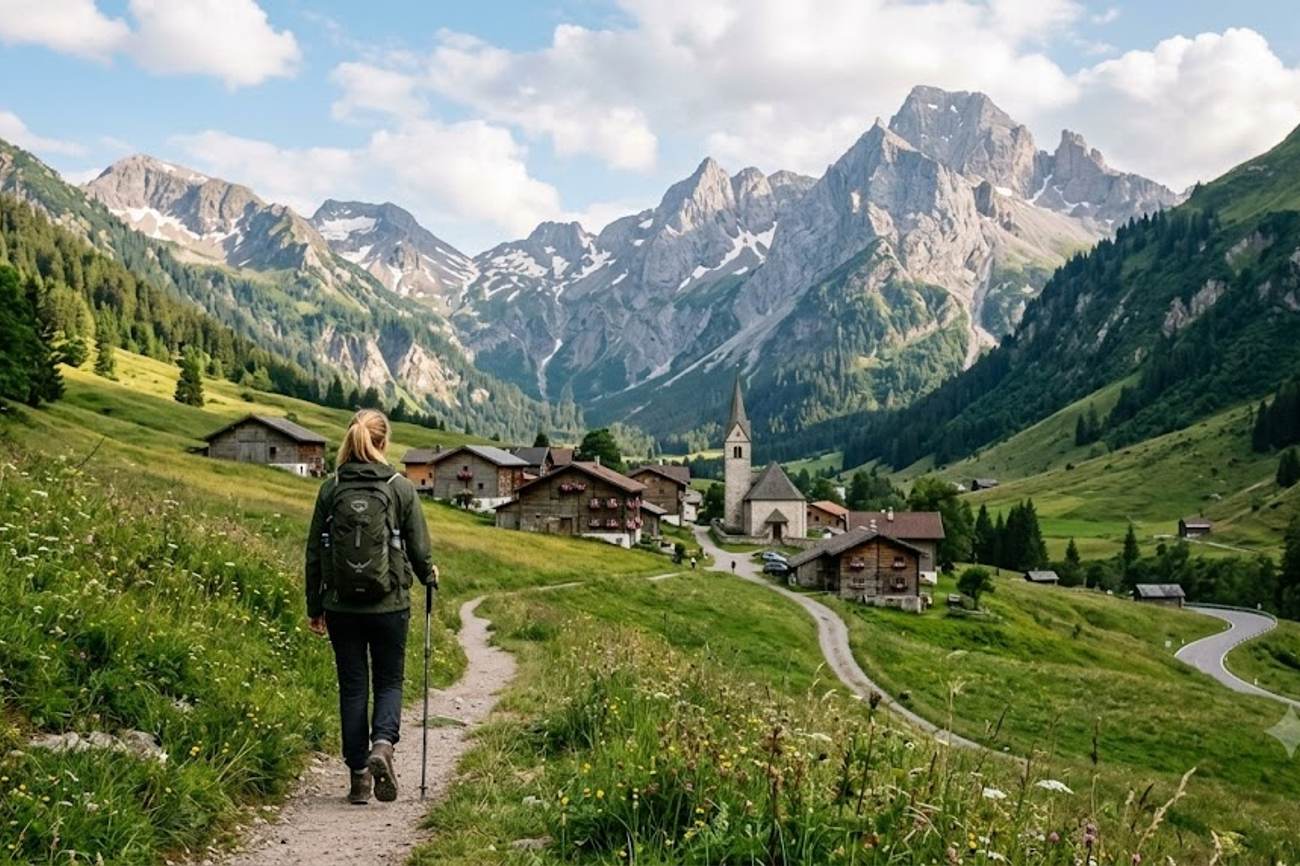
Image generated by AI
Three specific alpine detours—Lake Molveno, Berchtesgaden, and Gosausee—are emerging as primary relief valves for the systemic overtourism currently paralyzing Europe's most famous landmarks. This shift toward "hidden gems" is not merely a trend in leisure preference but a logistical response to the saturation of primary hubs like the Dolomites, Salzburg, and Hallstatt. As travelers seek to decouple their itineraries from the crushing density of "bucket-list" locations, these secondary destinations are absorbing the overflow, transforming from local secrets into strategic alternatives for the modern nomad.
The Geography of Displacement: From Hubs to Hinterlands
The movement toward alternative alpine destinations is driven by a phenomenon known as tourism displacement. When primary nodes—such as the village of Hallstatt or the center of Salzburg—reach a peak carrying capacity, the surrounding infrastructure and the travelers themselves naturally migrate toward adjacent, lower-density zones. This creates a ripple effect where "scenic detours" become the primary value proposition for high-value travelers who prioritize authenticity over iconography.
In the case of the Italian Alps, the Dolomites have become victims of their own visibility. While the region remains a global benchmark for hiking and skiing, the resulting congestion has pushed visitors toward the Trentino region. Specifically, Lake Molveno serves as a strategic buffer between the high-traffic corridors of Lake Garda and the core Dolomites. This geographical positioning allows travelers to access the same geological grandeur without the logistical friction of overcrowded trailheads and fully booked hospitality sectors.
Similarly, the proximity of Berchtesgaden to Salzburg and Gosausee to Hallstatt suggests that these are not standalone destinations but "satellite escapes." The 30-minute transit time between these hubs and their quieter counterparts is the critical variable. It allows for a hybrid itinerary: the cultural consumption of a major city paired with the psychological decompression of a rural alpine environment.
Comparative Analysis of Alpine Alternatives
The transition from a primary tourist hub to a secondary alpine escape involves a trade-off between accessibility and serenity. The following data outlines the strategic positioning of these emerging destinations.
| Primary Hub | Alternative Destination | Transit Time | Key Geological/Cultural Feature | Primary Activity Shift |
|---|---|---|---|---|
| The Dolomites | Lake Molveno (Italy) | Variable | Pradel Plateau / Alpine Forests | From peak-scaling to lakeside leisure |
| Salzburg (Austria) | Berchtesgaden (Germany) | 30 Minutes | Königssee / St. Bartholomä | From musical heritage to National Park hiking |
| Hallstatt (Austria) | Gosausee (Austria) | 30 Minutes | Dachstein Glacier / Turquoise Lakes | From village sightseeing to glacial trekking |
The operational scale of these regions is significant. For instance, Berchtesgaden is not merely a village but home to Germany's only alpine national park, boasting a network of over 260 kilometers of hiking routes. This infrastructure provides a level of capacity that can realistically absorb diverted traffic from Salzburg without succumbing to the same density issues.
Expert Analysis: The Economic and Logistical Shift
For the traveler booking these routes, the direct consequence is a shift in the "cost of experience." In primary hubs, the price of hospitality is often inflated by extreme demand, while the quality of the experience is degraded by crowds. By pivoting to destinations like Gosausee or Lake Molveno, travelers are effectively arbitrageurs—they are securing the same high-quality alpine scenery at a lower "density cost."
Travelers seeking serenity in the Alps can bypass major hubs by utilizing regional rail networks to reach secluded valleys. For comprehensive planning and official transport schedules, visitors should consult Switzerland Tourism to coordinate seamless transfers between remote mountain villages.
The pricing pressure created by the popularity of Hallstatt, for example, makes the 30-minute drive to Gosausee a logical economic choice. When a destination becomes a "photo-op" (as Hallstatt has), the local economy shifts toward short-term, high-turnover tourism. Conversely, destinations like Berchtesgaden, with its focus on the Bavarian National Park, maintain a model based on longer-stay outdoor recreation. This attracts a different demographic of traveler—one who spends more on local services and stays longer in the region.
Furthermore, the reliance on specific infrastructure—such as the Molveno-Pradel Cableway or the Gosaukammbahn cable car—indicates a professionalization of these "hidden gems." These are no longer raw wilderness areas but managed ecosystems designed to funnel tourists efficiently to high-altitude viewpoints, thereby protecting the valley floors from over-saturation. For the nomad lawyer or the business traveler seeking a retreat, this means the "wild" experience is now supported by reliable logistical frameworks, reducing the risk of travel disruptions.
From a regulatory perspective, this trend aligns with broader European goals to decentralize tourism. By promoting the International Air Transport Association (IATA) standards for regional connectivity and encouraging the use of secondary airports and rail links, European tourism boards are attempting to spread the economic benefits of travel across a wider geographic area, preventing the "museumification" of cities like Salzburg.
Key Takeaways
- Strategic Buffers: Lake Molveno, Berchtesgaden, and Gosausee act as logistical relief valves for the Dolomites, Salzburg, and Hallstatt, respectively.
- The 30-Minute Rule: The viability of these alternatives depends on their proximity (approx. 30 minutes) to major hubs, allowing for flexible, hybrid itineraries.
- Infrastructure Capacity: Berchtesgaden offers massive scalability for outdoor enthusiasts with over 260 kilometers of hiking trails in Germany's only alpine national park.
- Experience Arbitrage: Travelers can avoid the "density tax" of famous landmarks by shifting to satellite destinations that offer identical scenery with lower crowd volumes.
- Managed Access: The use of cable cars (Molveno-Pradel and Gosaukammbahn) indicates a shift toward managed tourism to protect alpine ecosystems.
FAQ: Alpine Detours 2025
Is it better to stay in Salzburg or Berchtesgaden? It depends on your priority. Salzburg is ideal for history and music lovers. Berchtesgaden is superior for those seeking nature, specifically the emerald waters of Königssee and extensive hiking in the national park, located just 30 minutes away.
How do I get to Gosausee from Hallstatt? The most efficient method is a 30-minute drive. This allows you to experience the famous lakeside views of Hallstatt before retreating to the quieter, glacier-surrounded lakes of the Salzkammergut region.
What is the best way to see Lake Molveno? For a comprehensive view, use the Molveno-Pradel Cableway to reach the Pradel Plateau. For ground-level exploration, the circular walking and cycling path around the lake provides the most relaxed experience.
Are these "hidden gems" actually quiet? While more peaceful than hubs like Hallstatt, they are gaining popularity. To ensure a quiet experience, visit during the shoulder seasons or utilize the deeper hiking trails, such as those leading to Hinterer Gosausee.
The future of European travel lies not in the destination, but in the detour.
Tags: Lake Molveno, Berchtesgaden, Gosausee, Trentino Tourism, Salzkammergut Region, Bavarian Alps 2025
Related Travel Guides
- Gothenburg and Leipzig Remain Top Tourism Sources for Brno Despite Major Visitor Declines During the First Eight Months of 2026
- California Consolidates With Michigan, Wisconsin and More US States Trying to Bringing Back Tourists from Canada with New Promotional and Marketing Campaigns as American Tourism Hitting Hard to Economy, Now Brand USA Travel Week in Toronto and Montreal Focuses Holiday Trips, Daycation and Weekend Vacations: Everything You Need To Know
- China Forces Trip.com Group into Sweeping Rectification After RMB5.18 Billion Antitrust Ruling Exposes Exclusive Hotel Agreements and Pricing Controls
Disclaimer
This article is for informational and educational purposes only. It does not constitute legal, financial, or professional advice. While we strive to provide accurate and up-to-date information, travel policies, regulations, and conditions change rapidly. Always verify information with official sources before making travel decisions. Nomad Lawyer makes no representations about the accuracy, reliability, completeness, or suitability of the information provided. Readers should consult qualified professionals for advice specific to their circumstances. The views expressed in this article are those of the author and do not necessarily reflect the views of Nomad Lawyer.
Preeti Gunjan
Contributor & Community Manager
A passionate traveller and community builder. Preeti helps grow the Nomad Lawyer community, fostering engagement and bringing the reader experience to life.
Learn more about our team →