
Europe's Summer Tourism Shift: Spain, Italy Face Heatwave Crisis as Finland's 'Coolcations' Surge in 2026
Southern Europe battles record heatwaves reshaping tourism patterns. Finland emerges as Europe's fastest-growing summer destination as travelers prioritize climate comfort over traditional Mediterranean escapes in 2026.

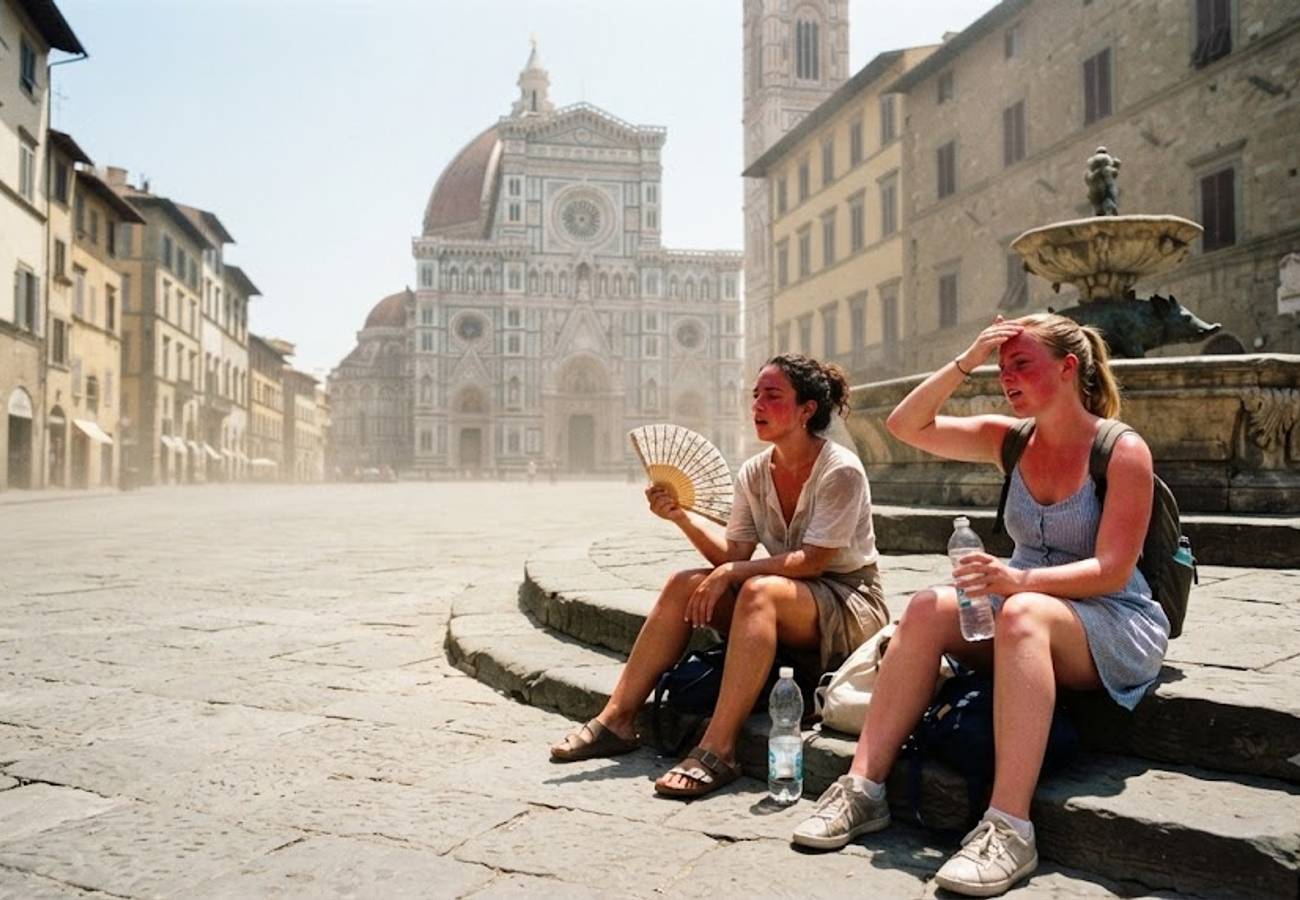
Image generated by AI
The Mediterranean Heatwave: When Paradise Becomes Unbearable
The thermometer doesn't lie. Southern Europe is burning—and it's destroying the summer tourism playbook that worked for centuries.
Spain, Italy, France, and Greece are grappling with a historic reality: traditional Mediterranean summer holidays are becoming physically dangerous. Day temperatures routinely exceed 40°C (104°F) in urban centres like Barcelona, Rome, and Athens. But here's what tourists aren't discussing in travel forums: the experience isn't just uncomfortable—it's fundamentally broken.
Outdoor sightseeing during peak afternoon hours? Impossible. Walking tours? Truncated or rescheduled. Beach days? Limited to early morning or dusk. The iconic Mediterranean summer—once the gold standard of European travel—is being compressed into survival mode.
Reddit: "Just spent two weeks in Spain in June. Spent half the day hiding in air-conditioned museums because it was 42°C outside. This wasn't a vacation." — r/travel
Why Southern Europe's Infrastructure Can't Keep Up
This isn't a minor inconvenience. Dense urban tourism destinations are experiencing cascading infrastructure strain.
Historic city centres in Spain and Italy—built centuries before mass air conditioning—trap and amplify heat. Ancient stone architecture radiates thermal energy long after sunset, making evening relief impossible. Public transport systems designed for moderate climates are failing under extreme thermal loads. Water systems in tourist zones are experiencing pressure as demand spikes.
Tourism operators are scrambling with adaptive scheduling: early-morning museum access, late-evening dining experiences, midday retreats to cooling centres. But these band-aids don't address the core problem: the environment itself has become hostile to the traditional tourism model.
The Data: Travellers Are Voting With Their Bookings
What makes this story compelling isn't anecdote—it's behaviour change at scale.
Demand patterns across European tourism markets show a clear directional shift. Searches for northern European summer destinations have increased measurably. Bookings to Finland, Sweden, and Norway are accelerating during traditional Mediterranean peak season (June–August).
Finland specifically is emerging as the primary beneficiary of this redistribution. Why? Environmental stability. Lakes hover at refreshing temperatures. Forests provide natural cooling. Daylight extends until nearly midnight, eliminating the afternoon heat-retreat problem entirely. The tourism experience remains continuous, comfortable, and genuinely enjoyable.
This isn't a temporary trend. Travellers are integrating climate risk directly into destination selection criteria—alongside cost, accessibility, and cultural appeal.
Finland's Unlikely Rise as Europe's Summer Powerhouse
What was once positioned as a winter-tourism and aurora-hunting destination is rapidly repositioning itself as a summer wellness and comfort destination.
Finland's appeal is structural, not circumstantial. The country offers:
- Thermal comfort: Summer temperatures rarely exceed 25°C (77°F), creating ideal conditions for continuous outdoor activity
- Natural immersion: Over 180,000 lakes and vast boreal forests provide low-density, nature-integrated experiences
- Activity continuity: Swimming, forest walks, sauna traditions, and lakeside retreats remain comfortable throughout daylight hours
- Extended daylight: Near-24-hour summer daylight eliminates the evening heat-retreat problem
Tourism authorities in Finland have recognized this opportunity and are actively marketing the "coolcation" concept—vacations defined by climate comfort, wellness, and stress-free outdoor exploration.
Reddit: "Finland in summer is genuinely underrated. No crowds, perfect weather, and you can actually enjoy being outside without feeling like you're being roasted alive." — r/travel
The "Coolcation" Movement: A New Tourism Logic
What's emerging across Europe is a fundamental reshaping of how travellers define a successful holiday.
The traditional Mediterranean model prioritized intensity: maximum sightseeing, maximum beach time, maximum cultural immersion. The new model prioritizes sustainability and wellbeing. Climate comfort has become a primary selection criterion.
This shift reflects deeper changes in post-pandemic travel psychology. Travellers increasingly seek:
- Stress reduction over activity maximization
- Environmental control over density and crowds
- Wellness integration into daily itineraries
- Sustainable outdoor time without health risk
Finland's tourism structure aligns perfectly with these expectations. Its low-density model, nature integration, and stable climate create a fundamentally different experience—one where the environment enhances rather than threatens the vacation.
Southern Europe Adapts, But Redistribution Accelerates
Spain, Italy, Greece, and France aren't disappearing from the European tourism map. These destinations remain anchors in global travel flows.
But their competitive positioning is shifting. Tourism authorities are adapting strategies:
- Expanded cooling infrastructure in public spaces
- Revised visitor management to distribute demand across seasons
- Investment in early-morning and evening tourism experiences
- Enhanced shading systems in high-traffic zones
However, these adaptations only partially mitigate the underlying climate constraint. A gradual but visible redistribution of summer demand is occurring, with northern destinations capturing an expanding share during peak season.
Airlines are responding by adjusting routing priorities. Hotel investment is shifting toward northern markets. Destination marketing budgets are diversifying away from exclusive Mediterranean focus.
This represents a long-term structural reallocation, not temporary volatility.
The Broader European Tourism Restructuring
What's happening transcends individual destination performance. The entire geographic logic of European summer tourism is being redesigned.
Climate resilience is becoming a decisive competitive factor. Southern destinations with severe thermal exposure face sustained pressure during peak season. Northern destinations with stable climates are capturing growth and market share.
This restructuring is influencing:
- Airline capacity allocation: Routes to cooler destinations expanding; traditional Mediterranean routes facing demand softness
- Hotel development: Investment shifting from saturated southern markets to emerging northern opportunities
- Tour operator strategies: Packaging increasingly differentiates by climate comfort, not just scenery
- Travel insurance products: Climate-related disruption coverage becoming standard
According to travel industry climate adaptation research, destination climate resilience is now a primary variable in competitive positioning.
The Data Tells the Story: Heatwaves Drive Behaviour Change
The numbers are unambiguous. Major European tourism boards are reporting measurable demand shifts during peak summer 2026.
Southern Mediterranean destinations are experiencing booking softness during June–August, with more cancellations cited due to heat concerns. Northern European destinations are reporting record summer bookings and capacity constraints.
Finland's tourism authority has publicly acknowledged unprecedented summer demand levels, with accommodations in lakeside regions operating at near-capacity through August.
This isn't speculation. It's observable market behaviour reflecting genuine changes in traveller priorities and risk assessment.
What This Means for the Future of European Tourism
Europe's summer tourism industry is undergoing a transformation that will reshape competitive dynamics for years.
The Mediterranean will remain central to global tourism. Cultural heritage, historical significance, and established infrastructure ensure continued visitor flows. But seasonal patterns are changing, visitor demographics are shifting, and profitability pressures are intensifying.
Northern Europe—particularly Finland, Sweden, and Norway—is capturing a disproportionate share of growth in climate-comfort-focused segments. This market segment is expanding, not contracting.
Travel planning is increasingly climate-aware. Destination selection now routinely includes climate risk assessment alongside cultural and logistical factors.
The era of unquestioned Mediterranean summer dominance is ending. The era of climate-responsive, diversified European tourism geography is beginning.
The future of European travel isn't written in Mediterranean heat—it's emerging in Nordic cool.
Related Travel Guides
Disclaimer
This article is for informational and educational purposes only. It does not constitute legal, financial, or professional advice. While we strive to provide accurate and up-to-date information, travel policies, regulations, and conditions change rapidly. Always verify information with official sources before making travel decisions. Nomad Lawyer makes no representations about the accuracy, reliability, completeness, or suitability of the information provided. Readers should consult qualified professionals for advice specific to their circumstances. The views expressed in this article are those of the author and do not necessarily reflect the views of Nomad Lawyer.
Preeti Gunjan
Contributor & Community Manager
A passionate traveller and community builder. Preeti helps grow the Nomad Lawyer community, fostering engagement and bringing the reader experience to life.
Learn more about our team →