
AAA July 4th Travel Alert 2026: Peak Hours to Avoid and Highway Safety Tips for Independence Day Road Trips
The American Automobile Association warns of unprecedented July 4th traffic. Learn which hours cause gridlock, vehicle prep essentials, and emergency protocols to stay safe.

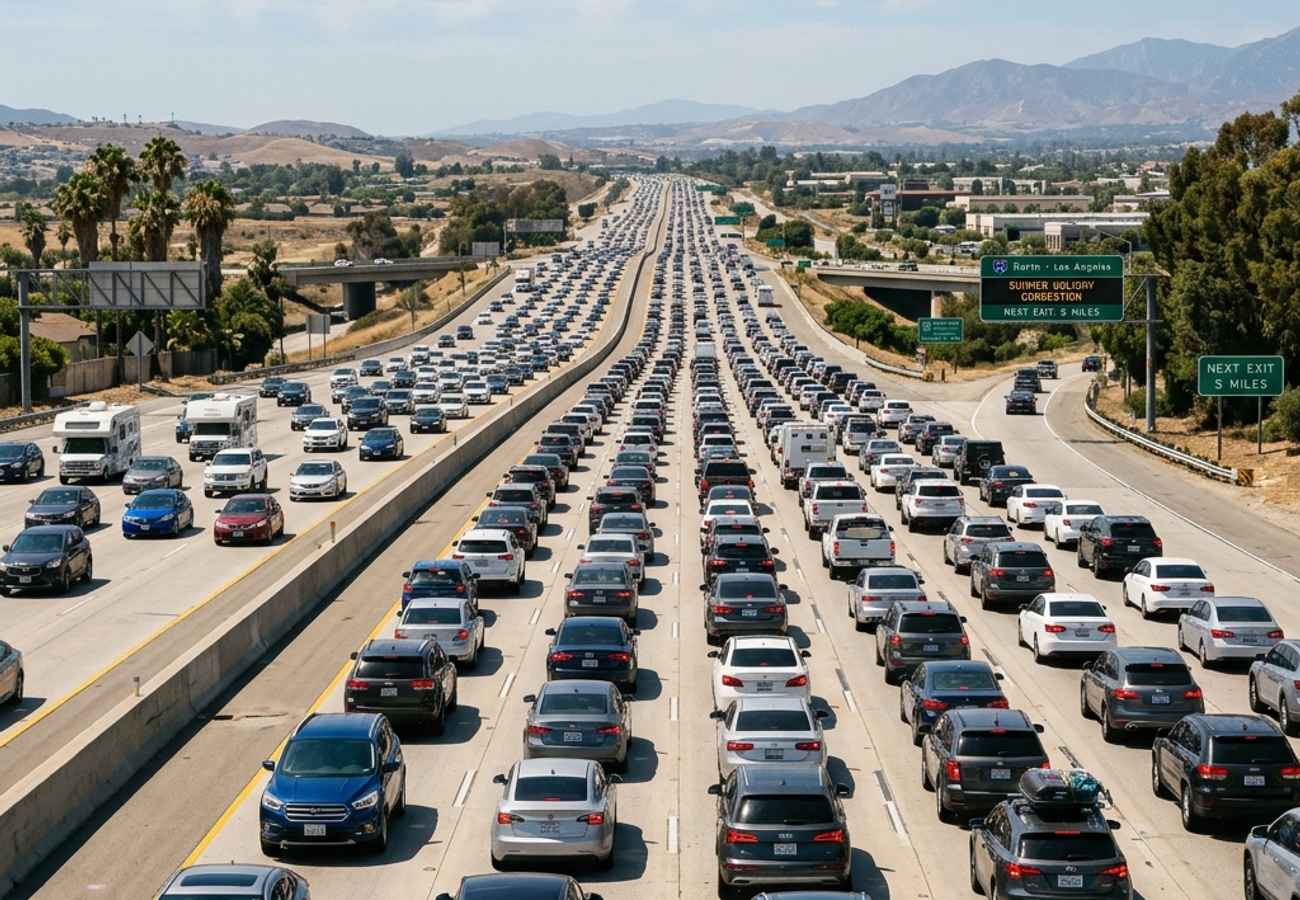
Image generated by AI
The American Automobile Association (AAA) just sounded the alarm: this Independence Day weekend is shaping up to be absolutely brutal for highway travelers. Unprecedented numbers of motorists are packing their vehicles for cross-country journeys, and traffic analysts are predicting gridlock that could strand families for hours. The culprit? A perfect storm of stable fuel prices, remote work flexibility, and pent-up demand for family gatherings colliding all at once.
If you're planning to hit the road next week, timing is everything—and getting it wrong could mean you're sitting bumper-to-bumper in sweltering heat while your engine overheats. Here's what you absolutely need to know to navigate this holiday safely.
The Perfect Storm: Why This July 4th Will Shatter Travel Records
Traffic data reveals something alarming: this summer's domestic automotive travel volume will dramatically exceed last year's metrics by a staggering margin. Millions of families are simultaneously mobilizing for long-distance road trips, creating arterial bottlenecks across major transport corridors that standard highway infrastructure simply wasn't designed to handle.
The math is brutal. When thousands of vehicles converge on the same routes simultaneously, even a minor single-vehicle accident can trigger miles of cascading delays within minutes. Your typical two-hour drive suddenly becomes a five-hour crawl through stop-and-go traffic on baking asphalt.
Reddit: "Left at noon on July 3rd last year. Never again. 8 hours to drive 4 hours. Check the AAA traffic maps before you leave." — r/travel
The Critical Window: When NOT to Leave Your Driveway
Transportation data platforms have identified the absolute worst time window with surgical precision: 2:00 PM to 6:00 PM. This is when regional commuters heading home from work collide directly with holiday travelers departing for the weekend. It's a perfect collision of two traffic waves, and the results are catastrophic.
Your escape routes:
Travel before 7:00 AM. This is non-negotiable if you want to breeze through major metropolitan chokepoints before regional traffic volume spikes. The early morning window remains your absolute safest bet for avoiding gridlock entirely.
If an early departure is impossible, wait until well after the evening rush has dissipated—typically after 7:00 PM or later. The roads will be considerably lighter, and you'll make meaningful progress toward your destination.
The Mechanical Reality: Heat Kills Vehicles on Highway Stretches
Here's what mechanics see every single holiday season: thousands of preventable automotive failures triggered by intense summer heat and extended highway cruising. Your vehicle's battery, cooling hoses, and tires are exceptionally vulnerable to thermal stress when you're stuck in slow-moving traffic under a brutal sun.
A hairline crack in an aging radiator hose? That's a ticking time bomb that will detonate into catastrophic engine overheating once you're trapped in gridlock with nowhere to escape. Under-inflated tires generate excessive internal friction against scorching asphalt, which drastically increases your probability of a high-speed blowout on the highway shoulder.
Your 15-minute pre-trip inspection checklist:
- Check tire pressure against your vehicle's specifications (found on the driver's door jamb)
- Verify oil levels using your dipstick
- Inspect coolant reservoirs and top off as needed
- Examine all visible hoses for cracks or deterioration
- Test your battery terminals for corrosion
Fifteen minutes of prep work prevents a $500+ towing bill on a desolate highway in 95-degree heat.
The Emergency Kit: Your Roadside Survival Arsenal
Getting stranded on a congested highway during an extreme summer heatwave transforms every minute into a potential medical emergency. Safety organizations mandate that every vehicle carry a fully stocked emergency kit before departing on holiday weekends.
Essential items:
- Generous supply of bottled drinking water (at least 2-3 gallons per person)
- Non-perishable food snacks and electrolyte drinks
- Complete first-aid kit with blister treatments and pain relievers
- External smartphone battery charger (this is critical for navigation and emergency calls)
- Jumper cables and basic hand tools for minor repairs
- Functional flashlight with extra batteries
- Reflective warning triangles for roadside visibility
If you're traveling with young children or family pets, pack specialized medications and additional hydration supplies—these aren't optional add-ons. A prolonged mechanical delay shouldn't escalate into a dangerous medical crisis.
Smart Navigation: Let Technology Save Your Sanity
Relying on familiar routes or outdated physical maps during a massive holiday rush is a guaranteed recipe for immense frustration. Modern navigation platforms like Google Maps and Waze utilize live crowd-sourced traffic data to identify developing accidents, construction zones, and sudden speed drops ahead of your route.
These applications instantly calculate faster alternative detours through rural side roads that keep your vehicle moving forward instead of idling in gridlock. Download your app, enable real-time notifications, and program your destination coordinates well before shifting into drive.
Audible alerts allow you to receive critical route updates without taking your eyes off the road—that's how you make informed operational decisions that protect both your sanity and your vacation time.
Highway Failure Protocol: What to Do When Disaster Strikes
If your vehicle suffers a sudden mechanical failure or unexpected puncture at highway speed, executing proper safety procedures becomes absolutely critical for your survival.
Immediate actions:
Remain completely calm and activate your hazard warning lights immediately to signal your distress. Safely steer toward the furthest edge of the right-hand shoulder, creating maximum distance between your vehicle and active traffic lanes.
Once parked, keep passengers inside the vehicle with seatbelts fastened unless the exterior environment is genuinely unsafe. If you must exit to inspect damage, exit through the passenger-side doors to avoid traffic. Call professional roadside emergency services immediately—don't attempt complex repairs in 95-degree heat.
Place reflective warning triangles behind your vehicle at minimum 100-foot intervals to maximize visibility to oncoming traffic. These triangles are your first line of defense against secondary collisions from drivers who don't see your stranded vehicle.
Stay cool, plan ahead, and let someone else deal with the 2 PM traffic disaster.
Related Travel Guides
Disclaimer
This article is for informational and educational purposes only. It does not constitute legal, financial, or professional advice. While we strive to provide accurate and up-to-date information, travel policies, regulations, and conditions change rapidly. Always verify information with official sources before making travel decisions. Nomad Lawyer makes no representations about the accuracy, reliability, completeness, or suitability of the information provided. Readers should consult qualified professionals for advice specific to their circumstances. The views expressed in this article are those of the author and do not necessarily reflect the views of Nomad Lawyer.
Preeti Gunjan
Contributor & Community Manager
A passionate traveller and community builder. Preeti helps grow the Nomad Lawyer community, fostering engagement and bringing the reader experience to life.
Learn more about our team →