
Europe's Green Tourism Renaissance: Kranj, Benidorm, Middelfart Lead Sustainable Travel
Three European destinations are pioneering sustainable tourism infrastructure that bypasses fuel dependency. Kranj, Benidorm, and Middelfart demonstrate how rail, cycling, and walkable design attract climate-conscious travelers in 2026.

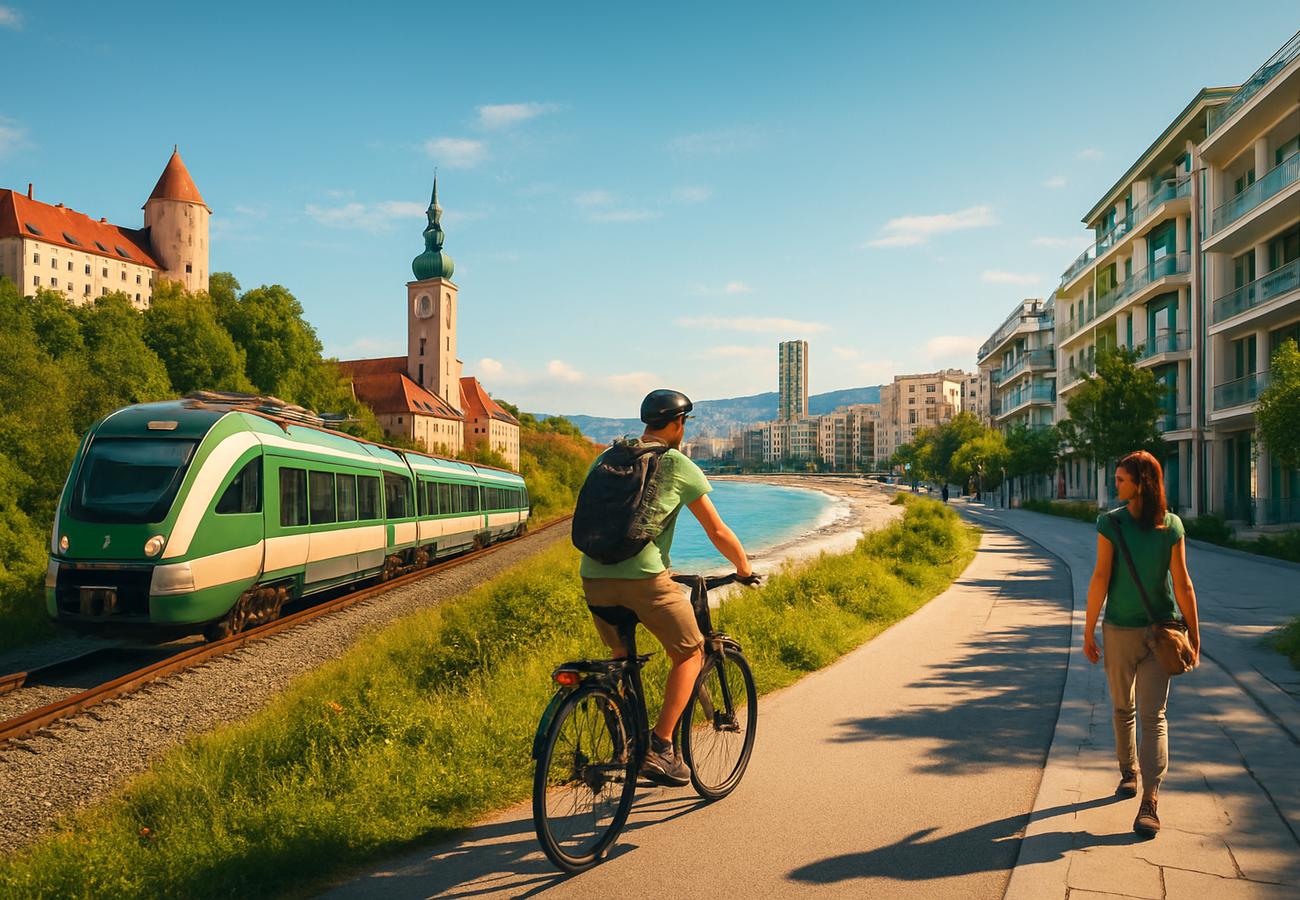
Image generated by AI
Across Europe, tourism destinations are fundamentally reshaping how travelers move through cities and regions. The shift away from fuel-dependent models is no longer optional—it's becoming the industry standard. Three destinations in particular are leading this transformation: Kranj, Slovenia; Benidorm, Spain; and Middelfart, Denmark. Each represents a different approach to sustainable mobility, yet all share a critical advantage: they remain accessible and attractive even when fuel prices spike or supply disruptions occur.
The underlying driver is straightforward. Traditional tourism infrastructure built on private car dependency and fossil-fuel consumption is proving fragile. Travelers increasingly seek destinations where movement remains efficient, affordable, and low-impact. Climate concerns and energy security fears have accelerated this preference shift substantially over the past two years.
Kranj: Slovenia's Walkable Urban Model
Kranj earned official recognition as the 2023 European Destination of Excellence under the European Commission's EDEN initiative. This accolade reflected years of intentional urban design focused on walkability and sustainable mobility integration.
The town sits in northwestern Slovenia, benefiting from the country's broader national strategy emphasizing rail and cycling over car dependency. Within Kranj's historic center, visitors move comfortably through cultural districts, riverside promenades, and local markets entirely on foot. The compact layout eliminates the need for fuel-intensive transportation while enhancing the experience itself—travelers interact directly with the town rather than passing through it.
Rail connectivity strengthens accessibility significantly. The electrified regional rail network connects Kranj to Ljubljana, Lake Bled, and surrounding areas. Low-emission bus services complement rail options, creating an integrated mobility ecosystem. This infrastructure design means the town remains accessible even during fuel price surges or transportation disruptions.
Reddit: "I spent three days in Kranj without renting a car. Everything I needed was walkable, and the train to Ljubljana was clean and on time." — r/travel
The Slovenia Green certification system reinforces sustainability standards across tourism businesses, accommodations, and local authorities. Energy efficiency, waste management, and environmental protection are formally evaluated. As global demand for low-carbon travel experiences grows, Kranj attracts precisely the travelers seeking that combination.
Benidorm: Mediterranean Reinvention
Mediterranean coastal destinations typically depend on high fuel consumption and extensive car traffic. Benidorm challenged this model and was recognized as the European Green Pioneer of Smart Tourism for 2025 by the European Union—a significant shift from its traditional image as a high-volume beach resort.
The city's dense, compact urban layout enables visitors to move between beaches, hotels, entertainment zones, and attractions primarily through walking and low-emission transport. Unlike sprawling resort destinations requiring cars between dispersed facilities, Benidorm concentrated development within accessible districts.
Benidorm's renewable infrastructure extends beyond transportation. Advanced water recycling systems operate citywide. Biogas generation from wastewater treatment contributes to renewable energy production. These circular economy systems reduce dependence on imported fossil fuels while building long-term environmental resilience—critical advantages during periods of global energy uncertainty.
Public transportation integration connects Benidorm to electrified rail and tram systems operating from Alicante. Visitors reach the city efficiently without relying exclusively on private vehicles. This transportation resilience, combined with the city's inherent walkability, creates a destination where tourists experience freedom of movement despite fuel supply constraints.
Reddit: "Benidorm shocked me. I expected traffic nightmares. Instead, everything was walkable, and the public tram system was excellent. Zero car rentals needed." — r/Spain
The transformation demonstrates that even high-volume tourism destinations can adapt successfully to low-carbon mobility systems without compromising visitor satisfaction. Benidorm proved the business case works.
Middelfart: Scandinavia's Cycling Blueprint
Middelfart became the inaugural holder of the renewed European Destination of Excellence sustainability initiative, reinforcing its position as a model for green tourism development. The Danish destination exemplifies how national mobility strategies at the macro level create sustainable tourism at the destination level.
Denmark's transportation systems integrate cycling infrastructure, electric rail networks, and renewable electricity generation into urban planning. Middelfart reflects this national philosophy: tourism experiences connect to nature, local mobility, and environmentally responsible travel rather than fuel-intensive models.
The destination's defining characteristic is strong cycling and rail accessibility. Denmark's extensive cycling culture allows visitors to navigate urban districts and surrounding landscapes through dedicated bicycle infrastructure that minimizes emissions. This isn't novelty—it's the primary transportation mode. Electrified rail systems enable efficient regional travel without private fossil-fuel vehicles.
As fuel prices fluctuate across global markets, this transportation resilience becomes increasingly valuable. A traveler in Middelfart doesn't worry about fuel availability or price—they navigate by bike and train.
"Slow tourism" has become central to the visitor philosophy. Rather than rapidly consuming multiple destinations, travelers spend extended time moving at human pace through landscapes and communities. This model generates economic benefits for local businesses while reducing transportation impacts proportionally.
The Broader Pattern
What connects these three destinations? Each positioned itself for a future shaped by fuel uncertainty, climate urgency, and evolving traveler values. They invested in infrastructure—electric rail, cycling networks, walkable urban design—that makes cars optional rather than essential.
The market is responding. Global sustainable tourism growth outpaces conventional tourism across most European markets. Destinations that adapted first capture disproportionate market share from climate-conscious travelers.
For digital nomads, remote workers, and extended-stay travelers, these destinations offer particular advantages. Monthly accommodation costs remain reasonable, while mobility infrastructure eliminates rental car expenses entirely. The economics align with both environmental values and personal finances.
The transformation isn't universal. Sprawling resort destinations dependent on car-based tourism face harder transitions. But Kranj, Benidorm, and Middelfart demonstrate the path forward—and it's increasingly profitable.
European tourism's future belongs to destinations where walking and rail replace fuel dependency.
Related Travel Guides
Europe's 2026 Tourism Boom: Greece, Türkiye, Romania Lead Budget Revolution
China May Day Tourism 2026: Trip Numbers Rise 3.49% as Consumer Spending Lags Behind 2019 Levels
China's Major Airlines Face Mounting Pressures as Regional Competitors Surge Ahead
Disclaimer
This article is for informational and educational purposes only. It does not constitute legal, financial, or professional advice. While we strive to provide accurate and up-to-date information, travel policies, regulations, and conditions change rapidly. Always verify information with official sources before making travel decisions. Nomad Lawyer makes no representations about the accuracy, reliability, completeness, or suitability of the information provided. Readers should consult qualified professionals for advice specific to their circumstances. The views expressed in this article are those of the author and do not necessarily reflect the views of Nomad Lawyer.
Kunal K Choudhary
Co-Founder & Contributor
A passionate traveller and tech enthusiast. Kunal contributes to the vision and growth of Nomad Lawyer, bringing fresh perspectives and driving the community forward.
Learn more about our team →