EU Probes Booking.com Under Digital Services Act Over Fake Hotel Listings, Hijacked Reservations, and Search Ranking Transparency

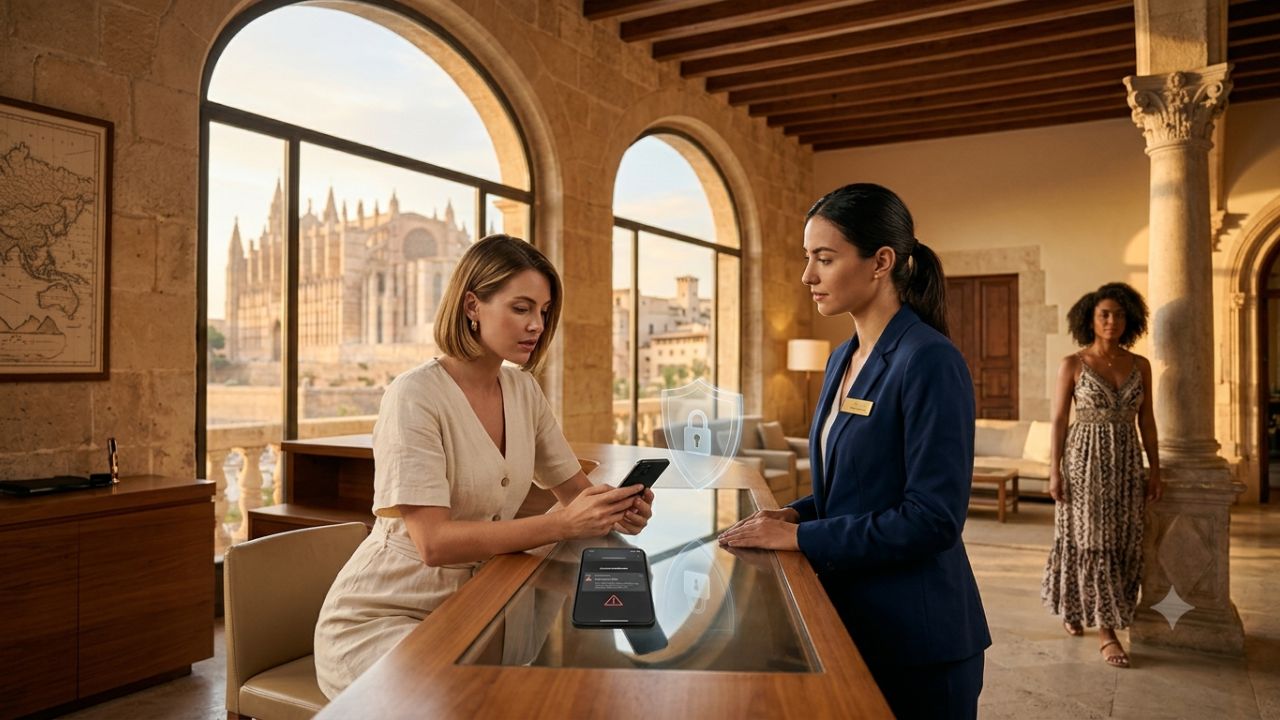
The European Commission has initiated formal proceedings against Booking.com under the Digital Services Act, assessing consumer fraud risks and ranking transparency.
BRUSSELS, November 3, 2026 — The European Commission has launched a comprehensive formal investigation into online travel giant Booking.com under the European Union's landmark Digital Services Act, scrutinizing systemic vulnerabilities surrounding fraudulent accommodation listings, reservation hijacking schemes, and potentially deceptive hotel search rankings. Initiated following preliminary inquiries and rising consumer complaints across the European continent, the proceedings examine whether the Amsterdam-headquartered platform has met its binding obligations to assess and mitigate systemic consumer risks. Major European tourism powerhouses—including Spain, France, Italy, and the Netherlands—find their accommodation sectors directly impacted by sophisticated digital booking fraud, from ghost holiday apartments and credential-stealing phishing attacks to covert commission-driven listing promotions. If European regulators establish formal infringements of the legislation, Booking.com faces potential statutory penalties reaching up to 6% of its total worldwide annual turnover.
[!NOTE] Key Dimensions of the European Commission's Digital Services Act Probe: The formal proceedings opened against Booking.com focus on three primary compliance areas under the Digital Services Act (DSA): systemic risk assessment and mitigation regarding fraudulent listings (Articles 34 and 35), protection against phishing and reservation-data exploitation within customer messaging channels (Articles 34 and 35), and online advertising transparency regarding commission-boosted hotel search rankings (Article 26(1)). Under DSA provisions governing designated Very Large Online Platforms (VLOPs), confirmed systemic failures carry maximum financial penalties of up to 6% of global annual corporate turnover. While regulatory proceedings do not establish legal liability at this stage, the investigation signals unprecedented regulatory oversight across the European digital hospitality ecosystem.
EUROPEAN COMMISSION DSA INVESTIGATION: BOOKING.COM COMPLIANCE MATRIX
| [ REGULATORY STATUS & STATUTORY THRESHOLDS ] |
|---|
| * Legal Framework: European Union Digital Services Act (Regulation EU 2022/2065). |
| * Platform Classification: Designated Very Large Online Platform (VLOP) since April 25, 2023. |
| * Formal Proceedings Initiated: October 21, 2026 (following preliminary inquiries in 2025/2026). |
| * Maximum Financial Exposure: Up to 6% of global annual worldwide corporate turnover. |
| [ CORE INVESTIGATIVE PILLARS UNDER EXAMINATION ] |
| * Pillar 1: Fraudulent Accommodation Listings (DSA Articles 34 & 35) |
| - Presence of non-existent 'ghost properties', hijacked host profiles, & unauthorized rentals. |
| - Effectiveness of host identity verification protocols prior to listing publication. |
| * Pillar 2: Reservation Hijacking & In-App Phishing (DSA Articles 34 & 35) |
| - Infiltration of hotel partner extranets via Infostealer malware and credential harvesting. |
| - Unauthorized payment demands dispatched through official platform customer messaging channels |
| * Pillar 3: Search Ranking & Advertising Transparency (DSA Article 26(1)) |
| - Failure to clearly identify search visibility boosted by higher commission rate overrides. |
| - Algorithmic prioritization obscuring objective user review ratings and pricing parameters. |
| [ MACRO TOURISM IMPACT ACROSS MAJOR EUROPEAN DESTINATIONS ] |
| * Spain: High exposure across 96.8M annual visitors; clashes with municipal rental regulations. |
| * Netherlands: Platform HQ jurisdiction; Consumentenbond logs 1,072 complaints (~€82k losses). |
| * France: High-value hotel booking risks across Paris & Riviera; credential phishing schemes. |
| * Italy: Property substitution scams & unauthorized listings amid strict municipal crackdowns. |
The European Commission's Digital Services Act Probe: Legal Scope and 6% Turnover Penalty Exposure
The decision by the European Commission to open formal proceedings against Booking.com represents a watershed moment in the governance of online travel platforms. Designated as a Very Large Online Platform (VLOP) under the Digital Services Act on April 25, 2023, after surpassing the statutory threshold of 45 million monthly active European recipients, Booking.com is legally bound to the highest standard of regulatory compliance, algorithmic accountability, and systemic consumer protection enforced in the European Union.
The formal investigation follows an extensive preliminary evaluation during which the European Commission issued binding requests for information on September 23, 2025, and May 26, 2026. European regulators conducted deep technical audits of Booking.com's risk assessment reports, content moderation architectures, and transparency databases. The formal opening of proceedings on October 21, 2026, indicates that European authorities found sufficient preliminary evidence of systemic vulnerability to warrant an in-depth, enforceable inquiry into the platform's digital infrastructure.
At the center of the investigation are Articles 34 and 35 of the Digital Services Act. Article 34 requires VLOPs to diligently identify, analyze, and assess any systemic risks stemming from the design or functioning of their services, including the dissemination of illegal content and intentional manipulation through fraudulent activities. Article 35 mandates the implementation of reasonable, proportionate, and effective mitigation measures tailored to those specific systemic risks. The European Commission is examining whether Booking.com deployed adequate automated detection filters, human review mechanisms, and vendor onboarding verifications to prevent bad actors from exploiting its booking ecosystem.
Simultaneously, the Commission is assessing compliance with Article 26(1) of the DSA, which governs online commercial transparency. Under this provision, platforms must ensure that consumers can unambiguously identify sponsored content, understand the commercial entity on whose behalf the promotion is presented, and view meaningful parameters explaining why specific listings appear in prominent search positions. Regulators are examining whether accommodation providers that pay premium commission overrides to secure top search placements are clearly marked as commercial promotions, or whether ordinary consumers are misled into believing that ranking positions reflect objective user review merit.
The financial stakes accompanying the investigation are unprecedented in the hospitality sector. Under Article 52 of the Digital Services Act, if the European Commission establishes that a Very Large Online Platform has intentionally or negligently infringed its statutory obligations, it possesses the legal authority to impose fines of up to 6% of the entity's total worldwide annual turnover in the preceding financial year. For a multinational conglomerate like Booking Holdings, whose global revenues consistently surpass twenty billion dollars annually, theoretical maximum penalties could exceed 1.2 billion euros. While European officials emphasize that the opening of formal proceedings does not prejudge the final outcome or establish legal guilt, the scope of the probe demonstrates an uncompromising regulatory stance against digital travel fraud.
CYBER ANATOMY: THE MECHANICS OF HOTEL RESERVATION HIJACKING
| Column 1 |
|---|
| STEP 1: TARGETING THE HOTEL RECEPTION DESK |
| * Threat actors send spear-phishing emails to hotel reception (e.g., "Medical emergency inquiry"). |
| * Hotel staff opens malicious attachment containing Infostealer malware (Lumma, Vidar, RedLine). |
| STEP 2: CREDENTIAL & SESSION HARVESTING |
| * Malware extracts cached browser session cookies, passwords, & Booking.com Extranet credentials. |
| * Attackers bypass multi-factor authentication (MFA) by replaying active session tokens. |
| STEP 3: DIRECT INFILTRATION OF IN-APP GUEST MESSAGING |
| * Cybercriminals access genuine hotel management dashboards within Booking.com infrastructure. |
| * Attackers extract authenticated guest lists, confirmed check-in dates, & booking references. |
| STEP 4: HYPER-PERSONALIZED PHISHING MESSAGES DISPATCHED TO GUESTS |
| * Guests receive messages directly inside the official Booking.com mobile app or web portal. |
| * Text quotes exact reservation details: "Credit card verification failed; room will be canceled." |
| STEP 5: FRAUDULENT PAYMENT EXTRACTION & FINANCIAL LOSS |
| * Guest clicks external link disguised as official payment gateway (e.g., booking-verify-card.cc). |
| * Credit card data and secondary verification funds are stolen; genuine hotel remains unaware. |
The Anatomy of Reservation Hijacking: How Cybercriminals Infiltrate Hotel Extranets
Among the most technically concerning phenomena under examination by European regulators is reservation hijacking—a sophisticated form of authorized-channel fraud that bypasses conventional consumer spam defenses. Unlike generic phishing campaigns that broadcast mass emails from random domains, reservation hijacking operates directly within the authenticated communication channel between a legitimate hotel and its confirmed guests.
The cyberattack begins at the property level rather than within Booking.com's centralized server banks. Cybercriminals target front desk staff and reservation agents at independent hotels, boutique resorts, and hotel chains using carefully crafted spear-phishing emails. Attackers often masquerade as upcoming guests requesting urgent assistance, sending messages containing phrases such as "Urgent: Medical documentation for my elderly mother's wheelchair access" or "Passports for advance check-in attached."
When an unsuspecting hotel clerk opens the attached compressed file or clicks a malicious cloud storage link, an Infostealer trojan—such as Lumma Stealer, Vidar, or RedLine—is silently deployed onto the hotel's reception workstation. These malware variants are engineered to scan local web browsers, extracting cached passwords, autocomplete data, and active session cookies. By harvesting authenticated session tokens, cybercriminals can bypass multi-factor authentication mechanisms entirely, gaining administrative control over the hotel's Booking.com Extranet portal without alerting the property management team.
Once inside the compromised extranet account, attackers possess real-time visibility over all active reservations. They can view guest full names, telephone numbers, home addresses, dates of arrival and departure, total booking amounts, and unique reservation confirmation numbers. Armed with this granular intelligence, criminals generate hyper-personalized payment demands sent directly through Booking.com's official in-app chat infrastructure.
Because the message originates from the authentic profile of the hotel that the guest booked, standard consumer warning systems fail. The guest receives an official notification on their smartphone from the Booking.com mobile application stating: "Urgent security update from your hotel." The message warns that due to an updated European banking security directive, the payment card provided at booking failed a pre-authorization check, and the reservation will be automatically cancelled within twelve or twenty-four hours unless identity verification is completed.
The message directs the traveler to click an external hyperlink disguised to mirror Booking.com's visual identity, hosted on typosquatted domains such as booking-card-verification.net or reservation-secure-check.com. Once on the fraudulent portal, the traveler is prompted to re-enter credit card numbers, expiration dates, card verification values (CVV), and one-time passcodes generated by their mobile banking app. The criminal syndicate captures the funds immediately through secondary wire channels or cryptocurrency conversion. The guest discovers the theft only upon arrival at the hotel front desk, where staff have no record of the communication or the supplementary payment.
The rise of generative artificial intelligence has amplified this threat exponentially. Threat actors now utilize advanced large language models to generate polished, polite, and grammatically flawless communications in Spanish, French, Italian, German, and English, perfectly matching the professional tone of luxury hospitality staff. Independent cybersecurity monitoring indicates that certain categories of automated phishing have surged between 500% and 900% across the travel and retail sectors over the past eighteen months. The European Commission's probe aims to determine whether Booking.com took sufficient technical steps—such as automated URL filtering, behavioral anomaly detection, and stricter session management—to block malicious external payment links within its proprietary chat channels.
EUROPEAN TOURISM EXPOSURE & REGULATORY TENSIONS (2025-2026)
| Entity / Facility | Delays | Cancellations | Details |
|---|---|---|---|
| Country | Annual Tourists | International Spend | Primary Online Booking Fraud Risk Vector |
| :--- | :--- | :--- | :--- |
| Spain | 96.8 Million | €134.0 Billion | Ghost holiday rentals & license scraping. |
| France | 102.0 Million | €77.5 Billion | High-value Paris hotel reservation attacks. |
| Italy | 85.0+ Million | €58.0+ Billion | Bait-and-switch property substitutions. |
| Netherlands | 21.0+ Million | €18.0+ Billion | Platform HQ; 1,072 Consumentenbond alerts. |
National Tourism Impacts: Spain, the Netherlands, France, and Italy Under the Microscope
While the European Commission leads the regulatory enforcement from Brussels, the practical consequences of online booking vulnerabilities reverberate across Europe's premier tourism destinations. Spain, the Netherlands, France, and Italy represent the economic backbone of European leisure travel, each exhibiting distinct exposure profiles to digital accommodation fraud.
Spain: Ghost Rentals and Municipal License Pressures
Spain stands as one of the world's most formidable tourism powerhouses, welcoming approximately 96.8 million international visitors in 2025 whose total expenditure surpassed 134 billion euros. The country's heavy reliance on foreign visitor spending makes the reliability of digital accommodation platforms an economic imperative. In coastal vacation hotspots such as the Costa del Sol, the Balearic Islands, the Canary Islands, and historic metropolitan centers like Madrid and Barcelona, travelers frequently book self-catering holiday apartments and boutique properties through online platforms.
The primary vulnerability facing travelers in Spain centers on fraudulent accommodation listings, commonly termed 'ghost apartments.' Bad actors download high-resolution marketing photographs from architectural websites, real estate listings, or legitimate hotel portfolios, creating fake accommodation profiles on booking platforms at attractive, slightly below-market nightly rates. Unsuspecting travelers pay advance reservation deposits or full accommodation fees, only to arrive in Spain with heavy luggage to find that the address corresponds to a vacant commercial building, a private residential family home, or an entirely fictional street number.
This fraudulent dynamic intersects with aggressive municipal crackdowns across Spain aimed at tackling housing shortages. In Barcelona, municipal authorities have enacted legislation to eliminate all 10,101 licensed tourist apartment permissions across the city by November 2028, returning units to the local residential rental market. In Málaga, regional authorities introduced a moratorium on new tourist accommodation registrations across 43 urban neighborhoods where holiday lets exceeded 8% of total residential housing stock.
These housing restrictions have inadvertently increased the risk of fraudulent and unauthorized listings. As legal short-term rental permits become scarce and valuable, unauthorized operators and outright scammers scrape genuine tourist registration license numbers from official registers to populate fraudulent online listings. International travelers who book these unauthorized properties face sudden cancellations when local authorities inspect buildings, or find themselves locked out of accommodations without legal recourse. For Spain's tourism ministry, ensuring that platforms verify property ownership and authentic municipal license codes prior to listing publication is essential to safeguarding the country's hospitality reputation.
The Netherlands: Platform Jurisdiction and Consumentenbond Findings
The Netherlands occupies a central role in the European investigation because Booking.com's global headquarters is situated in Amsterdam. The platform falls under the immediate regulatory supervision of the Dutch Authority for Consumers and Markets (ACM), which acts as the lead national coordinating authority under European digital trade rules.
Public urgency surrounding online booking fraud reached new heights following data released by Dutch consumer protection watchdog Consumentenbond. The organization recorded 1,072 formal Booking.com-related fraud notifications during part of 2026, documenting cumulative consumer financial losses of approximately 82,000 euros. European regulators noted that this complaint volume represented an alarming tenfold increase compared to baseline figures documented during equivalent periods in 2025.
The Dutch data highlights the acute psychological vulnerability of travelers targeted by reservation hijacking. The majority of reported losses involved individual sums ranging from 300 to 1,500 euros—amounts calibrated by fraudsters to fall just below the psychological threshold that would prompt a traveler to cancel an entire multi-thousand-euro holiday. Dutch consumer advocates have argued that while Booking.com has introduced warning banners advising customers that hotels will never ask for payment via external chat links, passive warnings are fundamentally insufficient to counter sophisticated social engineering. Regulators are evaluating whether the platform's failure to programmatically block external hyperlinks and disable clickable URL routing within customer chat interfaces constitutes a breach of systemic mitigation duties under Article 35.
France: Luxury Hotel Vulnerabilities in Paris and the French Riviera
France maintained its historic position as the world's most visited destination in 2025, welcoming approximately 102 million international tourists and generating 77.5 billion euros in inbound international tourism receipts. The French hospitality market is distinguished by a heavy concentration of high-average-daily-rate (ADR) luxury accommodations across Paris, Cannes, Nice, and the French Alps.
In high-value markets like Paris, cybercriminals exploit the large financial stakes involved in hospitality reservations. An international traveler reserving a four-night stay in a Parisian boutique hotel at 600 euros per night commits 2,400 euros to the reservation. When the guest receives an urgent message through the official platform requesting a 500-euro pre-authorization deposit to secure the room during peak fashion week or summer exhibition periods, the demand appears plausible against the total booking value.
The financial pressure created by imminent arrival dates induces panic. Travelers who have already invested thousands of euros in long-haul transatlantic or Asian flights are exceptionally reluctant to risk hotel cancellation over an apparent administrative card error. French hospitality trade bodies have emphasized that reservation hijacking causes severe reputational collateral damage to legitimate French hoteliers. When guests arrive at Parisian properties and discover they have been defrauded, tensions at reception desks escalate, leaving front office teams to absorb customer anger despite having had their own IT systems compromised by external malware.
Italy: Property Substitutions and Heritage City Enforcement
Italy's international tourism sector, which generates tens of billions of euros annually across art cities such as Florence, Venice, Rome, and Milan, faces severe challenges related to deceptive accommodation listings and unauthorized property substitutions.
In historic Italian destinations where building restrictions prevent modern hotel construction, demand for centrally located vacation rentals is intense. In Florence, official records registered 16,906 active tourist rental properties in 2025 supporting over 11.5 million tourist overnight stays. Municipal leadership under Mayor Sara Funaro has enacted strict municipal measures, including prohibiting external self-check-in keyboxes in the UNESCO World Heritage historical center and intensifying inspections against unregistered short-term rentals.
In this high-demand environment, travelers face the recurring scam of bait-and-switch property substitutions. Guests complete online bookings for charming, renovated apartments overlooking historic piazzas, backed by glowing platform reviews. Shortly before arrival or upon reaching the check-in point, the host contacts the guest claiming that an unexpected emergency—such as a burst pipe, an electrical failure, or structural repairs—renders the booked property unavailable. The guest is then escorted or redirected to an alternative apartment located miles outside the historic center in an unrenovated suburban block, lacking air conditioning or advertised amenities.
While legitimate hotel maintenance emergencies do occur, regulatory investigators are examining whether organized rental operators systematically market non-existent luxury apartments to capture bookings, deliberately intending to steer guests into substandard secondary properties. Italian consumer groups are demanding that online platforms enforce mandatory photo verification, GPS location authentication, and automatic full-refund guarantees whenever an accommodation provider fails to supply the precise property shown in confirmed booking records.
SYSTEMIC COMPARISON: PAID SEARCH RANKINGS VS. ORGANIC ALGORITHMIC RELEVANCE
| Entity / Route | Metrics | Operational Status |
|---|---|---|
| Search Dimension | Organic Relevance Criteria | Paid Visibility Overrides (DSA Scrutiny) |
| :--- | :--- | :--- |
| Primary Metric | Verified guest reviews, location score | Elevated commission percentage paid to OTA |
| Transparency | Clear mathematical averaging | Ambiguous "Preferred" or "Recommended" tag |
| Consumer Impact | Connects traveler to best-rated option | Steers traveler to highest-commission inn |
| DSA Article | Standard search cataloging | Article 26(1) Advertising Transparency |
| Regulatory Issue | Fair market competition | Deceptive dark patterns & concealed ads |
Paid Hotel Search Rankings and Algorithmic Transparency: The Commercial Conflict
Beyond fraudulent listings and cyber hijacking, the European Commission's investigation tackles a contentious structural aspect of the online travel industry: the commercial mechanisms governing hotel search result rankings. Under Article 26(1) of the Digital Services Act, online platforms must provide complete transparency regarding commercial advertising, ensuring that any promoted placement is immediately identifiable to the average consumer.
When a traveler searches for accommodation in Rome, Paris, or Barcelona on Booking.com, the platform presents a default ranking of properties, historically labeled with terms such as "Our Top Picks," "Recommended," or "Preferred Partner." While consumers frequently assume that these top-tier recommendations reflect algorithmic analysis of superior guest reviews, cleanliness ratings, and value for money, the reality is heavily governed by commercial commission bidding.
Online travel agencies operate sophisticated commission override programs. While baseline commission rates charged to hoteliers typically range between 15% and 18% per completed booking, accommodation providers can voluntarily increase their commission payment to 20%, 25%, or higher through programs such as the Preferred Partner Program or visibility booster tools. In exchange for surrendering a larger share of room revenue to the platform, the hotelier's property is pushed up the search rankings, capturing prime screen real estate above competitors.
The European Commission is investigating whether this practice violates European commercial transparency standards. Regulators argue that if a hotel's position at the top of search results is directly tied to paying a higher commission surcharge rather than objective merit, that listing constitutes a sponsored promotion. Under the DSA, platforms cannot conceal commercial promotions behind ambiguous labels like "Recommended." Consumers must be explicitly informed that the property's placement is paid promotion, accompanied by accessible explanations detailing the exact parameters that determined the ranking order.
This algorithmic dynamic creates severe market distortions that penalize independent hoteliers and consumers alike. Independent and family-run hotels with outstanding service records and superior guest satisfaction ratings may find themselves pushed down to page three or four of search results simply because they cannot afford to surrender a 25% commission margin to the platform. Conversely, large corporate properties with mediocre review scores can buy top-of-page visibility, effectively misleading travelers seeking the highest-quality local accommodations.
European authorities are also scrutinizing consumer-facing interface designs, commonly referred to as behavioral dark patterns. Warning messages such as "Only 1 room left on our site!" or "In high demand—booked 14 times today!" are under examination to determine whether they create artificial psychological urgency based on incomplete platform data. If an online platform artificially restricts inventory visibility or exaggerates booking velocity to coerce travelers into hasty purchasing decisions, it risks falling foul of European fair trading directives and DSA systemic manipulation prohibitions.
THE TRAVELER'S DEFENSE PLAYBOOK: SECURING ONLINE ACCOMMODATION
| Column 1 |
|---|
| [ PRE-BOOKING VERIFICATION PROTOCOL ] |
| * Image Reverse Search: Run promotional photos through reverse image search engines to spot theft. |
| * Satellite & Street View Check: Verify building existence, signage, and street context. |
| * Municipal Registry Cross-Check: Match local license numbers in Spain (VFT) and Italy (CIR). |
| [ POST-BOOKING COMMUNICATION DEFENSE ] |
| * Zero-Trust Payment Rule: NEVER click external payment links delivered via chat or WhatsApp. |
| * Independent Channel Verification: Call the hotel directly using phone numbers from Google Maps. |
| * Credit Card Policy: Legitimate hotels never cancel confirmed bookings over unverified links. |
| [ INCIDENT RESPONSE & FRAUD MITIGATION ] |
| * Immediate Bank Contact: Freeze cards and dispute unauthorized transfers under chargeback rules. |
| * Platform Notification: File urgent fraud reports to trigger platform account freezes. |
| * Municipal Reporting: Log complaints with local consumer protection agencies (e.g., DGCCRF, ACM). |
The Comprehensive Hotel Booking Defense Playbook: Protecting Your Reservations in 2026
As European regulators pursue enforcement actions that may take months or years to reach final legal determinations, travelers planning European itineraries must adopt proactive, zero-trust security habits to protect their funds and holiday arrangements. Understanding the operational methods of modern travel cybercrime enables holidaymakers to navigate digital booking platforms safely.
The Zero-Trust Rule for Payment Links
The most critical security protocol for any traveler is the absolute refusal to click external payment or card verification links sent via in-app chat, SMS, or WhatsApp. If a traveler receives a message claiming that their credit card has failed verification, that a mandatory local tourist tax must be paid in advance, or that an insurance deposit is required to prevent immediate room cancellation, the traveler must assume the communication is potentially hostile.
Legitimate European hotels do not require guests to input sensitive banking credentials on secondary websites to confirm an already-guaranteed reservation. If there is a genuine problem with a credit card pre-authorization, standard industry procedure requires the front desk to request a physical payment card upon in-person arrival at check-in. Whenever an urgent payment demand arrives, travelers should close the application and contact the hotel directly using an independently verified telephone number sourced from the hotel's official website or Google Business profile—never using phone numbers provided within the suspicious chat thread.
Verifying Property Authenticity Prior to Booking
Before committing non-refundable funds to a private holiday rental or unfamiliar boutique property, travelers should perform independent digital due diligence. Conducting a reverse image search on primary listing photographs using Google Lens or TinEye can immediately expose fraudulent listings. Scammers routinely steal images from high-end architectural magazines, luxury estate agency portfolios, or existing luxury villas located in entirely different countries.
Travelers should also inspect the property's physical location using Google Earth and Street View. Look for physical indicators of the property: Does the building exterior correspond to the interior balcony views shown in listing photos? Does the street name and building number exist? If a listing in central Barcelona or Florence shows a sprawling suburban villa with a swimming pool at an address in the historic gothic quarter, the listing is fraudulent.
In regulated European markets, travelers should verify official registration credentials. In Spain, authorized tourist accommodation listings are legally required to display a regional registration code (such as VFT/MA/00000 in Andalusia or HUTB-000000 in Catalonia). In Italy, accommodations must provide a National Identification Code (CIN) or Regional Identification Code (CIR). Travelers can cross-reference these license codes against official regional government tourism registries online to ensure the property is legally registered to host guests.
Defending Against Bait-and-Switch Substitutions
To guard against unauthorized property substitutions, travelers should preserve complete records of their booking confirmation. Take high-resolution screenshots of the listing details, including specific room layouts, listed square footage, exact address, and advertised amenities such as air conditioning, private balconies, or washing machines.
If a host contacts you shortly before check-in claiming an emergency burst pipe or maintenance defect requires moving you to another property, do not accept the alternative without thorough inspection. Demand immediate photographs and the precise address of the proposed alternative property. If the replacement is in an inferior location or substandard condition, refuse the relocation and contact the booking platform's customer support immediately, citing breach of contract. Under European consumer protection regulations, travelers are entitled to a full refund and assistance in securing comparable alternative lodging if an operator fails to supply the contractually agreed accommodation.
Payment Protection and Credit Card Safeguards
When paying for travel accommodations online, travelers should always use a recognized credit card rather than a debit card, direct bank transfer, or peer-to-peer wire service like Revolut, Wise, or Western Union. Credit cards provide statutory purchase protection mechanisms, such as Section 75 in the United Kingdom and Regulation E/Z chargeback rights in the European Union and North America.
If an accommodation listing turns out to be fraudulent or funds are stolen through a compromised reservation link, travelers can initiate a formal chargeback dispute with their card-issuing bank under reason codes for fraud or services not provided. Maintaining a dedicated credit card with a conservative credit limit for international travel reservations further restricts potential financial exposure in the event of credential theft.
Comprehensive Digital Services Act Investigation Matrix: Booking.com and European Tourism
The following analytical matrix summarizes the primary compliance dimensions, threat vectors, national impacts, and regulatory frameworks governing the European Commission's investigation into Booking.com:
| Investigation Dimension | Relevant DSA Article | Primary Threat Mechanism | Affected National Markets | Potential Legal & Commercial Consequence | Recommended Traveler Safeguard |
|---|---|---|---|---|---|
| Fraudulent Listings | Articles 34 & 35 (Systemic Risks) | Ghost apartments, stolen listing photos, fake hosts | Spain (Barcelona/Málaga), Italy (Florence/Rome) | Mandatory pre-listing verification protocols; systemic fines | Reverse image search listing photos; verify municipal registry codes. |
| Reservation Hijacking | Articles 34 & 35 (Platform Security) | Infostealer malware at hotel reception; stolen session cookies | France (Paris), Netherlands, pan-European hotels | Automated URL blocking in chat; mandatory hardware MFA for hotels | Never click external payment links sent via chat; verify by phone. |
| Paid Search Transparency | Article 26(1) (Advertising Rules) | Commission override bidding disguised as "Top Picks" | All European member states, domestic travelers | Mandatory explicit "Sponsored Ad" labeling on promoted hotels | Filter search results by "Guest Review Score" rather than "Recommended." |
| Financial Penalty Exposure | Article 52 (Enforcement Powers) | Up to 6% of global annual worldwide corporate turnover | Global corporate holding (Booking Holdings Inc.) | Fines exceeding €1.2B; enforceable compliance oversight | Use secure credit cards offering comprehensive chargeback guarantees. |
| Bait-and-Switch Tactics | Articles 34 & Unfair Commercial Practices | False maintenance claims forcing substandard relocations | Italy (historic centers), Spain (beach resorts) | Platform exclusion of repeat deceptive property operators | Screenshot original booking specifications; reject inferior swaps. |
Frequently Asked Questions About the EU Digital Services Act Booking.com Investigation
Why is the European Commission investigating Booking.com under the Digital Services Act?
The European Commission opened formal proceedings on October 21, 2026, to determine whether Booking.com has complied with its systemic risk obligations as a Very Large Online Platform (VLOP). The probe examines how the platform addresses fraudulent accommodation listings, reservation hijacking via compromised hotel accounts, phishing messages within customer chat tools, and whether commission-boosted search rankings are transparently identified as paid promotions.
What financial penalties could Booking.com face if found non-compliant?
Under Article 52 of the Digital Services Act, if the European Commission determines that a Very Large Online Platform has infringed its statutory obligations, it can impose financial penalties of up to 6% of the company's total worldwide annual turnover. For Booking Holdings, whose global revenues exceed twenty billion dollars, potential maximum penalties could surpass 1.2 billion euros.
How do cybercriminals hijack confirmed hotel reservations on Booking.com?
Cybercriminals deploy Infostealer malware against front desk computers at individual hotels via targeted spear-phishing emails. The malware extracts cached login credentials and browser session cookies, allowing hackers to bypass multi-factor authentication and log into the hotel's authentic Booking.com Extranet portal. From there, criminals view real guest details and send fraudulent payment verification demands directly through official platform messaging channels.
How does the investigation impact major tourism markets like Spain, France, and Italy?
In Spain, the probe addresses ghost apartments and unauthorized holiday rentals that conflict with municipal housing caps in Barcelona and Málaga. In France, it focuses on high-value payment hijacking targeting luxury travelers in Paris and the French Riviera. In Italy, regulators examine deceptive property substitutions in historic cities like Florence and Rome where tourists are redirected to substandard alternative lodging.
How can travelers protect themselves from booking fraud and reservation phishing?
Travelers should never click external payment or card verification links sent through in-app chat or messaging applications. If an urgent payment demand is received, travelers should contact the accommodation provider directly using a phone number obtained from an independent official source. Additionally, travelers should cross-reference listing photos using reverse image searches and always make reservations using a protected credit card rather than debit cards or bank wires.
Related Travel Guides
- UK Noise Pollution Rankings 2026: Salford Loudest City While Scotland's Perth and Kinross Emerges as Ultimate Peaceful Travel Retreat
- Italy–Peru Direct Flight Talks: Unlocking Rome, Milan, and High-Speed Rail Two-City Itineraries
- Emirates Dominates Singapore Travel Awards 2026: Inside the Four-Class Cabin Overhaul and Starlink Integration
- Sun PhuQuoc Airways Launches Daily Hanoi to Shanghai Flights: Expanding Vietnam's Aviation Bridge to China
This article is for informational purposes. Flight routes, passenger regulations, visa rules, and transit advisories are subject to change by airlines and aviation authorities. Readers are advised to verify schedules and travel documentation with relevant carriers and border agencies before departure.
Related Stories


Preferred Hotels & Resorts Accelerates Middle East Expansion: Çağlar Göncüler Appointed to Steer UAE and Egypt Luxury Sales