
UK Noise Pollution Rankings 2026: Salford Loudest City While Scotland's Perth and Kinross Emerges as Ultimate Peaceful Travel Retreat

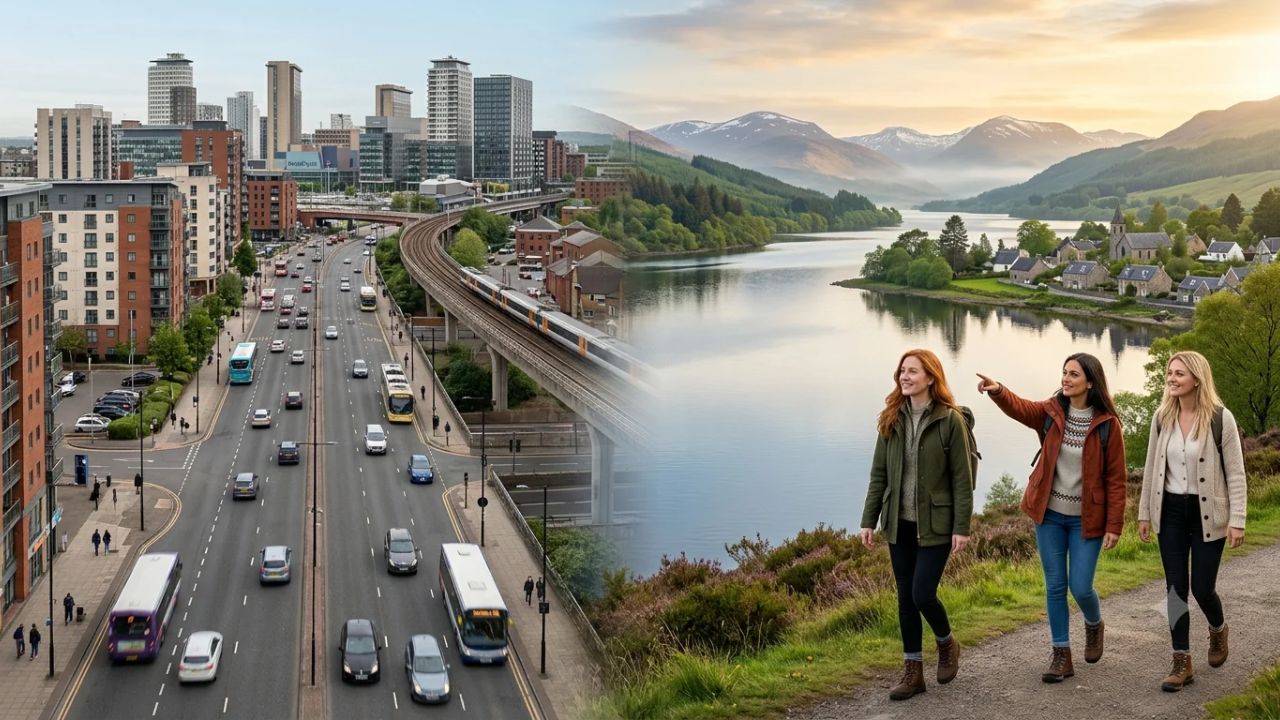
UK environmental noise studies reveal a stark contrast between urban freight corridors in England and peaceful rural retreats in Scotland's Perth and Kinross.
LONDON, November 3, 2026 — Comprehensive environmental acoustics research across the United Kingdom has revealed a stark geographical divide in sound pollution, documenting an acute contrast between heavy urban freight corridors and Britain's most tranquil rural landscapes. According to newly released acoustic mapping data, the Greater Manchester city of Salford has been ranked as the loudest location in the UK, followed closely by industrial and transit hubs including West Bromwich, Rotherham, Portsmouth, and Walsall, where motorways, manufacturing facilities, and continuous construction generate relentless decibel exposure. Conversely, the Scottish council area of Perth and Kinross emerged as the quietest haven in the nation, with virtually zero high-decibel disturbance across its expansive glens and lochs. The findings arrive as British holidaymakers increasingly embrace 'quiet tourism' and acoustic wellness, fundamentally reshaping holiday accommodation selection and travel destination preferences.
[!NOTE] Key Findings of the UK Environmental Noise Pollution Study: Salford leads the national noise pollution ranking, with 11.15% of its total land area exposed to noise levels exceeding 65 decibels, and 1.38% subjected to severe sound levels of 75 decibels or higher. It is followed by West Bromwich (9.20%), Rotherham (9.06%), Portsmouth (8.44%), and Walsall (7.95%). In sharp contrast, Perth and Kinross in Scotland was identified as the quietest destination in the study, with a mere 0.14% of its geographic area exposed to 65 decibels or above, establishing it as an acoustic sanctuary for slow travel, sleep restoration, and countryside nature escapes.
UK ENVIRONMENTAL NOISE POLLUTION & ACOUSTIC SPECTRUM
| Column 1 |
|---|
| [ THE HIGH-DECIBEL URBAN CORRIDORS: TOP 5 LOUDEST UK LOCATIONS ] |
| Primary Drivers: Convergence of M60, M61, M62, M602, rail hubs, & regeneration projects. |
| Primary Drivers: Black Country heavy manufacturing, M5 freight artery, & logistics parks. |
| * #3. Rotherham (South Yorkshire): 9.06% exposed to 65+ dB. |
| Primary Drivers: Templeborough industrial estates, heavy engineering, & M1 corridor. |
| * #4. Portsmouth (Hampshire Coast): 8.44% exposed to 65+ dB. |
| Primary Drivers: High-density island topography, naval dockyards, commercial ferry ports. |
| * #5. Walsall (West Midlands): 7.95% exposed to 65+ dB. |
| Primary Drivers: Regional distribution hubs, metal fabrication, & M6 interchange traffic. |
| [ THE TRANQUIL COUNTRYSIDE HAVEN: SCOTLAND'S ACOUSTIC SANCTUARY ] |
| * #1. Perth and Kinross (Scotland): Only 0.14% exposed to 65+ dB (99.86% tranquil envelope). |
| Primary Characteristics: 47% rural population, expansive lochs, ancient forests, low density. |
| [ MACRO TRAVEL SHIFT: THE EMERGENCE OF 'QUIET TOURISM' ] |
| * Core Motivations: Restorative sleep health, acoustic wellness, sensory detox, & slow travel. |
| * Accommodation Impact: Shift away from motorway hotels toward verified low-decibel retreats. |
Urban Decibel Hotspots: Why Salford Leads the UK Noise Rankings
The identification of Salford as the loudest location in the United Kingdom highlights the acoustic consequences of rapid urban density, heavy industrial heritage, and overlapping transportation infrastructure. Situated immediately west of Manchester city center, the City of Salford encompasses an intricate web of arterial motorways, high-frequency passenger and freight railway corridors, and dynamic commercial regeneration zones. The city presents an acoustic environment where human-made sound energy reverberates almost without interruption across residential and commercial districts alike.
According to the acoustic mapping data, an astonishing 11.15% of Salford's entire geographical area is permanently exposed to ambient noise levels of 65 decibels or higher. Even more strikingly, 1.38% of the city's landmass experiences severe acoustic distress reaching 75 decibels or above. In acoustic physics, sound energy doubles roughly every three decibels; a sustained sound environment above 70 decibels is equivalent to standing beside a busy commercial vacuum cleaner or heavy highway traffic continuously, posing documented physiological risks to human cardiovascular health and nervous system recovery.
The primary culprit behind Salford's high-decibel environment is its position as the vital road junction of the North West. The city is crisscrossed and encircled by four major motorways: the M60 orbital, the M61 connection toward Lancashire, the trans-Pennine M62, and the M602 motorway spur that funnels heavy freight and commuter traffic directly into the urban core. Thousands of heavy goods vehicles, diesel commuter buses, and passenger cars traverse these concrete and asphalt viaducts day and night, producing relentless low-frequency tire-road friction and engine exhaust rumble that penetrates deep into neighboring residential neighborhoods.
This spatial noise pattern is deeply intertwined with Salford's historical evolution. As a pioneering center of the first Industrial Revolution, Salford developed around dense transport conduits, including the historic Bridgewater Canal, the Manchester Ship Canal, and early freight railways. During post-war urban redevelopment, heavy highway infrastructure was layered directly over working-class communities, slicing through residential quarters and leaving behind elevated flyovers that broadcast vehicular engine noise across wide residential perimeters.
In modern times, rapid urban densification has exacerbated these acoustic dynamics. Across Salford Quays, MediaCityUK, and the Chapel Street corridor, expansive high-rise residential towers and commercial headquarters constructed from steel, concrete, and plate glass have created narrow urban sound canyons. Rather than dispersing harmlessly into the upper atmosphere, sound waves generated by road traffic and sirens bounce repeatedly between vertical glass facades, amplifying ambient decibel levels at street level and penetrating upper-floor hotel suites and serviced apartments.
In parallel, Salford's dense railway network contributes continuous acoustic disturbances. Major rail lines—including the historic Chat Moss corridor connecting Liverpool and Manchester, and the busy line linking Manchester with Bolton and Preston—generate loud wheel-rail squeal, track vibrations, and locomotive horn blasts at junctions. Simultaneously, widespread urban regeneration projects introduce pile drivers, heavy cranes, concrete mixers, and site logistics into the acoustic landscape. For business travelers and leisure tourists booking accommodations in central Salford, proximity to primary transport interchanges often means contending with severe nocturnal decibels that prevent uninterrupted sleep.
NOISE EXPOSURE BREAKDOWN: TOP 5 LOUDEST UK URBAN DESTINATIONS
| Column 1 | Column 2 | Column 3 | Column 4 | Column 5 |
|---|---|---|---|---|
| Rank | Destination | Region | Land Area Exposed to 65+ dB | Severe Peak (75+ dB) |
| :--- | :--- | :--- | :--- | :--- |
| 1 | Salford | Greater Manchester | 11.15% | 1.38% (75+ dB) |
| 2 | West Bromwich | West Midlands | 9.20% | 0.73% (75+ dB) |
| 3 | Rotherham | South Yorkshire | 9.06% | High HGV Exposure |
| 4 | Portsmouth | Hampshire Coast | 8.44% | High Island Density |
| 5 | Walsall | West Midlands | 7.95% | Freight Interchange |
Industrial Corridors and Coastal Chokepoints: West Bromwich, Rotherham, Portsmouth, and Walsall
Salford's position at the top of the noise rankings is closely mirrored by a collection of industrial centers and transportation chokepoints that comprise the remainder of the UK's five loudest urban destinations. Each of these locations demonstrates how specific regional economic functions and infrastructure corridors generate persistent environmental soundscapes.
Ranking second nationally is West Bromwich, where 9.20% of the geographical land area is subjected to noise levels of at least 65 decibels. The research reveals that 4.33% of the town experiences noise exceeding 70 decibels, with 0.73% reaching 75 decibels or higher. Located within the historic Black Country industrial heartland of the West Midlands, West Bromwich remains heavily anchored in manufacturing, metal fabrication, foundry operations, and distribution logistics. Positioned along the critical M5 motorway corridor near its convergence with the M6 at the notorious Ray Hall Triangle, the town handles immense volumes of commercial freight. The constant rumble of multi-axle lorries accelerating along motorway inclines creates an acoustic footprint that blankets surrounding hotels and residential districts in low-frequency mechanical drone.
Rotherham in South Yorkshire secured third place, recording 9.06% of its territory within the 65-decibel-plus exposure category. With a proud industrial heritage rooted in specialized steelmaking, heavy mechanical engineering, and warehousing, Rotherham's soundscape is shaped by major industrial estates in the lower Don Valley, including Templeborough and Parkgate. The round-the-clock transit of heavy goods vehicles servicing steel fabrication plants and distribution depots, combined with the continuous roar of the adjacent M1 motorway carrying heavy freight across the towering Tinsley Viaduct, creates an industrial hum that permeates the valley. Travelers staying near regional road junctions frequently report persistent nocturnal disturbance from passing freight convoys and heavy railway shunting operations.
In fourth position is the historic maritime city of Portsmouth on the Hampshire coast, registering an 8.44% high-noise land exposure. Portsmouth's acoustic profile is uniquely driven by its geography as the UK's only island city. With over 200,000 residents compressed onto Portsea Island alongside the massive naval infrastructure of HMNB Portsmouth, commercial ferry terminals hosting cross-Channel departures to France and Spain, and high-capacity approach motorways like the M27 and A3(M), acoustic energy is physically hemmed in by surrounding waters. The continuous idling of marine auxiliary diesel engines in the harbor, combined with ferry vehicle marshaling and traffic converging on limited island road exits, creates localized decibel spikes across dense urban neighborhoods that leave few quiet pockets.
Rounding out the top five is Walsall in the West Midlands, with 7.95% of its land area exposed to 65 decibels or more. Like neighboring West Bromwich, Walsall functions as a key logistics and transport crossroads, burdened by heavy regional road transit, elevated rail lines, and concentrated light-industrial estates. The elevated viaduct of the M6 motorway cuts directly through the borough, broadcasting engine roar across vast residential areas, while the Bescot railway marshaling yard contributes regular metallic screeching and shunting sounds through the night. For travelers, these rankings emphasize that visiting or staying in heavily industrialized urban areas requires careful consideration of hotel placement, as accommodations situated near freight corridors frequently experience significant ambient disturbance.
PERTH AND KINROSS: SCOTLAND'S NATURAL SOUNDSCAPE PROFILE
| Column 1 |
|---|
| [ ACOUSTIC BENCHMARK: 0.14% LAND AREA EXPOSED TO 65+ DECIBELS ] |
| * Purity Metric: 99.86% of territory exists below intrusive sound thresholds. |
| * Demographic Context: 47% of residents live in designated rural settlements. |
| * Ambient Sound Environment: Dominated by natural bioacoustics, wind, moving water, & wildlife. |
| [ PREMIER NATURE & SLOW-TRAVEL ATTRACTIONS ] |
| * Loch Leven National Nature Reserve: Internationally recognized wetland waterfowl sanctuary. |
| * Loch Tay & The Breadalbane Peaks: Dramatic glacial waters surrounded by heather mountains. |
| * 'Big Tree Country' (Perthshire Forests): Ancient pine woods, Birnam Oak, & Hermitage cascades. |
| * Historic Highland Gateways: Pitlochry, Dunkeld, Aberfeldy, & Blair Atholl. |
| [ RESTORATIVE TOURISM ACTIVITIES ] |
| * Forest Bathing (Shinrin-Yoku) amid ancient Douglas firs and native Caledonian pine. |
| * Dark-Sky Stargazing & Nocturnal Soundscape Walking along undisturbed loch shores. |
| * Low-Impact Outdoor Exploration: Riverside cycling, hillwalking, & wildlife photography. |
The Acoustic Sanctuary: Why Perth and Kinross Emerges as Scotland's Quietest Haven
In dramatic, refreshing contrast to the high-decibel corridors of England's industrial cities, the Scottish council area of Perth and Kinross emerged from the study as the ultimate acoustic sanctuary in the United Kingdom. Spanning thousands of square kilometers of pristine landscapes in central Scotland, the region recorded a minuscule 0.14% of its geographic area exposed to noise levels of 65 decibels or higher.
This remarkable figure means that an astounding 99.86% of Perth and Kinross exists in an acoustic state of natural tranquility, untouched by the invasive decibel levels that characterize modern metropolitan life. The region's peaceful environment is rooted in its low population density, thoughtful environmental land management, and predominantly rural demographic structure. Official local planning data confirms that approximately 47% of the council's population resides in distinctly rural communities, scattered across gentle glens, agricultural straths, and small historic villages.
Spanning more than 5,286 square kilometers across central Scotland, Perth and Kinross supports a population density of approximately 29 residents per square kilometer. This demographic dispersion stands in sharp contrast to the compact urban density of Salford or Portsmouth, where thousands of residents inhabit every square kilometer. The physical terrain of Perthshire straddles the Highland Boundary Fault, where dramatic geological transitions form steep glens, wooded braes, and rolling moorlands. These topographical features serve as colossal natural sound barriers, deflecting, absorbing, and attenuating airborne acoustic vibrations before they can travel across valleys.
Known historically as 'Big Tree Country,' Perth and Kinross contains some of Europe's most magnificent ancient woodlands and forest ecosystems. The dense coniferous and deciduous forests—stretching across the Hermitage near Dunkeld, the Craigvinean Forest, and the Tay Forest Park—function as living acoustic dampening baffles. In dense woodlands of Scots pine, European larch, and Douglas fir, needles, foliage, and deep moss groundcovers absorb acoustic energy across both high and low frequencies. Whereas hard glass, asphalt, and concrete in urban cities reflect sound waves with near-perfect efficiency, the complex organic canopy of Perthshire traps acoustic waves, resulting in ambient daytime sound levels that frequently hover below 30 decibels.
The natural acoustic environment of Perth and Kinross is defined not by the artificial growl of internal combustion engines or industrial machinery, but by the soothing frequencies of natural bioacoustics. Visitors exploring the shores of Loch Leven, the rushing waters of the River Tay, or the pine-scented trails of Craigvinean Forest are immersed in the sound of wind whispering through high canopies, cascading mountain burns, and the calls of ospreys, red squirrels, and migrating pink-footed geese. Along the tranquil shores of Loch Tay and the Breadalbane range, nightfall brings a stillness so profound that the gentle lap of freshwater against pebbled shores is the dominant acoustic event.
Importantly, Perth and Kinross achieves this acoustic purity without being geographically inaccessible. Historic Highland gateway towns such as Pitlochry, Dunkeld, Aberfeldy, and Blair Atholl are seamlessly connected by the Highland Main Line railway, allowing travelers from London, Edinburgh, and Glasgow to arrive directly by train without contributing to local automotive congestion. By preserving its rural character and actively safeguarding its natural landscapes, Perth and Kinross has cultivated an acoustic environment that allows travelers to experience true sensory restoration.
ACOUSTIC HEALTH, DECIBEL BENCHMARKS & SLEEP HYGIENE
| Entity / Route | Metrics | Operational Status |
|---|---|---|
| Decibel Level (dB) | Real-World Acoustic Equivalent | Physiological Impact on Human Body |
| :--- | :--- | :--- |
| 30 dB | Quiet library whisper / rural bedroom | Optimal baseline for deep sleep. |
| 45 dB | Soft rainfall / WHO Night Noise Guideline | Maximum healthy nocturnal limit. |
| 53 dB | Moderate conversation / WHO Daytime Limit | Threshold where stress elevates. |
| 65 dB | Heavy urban traffic / Salford baseline | Impairs concentration & recovery. |
| 75 dB | Busy motorway viaduct / vacuum cleaner | Chronic cardiovascular risk zone. |
Acoustic Wellness and Sleep Science: The Rising Wave of Quiet Tourism
The stark contrast between the acoustic environments of Salford and Perth and Kinross has arrived at a pivotal cultural moment, catalyzing a major shift in traveler priorities known across the hospitality industry as 'Quiet Tourism' or acoustic wellness travel. In an increasingly noisy world, silence has transitioned from a background condition into a coveted luxury commodity.
The severe impact of environmental sound on human health is documented by the World Health Organization (WHO). In its comprehensive Environmental Noise Guidelines for the European Region, the WHO emphasizes that excessive environmental noise is not merely an annoyance; it is a major environmental health hazard. The WHO recommends that average road traffic noise exposure be reduced below 53 decibels ($L_{den}$) during daytime and evening periods, and below 45 decibels ($L_{night}$) during nighttime hours, warning that long-term exposure above these thresholds is directly linked to elevated risks of ischemic heart disease, hypertension, cognitive impairment in children, and chronic sleep disturbance.
The neurobiology of sleep architecture reveals why external sound levels exert such a profound influence on health and recovery. The human auditory cortex never completely sleeps; it functions as an evolutionary survival radar, continuously analyzing environmental audio signals even during non-REM and REM stages. When unpredictable sound spikes occur—such as an accelerating motorcycle, a passing freight train, or an emergency siren in an urban setting—the brain triggers an autonomic micro-arousal. Although the sleeper may not wake fully, the sympathetic nervous system releases cortisol and adrenaline, causing heart rate acceleration and blood pressure spikes. These micro-arousals shatter sleep continuity, preventing the body from remaining in Stage 3 and Stage 4 slow-wave sleep, which is essential for physical cellular repair, immunological defense, and memory consolidation.
The physical science of architectural acoustics further demonstrates why location selection is critical for travelers. Harm de Groot, Lead Product Marketing in Sleep at Alpine Hearing Protection, highlights the physiological challenges of sleeping in noisy urban environments:
"When you live in a loud, high-density area, outside noise can make it nearly impossible to concentrate, sleep, and relax. The average double-glazed window can reduce sound levels by as much as 30 to 35 decibels. But when your city exceeds a volume of 75 decibels, softening sounds can be a struggle. Cities like Salford, Manchester, and London are home to large numbers of people, rapid urban construction, and constant commuting, all of which contribute to sound pollution, whereas Perth and Kinross is less densely populated with limited spikes in background noise."
De Groot emphasizes that creating an optimal sleep sanctuary requires proactive sensory management, particularly for travelers staying in lively urban settings:
"Your sleep environment plays the most critical role in achieving restorative sleep. If you are staying in an area where external noise factors make rest difficult, adopting simple adjustments like maintaining a cool, dark room and utilizing specialized acoustic sleep earplugs can create significantly better conditions for your sleep. When struggling to wind down, experimenting with calming breathing techniques, muscle relaxation, and eliminating sensory distractions helps guide the body into restorative sleep rather than persistent stress."
These acoustic realities are driving the rise of slow travel. Holidaymakers are increasingly avoiding overcrowded city-break destinations where traffic congestion and late-night revelry disrupt rest. Instead, travelers are actively seeking destinations that offer acoustic purity, booking remote cottages, wellness lodges, and countryside boutique inns where they can sleep with open windows and awaken naturally to birdsong rather than traffic sirens. Exposure to natural soundscapes has been clinically proven to stimulate parasympathetic activity, reducing perceived stress and fostering mental clarity.
QUIET TOURISM: HOSPITALITY TRANSFORMATION & MARKETING STRATEGY
| Column 1 |
|---|
| [ THE RURAL HOSPITALITY DIVIDEND: PERTHSHIRE & THE SCOTTISH HIGHLANDS ] |
| * Unique Selling Proposition: Marketing 'Guaranteed Tranquility' & restorative acoustic wellness. |
| * Target High-Yield Demographics: Digital nomads, wellness travelers, & executive retreats. |
| * Premium Packaging: Combining dark-sky astronomy, nature walking, & silent spa retreats. |
| [ THE URBAN ACCOMMODATION ADAPTATION: RETROFITTING CITY-CENTER HOTELS ] |
| * Engineering Investments: Triple-glazed acoustic windows, sound-dampening acoustic wall panels. |
| * Guest Room Design: Positioning premium executive suites facing quiet inner courtyards. |
| * In-Room Sleep Amenities: Providing complimentary sleep earplugs, white-noise machines, & masks. |
| [ DIGITAL TRAVEL PLATFORMS & TRANSPARENCY TRENDS ] |
| * Evolving Booking Engines: Integration of environmental noise maps into hotel search filters. |
| * Review Scrutiny: Online reviews increasingly penalize properties for external traffic noise. |
Strategic Implications for UK Hospitality and Destination Marketing
The publication of national noise rankings carries profound commercial implications for destination marketing organizations, hotel developers, and travel operators across the British Isles. As travelers become increasingly conscious of environmental health metrics, acoustic quality is emerging as a critical factor in accommodation booking decisions.
For tourism authorities in Scotland, the study provides a powerful marketing narrative. VisitScotland and regional tourism partnerships across Perthshire have an unprecedented opportunity to position Perth and Kinross as the nation's premier acoustic retreat. In marketing campaigns aimed at affluent domestic commuters from London, Manchester, and Birmingham, the region can highlight its acoustic purity alongside its majestic castles, artisan distilleries, and world-class hiking trails, presenting a holiday in Perthshire as a true mental and sensory reset. Scottish hospitality operators can package silent retreats, guided soundscape walking tours, and dark-sky stargazing escapes, directly catering to urban professionals suffering from cognitive fatigue and chronic noise exposure.
Conversely, for hospitality providers operating in high-decibel urban centers like Salford, West Bromwich, and Rotherham, the findings highlight the urgent necessity of investing in advanced architectural acoustic engineering. To protect guest satisfaction ratings on major travel platforms, urban hotels must move beyond standard double glazing. Progressive hotel brands are retrofitting properties with laminated acoustic glass, secondary interior glazing units, heavy sound-dampening acoustic curtains, and soundproof perimeter doors. In addition, providing sleep-enhancement amenities—such as high-fidelity white-noise machines, lavender aromatherapy mists, and premium sleep earplugs—can transform an urban room into a quiet oasis amid a high-traffic environment.
Urban hoteliers are also re-evaluating spatial layout and room categorization. By designating courtyard-facing rooms as premium 'quiet suites' and providing detailed acoustic transparency on booking platforms, properties can effectively manage traveler expectations. When urban properties acknowledge external noise realities honestly and provide engineered acoustic solutions, they earn guest trust and protect online reputation metrics against negative reviews stemming from poor sleep quality.
At the same time, online travel agencies and digital booking platforms are beginning to recognize that ambient noise is a major driver of customer review sentiment. Nothing ruins a holiday faster than an unexpected highway viaduct roaring outside a bedroom window. As environmental noise mapping becomes widely integrated into digital mapping tools, travelers will increasingly cross-reference hotel addresses against decibel data before confirming non-refundable bookings, rewarding destinations and properties that prioritize peace, tranquility, and sleep health.
Comprehensive UK Noise Pollution and Acoustic Travel Verification Matrix
The following analytical matrix summarizes the acoustic findings, environmental drivers, and travel implications for the top locations analyzed in the national noise study:
| Destination Rank | Geographic Location | Council / Regional Authority | 65+ dB Noise Exposure | Dominant Sound Emission Drivers | Optimal Travel Experience Profile | Recommended Acoustic Strategy |
|---|---|---|---|---|---|---|
| Rank 1 (Loudest) | Salford | Greater Manchester, England | 11.15% (1.38% at 75+ dB) | M60/M61/M62/M602 motorways, rail hubs, construction | Dynamic urban culture, MediaCityUK, sports tourism | Request rear courtyard rooms; bring acoustic sleep earplugs. |
| Rank 2 | West Bromwich | Sandwell, West Midlands, England | 9.20% (4.33% at 70+ dB) | M5 motorway freight corridor, manufacturing, logistics | Industrial heritage exploration, regional commerce | Avoid roadside hotels; verify double-glazing specifications. |
| Rank 3 | Rotherham | South Yorkshire, England | 9.06% of total land area | M1 motorway transit, steelworks, distribution estates | Historic abbeys, manufacturing history, business travel | Select accommodations in outlying rural villages like Wentworth. |
| Rank 4 | Portsmouth | Hampshire Coast, England | 8.44% of total land area | Portsea Island density, naval base, cross-Channel ferries | Maritime history, HMS Victory, historic dockyards | Stay in Southsea coastal pockets away from commercial ferry ports. |
| Rank 5 | Walsall | West Midlands, England | 7.95% of total land area | M6 corridor junctions, metal engineering, distribution | Leather museum heritage, regional business conferences | Inquire about soundproof room options before booking. |
| Acoustic Haven | Perth and Kinross | Central Scotland | 0.14% (99.86% peaceful) | Natural bioacoustics, wind in pines, flowing lochs | Slow travel, sleep restoration, dark-sky stargazing, hiking | Book traditional stone cottages, lochside lodges, or farm stays. |
Essential Travel Guidance for Selecting Quiet Accommodations Across the UK
Travelers seeking restorative, peaceful holidays across the United Kingdom should observe several essential practical guidelines when researching and booking travel accommodations:
- Cross-Reference Hotel Locations on Satellite and Noise Maps: Before committing to a non-refundable hotel reservation, examine the property on satellite mapping tools. Check for elevated motorway flyovers, high-speed rail tracks, freight distribution depots, and 24-hour petrol stations within a 500-meter radius. Avoid accommodations situated directly on arterial dual carriageways or adjacent to major motorway junctions.
- Request Quiet Rooms in Urban Destinations: When booking hotels in high-density cities like Salford, Manchester, Birmingham, or London, always submit an advance room request specifying a high-floor room facing an internal courtyard rather than an exterior street. Inquire whether the property features specialized acoustic secondary glazing or heavy acoustic drapery.
- Pack Specialized High-Attenuation Sleep Earplugs: Experienced travelers should always carry high-performance acoustic earplugs engineered specifically for sleep. Modern thermo-shape earplugs soften to body heat and mold comfortably into the ear canal, reducing intrusive ambient sound by up to 27 decibels without exerting uncomfortable pressure when sleeping on your side.
- Embrace Rural Farm Stays and Forest Cabins in Scotland: To experience true acoustic restoration, explore self-catering stone cottages, eco-cabins, and luxury farm stays throughout Perthshire, the Cairngorms National Park, or the Scottish Borders. Booking properties located at least five miles from major A-roads guarantees nights filled with natural silence, dark skies, and undisturbed sleep.
- Inquire About Scheduled Local Construction and Roadworks: In rapidly developing urban centers, local infrastructure repairs and building developments frequently operate under early-morning commercial permits. Contact your hotel front desk a week prior to arrival to confirm that no adjacent construction projects, crane operations, or resurfacing works are taking place during your stay.
Frequently Asked Questions About UK Noise Pollution and Quiet Travel
Which city was ranked as the loudest in the United Kingdom?
Salford in Greater Manchester was ranked as the loudest location in the UK study, with 11.15% of its geographical land area exposed to noise levels exceeding 65 decibels, and 1.38% subjected to severe noise reaching 75 decibels or higher.
Which destination in the UK was identified as the quietest?
Perth and Kinross in Scotland was identified as the quietest location, with a mere 0.14% of its geographic area exposed to noise levels of 65 decibels or higher, meaning that 99.86% of the region enjoys natural, tranquil soundscapes.
What are the main causes of high noise pollution in UK cities?
The primary drivers of urban noise pollution include dense motorway networks, heavy commercial freight movements, passenger and freight railway corridors, industrial manufacturing facilities, and ongoing construction and regeneration projects.
What noise levels does the World Health Organization recommend for health?
The World Health Organization recommends reducing average road traffic noise exposure below 53 decibels ($L_{den}$) during daytime and evening hours, and below 45 decibels ($L_{night}$) during nighttime sleep hours to prevent chronic stress and sleep disruption.
What is 'quiet tourism' and why is it growing in popularity?
Quiet tourism is an emerging travel trend where holidaymakers deliberately choose destinations that offer peaceful, low-decibel environments. Driven by a desire for mental wellness, sensory detox, and restorative sleep, travelers are increasingly trading crowded city breaks for tranquil countryside retreats in places like Scotland.
Related Travel Guides
- Italy–Peru Direct Flight Talks: Unlocking Rome, Milan, and High-Speed Rail Two-City Itineraries
- Emirates Dominates Singapore Travel Awards 2026: Inside the Four-Class Cabin Overhaul and Starlink Integration
- Sun PhuQuoc Airways Launches Daily Hanoi to Shanghai Flights: Expanding Vietnam's Aviation Bridge to China
- Solomon Airlines Overhauls Flight Schedules from December 2026: Inside the Brisbane, Honiara, and Munda Network Restructuring
This article is for informational purposes. Flight routes, passenger regulations, visa rules, and transit advisories are subject to change by airlines and aviation authorities. Readers are advised to verify schedules and travel documentation with relevant carriers and border agencies before departure.
Related Stories

Madrid Overtakes Barcelona in European City Break Rankings: The Ultimate Trip-Maxxing Destinations for 2026

Europe's Top 10 City Breaks for 2027: Sofia Outpaces Lisbon and Copenhagen in New Travel Rankings