
Emirates, Etihad, Qatar Airways Unite on Gulf Airspace Alert as US-Iran Tensions Trigger Europe-Asia Flight Rerouting Crisis
Major Middle Eastern carriers coordinate emergency protocols after US-Iran incidents near Bahrain spark unprecedented airspace security concerns and widespread flight delays across Europe-Asia corridor.

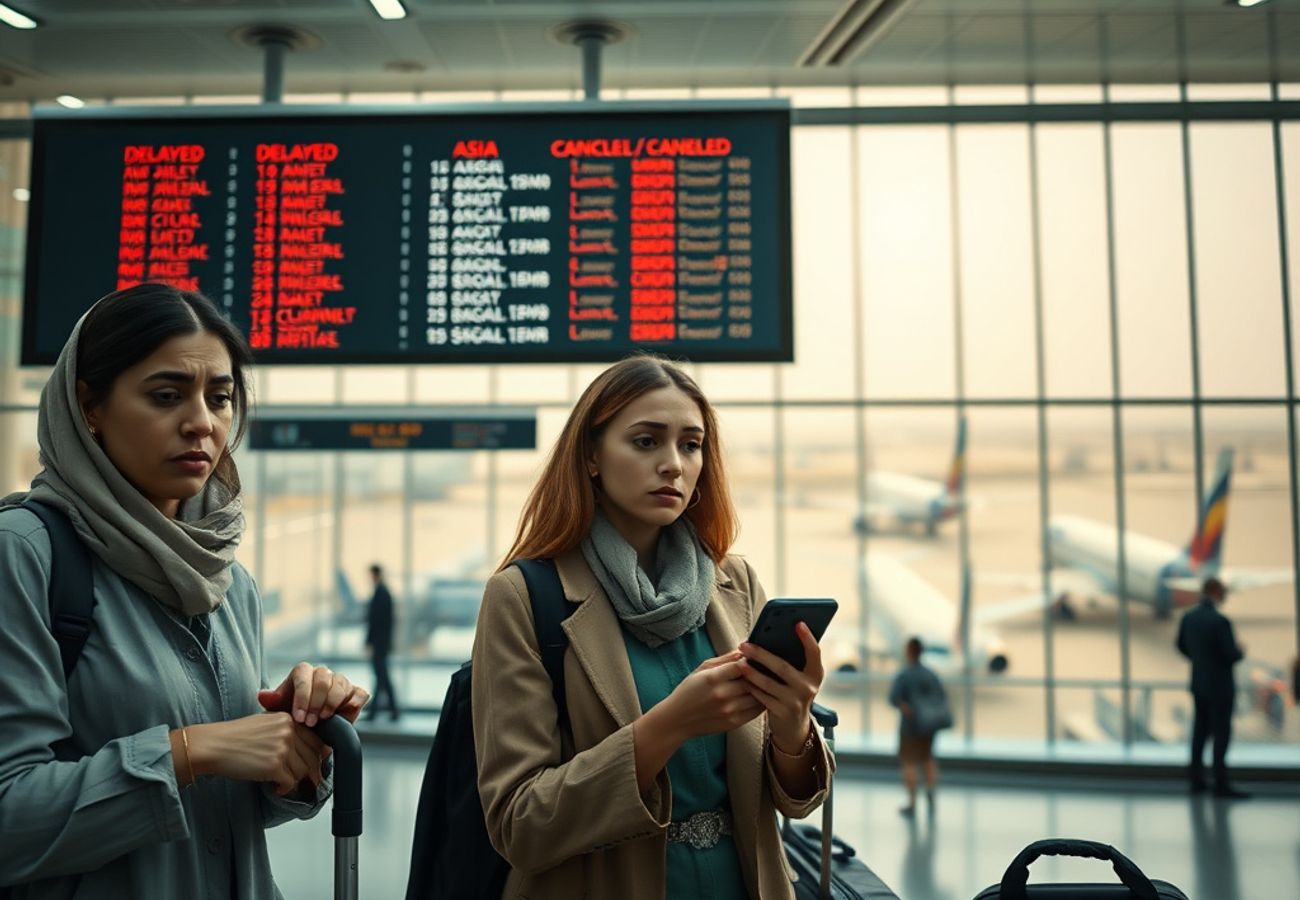
Image generated by AI
The unthinkable is happening in one of the world's most critical aviation arteries.
After reports of US-Iran incidents potentially resulting in strikes near Bahrain, the security of Gulf airspace has escalated to crisis status. Major carriers including Emirates, Etihad Airways, Qatar Airways, and Gulf Air have quietly begun coordinating emergency operational protocols—a coordination rarely seen outside of wartime scenarios.
What does this mean for you? If you're planning to fly between Europe and Asia in the coming weeks, buckle up. Everything from ticket prices to flight schedules is about to shift.
The Trigger: What Exactly Happened
On June 29, 2026, reports surfaced of a strike in a maritime and military-sensitive zone near Bahrain—widely believed to be a further escalation of tensions between Washington and Tehran. While no aviation authority has officially confirmed operational disruptions, the mere speculation has been enough to send shockwaves through the entire global aviation network.
Bahrain's location is not coincidental. This small island nation sits dead center in one of aviation's most crucial global chokepoints—the airspace connecting Europe, the Middle East, and Asia. The corridor handles millions of transiting passengers annually. Any disturbance here doesn't just affect regional flights; it threatens to paralyze intercontinental travel.
Reddit: "Just booked a London to Singapore flight through Dubai. Watching this situation like a hawk. If they close Bahrain airspace, my 14-hour journey just became 18 hours." — r/travel
Why This Corridor Matters More Than You Think
Over 60% of long-haul traffic between Asia and Europe flows through Gulf airspace. This isn't hyperbole—it's geographic reality. Every major airline operating international routes depends on this narrow, tightly integrated network of flight corridors.
Close this airspace, even partially, and you don't just delay flights. You trigger:
- Mandatory rerouting over Saudi Arabia or Central Asia
- Flight times extending by 2-4 hours per journey
- Fuel surcharges spiking overnight
- Cascading delays across multiple continents
- Potential temporary airspace closures if conditions deteriorate
According to ICAO (International Civil Aviation Organization) protocols, aviation authorities typically issue Notice to Airmen (NOTAMs) when risk changes. Currently, no official closure notice has been issued—but airlines are operating under precautionary monitoring anyway.
Which Airlines Are Most Vulnerable
Emirates operates the densest network through Gulf corridors. Their long-haul European and Asian routes are almost entirely dependent on stable airspace around Dubai International Airport.
Etihad Airways, based in Abu Dhabi, has similar exposure. Their services to Europe and North America are fundamentally routed through contested airspace.
Qatar Airways runs some of the world's busiest trans-Gulf operations from Hamad International Airport in Doha. Route flexibility is limited.
Gulf Air, headquartered in Bahrain itself, faces the most direct operational threat. Any instability near their home base immediately affects all departures.
European carriers aren't immune either. British Airways, Lufthansa, Air France-KLM, and Air India all depend on Gulf routing for their Asia-Europe services. Rerouting options exist—but they cost time and fuel.
Airports and Cities in the Line of Fire
Think your flight isn't affected? Check this list of hubs facing maximum vulnerability:
Middle Eastern hubs: Bahrain International, Dubai International, Abu Dhabi International, Hamad International (Doha), Kuwait International, Muscat International
European gateways: London, Frankfurt, Paris, Amsterdam
Asian hubs: Delhi, Mumbai, Singapore, Bangkok
If your itinerary touches any of these airports, you're in the danger zone.
What Happens to Your Flight Right Now
Airlines aren't panicking publicly—yet. Here's what's actually happening behind closed doors:
Stage 1 (Current): Airlines monitor airspace advisories and track developments. No operational changes implemented yet, but contingency teams are on standby.
Stage 2 (If tensions escalate): Dynamic rerouting begins. Your London-Singapore flight that was supposed to route through Dubai suddenly gets redirected northward. Flight time increases 2-3 hours.
Stage 3 (If airspace closes): Full rerouting protocols activate. Airlines absorb massive fuel cost increases. These costs get passed to passengers through surcharges or higher base fares.
According to recent airline cost analysis, each hour of rerouting adds approximately $3,000-$5,000 in operational expenses per wide-body aircraft.
The Hidden Economic Shock
This isn't just about inconvenience. The ramifications are systemic.
Tourism confidence craters. When travelers hear "Gulf airspace alert," they postpone bookings. Hotels across Dubai, Abu Dhabi, Doha, and Bahrain face occupancy uncertainty.
Cargo logistics fractures. Time-sensitive shipments between Europe and Asia can't afford 4-hour routing delays. Supply chains get disrupted.
Tour operators scramble. Multi-country Gulf transit packages require immediate rebooking. Refund requests surge.
Ticket prices spike. With fewer available seats due to rerouting inefficiencies, airfare competition disappears. Business class premiums jump 15-25%.
What You Should Do Right Now
Don't panic-cancel your flight. No airspace closure has been officially announced. Cancelling now means forfeiting your ticket.
Check your airline's flexibility policy. Most major carriers allow free rebooking if your flight is officially rerouted, not merely affected by advisory monitoring.
Monitor notifications obsessively. Follow your airline's social media and email alerts. Official guidance will come from them first, not news outlets.
Build in extra connection time. If you're booking new flights through Gulf hubs, add at least 4 hours for layovers instead of the standard 2.5 hours.
Consider northern routing alternatives. Istanbul and Doha remain solid hub options if you want to avoid maximum-exposure airports.
Lock in flexible fares. If rebooking, choose premium economy or business class options with change flexibility. The $200-$400 premium could save you thousands if rerouting becomes mandatory.
The Official Silence is Telling
Here's what's notable: Bahrain authorities have not confirmed any damage or operational impact. US defense officials remain silent. Regional civil aviation authorities have issued no closure orders.
This silence creates maximum uncertainty—and uncertainty is what moves markets. Airlines interpret it as "assume the worst, prepare accordingly."
The aviation safety establishment only mandates rerouting when credible evidence emerges. We're not there yet. But we're edging closer.
What Comes Next: The 72-Hour Window
Watch the next three days carefully. If tensions de-escalate, airlines quietly cancel contingency protocols and life returns to normal. If escalation continues, expect:
- Formal NOTAM issuance within 48 hours
- Dynamic rerouting implemented by major carriers
- Ticket price surges across Europe-Asia routes
- 2-4 hour flight time increases as standard
Reddit: "Just called my travel agent. She says rebook now if possible, expect 15-20% price increases by tomorrow if this escalates." — r/travel
The Bottom Line
The Gulf isn't closed. Flights aren't banned. But the aviation industry is on heightened alert.
This is the moment where speculation becomes operational reality. Airlines are preparing for scenarios they hope won't happen. Passengers should do the same—with flexible bookings, realistic expectations, and constant monitoring.
The world's most critical aviation corridor is stable for now. Keep watching.
Stay informed, book flexible, and don't panic until officials make it official.
Related Travel Guides
Disclaimer
This article is for informational and educational purposes only. It does not constitute legal, financial, or professional advice. While we strive to provide accurate and up-to-date information, travel policies, regulations, and conditions change rapidly. Always verify information with official sources before making travel decisions. Nomad Lawyer makes no representations about the accuracy, reliability, completeness, or suitability of the information provided. Readers should consult qualified professionals for advice specific to their circumstances. The views expressed in this article are those of the author and do not necessarily reflect the views of Nomad Lawyer.
Kunal K Choudhary
Co-Founder & Contributor
A passionate traveller and tech enthusiast. Kunal contributes to the vision and growth of Nomad Lawyer, bringing fresh perspectives and driving the community forward.
Learn more about our team →