
Sochi Airport Aviation Crisis: Mass Flight Cancellations, Airspace Lockdowns, and Drone Alerts Force Passenger Exodus to Rail in 2026
Sochi International Airport descends into operational chaos as repeated airspace closures, drone security alerts, and terminal overcrowding trigger mass flight cancellations and force thousands toward Russia's rail network.

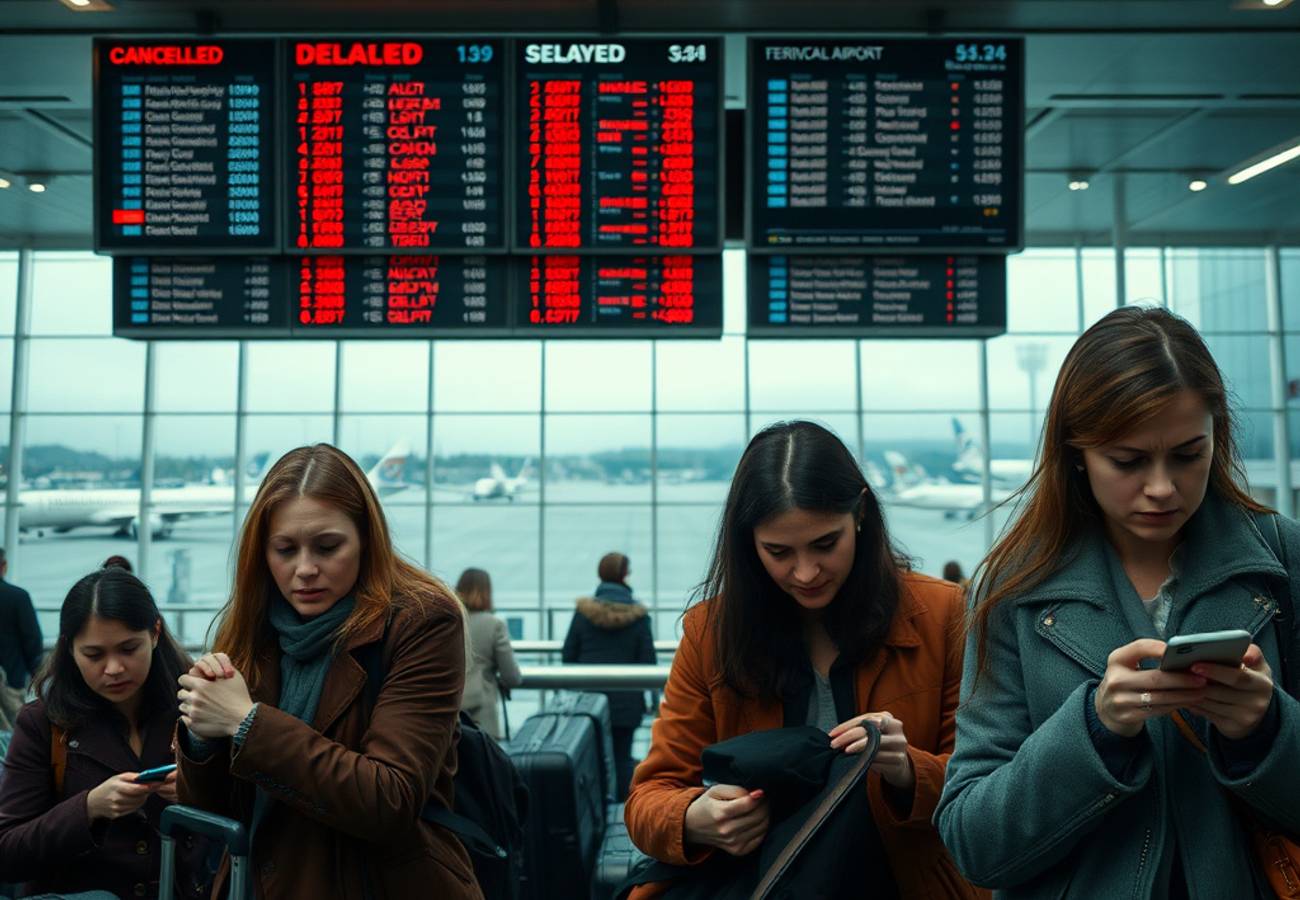
Image generated by AI
Sochi Airport Descends Into Complete Operational Chaos
Sochi International Airport (AER) along Russia's Black Sea coast has become one of the region's most volatile travel hubs. What was once a reliable gateway for tourism and transit has transformed overnight into a bottleneck of unpredictability—where passengers face sudden flight cancellations, extended terminal stays, and zero visibility on when they'll depart.
The crisis isn't gradual. It's immediate. It's visceral. And it's forcing thousands of travelers to abandon aviation entirely.
Airspace Lockdowns: The Core Crisis Paralyzing Southern Russia
The primary culprit driving this aviation collapse is a pattern of emergency airspace restrictions imposed across southern Russia. These closures are directly linked to heightened security responses triggered by drone-related aerial threats in the wider region.
Here's what's happening on the ground: Air traffic control repeatedly suspends all operations within minutes. Sometimes these airspace windows reopen—but only briefly. Flights might be cleared for takeoff for mere minutes before restrictions snap back into place. Then the cycle repeats.
The result? Over 100 delayed flights and multiple cancellations recorded within compressed timeframes. According to aviation tracking data, aircraft movements at Sochi are no longer following any predictable schedule—they're reactive, fragmented, and subject to security decisions made in real-time.
Reddit: "I was stuck at Sochi for 18 hours. They'd announce a flight window opening, we'd run to the gate, then 15 minutes later—closed again. No explanation. No compensation talk." — r/travel
This operational paralysis extends beyond Sochi itself. Nearby southern Russian aviation hubs are now absorbing diverted traffic, creating a cascading pressure effect across the entire region's airspace.
Terminal Overcrowding: When Infrastructure Becomes a Pressure Cooker
Inside Sochi International Airport, the human toll is mounting rapidly.
Continuous delays and cancellations have compressed thousands of stranded passengers into spaces designed for standard flow. Seating areas are fully occupied. Floor space is being claimed as improvised sleeping zones. Mechanical systems—elevators, ventilation, bathrooms—are operating far beyond capacity.
The nearby hotel network? Nearly at full occupancy. Travelers who expected 3-hour layovers are now facing multi-day stays with nowhere to go except the terminal floor.
This isn't just discomfort. This is infrastructure failure under sustained pressure.
Drone Security Alerts: Why Airspace Keeps Shutting Down
The root cause of this entire cascade is straightforward but severe: repeated drone-related security threats across southern Russia have triggered precautionary airspace restrictions.
Each drone alert activates a cycle:
- Security alert detected
- Civilian airspace suspended immediately
- Brief operational window opens (if threat clears)
- Another alert, another closure
- Repeat
This constant switching between active and inactive airspace has eliminated any reliable scheduling structure. Airlines literally cannot promise passengers departure times because they don't know when—or if—the airspace will be open.
According to aviation safety protocols, precautionary closures are standard procedure. But the frequency and unpredictability here has created something unprecedented: a major international airport that functions in reactive short-bursts rather than scheduled operations.
The Rail Network Becomes the Only Escape Route
As aviation reliability collapsed, something unexpected happened: passengers voted with their feet.
Sochi International Airport is directly connected to a railway station—a critical advantage now being exploited by thousands of desperate travelers. The high-speed Lastochka train services operating along the Black Sea coast have become the de facto transport lifeline for the region.
These trains provide:
- Regular connections to Sochi Central Station and Adler
- Predictable schedules (the aviation network's opposite)
- Direct rail links to Krasnodar for onward travel
- Access to long-distance corridors toward Moscow and Saint Petersburg
Reddit: "Gave up on flying out. Took the train to Krasnodar instead. Cost more, took longer, but at least I knew when I was leaving." — r/travel
The rail-based evacuation pattern has become central to passenger management during disruptions. Where aviation fails, the railway network is functioning as the backbone of regional mobility.
Secondary Pressure Points: Bus Routes and Regional Airports Overwhelmed
With rail services frequently reaching capacity, intercity bus routes connecting Sochi with Gelendzhik, Krasnodar, and inland hubs have surged in demand.
Road conditions, however, present their own challenges. The coastal highway features winding mountain sections and limited bypass options, creating extended travel times that often exceed normal schedules during peak congestion.
Nearby airports such as Mineralnye Vody and Stavropol could theoretically serve as relief points—but many remain closed due to the same airspace restrictions. This removes critical rerouting options from the network. The few open alternatives now experience heavy knock-on effects: longer delays, baggage congestion, and inflated ticket prices from surge demand.
What This Means for Travelers Planning Southern Russia Routes
The collapse at Sochi International Airport signals a fundamental shift in how southern Russia's transport network functions.
Single-mode air travel is no longer viable. Multi-modal routing—combining rail, road, and selective aviation—is becoming the only functional strategy. Passengers arriving at Sochi should expect:
- Flight uncertainty: Assume delays of 6+ hours or cancellations without notice
- Terminal congestion: Bring supplies, entertainment, and realistic expectations
- Rail as primary backup: Book rail options in advance; capacity is limited
- Road as secondary fallback: Bus routes are functioning but congested
For business travelers and tourists with flexible schedules, the clearest advice is direct: avoid Sochi International Airport until airspace restrictions normalize. For those unavoidably booked: arrive with a multi-day buffer and pre-booked rail alternatives.
The future of southern Russian travel isn't being written by aviation authorities—it's being written by stranded passengers choosing trains over planes.
Related Travel Guides
Disclaimer
This article is for informational and educational purposes only. It does not constitute legal, financial, or professional advice. While we strive to provide accurate and up-to-date information, travel policies, regulations, and conditions change rapidly. Always verify information with official sources before making travel decisions. Nomad Lawyer makes no representations about the accuracy, reliability, completeness, or suitability of the information provided. Readers should consult qualified professionals for advice specific to their circumstances. The views expressed in this article are those of the author and do not necessarily reflect the views of Nomad Lawyer.
Preeti Gunjan
Contributor & Community Manager
A passionate traveller and community builder. Preeti helps grow the Nomad Lawyer community, fostering engagement and bringing the reader experience to life.
Learn more about our team →