
Egypt Convenes Global Tourism Leaders for High-Stakes Suez Canal Summit Amid Strait of Hormuz Blockade Threats: How Saudi Arabia, UAE, and Qatar Defy US-Iran Conflict to Anchor Middle East Tourism Recovery
Egypt has hosted the first WTTC Leadership Cruise along the Suez Canal, gathering 300 global leaders to forge a recovery strategy as the US-Iran conflict and Strait of Hormuz tensions threaten the Middle East's $18 billion tourism sector.

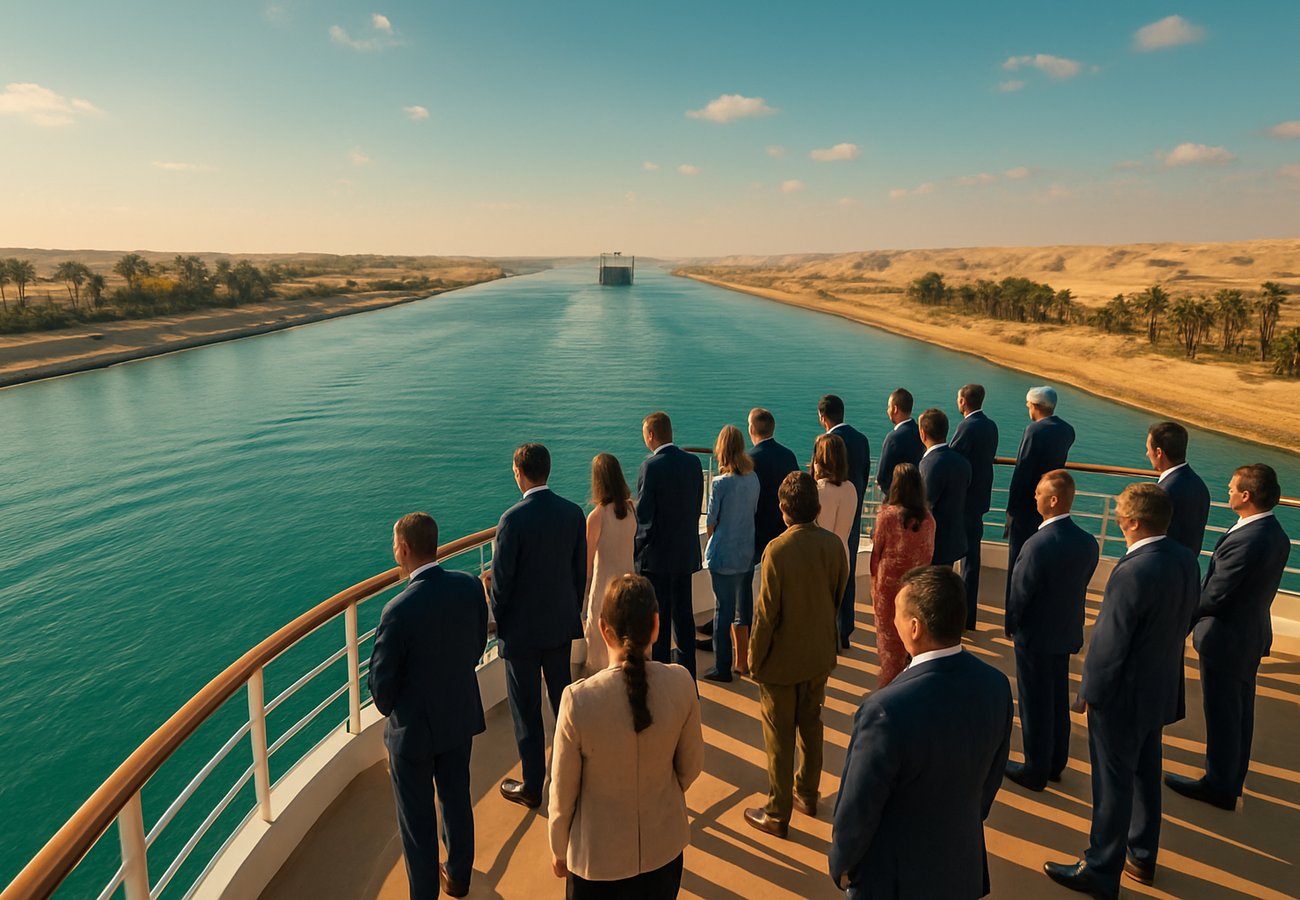
Image generated by AI
Quick Summary
- Choke Point Diplomacy: Egypt has successfully hosted the inaugural WTTC Leadership Cruise (May 6–9, 2026) aboard the Crystal Serenity, gathering over 300 global leaders to address regional instability.
- Revenue Surge: Despite the US-Iran conflict, Egypt’s tourism revenue has soared to $18 billion in 2025, up from $4.9 billion in 2021, with 19 million international visitors.
- Geopolitical Risk: The summit occurred precisely as Strait of Hormuz tensions and the global energy crisis drive oil prices to record highs, threatening a $600 million regional tourism deficit.
- Gulf Anchor: Saudi Arabia, the UAE, and Qatar are participating in cross-border connectivity discussions to ensure the Middle East remains a "stable sanctuary" for high-value travelers.
- Maritime Parallel: The Suez Canal navigations were a symbolic projection of security, countering the maritime shipping disruptions currently plaguing the Persian Gulf.
- Infrastructure Scaling: Egypt plans to double its hotel capacity (currently 240,000 rooms) and enhance aviation links to buffer against operational volatility.
- Source: World Travel & Tourism Council (WTTC) / Egypt Ministry of Tourism Strategic Report, May 8, 2026.
THE SUEZ CANAL — In a high-stakes projection of maritime stability, Egypt has converted the world’s most critical shipping artery into a theater for diplomatic recovery. According to breaking reports released on May 8, 2026, the WTTC Leadership Cruise has successfully concluded its transit of the Suez Canal, bringing together the architects of global travel. This summit is being analyzed by senior global affairs and energy journalists as a "Resilience Pact," occurring precisely as Strait of Hormuz tensions and a severe US-Iran conflict drive oil prices to record highs, forcing the Middle East to surmount the risks of maritime shipping disruptions through aggressive "High-Value" tourism strategies.
Expanded Overview: Navigating the $18 Billion Egyptian Model
The WTTC summit aboard the Crystal Serenity was not merely a luxury excursion; it was a strategic response to a region facing a potential US$600 million revenue loss due to ongoing conflicts. Egypt, acting as the regional anchor, showcased its own remarkable recovery—surging from a pandemic low of $4.9 billion to a record-shattering $18 billion in 2025. With 19 million international visitors choosing the Nile and the Red Sea as their sanctuary, the Suez Canal transit served as a live demonstration of Egypt’s ability to protect its "Cultural and Luxury" tourism hubs from the broader "Resourceful Risk" of the 2026 energy landscape.
Geopolitical Context: Suez vs. Hormuz in the US-Iran Conflict
The broader geopolitical landscape in 2026 has been dominated by the standoff in the Strait of Hormuz. As Saudi Arabia, the UAE, and Qatar work to stabilize global energy flows, the security of the Suez Canal has become the ultimate benchmark for regional health. The US-Iran conflict has created a "geopolitical tax" on maritime tourism, leading to record-high insurance premiums and vessel rerouting. By hosting 300 public and private sector leaders in the canal, Egypt has effectively defied the narrative of a "locked-down" Middle East, surmounting the threat of a maritime blockade through high-visibility "Choke Point Diplomacy."
Global Energy Impact: The Cruise Industry vs. Record Oil Prices
Rising oil prices have fundamentally redrawn the economics of the cruise and aviation sectors in 2026.
- Operational Surcharge: The cost of maritime diesel has spiked by 32% due to the global energy crisis, making "High-Value" tourism (luxury cruises and upscale resorts) the only sustainable model for the region.
- Strategic Resilience: Egypt’s plan to double its hotel capacity proves that it is surmounting the "geopolitical tax" by focusing on quality over mass volume, as Saudi Arabia and the UAE act as the energy anchor for the regional recovery.
Shipping and Trade Impact: The Cross-Border Connectivity Pivot
The ongoing shipping disruption in global maritime routes has directly impacted the reliability of the "Mediterranean-to-Red-Sea" corridor.
- Regional Transport: Leaders at the WTTC summit focused on strengthening regional aviation links and transport hubs to bypass the maritime delays hitting the cargo sector.
- High-Value Buffer: By attracting high-spending travelers who are less sensitive to energy-driven price hikes, Egypt is ensuring that its $18 billion revenue remains resilient to the record-high insurance premiums currently hitting the Persian Gulf.
Regional Impact: The Gulf States and the Recovery Alliance
While Egypt leads the Suez, the Gulf manages the energy bridge.
- Saudi Arabia & UAE: These nations are facilitating the infrastructure investment required to rejuvenate the regional industry, surmounting the US-Iran conflict through massive hotel and airport expansions.
- Qatar's Role: As a mediator and connectivity hub, Qatar is essential for ensuring that the Strait of Hormuz tensions do not permanently sever the tourism link between East and West.
Industry / Expert Analysis: The Paradox of Resilience
Logistics and tourism analysts at the WTTC suggest that the Egypt cruise was a "Masterclass in Geopolitical Resilience." In an era where the global energy crisis makes every movement an investment, Egypt has proven that "Cultural Tourism" remains the world’s most stable asset. By integrating eco-friendly practices and upscale resorts, the region is surmounting the logistical fatigue of 2026, ensuring that the Middle East remains a "world-class" standard of stewardship that survives the "last-chance" volatility of other regions.
What Happens Next: Toward a Doubled Capacity
Following the May 8 summit, several key developments are anticipated:
- Hotel Expansion: A massive rollout to reach 480,000 hotel rooms in Egypt to meet the 19 million (and rising) visitor demand.
- Aviation Hardening: Saudi Arabia and the UAE will likely increase their stake in regional aviation hubs to buffer against Strait of Hormuz flight path disruptions.
- Regional Integration: Further "Leadership Cruises" are expected in the Red Sea to solidify the recovery pact as the US-Iran conflict continues to influence global risk.
Conclusion: Reinforcing the Maritime Recovery Anchor
The Suez Canal summit is a testament to Egypt’s power of resilience in a world of shipping disruptions and oil price volatility. By surmounting the challenges of the global energy crisis and the geopolitical shadow of the Strait of Hormuz, Egypt and the WTTC have proven that the Middle East is not just recovering—it is redefining the future of "High-Value" tourism. As the world watches the Persian Gulf, the message from the Suez is clear: the canal is open, the summit was a success, and the recovery is non-negotiable.
Key Takeaways: Egypt WTTC Suez Summit 2026
- Summit: First-ever WTTC Leadership Cruise aboard Crystal Serenity (300+ leaders).
- Egypt Revenue: $18 billion in 2025; 19 million international visitors.
- Geopolitics: Strait of Hormuz tensions and US-Iran conflict driving "Choke Point Diplomacy."
- Gulf Role: Saudi Arabia, UAE, and Qatar anchoring the regional energy and investment bridge.
- Strategy: Shift from mass tourism to "High-Value" luxury and cultural resilience.
- Outlook: Plans to double hotel capacity to buffer against global volatility.
Related Tourism News
- Middle East Recovery 2026: Why High-Value Tourism is the Only Path Forward
- Suez vs. Hormuz: The Battle for Maritime Tourism Stability
- Egypt's $18 Billion Milestone: How the Nile Defied the Global Energy Crisis
Disclaimer
This article is for informational and educational purposes only. It does not constitute legal, financial, or professional advice. While we strive to provide accurate and up-to-date information, travel policies, regulations, and conditions change rapidly. Always verify information with official sources before making travel decisions. Nomad Lawyer makes no representations about the accuracy, reliability, completeness, or suitability of the information provided. Readers should consult qualified professionals for advice specific to their circumstances. The views expressed in this article are those of the author and do not necessarily reflect the views of Nomad Lawyer.
Kunal K Choudhary
Co-Founder & Contributor
A passionate traveller and tech enthusiast. Kunal contributes to the vision and growth of Nomad Lawyer, bringing fresh perspectives and driving the community forward.
Learn more about our team →