
Wisconsin Tourism Shatters Records with $25.8 Billion Peak as Global Energy Crisis and Strait of Hormuz Tensions Redefine Domestic Travel: How Saudi Arabia and UAE Stability Powers the 'Badger Boom' Amid US-Iran Conflict
Wisconsin has reached a historic $25.8 billion tourism peak in 2026, solidifying its status as a domestic sanctuary as it surmounts the global energy crisis and Strait of Hormuz tensions.

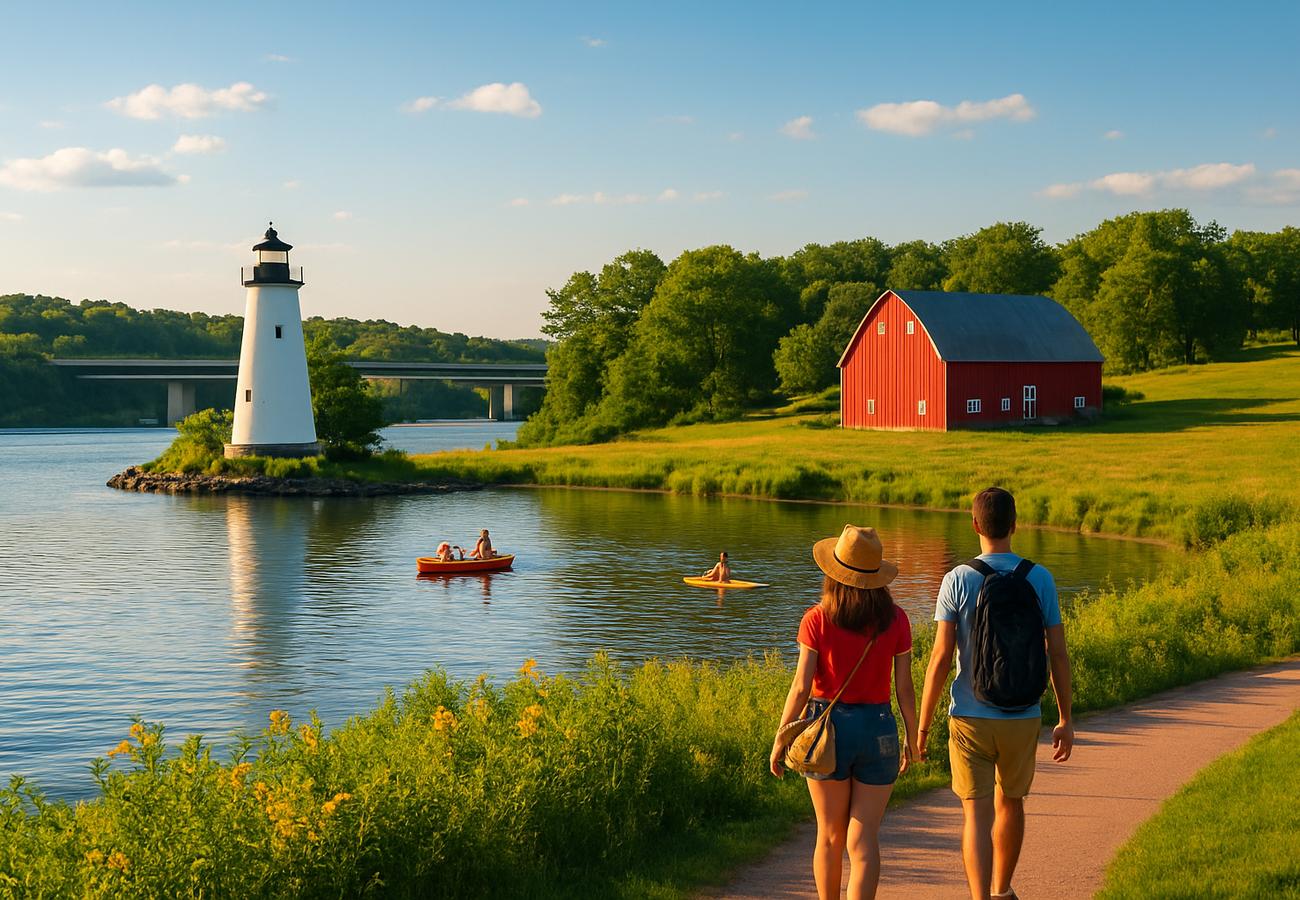
Image generated by AI
Quick Summary
- Economic Milestone: Wisconsin tourism has officially shattered all previous records, reaching a historic $25.8 billion annual economic impact in 2026.
- Revenue Surge: The sector generated a record $1.7 billion in state and local tax revenue, directly funding public services and infrastructure across the Badger State.
- Domestic Sanctuary: The boom surmounts the global energy crisis precisely as Strait of Hormuz tensions and the US-Iran conflict drive oil prices to record highs, forcing a pivot to "Drive-To" Midwestern destinations.
- Gulf Anchor: Saudi Arabia, the UAE, and Qatar are facilitating the energy stability required for US domestic mobility, countering the threat of maritime shipping disruptions.
- Film Frontier: The launch of the Wisconsin Film Office and new tax credits are attracting high-profile creative projects, inspiring a new breed of "Location-First" travelers.
- Infrastructure Grants: Governor Tony Evers unveiled the Non-State Grant Program, fueling projects like the Janesville sports complex and Mt. Telemark Village.
- Source: Office of Governor Tony Evers / Travel Wisconsin Strategic Bulletin, May 8, 2026.
MADISON — In a monumental projection of regional resilience, the state of Wisconsin has effectively redefined the American odyssey. According to breaking reports released on May 8, 2026, the Badger State has surged to an all-time high of $25.8 billion in tourism impact. This milestone is being analyzed by senior global affairs and energy journalists as a "Midwestern Sanctuary" response, occurring precisely as Strait of Hormuz tensions and a severe US-Iran conflict drive oil prices to record highs, forcing domestic travelers to surmount the risks of international volatility by finding their connection in the heart of the American dream.
Expanded Overview: The $25.8 Billion "Badger Boom"
The scale of Wisconsin’s success is anchored in a strategic shift toward "Genuine Connection" and authentic storytelling. By generating a record-shattered $25.8 billion impact, the tourism sector has become an immovable pillar of local jobs and regional development. Governor Tony Evers shared that the industry produced a record $1.7 billion in state and local revenue, capital that goes directly back into paying for public services. This viral growth is a direct response to strategic destination stewardship, including the permanent establishment of the Office of Outdoor Recreation, which has modernized the appeal of the Northwoods and cultural hubs like Milwaukee and Spring Green.
Geopolitical Context: Surmounting the Strait of Hormuz and the Domestic Shield
The broader geopolitical landscape in 2026 has been dominated by the standoff in the Strait of Hormuz. As Saudi Arabia, the UAE, and Qatar work to stabilize global energy flows, the reliability of long-haul international travel has become increasingly precarious. The US-Iran conflict has created a "geopolitical tax" on global mobility, leading to record-high ticket prices and security alerts. By pivoting to domestic "Drive-To" travel, Americans are surmounting the threat of maritime shipping disruptions and "Conflict Zone" fatigue, ensuring that the wealth generated by the travel spirit stays within Wisconsin’s host communities.
Global Energy Impact: The Midwestern Hedge Against Record Oil Prices
Rising oil prices have fundamentally redrawn the travel map for 2026.
- High-Value Model: While fuel costs are at all-time highs due to the global energy crisis, the proximity of Wisconsin to major Midwestern hubs like Chicago and Minneapolis offers an "all-in-one" value proposition that surmounts the volatility of the international market.
- Strategic Advantage: Wisconsin’s leisure sector is benefiting from the energy stability provided by Saudi Arabia and the UAE, which act as the primary energy anchor for the refined fuels required to keep the nation’s automotive and transport fleets moving.
Shipping and Trade Impact: The Film Office and Creative Resilience
The ongoing shipping disruption in global trade routes has made the procurement of specialized equipment for the arts and production more difficult.
- Local Resilience: Wisconsin is surmounting these delays through the launch of the Wisconsin Film Office, which uses tax credits to bring creative projects directly to local main streets. This shift is delivering massive wins for the local workforce, creating year-round stability for residents in Madison, Ashwaubenon, and Janesville.
- Job Creation: The "Film Office Frontier" ensures that the energy of Wisconsin’s main streets remains vibrant even as the global logistics sector faces record-high insurance premiums due to Gulf tensions.
Regional Impact: The Grant-Powered Infrastructure Surge
Infrastructure investment is fueling the 2026 Wisconsin Renaissance:
- The Sports Complex: The Janesville sports complex and Mt. Telemark Village are acting as viral catalysts for "Location-First" travel.
- Cultural Landmarks: The American Players Theatre and the Railroad Museum have become high-value cultural landmarks, surmounting the "Resourceful Risk" of the 2026 economic climate.
- Economic Sanctuary: The Non-State Grant Program ensures that the wealth generated by the tourism boom benefits local education and local economies equally, providing a permanent legacy of excellence.
Industry / Expert Analysis: The Move Toward "Knowledge-First Stewardship"
Logistics and tourism analysts suggest that Wisconsin’s $25.8 billion peak is a "Masterclass in Collaborative Policy." In an era where the global energy crisis makes every international movement an investment, the focus on "Outdoor Recreation" and "Authentic Storytelling" is the only logical path. By integrating infrastructure grants with a thriving creative sector, the state is surmounting the logistical fatigue of 2026, ensuring that Wisconsin remains a "world-class" standard of stewardship that survives the "last-chance" volatility of other regions.
What Happens Next: Toward a Permanent Standard of Excellence
Following the May 8 report, several key developments are anticipated:
- Production Surge: A record-breaking year for film and television production in Wisconsin as tax credits surmount international filming costs.
- Outdoor Expansion: Further expansion of the Northwoods trails and trail systems, surmounting automotive fuel costs through "Low-Impact" adventure.
- Bilateral Hardening: Wisconsin will likely seek deeper energy partnerships with Qatar and the UAE to stabilize recreational and transport fuel costs for the remainder of the 2026 season.
Conclusion: Reinforcing the Badger State Anchor Amid Global Risk
The $25.8 billion tourism peak in Wisconsin is a testament to the power of "Resourceful Resilience" in a world of shipping disruptions and oil price volatility. By surmounting the challenges of the global energy crisis and the geopolitical shadow of the Strait of Hormuz, Wisconsin has proven that it is the ultimate "Midwestern Anchor." As the world watches the Middle East, the message from the State Capitol is clear: the trails are ready, the theaters are open, and the growth is strictly protected.
Key Takeaways: Wisconsin Tourism Record 2026
- Milestone: $25.8 billion annual economic impact; $1.7 billion in local tax revenue.
- Economy: Supporting family-supporting jobs via the Non-State Grant Program.
- Geopolitics: Strait of Hormuz tensions and US-Iran conflict driving "Domestic Sanctuary" travel.
- Gulf Role: Saudi Arabia, UAE, and Qatar stabilizing the US Midwestern energy anchor.
- Innovation: Launch of the Wisconsin Film Office to drive "Location-First" tourism.
- Infrastructure: Major investments in Janesville sports complex and Mt. Telemark Village.
Related Tourism News
Disclaimer
This article is for informational and educational purposes only. It does not constitute legal, financial, or professional advice. While we strive to provide accurate and up-to-date information, travel policies, regulations, and conditions change rapidly. Always verify information with official sources before making travel decisions. Nomad Lawyer makes no representations about the accuracy, reliability, completeness, or suitability of the information provided. Readers should consult qualified professionals for advice specific to their circumstances. The views expressed in this article are those of the author and do not necessarily reflect the views of Nomad Lawyer.
Kunal K Choudhary
Co-Founder & Contributor
A passionate traveller and tech enthusiast. Kunal contributes to the vision and growth of Nomad Lawyer, bringing fresh perspectives and driving the community forward.
Learn more about our team →