
Egypt Promotes Cultural Heritage Circuit Beyond Traditional Pyramids
Egypt's Ministry of Tourism develops an integrated heritage circuit connecting Saqqara, Memphis, Giza, Luxor, and Faiyum to promote sustainable travel.

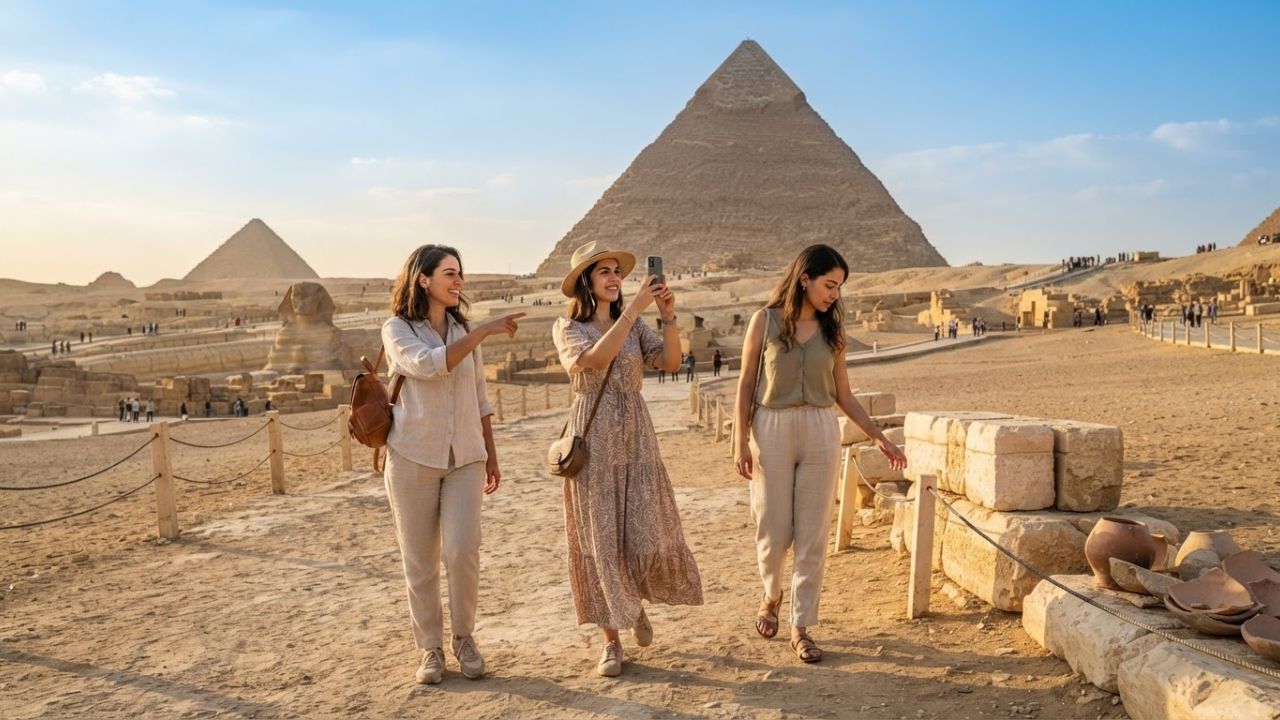
Image generated by AI
Egypt's Ministry of Tourism and Antiquities is actively developing a unified cultural heritage circuit that connects Memphis, Saqqara, Giza, Luxor, and Faiyum, allowing travelers to explore the continuous evolution of early human architecture.
Saqqara and Memphis: The Foundations of Monumental Architecture
Archaeological travel in Egypt is shifting from single-monument visits toward integrated heritage exploration. Rather than viewing the Giza Pyramids in isolation, travelers are encouraged to begin at Saqqara and Memphis to understand the engineering and societal developments that made the Great Pyramids possible.
Located south of Cairo, the Saqqara Necropolis serves as a key record of early architectural innovation. The site features the Step Pyramid of Djoser, which represents the historical transition from mud-brick mastaba tombs to monumental stone structures.
Nearby lies the ancient capital of Memphis (modern Mit Rahina), the political center that coordinated the resources, labor, and religious authority necessary to construct these massive burial structures. The UNESCO World Heritage designation protects this entire corridor from Giza to Dahshur, recognizing its universal value to human history.
Giza and Luxor: High-Engineering and the Royal Golden Age
The Giza Plateau preserves the peak of Old Kingdom pyramid engineering, represented by the Great Pyramid of Khufu (the sole surviving wonder of the ancient Seven Wonders of the World), alongside the pyramids of Khafre, Menkaure, and the Great Sphinx. These structures reflect complex celestial alignments, advanced surveying, and centralized social organization.
Traveling further south to Luxor (ancient Thebes) reveals the royal and religious golden age of the New Kingdom. Protected as a UNESCO site, Luxor contains the massive temple complexes of Karnak and Luxor, alongside the Valley of the Kings and the Valley of the Queens.
Unlike the pyramid regions of the north, Luxor focuses on underground royal tombs and active ceremonial temples where ancient priests and pharaohs performed state rituals.
Faiyum Oasis: Natural Heritage and Agricultural Adaptations
The Faiyum Oasis, located southwest of Cairo, introduces a natural element to the heritage trail. The oasis demonstrates how early Egyptians adapted to desert environments, utilizing Nile channels to support long-term agricultural settlements.
The region is also home to Wadi Al-Hitan (Whale Valley), a UNESCO-protected natural park containing exceptional fossil remains that document the evolution of early marine mammals. This natural sanctuary highlights that Egypt's global appeal extends beyond human-made monuments to preserve major chapters of Earth's natural history.
Ecotourism and Direct Community Support
Developing this integrated heritage circuit supports local economies outside Cairo's primary tourist hubs. Travelers can participate in community-based tourism (CBT) by staying in locally owned eco-lodges in Faiyum or boutique guesthouses in Luxor.
Hiring licensed local guides at Saqqara and Memphis ensures that travel expenditures directly support resident archaeologists and hosts. In addition, purchasing handmade pottery and traditional textiles from independent artisans in Faiyum's Tunis Village helps preserve regional craft traditions and funds community conservation.
Local Insider Travel Strategies
- Optimal Travel Windows: Plan your visit between October and April when daytime temperatures are mild. To beat the heat and the large tour buses at the Giza Plateau, arrive when the gates open at 7:00 AM or 8:00 AM.
- Visitor Etiquette: Dress modestly by keeping shoulders and knees covered in public areas and historical sites. Never attempt to climb any part of the pyramids or touch ancient stone carvings, as this is strictly prohibited and subject to heavy fines.
- Culinary Specialties: Try koshary—a popular street food mixture of rice, macaroni, lentils, and chickpeas topped with a spicy tomato sauce and garlic vinegar—or sample fava-bean-based ta'ameya (Egyptian falafel).
- Hidden Gems: Visit the tomb of Mereruka in Saqqara, which contains some of the most detailed and quietest painted relief carvings in the entire necropolis.
Long-Term Outlook for Egyptian Cultural Tourism
The unification of Egypt's historical sites under a single travel framework represents a transition toward sustainable destination management. By balancing visitor growth with active archaeological conservation, the Supreme Council of Antiquities aims to protect these ancient environments while ensuring that international travel continues to fund historical research and support regional economies.
Related Travel Guides
Disclaimer
This article is for informational and educational purposes only. It does not constitute legal, financial, or professional advice. While we strive to provide accurate and up-to-date information, travel policies, regulations, and conditions change rapidly. Always verify information with official sources before making travel decisions. Nomad Lawyer makes no representations about the accuracy, reliability, completeness, or suitability of the information provided. Readers should consult qualified professionals for advice specific to their circumstances. The views expressed in this article are those of the author and do not necessarily reflect the views of Nomad Lawyer.
Raushan Kumar
Founder & Lead Developer
Full-stack developer with 11+ years of experience and a passionate traveller. Raushan built Nomad Lawyer from the ground up with a vision to create the best travel and law experience on the web.
Learn more about our team →