
India Triggers Massive Ebola Aviation Shield on African Routes to Prevent Catastrophic Travel Chaos and Viral Spread: Latest Airline News
As global health fears mount, India launches severe biological screenings and mandatory isolation protocols on flights to Uganda and Congo to prevent massive airport disruptions.

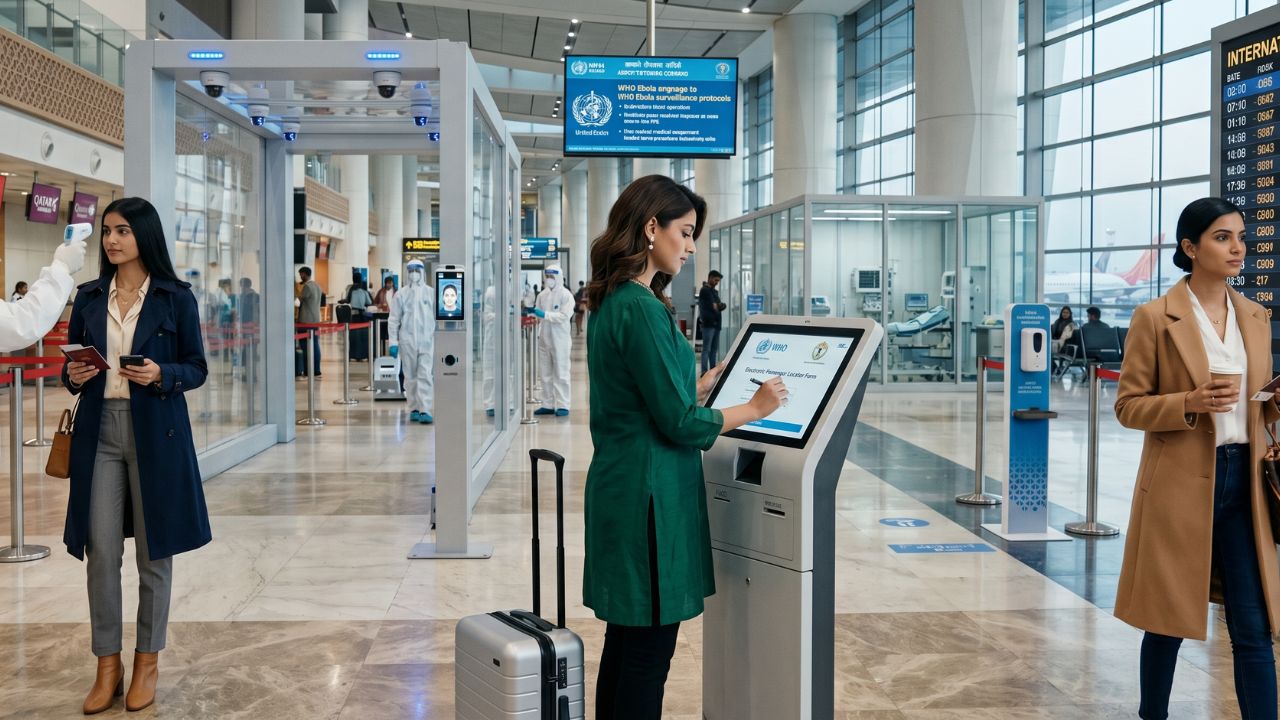
Image generated by AI
In a massive structural deployment directly designed to neutralize the devastating threat of biological travel chaos currently looming over massive international transit hubs, a coalition of high-ranking aviation and health regulators has aggressively forged a highly secure bio-containment firewall. Driven by the urgent need to physically shield millions of passengers from the grueling threat of a deadly pathogen, India has officially launched incredibly severe screening directives targeting specific high-risk African flight corridors. By aggressively enforcing mandatory isolation protocols on routes connecting India with Uganda and the Democratic Republic of Congo, the nation is moving to completely bypass the agonizing airport disruptions and massive flight cancellations that inevitably follow a localized outbreak. This unprecedented biosecurity injection totally dominates today’s premier airline news and global aviation updates.
By introducing direct passenger coordination and dynamic scheduling backups, the regional aviation hubs target growing passenger demand across vital commerce sectors. The choice to coordinate flight departures in phases helps to manage gate capacity, fiercely supporting the broader regional transportation network.
Context: Shielding Passengers From an International Emergency
The historical vulnerability of funneling massive volumes of international passengers through tightly constrained, geopolitically exposed airport terminals has repeatedly resulted in extreme physical exhaustion and severely destroyed global itineraries during health crises.
The immediate catalyst for this massive biosecurity surge was a formal declaration by the World Health Organization (WHO), which explicitly categorized the ongoing transmission of the Ebola virus as a Public Health Emergency of International Concern. Recognizing that the cross-border transmission of highly infectious pathogens instantly triggers catastrophic travel chaos, Union Health Minister JP Nadda personally led comprehensive reviews of national surveillance systems. Through a unified, militaristic approach involving the Ministry of Civil Aviation, specialized medical teams, and border control units, India has erected an impenetrable defensive mechanism. The absolute core objective is to execute medical interception with absolute precision, utilizing standardized protocols to brutally sever any potential local transmission chains before they paralyze the domestic aviation sector.
For live route mapping, specific bio-clearance updates, and direct health advisories, passengers should immediately consult the official directories of the Indian Ministry of Civil Aviation and the World Health Organization to safely secure their travel itineraries.
Section-Wise Breakdown: The Bio-Aviation Firewall
The In-Flight Shield: Mandatory Screening and Crew Vigilance
To deliberately bypass the severe rolling delays often plaguing terminal-based medical checks, aviation authorities are executing a massive surveillance surge directly inside the aircraft cabin. Air carriers operating between the Indian subcontinent and affected Central/East African territories must enforce enhanced health screening. Cabin crews are explicitly trained to maintain intense vigilance during long-haul flights. Standardized symptomatic checklists force crews to aggressively monitor for sudden high fevers, intense muscle pain, advanced physical weakness, and gastrointestinal distress. Furthermore, detailed passenger locator forms are now absolutely mandatory, ensuring accurate epidemiological tracking of previous travel into localized outbreak zones.
The Airborne Containment: Immediate Onboard Isolation
The operational shielding heavily extends into active crisis response. Should an individual manifest Ebola-indicative symptoms mid-flight, the aircraft command structure must instantly trigger isolation protocols. The symptomatic passenger is violently separated from the remainder of the cabin into a dedicated containment space. Flight crews must immediately deploy specialized universal precaution kits, donning fluid-resistant gowns, high-efficiency respiratory masks, face shields, and double gloves. All potentially contaminated materials are aggressively sealed within biosecurity bags, guaranteeing specialized destruction upon landing and physically insulating the rest of the passengers from biological exposure.
The Terminal Blockade: Remote Interception and Decontamination
Because massive flight disruptions actively destroy essential airport logistics, the ground interception is handled with surgical precision. The aircraft commander must transmit a radio notification to air traffic control prior to landing. The aircraft is then violently diverted to a designated remote bay, completely isolated from standard passenger terminals. Ground interception is managed exclusively by the Airport Health Organization, utilizing biological containment transport units to bypass standard immigration channels. Subsequently, the entire aircraft—including the hull, ventilation systems, tray tables, overhead bins, lavatories, and seating fabrics—undergoes brutal chemical disinfection using hospital-grade antimicrobial agents. The jet cannot return to commercial service until a formal certificate of bio-clearance is granted.
Technical Roster: Ebola Aviation Security Protocols
To guarantee 100% absolute factual accuracy regarding this massive pivot to ultra-reliable biosecurity capacity, the following table exactly documents the critical operational directives and containment metrics deployed across the targeted flight corridors:
| Operational and Biosecurity Metric | Verified Directive Data |
|---|---|
| Primary Pathogen Threat | Ebola Virus |
| Global Health Trigger | WHO Public Health Emergency of International Concern |
| Targeted Flight Corridors | India connecting with Uganda and Democratic Republic of Congo |
| Monitoring Symptoms | Sudden high fever, intense muscle pain, advanced physical weakness, gastrointestinal distress |
| In-Flight PPE Requirements | Fluid-resistant gowns, high-efficiency respiratory masks, face shields, double gloves |
| Aircraft Diversion Protocol | Radio ATC notification, isolation at a designated remote bay |
| Passenger Processing | Biological containment transport units (bypassing standard immigration) |
| Post-Flight Decontamination | Hospital-grade chemical disinfection of hull, ventilation, tray tables, lavatories |
| Return to Service Requirement | Formal certificate of bio-clearance granted by airport health inspectors |
| Oversight Authorities | Union Health Minister JP Nadda, Ministry of Civil Aviation, Airport Health Organization |
Passenger Impact: Eradicating Terminal Vulnerability
For the everyday international traveler, this aggressive biosecurity deployment translates into a massive upgrade in reliability and the total eradication of travel anxiety.
By heavily utilizing the newly fortified remote interception protocols, the vast majority of healthy passengers completely bypass the agonizing delays and staggering physical exhaustion associated with mass terminal quarantines. Because the suspected cases are surgically extracted via biological containment units straight from the remote bay, the main passenger terminals remain fully operational, preventing cascading travel chaos. Furthermore, the mandatory passenger locator forms feed directly into a centralized health database, allowing state-level surveillance cells to maintain continuous oversight. Daily health monitoring and telephone verification lines ensure that any delayed symptoms are handled instantaneously without ever disrupting broader domestic aviation networks.
Industry Analysis: The Economics of Bio-Resilience
Aviation industry analysts view these staggering containment injections as a highly critical evolution in the economics of global mobility.
The underlying strategic motivation perfectly reflects a massive industry realization: aggressive, in-flight bio-containment is the absolute ultimate defense against travel chaos. By eliminating manual choke points and standard terminal exposure, India’s aviation authorities are actively cementing the nation's transition into a highly resilient international transit hub. When an outbreak paralyzes regional travel, the economic fallout is catastrophic for airlines. By strictly enforcing hospital-grade decontamination and rapid certification of bio-clearance, aircraft are returned to commercial service rapidly, protecting the immense capital investments of the carriers. Collaborative communication with the World Health Organization ensures these defensive mechanisms remain globally interoperable.
What This Means for Travelers: Actionable Advice
To fully exploit these highly secure international networks and actively avoid traditional biological travel chaos, execute the following strategies:
- Pre-fill Passenger Locator Forms: Aggressively ensure your digital and physical passenger locator forms are completed prior to boarding. Failure to provide exact travel history into Central/East Africa will trigger massive immigration delays.
- Monitor Personal Health Status: If you experience a sudden high fever or intense muscle pain, instantly report it to medical authorities before boarding. Flying while symptomatic will trigger a severe airborne containment protocol.
- Anticipate Remote Bay Landings: If you are flying inbound from Uganda or the Congo, mathematically expect your aircraft to park at a remote isolation bay. Do not panic; this is a standardized biological defense mechanism.
- Participate in Contact Tracing: If your flight is intercepted, you will be enrolled in the centralized health database. Comply fully with the daily health monitoring and telephone verification lines to protect your community.
FAQ: Ebola Aviation Directives
Which specific flight routes are heavily targeted by these new health directives?
The enhanced biosecurity screenings explicitly target commercial air carriers operating on corridors connecting India with Uganda and the Democratic Republic of Congo.
What PPE is required for cabin crews handling a suspected Ebola case?
Flight crews must aggressively deploy specialized kits containing fluid-resistant gowns, high-efficiency respiratory masks, face shields, and double gloves.
How is a contaminated aircraft cleared to fly again?
The aircraft undergoes brutal chemical disinfection using hospital-grade antimicrobial agents and cannot fly until authorized airport health inspectors grant a formal certificate of bio-clearance.
The Bigger Picture: Building a Bulletproof Aviation Network
The aggressive, highly coordinated expansion of biological security capacity heavily demonstrates the absolute power of friction-free, protected mobility. By purposefully deploying massive containment protocols to shift sick travelers away from hyper-congested standard immigration channels, India’s Ministry of Civil Aviation and health authorities are effectively rewriting the rules of crisis transit. This relentless pursuit of localized efficiency and extreme reliability guarantees that their network remains highly resilient. Ultimately, this ensures that the terrifying era of massive, cascading flight cancellations and paralyzing worldwide travel chaos is permanently mitigated during health emergencies, offering unparalleled biosecurity across the subcontinent.
Key Takeaways
- Massive Bio-Shield: India launches severe biosecurity protocols on flights connecting to Uganda and the Democratic Republic of Congo.
- In-Flight Isolation: Symptomatic passengers are violently separated into designated containment spaces by PPE-clad crews.
- Remote Interception: Aircraft are diverted to remote bays where Airport Health Organization officers extract cases via biological containment units.
- Chemical Decontamination: Hospital-grade antimicrobial agents are utilized to thoroughly disinfect the aircraft before a certificate of bio-clearance is issued.
- Strategic Defense: The protocols explicitly prevent catastrophic travel chaos and massive airport disruptions by keeping the main terminals fully sterile.
Related Travel Guides
Kuwait Airport Recovery Shields Gulf Passengers
Swiss International Air Lines Deploys Direct Bengaluru Route
Jeddah Airport Deploys Smart Luggage Robots to Bypass Congestion
Disclaimer
This article is for informational and educational purposes only. It does not constitute legal, financial, or professional advice. While we strive to provide accurate and up-to-date information, travel policies, regulations, and conditions change rapidly. Always verify information with official sources before making travel decisions. Nomad Lawyer makes no representations about the accuracy, reliability, completeness, or suitability of the information provided. Readers should consult qualified professionals for advice specific to their circumstances. The views expressed in this article are those of the author and do not necessarily reflect the views of Nomad Lawyer.
Kunal K Choudhary
Co-Founder & Contributor
A passionate traveller and tech enthusiast. Kunal contributes to the vision and growth of Nomad Lawyer, bringing fresh perspectives and driving the community forward.
Learn more about our team →