
Global Airlines Resume Kuwait Flights, Ending Months of Severe Airport Disruptions and Cascading Gulf Travel Chaos: Latest Airline News
As Kuwait International Airport initiates a controlled restart at Terminal 4, major airlines return to finally end the massive flight cancellations and travel chaos plaguing the Gulf.

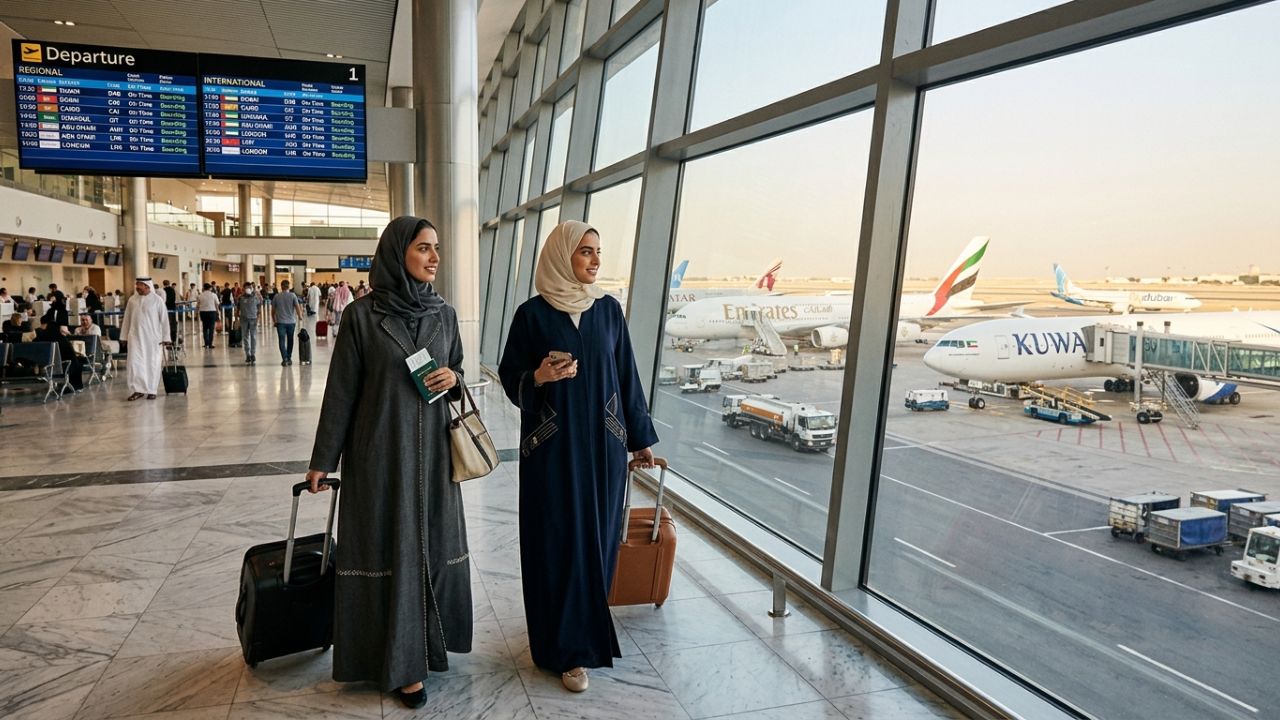
Image generated by AI
In a highly coordinated, phased operational restart designed to permanently end the massive waves of flight cancellations and severe travel chaos that recently paralyzed the Gulf aviation network, Kuwait International Airport has officially reopened its gates to major foreign carriers. Reported on June 19, 2026, global aviation heavyweights—including EgyptAir, flydubai, Emirates, Turkish Airlines, Etihad Airways, and Air Arabia—are finally resuming their highly lucrative Kuwait routes following an extended period of debilitating airport disruptions. By executing a highly controlled, slot-regulated return at Terminal 4, aviation authorities are aggressively restoring vital passenger flow, business travel, and complex international transit networks across the Middle East, North Africa, and Europe, effectively dominating today's most crucial headline in breaking airline news and essential global aviation updates.
By introducing direct passenger coordination and dynamic scheduling backups, the regional aviation hubs target growing passenger demand across vital commerce sectors. The choice to coordinate flight departures in phases helps to manage gate capacity, supporting the country's broader regional transportation network.
Context: Escaping the Regional Aviation Paralysis
For the global tourism and Gulf aviation industry, the rapid return of international carriers to Kuwait International Airport marks the end of a highly destructive operational crisis.
Historically, Kuwait serves as a critical strategic intersection point between the Middle East, Asia, Africa, and Europe. However, earlier infrastructure and operational disruptions at the airport severely compromised this gateway, triggering immediate, cascading travel chaos. Thousands of expatriate workers were stranded, highly lucrative corporate travel between Gulf Cooperation Council (GCC) states was violently suspended, and multi-continent connecting itineraries were repeatedly destroyed by sudden flight cancellations. The financial damage to the region's labor mobility and tourism flows was immense. To stop the bleeding, Kuwait aviation authorities initiated a deeply structured, phased recovery strategy. By strictly regulating passenger flow across terminals and meticulously coordinating airline slot allocations, the airport is finally absorbing returning traffic without triggering the terminal congestion and severe airport disruptions that characterized the height of the crisis.
To view live flight schedules, verify the active terminal clearance status of your specific Gulf itinerary, or to track potential route restorations, travelers must consult official aviation directories. For direct updates regarding how this massive operational restart impacts previous flight cancellations out of major hubs like Cairo and Dubai, travelers should aggressively utilize the official portals of the returning airlines. To explore live flight tracking and monitor the exact severity of the cascading bottlenecks across competitor hubs navigating these regional shifts, passengers can consult the official FlightAware tracking service.
Section-Wise Breakdown: The Return of the Mega-Carriers
Anchoring the Operations: Kuwait Airways at Terminal 4
The entire recovery process heavily relies on the operational stability of Terminal 4. Traditionally associated with the national carrier, Kuwait Airways, the terminal is functioning under a strict, phased access model. Kuwait Airways remains the absolute backbone of the international aviation structure, operating core routes and maintaining long-haul global connectivity while the government slowly integrates the returning foreign carriers under heavily controlled conditions to prevent a relapse into terminal chaos.
EgyptAir and the North African Lifeline
One of the most critical developments in this aviation rebound is the massive return of EgyptAir. The Cairo–Kuwait corridor is an absolute lifeline for the region, heavily driven by massive expatriate workforce movements, family visitation traffic, and critical government-linked travel flows. By reinstating these operations, EgyptAir instantly stabilizes massive labor mobility routes and reinforces Cairo’s role as a major aviation hub, linking Kuwait with global long-haul destinations through a single-stop network and actively preventing the travel chaos associated with stranded regional workforces.
The GCC and European Transit Reconnect
The simultaneous return of multiple mega-carriers instantly bridges Kuwait back to the global economy. Flydubai and Emirates have restored the crucial Kuwait–Dubai air corridor, supporting intense business travel and routing transit passengers seamlessly into Dubai's massive global destination network. Etihad Airways has mirrored this connectivity via Abu Dhabi, specifically targeting premium long-haul corporate demand. Simultaneously, Turkish Airlines has stepped back in to connect Kuwait to Europe, Central Asia, and the United States through its massive Istanbul hub, while Air Arabia continues its aggressive dominance of the low-cost, price-sensitive sector across the Gulf and South Asia markets.
Technical Roster: Kuwait Airport Recovery Data
To ensure absolute factual accuracy regarding the specific airlines resuming service, the primary operational terminal, and the crucial passenger corridors being restored, the following matrix details the verified recovery data:
Kuwait International Airport Recovery Matrix
| Recovery Parameter | Verified Operational Detail |
|---|---|
| Primary Hub & Focus Area | Kuwait International Airport (Controlled Restart at Terminal 4) |
| Anchor National Carrier | Kuwait Airways |
| Returning Major Airlines | EgyptAir, flydubai, Emirates, Turkish Airlines, Etihad Airways, Air Arabia |
| Key Regional Connections | Cairo, Dubai, Abu Dhabi, Istanbul |
| Restored Passenger Corridors | Business Travel, Tourism Flows, Expatriate Labour Mobility |
| Primary Recovery Goal | Structured capacity management to prevent renewed airport disruptions |
Data strictly reflects the verified, phased operational restart at Kuwait International Airport, highlighting the specific international carriers returning to the Gulf transit network.
Passenger Impact: The End of Stranded Itineraries
For the millions of expatriate workers, business executives, and international tourists who have been effectively locked out of the Kuwaiti aviation market for months, the gradual return of these airlines provides immediate, massive logistical relief and the end of compounding travel chaos.
The primary passenger impact of this coordinated restart is the total restoration of route predictability. During the height of the earlier disruptions, passengers attempting to fly between South Asia and Kuwait faced constant, unannounced flight cancellations, forcing them into highly complex, extremely expensive multi-day reroutes through alternate Middle Eastern hubs. With Emirates, Turkish Airlines, and EgyptAir actively restoring their high-frequency schedules, travelers finally benefit from a stable travel environment. The reduced terminal congestion at Terminal 4, combined with a vastly greater choice of airlines and fare options, actively guarantees improved transit reliability, completely eliminating the psychological panic of being stranded in the Gulf.
Industry Analysis: A Calculated Return to Power
Aviation and geopolitical analysts view the structured, phased reopening of Kuwait International Airport as a highly successful model of capacity management, proving that strict slot regulation is the only way to recover an overwhelmed regional hub without triggering renewed travel chaos.
Analysts note that Kuwait could have easily rushed the reopening, instantly approving every foreign carrier's request to return to normal scheduling. However, doing so would have instantly overwhelmed the infrastructure assessments and baggage systems, plunging Terminal 4 right back into paralyzing airport disruptions. By forcing major players like Emirates and Etihad to return under a controlled access model, Kuwait protected the integrity of its national carrier, Kuwait Airways, while slowly rebuilding the confidence of the international market. Industry experts emphasize that this multi-country network restoration not only stabilizes the Gulf's immediate labor mobility crisis but successfully repositions Kuwait as a highly resilient, strategic intersection point between continents.
Actionable Advice for Navigating the Gulf Restart
Because passengers cannot control the highly regulated slot allocations or the phased reopening speeds of international terminals, you must execute this strategic survival checklist to navigate the Kuwait aviation restart without encountering localized travel chaos:
- Verify Your Terminal Assignment: As operations ramp up, do not assume your flight departs from the standard main terminal. Kuwait Airways and selected foreign carriers are operating under strict, phased models primarily at Terminal 4. Always actively verify your exact terminal assignment via your airline's app 24 hours prior to departure, as arriving at the wrong building during a phased reopening guarantees you will miss your flight.
- Audit Your Connecting Visas: During the previous disruptions, many travelers were forced to transit through alternate Gulf hubs like Doha or Riyadh. With the direct Kuwait routes restored via carriers like flydubai and EgyptAir, review your itinerary closely. Ensure you are booked on the direct, restored routes rather than holding onto complex, multi-hub "hacker fares" that may require unnecessary transit visas and expose you to connecting travel chaos.
- Book Early to Beat the Labor Surge: The restoration of the Egypt–Kuwait and South Asia–Gulf corridors has instantly triggered a massive surge in expatriate workforce bookings. These flights will operate at 100% capacity for the foreseeable future. If you require corporate travel into Kuwait, absolutely do not wait until the week of departure to secure your seat, as the restored network is currently absorbing months of suppressed demand.
FAQ: Kuwait International Airport Flight Resumption
Why are major airlines just now returning to Kuwait?
Following earlier, severe operational disruptions, Kuwait International Airport implemented a highly structured, phased recovery strategy, only now allowing airlines to safely resume services without causing massive terminal congestion.
Which airlines have officially resumed flights to Kuwait?
The massive network restoration includes EgyptAir, flydubai, Emirates, Turkish Airlines, Etihad Airways, and Air Arabia, joining the national carrier, Kuwait Airways.
What terminal is handling the majority of these returning flights?
The controlled operational restart is heavily focused on Terminal 4, which is traditionally associated with Kuwait Airways but is now managing the phased integration of selected foreign carriers.
The Reality of Navigating Gulf Aviation Recoveries
The highly orchestrated return of EgyptAir, Emirates, and Turkish Airlines to Kuwait International Airport proves definitively that the modern Gulf aviation industry cannot afford to leave its strategic hubs paralyzed by operational disruptions. By executing a slow, heavily regulated restart at Terminal 4, aviation authorities successfully blocked a secondary wave of flight cancellations and insulated millions of passengers from severe travel chaos. Yet, as travelers eagerly flood back into the restored Cairo-Kuwait and Dubai-Kuwait corridors, they must accept a critical new reality: securing a smooth journey through a recovering mega-hub requires aggressive terminal verification, a deep understanding of localized capacity limits, and the tactical awareness to navigate massive surges in regional passenger demand.
Key Takeaways
- Massive Route Restoration: Following severe operational disruptions, Kuwait International Airport has officially resumed flights from major international carriers.
- Controlled Terminal 4 Restart: The recovery is highly regulated, utilizing Terminal 4 to manage returning traffic and prevent a relapse into severe airport disruptions.
- Mega-Carriers Return: Global heavyweights including EgyptAir, Emirates, flydubai, Etihad Airways, Turkish Airlines, and Air Arabia have fully reinstated their Kuwait routes.
- Labor and Corporate Lifeline: The restored connections, particularly the Cairo-Kuwait corridor, instantly stabilize the massive expatriate workforce movements and corporate travel essential to the Gulf economy.
- Preventing Travel Chaos: The phased strategy completely eliminated the risk of sudden terminal gridlock and unannounced flight cancellations during the network reboot.
Related Travel Guides
Massive Travel Chaos Paralyzes Chicago O'Hare with 1,425 Disruptions
Disclaimer
This article is for informational and educational purposes only. It does not constitute legal, financial, or professional advice. While we strive to provide accurate and up-to-date information, travel policies, regulations, and conditions change rapidly. Always verify information with official sources before making travel decisions. Nomad Lawyer makes no representations about the accuracy, reliability, completeness, or suitability of the information provided. Readers should consult qualified professionals for advice specific to their circumstances. The views expressed in this article are those of the author and do not necessarily reflect the views of Nomad Lawyer.
Kunal K Choudhary
Co-Founder & Contributor
A passionate traveller and tech enthusiast. Kunal contributes to the vision and growth of Nomad Lawyer, bringing fresh perspectives and driving the community forward.
Learn more about our team →