
Durham County Tourism Hits Record $1.17 Billion Spending in 2025 Driving North Carolina Economy
Durham County recorded a historic $1.17 billion in visitor spending in 2025, supporting 7,700 jobs and generating $82.3 million in tax revenue for regional infrastructure.

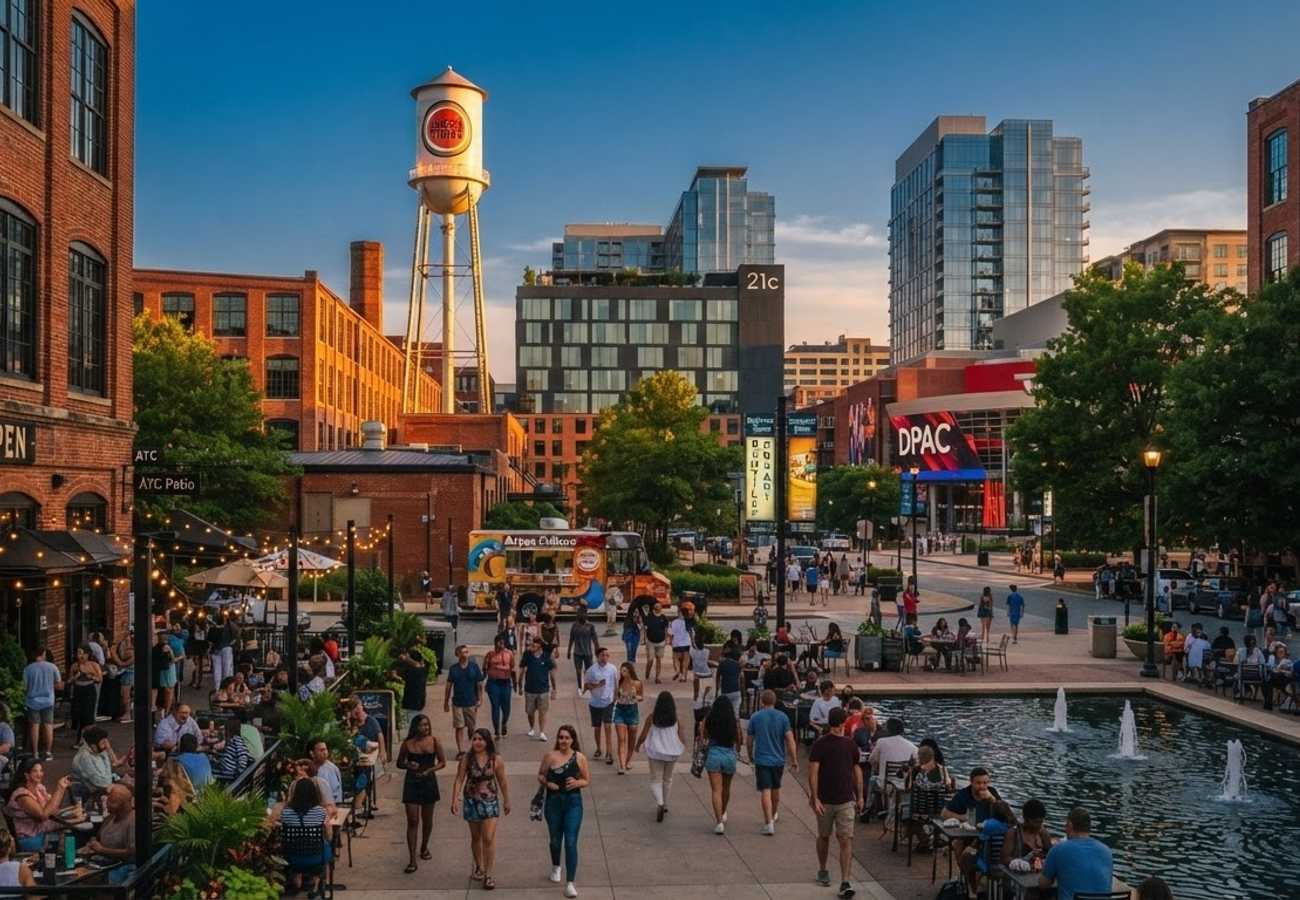
Image generated by AI
Durham County has reached a historic economic milestone with total visitor spending hitting $1.17 billion in 2025. This surge in travel activity has directly supported over 7,700 regional jobs and provided critical funding for public infrastructure.
Regional Economic Impact and Visitor Metrics
Recent data confirms that Durham County experienced an unprecedented influx of both domestic and international tourists throughout 2025. A total of 13.4 million individuals visited the region, driving a historic peak in visitor spending of $1.17 billion.
This figure represents a 0.9% increase over the $1.16 billion recorded in 2024. The growth indicates a shifting preference among modern travelers who are prioritizing community-driven environments and authentic local experiences over traditional resort settings.
Employment and Labor Market Breakdown
The surge in tourism has acted as a primary stabilizer for the localized labor market. Our analysis of the hospitality and travel sector shows a direct correlation between visitor volume and employment stability.
- Total Jobs Supported: 7,700+ positions across Durham County.
- Combined Workforce Payroll: $319 million.
- Economic Effect: Direct resource injection into local business ecosystems, elevating the general standard of living for permanent residents.
Public Revenue and Infrastructure Funding
Visitor commerce has significantly reduced the tax burden on local residents while funding essential civic improvements. Official reports verify that tourist transactions generated $82.3 million in combined state and local tax receipts.
These funds are allocated toward:
- Civic infrastructure projects.
- Road maintenance and transportation updates.
- Essential public services.
Strategic Reinvestment in Cultural Assets
While overall totals are at record highs, growth rates are beginning to moderate. To counter this slowing expansion, regional leadership has shifted toward an active investment model rather than passive promotion.
A specific allocation of $535,000 from visitor-paid tax revenue has been dedicated to expanding local public festivals and artistic gatherings. This funding specifically supports high-profile events such as the Full Frame Documentary Film Festival and the Liberty Arts Iron Pour to maintain high international engagement.
North Carolina Statewide Performance
The economic success of Durham County mirrors a broader trend across North Carolina. Statewide research indicates that total spending by domestic and international visitors reached $37.2 billion in 2025, a 1.3% increase over 2024 totals.
The tangible benefit to the average North Carolina household is quantified at approximately $605 in saved state and local taxes, as visitor commerce absorbs a significant portion of the civic tax burden.
Market Divergence: Domestic vs. International Spending
Analysis of the 2025 data reveals a widening gap between domestic and long-haul international spending patterns within the state:
| Market Segment | 2025 Total Spending | Year-over-Year Change |
|---|---|---|
| Domestic Visitors | $36.1 Billion | +1.5% Expansion |
| International Visitors | $1.1 Billion | 2.8% Contraction |
Passenger Advisory: Navigating Regional Travel in North Carolina
For travelers planning multi-stop journeys through North Carolina's urban centers and historic communities, our analysis suggests the following considerations regarding rights and logistics:
Transportation and Rebooking Rights Passengers utilizing domestic flights into regional hubs should be aware that while North Carolina operates under US DOT guidelines, those arriving on flights from the EU or UK may still be eligible for compensation under EU261/2004 if their outbound journey was disrupted. For the affected passenger, this means that delays or cancellations occurring at the origin airport in Europe could trigger mandatory financial compensation regardless of the final US destination.
Local Transit and Accessibility With 13.4 million visitors hitting regional infrastructure, peak travel windows may see increased congestion. Travelers are advised to utilize official municipal transit apps to monitor real-time road maintenance funded by the $82.3 million tax revenue pool to avoid delays.
The Durham County model demonstrates that the "leakage" often associated with tourism—where profits leave the community to go to global hotel chains—can be mitigated through targeted reinvestment. By directing $535,000 back into grassroots cultural events, the region is creating a self-sustaining loop: visitor spending funds the very culture that attracts the visitors. The contraction in international spending (2.8%) suggests a need for more aggressive global marketing or a reassessment of international accessibility to balance the heavy reliance on domestic markets.
A blueprint for sustainable regional growth through cultural reinvestment.
Related Travel Guides
Disclaimer
This article is for informational and educational purposes only. It does not constitute legal, financial, or professional advice. While we strive to provide accurate and up-to-date information, travel policies, regulations, and conditions change rapidly. Always verify information with official sources before making travel decisions. Nomad Lawyer makes no representations about the accuracy, reliability, completeness, or suitability of the information provided. Readers should consult qualified professionals for advice specific to their circumstances. The views expressed in this article are those of the author and do not necessarily reflect the views of Nomad Lawyer.
Kunal K Choudhary
Co-Founder & Contributor
A passionate traveller and tech enthusiast. Kunal contributes to the vision and growth of Nomad Lawyer, bringing fresh perspectives and driving the community forward.
Learn more about our team →