
Namibia Implements Strict Sossusvlei Access Rules to Protect Desert Icons in 2026
Namibia is transforming its tourism model at Sossusvlei and Deadvlei, replacing unrestricted vehicle access with a high-value, conservation-led system to preserve the fragile Namib-Naukluft National Park environment.

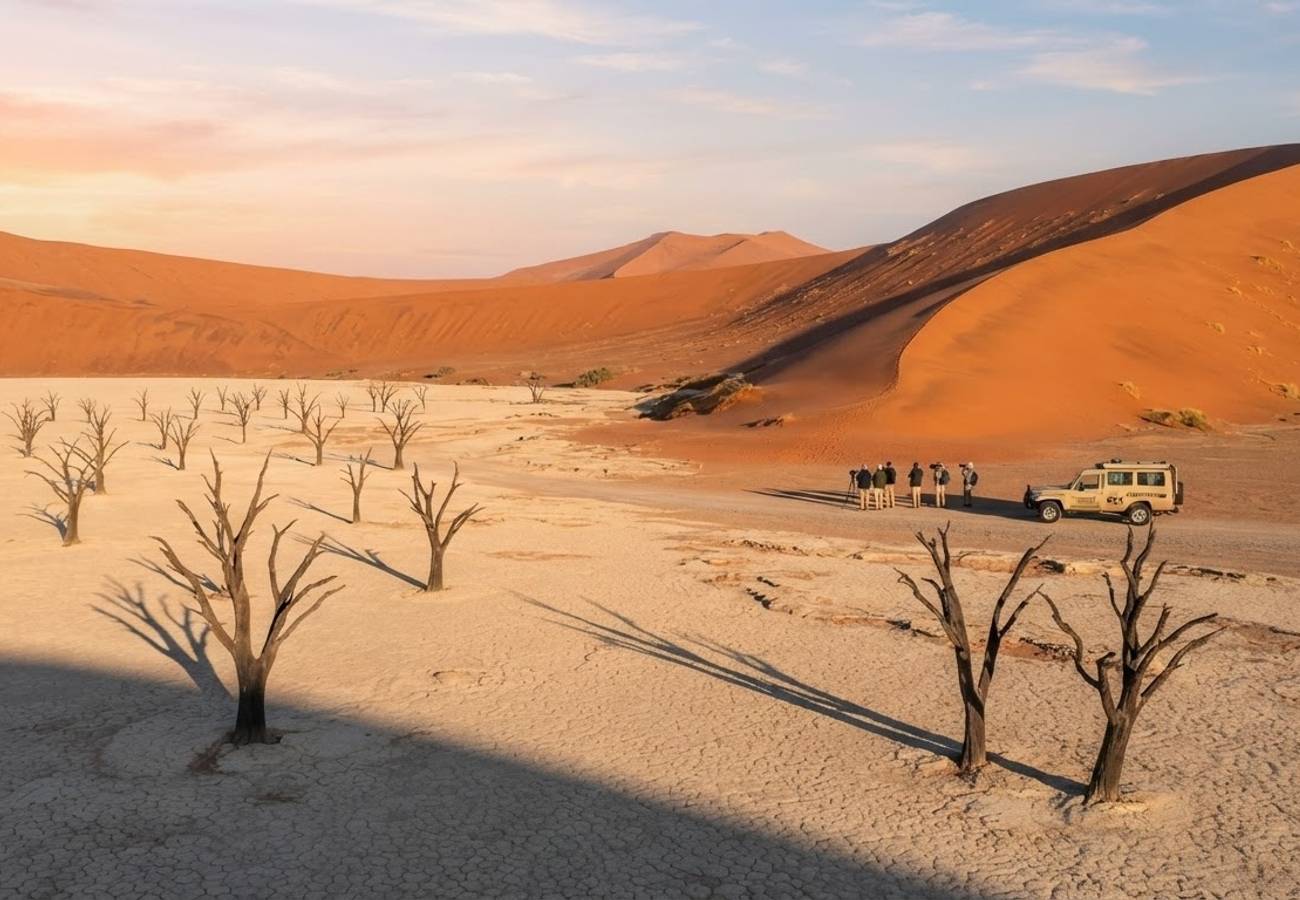
Image generated by AI
Namibia is pivoting away from mass tourism by restricting private vehicle access to its most iconic desert landscapes. This strategic shift ensures the survival of Sossusvlei and Deadvlei while upgrading the visitor experience to a premium, guided model.
The Namibian government has introduced stringent access guidelines for Sossusvlei, a crown jewel of the Namib-Naukluft National Park. This move is not designed to deter visitors but to safeguard the fragile ecosystem that serves as the primary engine for the country's international tourism brand.
By regulating how tourists interact with the towering orange dunes and the ancient camelthorn trees of Deadvlei, Namibia is transitioning toward a sustainability-first destination management strategy.
Transitioning to Controlled Desert Access
The core of the new policy is a significant shift in how the sensitive 4×4 zones are managed. Previously, independent travelers with capable vehicles could navigate the final sandy stretches leading to the dunes. Now, Namibia has implemented a controlled flow system to prevent environmental degradation.
Private vehicles are now restricted from entering the final 4×4 zone beyond the designated 2×4 parking area. To reach the heart of Sossusvlei and Deadvlei, visitors must now utilize authorized shuttle services or approved guided vehicles operated by registered tourism providers.
This systemic change addresses the mounting pressure on the desert floor, where repeated unregulated vehicle movement was beginning to scar the landscape and disrupt the natural desert tracks.
Sossusvlei Management Framework
| Key Tourism Change | Details |
|---|---|
| Destination Affected | Sossusvlei and Deadvlei |
| Country | Namibia |
| Protected Area | Namib-Naukluft National Park |
| Main Gateway | Sesriem |
| New Approach | Controlled access beyond the 2×4 parking area |
| Main Objective | Conservation, visitor safety, and sustainable tourism |
| Tourism Model | Low-impact, high-value travel |
Elevating the Visitor Experience to a Premium Model
Namibia is leveraging these restrictions to reposition itself as a high-end, responsible travel destination. Modern luxury travelers increasingly prioritize authenticity and untouched wilderness over high-volume accessibility.
By limiting the number of haphazardly driven vehicles, the state is preserving the sense of exclusivity and silence that makes the Namib Desert unique. The focus has shifted toward five specific pillars:
- Sustainable visitor management
- High-value nature experiences
- Conservation-focused tourism
- Professional guided journeys
- Attracting longer-stay international travelers
For the luxury segment, this removes the chaos of crowded vehicle routes and replaces it with a curated, organized journey into the wilderness.
Operational Shifts in Visitor Flow
The new regulations provide tourism authorities with unprecedented control over visitor movement, which is essential for both safety and ecology. The Namib Desert is an unforgiving environment characterized by extreme heat and difficult terrain; managed access reduces the risk of stranded tourists and emergency rescues.
| Previous Experience | New Tourism Model |
|---|---|
| Independent vehicle access | Controlled transport access |
| Multiple vehicles entering sensitive areas | Managed visitor movement |
| Less predictable visitor flow | Better organization |
| Higher environmental pressure | Reduced impact |
| Independent exploration | Guided and structured experiences |
Conservation as a Marketing Asset
Rather than viewing restrictions as a hurdle, Namibia is utilizing conservation as its primary marketing tool. By demonstrating a commitment to protecting the Namib-Naukluft National Park—one of Africa's largest protected areas—the country is appealing to a more conscious demographic.
This strategy specifically targets:
- Eco-conscious travelers
- Luxury adventure tourists
- Professional photography enthusiasts
- International tour operators focused on sustainability
Economic Impact on Local Tourism Operators
The move toward a guided model redistributes tourism spending back into the local economy. Because visitors now rely on registered providers, the financial benefits of visiting Sossusvlei are spread across a wider array of professional services.
- Shuttle Operators: See a direct increase in transport demand.
- Tour Companies: Can offer more structured, high-quality packages.
- Lodges: Can integrate seamless transport into their stay packages.
- Local Guides: Gain more professional opportunities and higher visibility.
Essential Planning Details for 2026 Travelers
Travelers planning a journey to the Namib Desert must adjust their logistics to comply with the new rules.
| Traveler Information | Details |
|---|---|
| Destination | Sossusvlei and Deadvlei |
| Entry Area | Sesriem |
| Vehicle Restriction | Private vehicles limited beyond 2×4 parking area |
| Alternative Access | Authorized shuttle and approved guides |
| Planning Advice | Confirm access and transport arrangements prior to arrival |
Namibia is proving that protecting a global icon is the only way to ensure its long-term economic value.
Related Travel Guides
Disclaimer
This article is for informational and educational purposes only. It does not constitute legal, financial, or professional advice. While we strive to provide accurate and up-to-date information, travel policies, regulations, and conditions change rapidly. Always verify information with official sources before making travel decisions. Nomad Lawyer makes no representations about the accuracy, reliability, completeness, or suitability of the information provided. Readers should consult qualified professionals for advice specific to their circumstances. The views expressed in this article are those of the author and do not necessarily reflect the views of Nomad Lawyer.
Raushan Kumar
Founder & Lead Developer
Full-stack developer with 11+ years of experience and a passionate traveller. Raushan built Nomad Lawyer from the ground up with a vision to create the best travel and law experience on the web.
Learn more about our team →