
Breaking Airline News: Severe Geopolitical Travel Chaos Paralyzes Dubai and Doha as Terrifying Fuel Crisis Devastates 2026 Aviation Profits
Breaking airline news: Amidst a terrifying era of massive geopolitical friction and soaring fuel costs, Middle Eastern mega-carriers in Dubai and Doha suffer catastrophic financial meltdowns, plunging global transit into extreme travel chaos.

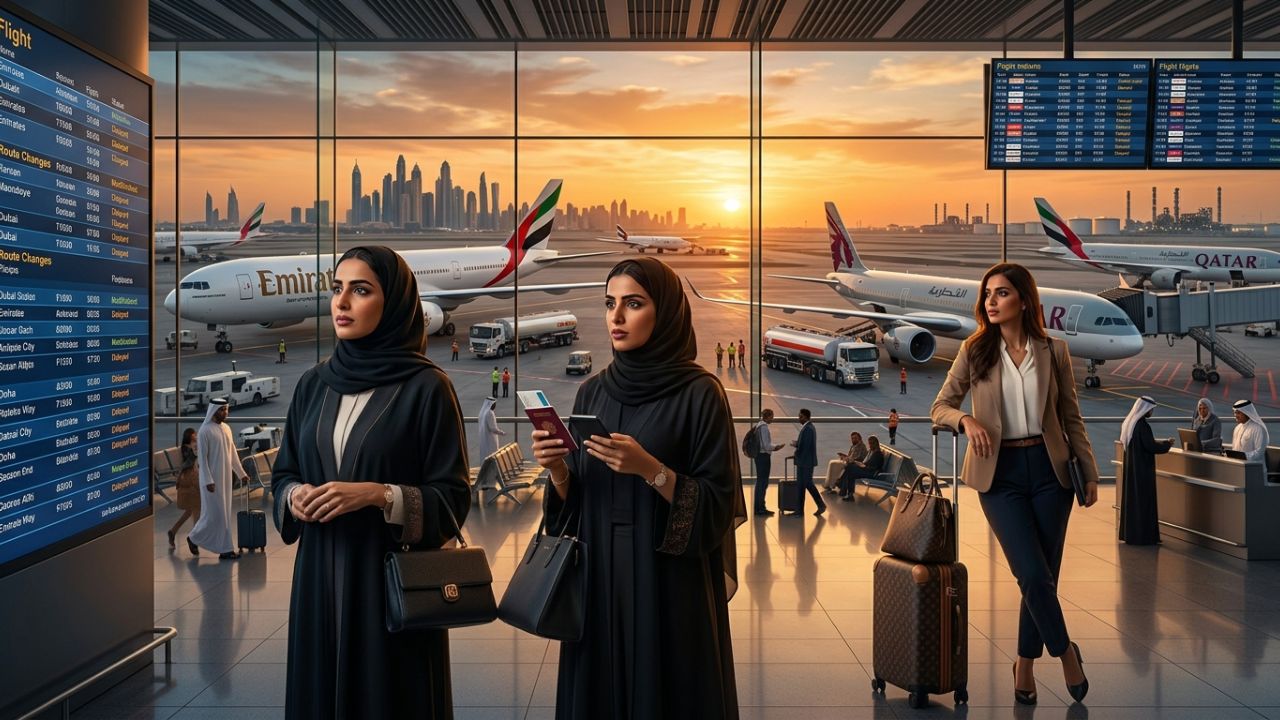
Image representing the intense strategic nightmare as global aviation authorities desperately attempt to contain severe flight cancellations and massive financial losses following terrifying airspace closures across the Middle East.
Breaking Airline News: Severe Geopolitical Travel Chaos Paralyzes Dubai and Doha as Terrifying Fuel Crisis Devastates 2026 Aviation Profits
As paralyzing airspace restrictions, violently skyrocketing operating costs, and severe geopolitical friction violently sweep through the Middle Eastern aviation grid, a catastrophic financial collapse is completely severing the world’s most critical transit arteries. In a devastating blow to the hyper-efficient mega-hubs of Dubai and Doha, the terrifying convergence of regional conflict and a massive surge in jet fuel prices has triggered an unprecedented airline profitability crisis for 2026. According to chilling new data released by the International Air Transport Association (IATA), this perfect storm of operational friction is aggressively forcing legendary Gulf carriers to confront mounting logistical nightmares, severely rerouted flights, and entirely obliterated revenue margins. As airlines frantically battle to absorb these massive economic shocks, the resulting network gridlock is immediately triggering severe travel chaos, forcing massive route cancellations and violently disrupting passenger connectivity between Europe, Asia, and Africa.
In a harrowing display of modern aviation fragility, the sheer scale of the airspace closures currently overwhelming the Gulf and Iran brutally exposes the terrifying cascading effects of geopolitical instability on global transport networks. For decades, the massive profitability of Middle Eastern carriers relied absolutely on perfectly optimized hub-and-spoke models, flying high-density jets on direct, highly efficient flight paths. However, ongoing conflict has violently severed these primary corridors. Airline dispatchers are now forced to execute massive tactical bypasses, routing heavily loaded aircraft on significantly longer, highly inefficient paths to avoid contested airspace. This severe operational deviation instantly triggers a terrifying surge in fuel consumption. Compounded by a catastrophic spike in global jet fuel prices, airlines in Dubai and Doha—traditionally viewed as the untouchable titans of global aviation profitability—are now violently reversing course, facing the incredibly rare and highly alarming prospect of posting massive net losses for the 2026 operating year.
Expanded Overview: The Massive Scale of the Economic Contagion
The terrifying crisis currently gripping the Middle Eastern hubs brutally exposes the incredibly fragile nature of airline economics when confronted with simultaneous operational and energy shocks. When strategically vital global mega-hubs experience a severe financial meltdown of this magnitude, the cascading effects on the international passenger are absolutely devastating. To survive the massive financial hemorrhage, airlines are forced to aggressively deploy capacity adjustments, resulting in sudden flight cancellations, brutally reduced frequencies on secondary routes, and massive ticket price hikes. The IATA forecast confirms that while an estimated 5.1 billion passengers will violently surge into the global network in 2026—driving industry revenues to a massive USD 1.16 trillion—the underlying economics are completely broken. Passengers are paying more, but the terrifying costs associated with bypassing conflict zones and burning hyper-expensive fuel are entirely destroying the airlines' ability to function efficiently.
Section-Wise Breakdown: The Operational Collapse
The Massive Middle Eastern Meltdown
The massive incident aggressively centers around the sudden logistical friction plaguing the perfectly tuned networks of Dubai and Doha. These hubs depend on frictionless transit connecting East and West. The violent airspace closures instantly obliterate this advantage, transforming highly profitable routes into massive financial liabilities. The forced rerouting aggressively extends block times, requiring additional crew deployments, creating terrifyingly tight connection windows for transit passengers, and causing severe travel chaos as thousands of passengers miss their connecting flights due to extended flight durations.
Deploying the Financial Defense Shield
To survive this terrifying economic environment, airline executives are desperately analyzing the catastrophic fuel metrics. IATA confirms a terrifying reality: jet fuel prices have violently surged by roughly 70 percent compared to 2025. This massive cost shock means fuel now aggressively consumes over 31 percent of total airline operating expenses, up from 25 percent previously. This dramatic structural shift forces airlines to ruthlessly cannibalize their own networks, instantly terminating marginally profitable routes to conserve cash and shield the core network from complete financial collapse.
The Collapse of Global Profitability
The terrifying shockwaves from the Middle East are violently suppressing the entire global aviation ecosystem. IATA’s forecast projects a devastating 50 percent collapse in anticipated global profitability, plunging worldwide airline net profits to a mere USD 23 billion. The net profit margin has been violently crushed to approximately 2 percent. Most alarmingly for airline survival, the net profit generated per passenger has plummeted from USD 9.10 in 2025 to a terrifyingly thin USD 4.50. This indicates that despite packing aircraft with load factors above 80 percent, airlines are barely surviving the massive friction of the 2026 operating environment.
Crushing Passenger Travel Corridors
Looking beyond the immediate financial devastation, the real-world impact on the passenger is severe travel chaos. Airlines across India and broader Asia have already begun aggressively suspending international flights to optimize costs. Passengers utilizing Gulf hubs are suddenly discovering fewer promotional fares, entirely altered service levels, and the terrifying threat of their flights being suddenly canceled as airlines ruthlessly prioritize financial survival over schedule integrity.
Strategic Global Aviation Financial Matrix
To fully comprehend the massive economic and strategic fallout of this geopolitical aviation crisis, corporate travel managers and affected commercial passengers must review the exact financial metrics currently paralyzing the network. The following matrix provides a granular breakdown of the specific, officially verified IATA forecast data defining this severe travel chaos.
| Strategic Economic Metric | Confirmed 2026 IATA Forecast Data |
|---|---|
| Projected Global Net Profit | USD 23 Billion (Down 50% from projections) |
| Net Profit Margin | Approximately 2% |
| Jet Fuel Price Surge | 70% Increase compared to 2025 |
| Fuel Share of Operating Expenses | 31% (Up from 25% in 2025) |
| Global Passenger Volume | Over 5.1 Billion Passengers |
| Total Industry Revenue | USD 1.16 Trillion (9% Growth) |
| Net Profit Per Passenger | USD 4.50 (Down from USD 9.10 in 2025) |
Passenger Impact: Surviving the Hub Nightmare
For the millions of global tourists and corporate commuters physically attempting to transit through heavily congested Middle Eastern terminals during this operational collapse, the logistical nightmare is absolutely terrifying. The brutal reality of enduring significantly longer flight times, sudden itinerary changes, and massive ticket price gouging inflicts intense psychological stress. The disruption causes immediate friction, resulting in severely missed international connections and entirely ruined global business summits as airlines violently re-optimize their networks in real-time.
Survival Guide for Stranded Travelers
Travelers desperately navigating this chaos through Dubai, Doha, and connecting Asian hubs must immediately execute the following survival protocols:
- Anticipate Extended Block Times: Passengers booking long-haul flights through the Middle East must aggressively account for extended flight durations due to airspace rerouting; booking connecting flights with less than a three-hour layover almost guarantees a terrifying missed connection.
- Monitor Route Suspensions: Because airlines are actively bleeding cash on fuel, passengers must relentlessly monitor their flight statuses; secondary routes connecting through the Gulf are highly vulnerable to sudden, permanent cancellation as airlines retreat to high-density trunk routes.
- Acknowledge the SAF Limitation: Travelers must realize that while Sustainable Aviation Fuel (SAF) is highly promoted, its current scarcity means it offers absolutely zero defense against this immediate fuel crisis; passengers must prepare for brutal, sustained ticket price increases driven entirely by traditional crude oil volatility.
Industry Analysis: The Devastation of Fuel Volatility
From a strategic aviation perspective, the travel turmoil currently decimating the Middle East highlights the terrifying vulnerability of global airlines to energy shocks. Industry analysts indicate that standard fuel hedging strategies have violently failed to protect carriers from a 70 percent price surge. The massive commercial failure observed today proves that major airline networks remain incredibly fragile when geopolitical conflict simultaneously denies them efficient airspace and cheap fuel. To prevent the complete destruction of their massive hub models, Gulf carriers are forced to aggressively park older, less efficient aircraft, sacrificing total market share to ensure basic corporate survival.
Conclusion: A Strategic Retreat to Ensure Aviation Survival
As the situation across the Middle East remains highly volatile, the sudden financial collapse of the Dubai and Doha aviation models represents a massive warning to transit travelers. The staggering drop in global profitability proves that flight schedules remain terrifyingly fragile under unexpected geopolitical lockdowns. Corporate travel buyers and everyday passengers attempting to navigate this highly unstable era of airport disruptions must maintain extreme flexibility and expanded budgets. By acting aggressively to secure robust travel insurance and relentlessly monitoring airline routing changes, travelers can successfully survive this unprecedented operational meltdown and escape the severe travel chaos currently paralyzing global aviation.
Key Takeaways
- Massive Financial Paralysis: Geopolitical conflict and a terrifying 70% surge in jet fuel prices have pushed highly profitable Dubai and Doha airlines toward massive net losses in 2026.
- Crushing Global Profitability: IATA forecasts reveal that global airline net profit has been violently slashed by 50% to USD 23 billion, with profit per passenger plummeting to just USD 4.50.
- Severe Operational Friction: Airspace closures across the Gulf and Iran are forcing massive flight reroutings, violently increasing fuel burn and triggering severe travel chaos for connecting passengers.
- Systemic Route Terminations: Airlines are aggressively suspending secondary international flights and cutting capacity to survive the massive cost shocks, directly impacting travelers from Europe, Asia, and Africa.
- Traveler Advisory: Passengers transiting through the Middle East must aggressively prepare for longer flight times, massive ticket price increases, and the terrifying threat of sudden itinerary cancellations as airlines battle for survival.
Related Travel Guides
Disclaimer
This article is for informational and educational purposes only. It does not constitute legal, financial, or professional advice. While we strive to provide accurate and up-to-date information, travel policies, regulations, and conditions change rapidly. Always verify information with official sources before making travel decisions. Nomad Lawyer makes no representations about the accuracy, reliability, completeness, or suitability of the information provided. Readers should consult qualified professionals for advice specific to their circumstances. The views expressed in this article are those of the author and do not necessarily reflect the views of Nomad Lawyer.
Kunal K Choudhary
Co-Founder & Contributor
A passionate traveller and tech enthusiast. Kunal contributes to the vision and growth of Nomad Lawyer, bringing fresh perspectives and driving the community forward.
Learn more about our team →