
Dubai International Airport Leads Historic Global Hub Expansion as Shanghai, Tokyo, and Istanbul Surge, Bypassing Transcontinental Flight Cancellations, Airport Disruptions, and Passenger Travel Chaos: New Airline News and Aviation Updates
Dubai International Airport (DXB) hits a record 95.2 million passengers, leading a global race for aviation dominance alongside mega-hubs in China, Japan, and Turkey.

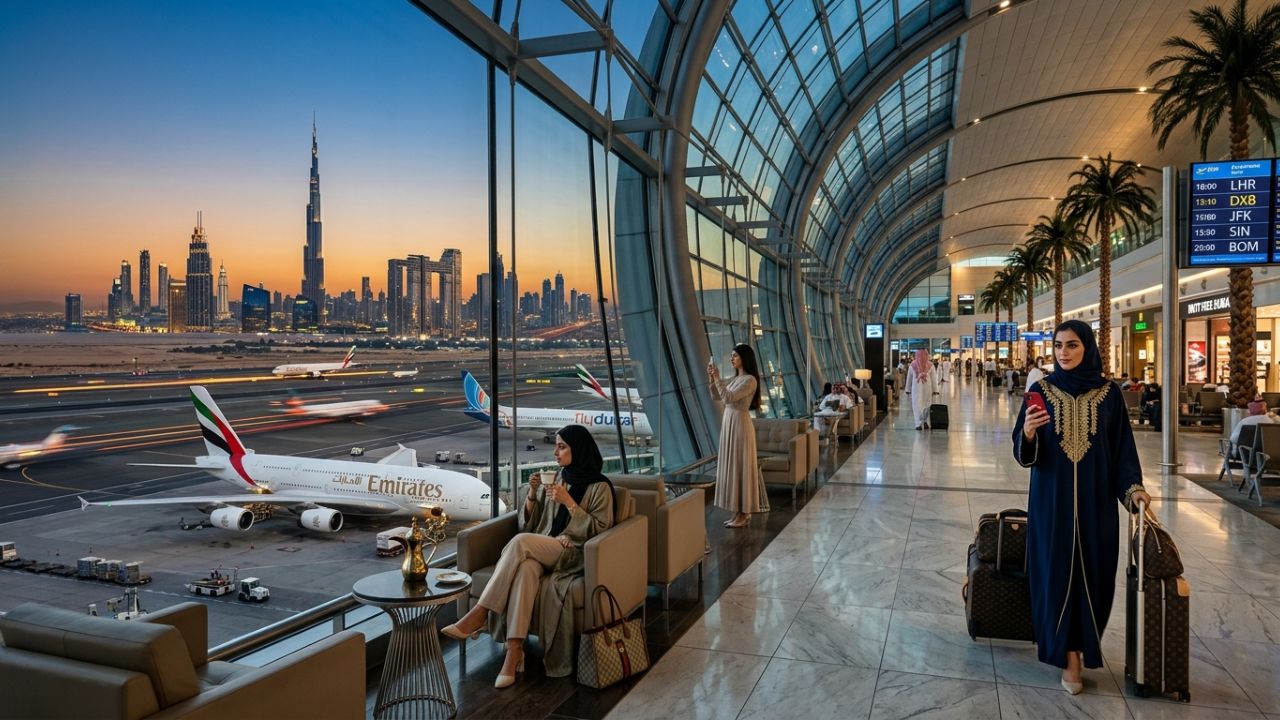
Image generated by AI
In a structural development that marks a historic turning point for the global civil aviation sector, the world's primary mega-airports are expanding passenger capacities at an unprecedented rate. Leading this international aviation race is Dubai International Airport (DXB), which welcomed a record-breaking 95.2 million passengers in 2025, representing a 3.1% growth from the previous year. This massive surge is matched by competitive expansions at China's twin giants, Shanghai Pudong International Airport (PVG) and Guangzhou Baiyun International Airport (CAN), alongside Japan's Tokyo Haneda Airport (HND) and Turkey's transcontinental gateway, Istanbul Airport (IST). As passenger demand surges, these mega-hubs are investing billions in new runways, terminals, and automated transit systems, protecting global travelers from localized flight cancellations, frustrating terminal-side airport disruptions, and subsequent regional travel chaos. The global race for airport dominance represents the primary headline in today's airline news and global aviation updates.
By introducing direct passenger coordination and dynamic scheduling backups, the regional aviation hubs target growing passenger demand across vital commerce sectors. The choice to coordinate flight departures in phases helps to manage gate capacity, supporting the country's broader regional transportation network.
Context: The Geopolitical Significance of Global Mega-Hubs
Aviation infrastructure is more than a transport link; it functions as a primary policy instrument and economic engine, driving international trade, tourism, and diplomatic influence. The airports that handle the largest passenger volumes attract airline networks, commercial retail investments, and global real estate developments.
As transit hubs in Asia, Europe, and the Middle East compete for transcontinental travel, the race to build the largest, most efficient airport has become a cornerstone of national development strategies.
To review flight schedules, terminal services, or transit guides at the world's busiest international gateway, passengers can check the official Dubai International Airport passenger portal. For detailed terminal guides, flight arrivals, and high-speed rail connections in East Asia's premier business hub, visitors can consult the official Shanghai Airport Authority terminal directory.
Section-Wise Breakdown of the World's Mega-Airports
Dubai (DXB) and the Al Maktoum (DWC) $35 Billion Expansion
Dubai's aviation success is powered by its strategic geographic location and extensive state support. Led by flag carriers Emirates and flydubai, DXB processes tens of thousands of travelers daily and handles over 86 million pieces of luggage annually.
Despite handling massive passenger volumes, the airport maintains exceptional operational efficiency, with passport control times remaining under 10 minutes for 99% of travelers.
To prevent future terminal congestion, CEO Paul Griffiths has targeted a passenger volume of 99.5 million for 2026, as the airport nears its physical limits.
The next leap comes in the form of Dubai World Central (Al Maktoum International Airport) (DWC). This US$35 billion project will accommodate 150 million passengers annually, eventually expanding to 260 million passengers by 2033 with five runways and 12 million tonnes of cargo capacity, reinforcing the UAE's dominance in global aviation.
Shanghai Pudong (PVG) and Guangzhou Baiyun (CAN): China's Twin Behemoths
China's economic growth has produced airports of astonishing scale. In 2025, the nation's civil transport airports handled 1.53 billion passenger trips, representing a 4.8% increase from 2024.
Forty-one airports surpassed 10 million passengers each, but Shanghai Pudong and Guangzhou Baiyun tower above the rest, with each crossing 80 million passengers in 2025:
- Shanghai Pudong (PVG): Connecting Shanghai to Asia, Europe, and North America, PVG features dual-runway expansions and terminal upgrades optimized for Airbus A380 operations. High-speed rail links provide seamless connections to downtown Shanghai.
- Guangzhou Baiyun (CAN): Serving southern China, Baiyun leverages Guangzhou's manufacturing and trade strengths, alongside proximity to Hong Kong and Shenzhen. The opening of Terminal 3 in 2025 expands the airport's capacity to 120 million passengers annually.
Tokyo Haneda Airport (HND): Japan's Domestic and International Giant
Tokyo Haneda Airport is a domestic powerhouse with growing international significance, handling 91.66 million passengers in FY2025, a 4.3% increase. Haneda's growth is fueled by domestic shuttles, premium international flights, and proximity to central Tokyo, making it the preferred choice for business travelers.
Government slot reforms have shifted more international services to Haneda, which features modern retail and cultural experiences, including Edo-themed terminal streets. For detailed terminal guides, passenger services, and flight departure guidelines at Japan's primary gateway, passengers can check the official Tokyo Haneda Airport guide.
Beijing Capital (PEK) and Daxing (PKX): Dual Powerhouses
Beijing boasts two mega-airports: Capital International Airport (PEK) and Daxing (PKX).
Capital remains one of the world's busiest airports, while Daxing's starfish-shaped terminal, opened in 2019, has relieved terminal congestion. Combined, Beijing's hubs handled over 70 million passengers in 2025, with Daxing's second phase targeting 100 million annual passengers.
Istanbul Airport (IST): Bridging Europe and Asia
Istanbul Airport sits at the edge of two continents. Operated by İGA, it replaced Atatürk Airport and handled 76 million passengers in 2025, with targets of 90 million passengers by 2027.
Turkish Airlines operates a massive hub-and-spoke network from IST, connecting Asia, Europe, and Africa, challenging Dubai and other regional hubs as a continental bridge.
Delhi Indira Gandhi International Airport (DEL): India's Rising Star
Delhi's busiest airport handled 79 million passengers in 2025.
Terminal 3 and the upcoming Terminal 4 will enable a capacity of 100 million passengers by 2030, supported by India's booming domestic market and the UDAN regional connectivity scheme.
Bangkok (Suvarnabhumi BKK & Don Mueang DMK) and Hong Kong (HKG) Rebuilding
- Bangkok Airports: Suvarnabhumi Airport, the long-haul hub, handled 50 million passengers, while Don Mueang Airport served 30 million, primarily low-cost carriers. Suvarnabhumi's USD 1.3 billion satellite terminal will expand capacity to 120 million passengers annually.
- Hong Kong International (HKG): Handled 47 million passengers in 2025. The airport authority is expanding the third runway and developing the Sky City commercial district, targeting a capacity of 120 million passengers and 10 million tonnes of cargo by 2028.
Global Mega-Airport 2025 Passenger Statistics and Expansions
To help passenger travel managers and corporate flight coordinators compare the scale and growth of these global aviation hubs, the following table details the key performance indices:
| Operating Mega-Airport Hub | 2025 Passenger Volume | Annual Growth Rate | Long-Term Target Capacity | Key Operating Airline / Carrier | Strategic Regional Advantage |
|---|---|---|---|---|---|
| Dubai International (DXB) | 95.2 Million | 3.1% Growth | 99.5M (2026) | Emirates, flydubai | Prime gateway between Europe, Asia, Africa |
| Tokyo Haneda (HND) | 91.66 Million | 4.3% Growth | 100 Million+ | Japan Airlines, ANA | Preferred choice for premium business flights |
| Shanghai Pudong (PVG) | 80 Million+ | Strong Rise | 100 Million+ | China Eastern | Yangtze River Delta high-speed rail links |
| Guangzhou Baiyun (CAN) | 80 Million+ | High Volatility | 120M (Terminal 3) | China Southern | Proximity to Greater Bay Area manufacturing |
| Delhi Indira Gandhi (DEL) | 79 Million | Booming Market | 100M (2030) | Air India, IndiGo | Booming domestic connectivity via UDAN scheme |
| Istanbul Airport (IST) | 76 Million | 4.8% Growth | 90M (2027) | Turkish Airlines | Continental bridge managed by İGA |
| Seoul Incheon (ICN) | 73 Million | Recovering | 100M (2030) | Korean Air | Strategic North East Asian gateway |
| Beijing Hubs (PEK / PKX) | 70 Million+ | 4.5% Growth | 100M (Daxing P2) | Air China | Starfish-shaped terminal relieving congestion |
Passenger Impact: Streamlined Transit and Reduced Layovers
For international travelers, the expansion of mega-hubs represents a significant upgrade in travel comfort. By integrating advanced baggage handling systems and automated immigration gates, airports like DXB and PVG ensure rapid transit times, reducing the risk of missed connections and luggage delays.
The availability of premium lounges, dining experiences, and airport hotels helps to lower travel fatigue, ensuring a highly reliable travel experience.
Industry Analysis: The Economics of Airport Congestion
Today's mega-hub expansions highlight the challenges of managing capacity slot constraints in high-traffic commercial environments. As airports like DXB reach physical limits, operators must invest in secondary gateways like DWC to prevent congestion and maintain schedule integrity.
Airlines must also coordinate with airport authorities to adopt sustainable aviation fuels (SAF), electrified ground operations, and carbon offsets to balance environmental pressures with passenger growth.
What Transit Passengers Should Do: Actionable Advice
To ensure a seamless travel experience through these global mega-hubs, follow this practical checklist:
- Allow at Least Two Hours for Layovers: Ensure your connecting itineraries allow sufficient transfer time, especially when changing terminals.
- Pre-Book Airport Sleeping Lounges: For long-haul overnight transit layovers, book terminal hotel rooms in advance to avoid travel fatigue.
- Complete Automated Immigration Checks: Take advantage of automated e-gates and smart passport control lines to bypass airport queues.
- Confirm Baggage Checked-Through Status: Verify that your bags are checked through directly to your final destination at your origin ticket counter.
- Use High-Speed Airport Rail Express: Select airport express rail links rather than road transfers to bypass highway traffic when heading downtown.
FAQ: Global Mega-Airport Expansions 2026
What was Dubai International Airport's passenger volume in 2025?
Dubai International Airport welcomed a record-breaking 95.2 million passengers in 2025, representing a 3.1% growth.
Which Chinese airports surpassed 80 million passengers in 2025?
Shanghai Pudong International Airport (PVG) and Guangzhou Baiyun International Airport (CAN) both crossed the 80 million passenger mark.
What is the target capacity of Dubai's Al Maktoum Airport (DWC)?
The US$35 billion Al Maktoum Airport expansion targets a capacity of 150 million passengers annually, eventually reaching 260 million by 2033.
Adaptation as the Blueprint for Future Mobility
The massive expansions of global mega-airports highlight the continuing strength of international travel and trade connectivity. By combining advanced transit technologies with massive capacity investments, hubs like Dubai, Shanghai, and Tokyo are rebuilding global network resilience. As passenger volumes approach pre-pandemic highs, these gateways will continue to play an essential role in supporting global mobility, ensuring that transcontinental travel remains accessible, efficient, and comfortable for all.
Key Takeaways
- Record Growth: Dubai International Airport handled 95.2 million passengers in 2025, targeting 99.5 million for 2026.
- Al Maktoum Mega-Hub: DWC's US$35 billion expansion will accommodate 150 million passengers annually, eventually reaching 260 million.
- China's Behemoths: Shanghai Pudong and Guangzhou Baiyun both crossed 80 million passengers in 2025, driving East Asian connectivity.
- Tokyo Haneda Giant: HND processed 91.66 million passengers in FY2025, supported by premium business travel and inbound tourism.
- Istanbul Continental Bridge: Istanbul Airport handled 76 million passengers in 2025, targeting 90 million by 2027.
Related Travel Guides
Da Nang Welcomes Moscow Direct Flights via Vietjet Air and Anex Tour
flydubai and Cyprus Airways Launch Major Strategic Interline Partnership
Global Mega Airports Passenger Traffic Ranking Review on Reddit in 2026
Disclaimer
This article is for informational and educational purposes only. It does not constitute legal, financial, or professional advice. While we strive to provide accurate and up-to-date information, travel policies, regulations, and conditions change rapidly. Always verify information with official sources before making travel decisions. Nomad Lawyer makes no representations about the accuracy, reliability, completeness, or suitability of the information provided. Readers should consult qualified professionals for advice specific to their circumstances. The views expressed in this article are those of the author and do not necessarily reflect the views of Nomad Lawyer.
Kunal K Choudhary
Co-Founder & Contributor
A passionate traveller and tech enthusiast. Kunal contributes to the vision and growth of Nomad Lawyer, bringing fresh perspectives and driving the community forward.
Learn more about our team →