
Hong Kong International Airport Completes State-of-the-Art Terminal Expansion to Handle 20 Million More Passengers, Bypassing Global Flight Cancellations, Airport Disruptions, and Passenger Travel Chaos: New Airline News and Aviation Updates
Hong Kong International Airport (HKIA) officially completes a massive state-of-the-art terminal expansion, increasing annual capacity by up to 20 million passengers.

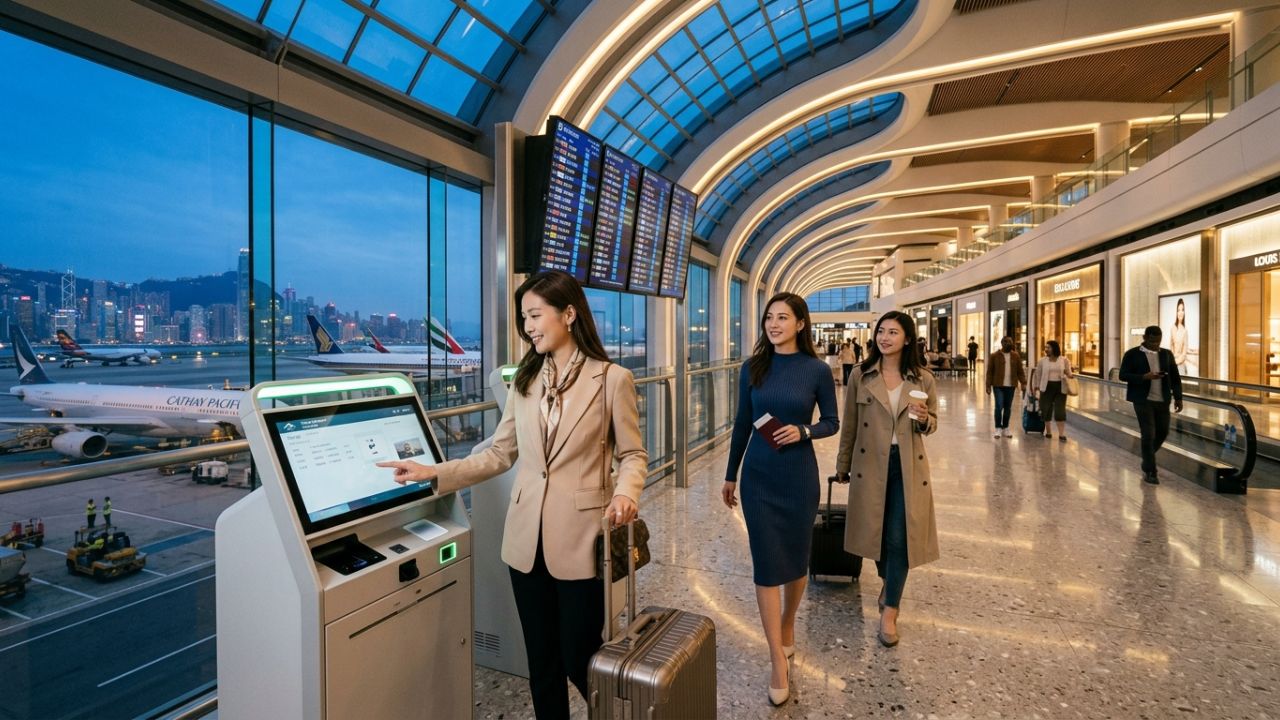
Image generated by AI
In a structural development that marks a historic milestone for civil aviation in the Asia-Pacific region, Hong Kong International Airport (HKIA / HKG) has officially completed the construction of its new state-of-the-art terminal facility. Designed to accommodate growing passenger volumes and international air traffic, the multi-billion-dollar expansion strengthens Hong Kong's role as a vital global gateway for tourism, business, and cargo logistics. Supported by advanced passenger processing systems and fleet coordinates from home carrier Cathay Pacific (CPA), the new terminal is strategically designed to protect transcontinental travelers from cascading regional flight cancellations, frustrating terminal-side airport disruptions, and subsequent holiday travel chaos across major short-haul and long-haul connections. The operational launch of this modern terminal represents the premier headline in today's airline news and global aviation updates.
By introducing direct passenger coordination and dynamic scheduling backups, the regional aviation hubs target growing passenger demand across vital commerce sectors. The choice to coordinate flight departures in phases helps to manage gate capacity, supporting the country's broader regional transportation network.
Context: Elevating Hong Kong's Competitive Edge in Asian Aviation
As global air travel rebounds, major Asian aviation hubs are locked in a high-stakes competition to capture transit traffic and cargo logistics shares. Hong Kong's new terminal comes at a crucial time, enabling HKIA to compete directly with other premier gateways such as Singapore Changi (SIN), Tokyo Haneda (HND), and Incheon International Airport (ICN).
By offering a highly streamlined, modern airport environment, the facility ensures that Hong Kong remains the preferred transit hub for travelers across Asia and beyond.
To check flight schedules, book premium passenger tickets, or explore the airline's global route network, travelers can consult the official Cathay Pacific booking site. For official real-time terminal maps, retail directories, and airport lounges, passengers can review the Hong Kong International Airport guide. To discover regional tourist spots, transit itineraries, and business travel guidelines in the city, visitors can check the Hong Kong Tourism Board directory.
Section-Wise Breakdown of the HKIA Terminal Expansion
Hong Kong International Airport (HKIA) Long-Term Expansion
The completion of the new terminal represents a major step forward in HKIA's long-term airport development strategy.
The facility is integrated with the airport's existing passenger infrastructure, allowing for smooth transfers between domestic and international flights. The terminal features spacious waiting areas, modern design details, and enhanced retail zones showcasing international brands.
Cutting-Edge Passenger Processing and Automated Systems
The new terminal incorporates advanced airport technology to improve passenger processing speeds:
- Automated Check-In Kiosks: Self-service kiosks allow passengers to check-in, select seats, and print baggage tags in minutes.
- Intelligent Baggage Handling: An automated baggage tracking system monitors checked luggage in real-time, reducing transit delays.
- Biometric Security Controls: Advanced security screening lanes and biometric e-gates streamline immigration clearance, reducing queues.
Capacity Boost: 20 Million Additional Passengers Annually
With the completion of this modern terminal, HKIA has increased its annual passenger handling capacity by up to 20 million passengers.
This substantial increase in capacity allows domestic and international airlines to launch new routes, increase flight frequencies, and optimize slot scheduling, supporting the hub's long-term growth.
Inbound Cargo Logistics and Sustainable Infrastructure
The terminal's design also supports Hong Kong's role as a premier cargo hub:
- Logistics Integration: Dedicated cargo storage and logistics zones are integrated into the terminal's infrastructure, supporting trade across Asia.
- Green Building Design: The facility incorporates sustainable design features, including energy-efficient LED lighting, water-saving fixtures, and advanced climate control systems to reduce environmental impact.
Hong Kong International Airport New Terminal Operational Metrics
To help airline coordinators and logistics managers evaluate these modern facilities, the following table details the key features of the terminal expansion:
| Operational Parameter | Strategic Feature / Capacity | Target Passenger Segment | Primary Technological Asset | Key Sustainable Design Element |
|---|---|---|---|---|
| Annual Capacity Boost | Up to 20 Million Passengers | Long-haul transit, business, tourism | Biometric e-gates, automated baggage sorting | Energy-efficient LED lighting, water-saving fixtures |
Passenger Impact: Streamlined Transit and Premium Comforts
For transcontinental travelers, the new terminal offers a significant upgrade in passenger comfort. By shortening check-in queues and security wait times, travelers can spend more time enjoying spacious lounges, dedicated business centers, and family-friendly children's play areas.
The seamless layout ensures that connecting passengers can navigate between flight gates quickly and comfortably.
Industry Analysis: The Smart Airport Model as a Benchmark
The completion of Hong Kong's terminal expansion highlights a broader shift in civil aviation toward the "smart airport" model.
By prioritizing biometric processing, automated check-ins, and green building standards, modern airports can handle higher passenger volumes while maintaining high service standards and minimizing environmental impact.
What Travelers Should Do: Actionable Advice
If you are planning to travel through Hong Kong International Airport, follow this practical checklist to make the most of the new facilities:
- Confirm Your Terminal Gate Allocation: Check your gate assignment on your airline's app before heading to the terminal.
- Register for Biometric Boarding: Take advantage of automated biometric e-gates for faster immigration processing.
- Pre-Book Airport Lounge Access: Secure slots in premium lounges early, as business travel demand remains high.
- Track Your Luggage in Real-Time: Use your carrier's mobile app to monitor your checked bags via HKIA's tracking systems.
- Use the High-Speed Airport Express: Utilize Hong Kong's efficient Airport Express train link for fast point-to-point transit to the city center.
FAQ: Hong Kong Airport Terminal Expansion 2026
What is the passenger capacity boost of HKIA's new terminal?
The new terminal expansion increases the airport's annual capacity by up to 20 million passengers.
How does the terminal incorporate green building standards?
The facility features energy-efficient LED lighting, water-saving fixtures, and advanced climate controls to minimize its environmental footprint.
Which premier Asian airports compete directly with HKIA?
Hong Kong competes directly with Singapore Changi (SIN), Tokyo Haneda (HND), and Seoul Incheon International Airport (ICN).
Re-establishing Hong Kong's Global Aviation Stature
The completion of the new terminal at Hong Kong International Airport represents a significant step forward in Asia-Pacific civil aviation. By combining advanced passenger technology with sustainable design and expanded capacity, HKIA improves passenger convenience while supporting regional economic growth. As airlines continue to expand their route networks through the hub, this modern terminal will play an essential role in keeping Hong Kong connected to the world.
Key Takeaways
- Massive Expansion: The new terminal at HKIA is complete, boosting annual handling capacity by up to 20 million passengers.
- Biometric Systems: The facility integrates biometric security screening and automated check-ins for faster processing.
- Cargo Operations: Dedicated logistics zones are integrated into the terminal to support regional trade.
- Sustainable Design: The building features energy-efficient lighting and advanced climate controls.
- Regional Competitiveness: The expansion strengthens HKIA's role as a premier transit gateway, competing with Changi and Haneda.
Related Travel Guides
WestJet Launches Direct Cardiff to Toronto Pearson Flights, Restoring Wales' Transatlantic Corridor
Disclaimer
This article is for informational and educational purposes only. It does not constitute legal, financial, or professional advice. While we strive to provide accurate and up-to-date information, travel policies, regulations, and conditions change rapidly. Always verify information with official sources before making travel decisions. Nomad Lawyer makes no representations about the accuracy, reliability, completeness, or suitability of the information provided. Readers should consult qualified professionals for advice specific to their circumstances. The views expressed in this article are those of the author and do not necessarily reflect the views of Nomad Lawyer.
Kunal K Choudhary
Co-Founder & Contributor
A passionate traveller and tech enthusiast. Kunal contributes to the vision and growth of Nomad Lawyer, bringing fresh perspectives and driving the community forward.
Learn more about our team →