
Denver International Airport Battles Terminal Travel Chaos with Massive $700M Underground Walkways to Shield 82 Million Passengers: Latest Airline News
Following devastating underground train outages, Denver Airport unveils a radical $700 million plan to repurpose baggage tunnels into pedestrian concourse walkways.

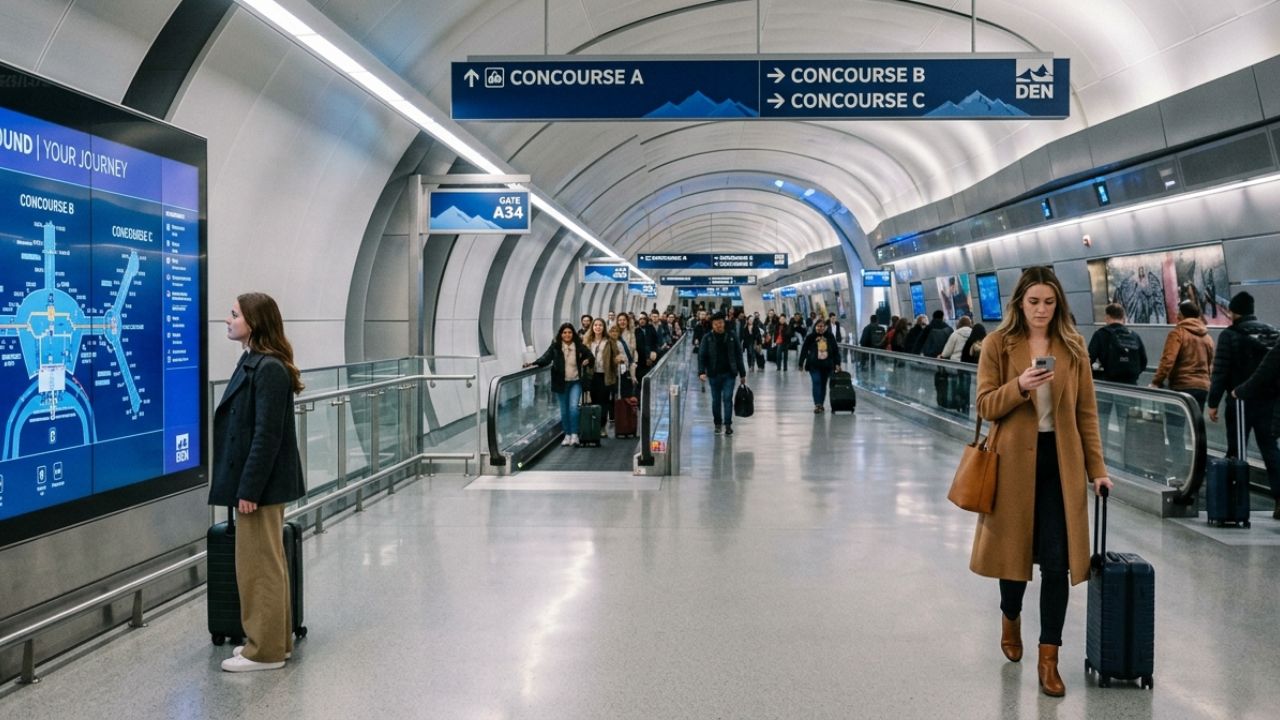
Image generated by AI
In a massive infrastructure pivot designed to physically insulate millions of travelers from the devastating effects of severe terminal gridlock and potential travel chaos, Denver International Airport (DEN) has announced a radical terminal modernization project. Driven by the catastrophic failure of its mandatory underground transit system earlier this year, airport executives are officially moving forward with an ambitious, $700 million plan to carve out massive pedestrian walkways between Concourses A, B, and C. By totally repurposing existing baggage tunnels, this unprecedented project is designed to physically break the airport’s dangerous over-reliance on aging train networks. As widespread airport disruptions and the threat of severe localized flight cancellations threaten America's busiest transit hubs, this massive infrastructural defense totally dominates today’s premier airline news and global aviation updates.
By introducing direct passenger coordination and dynamic scheduling backups, the regional aviation hubs target growing passenger demand across vital commerce sectors. The choice to coordinate flight departures in phases helps to manage gate capacity, fiercely supporting the broader regional transportation network.
Context: The Collapse of the "Must-Ride" Train Network
The historical vulnerability of funneling over 150,000 daily passengers onto a single, isolated "must-ride" underground train network is that a singular mechanical failure rapidly cascades into extreme physical exhaustion and severely destroyed passenger itineraries.
Because capacity crunches and localized operational strain constantly threaten punctuality, Denver’s infrastructure cracked in March 2026. A massive power outage completely paralyzed the underground train system, triggering a terrifying temporary ground stop that resulted in brutal airport disruptions. Passengers were trapped in terminals, completely unable to reach their gates, resulting in a wave of missed connections and stranded tourists. Airport CEO Phil Washington acknowledged that while the train system is usually reliable, its failures create absolute, severe operational chaos. To ensure that the 82.4 million passengers who utilized DEN in 2025 are never again trapped by a single point of failure, the airport will begin construction in 2027 to connect the massive concourses by foot.
For live route mapping, specific terminal navigation, and official flight status tracking, stranded passengers should immediately consult the digital advisories published by their respective carriers before attempting to access these severely compromised terminals.
Section-Wise Breakdown: The Massive Walkway Overhaul
Bypassing the Train Gridlock
To deliberately manage the immense volume of transcontinental traffic, DEN serves as a critical mega-hub for United Airlines, Southwest Airlines, and Frontier Airlines. Currently, these airlines suffer severe operational bleed when the terminal train system fails. The new blueprint calls for heavily reinforcing existing subterranean baggage tunnels and converting them into high-capacity pedestrian corridors. With an estimated cost between $300 million and $700 million—funded entirely by airport revenue rather than taxpayer dollars—the project physically ensures passengers can walk to their gates if the train system goes down.
Upgrading the 1995 Transit Fleet
Because massive airport disruptions actively destroy the passenger experience, DEN is attacking the problem from both sides. While the walkways serve as the ultimate physical redundancy, the airport is also currently executing a $79 million procurement program to replace its severely aging 1995 train fleet with brand-new Innovia APM R vehicles, ensuring maximum uptime while the walking corridors are under construction.
Full Operational Breakdown: Denver Airport Vulnerability Data
To guarantee 100% absolute factual accuracy regarding this massive pivot to terminal redundancy, the following exact tables document the critical operational failures and expansion projects driving this overhaul:
| Recent Denver Airport Operational Challenges | Impact |
|---|---|
| March 2026 power outage | Temporary airport ground stop |
| Multiple train service interruptions | Passenger delays and missed connections |
| Aging original train fleet from 1995 | Replacement program already underway |
| Rising passenger traffic | Increased pressure on transit infrastructure |
| Denver Airport Expansion Projects | Status |
|---|---|
| Great Hall modernization | Scheduled completion by 2027 |
| Train fleet replacement | Ongoing |
| Gate expansion program | Active |
| Underground pedestrian walkway proposal | Planning stage |
| International route growth | Continuing |
Passenger Impact: Protecting the Colorado Tourism Boom
For the everyday domestic and international traveler, this aggressive infrastructural defense translates into a massive reduction in travel anxiety and the total restoration of passenger control.
By heavily experiencing these sudden train stoppages, tourists visiting Colorado's lucrative ski resorts or national parks face brutal delays that ruin expensive vacations. Denver welcomed over 37 million domestic visitors in 2025, generating $10 billion in massive visitor spending. However, the airport’s massive Vision 100 plan is preparing for an eventual 100 million annual passengers. If international tourists from high-yield markets like the United Kingdom or Japan cannot physically transit between Concourses B and C due to a broken train, the entire regional tourism economy faces massive revenue suppression. The underground walkways guarantee that a traveler can simply pick up their bags and walk, completely eliminating the terror of being held hostage by transit delays.
To accurately reflect the high-value international connections relying on this infrastructure, the following exact table details Denver's critical global inbound markets:
| Country | Tourism and Aviation Importance |
|---|---|
| Canada | One of the largest inbound travel markets to the U.S. |
| Mexico | Major leisure and VFR travel market |
| United Kingdom | Strong tourism and business travel demand |
| Germany | Growing European visitor market |
| Japan | Important long-haul tourism connection through Tokyo |
| France | Expanding European travel demand |
| Costa Rica | Growing leisure tourism connectivity |
The Bigger Picture: The Economics of Terminal Redundancy
Aviation industry analysts view these staggering, highly targeted infrastructural investments as a critical indicator of systemic vulnerability within modern mega-hubs.
The underlying strategic motivation perfectly reflects an industry reality: airports can no longer rely on single-point transit systems. Because Denver ranks among the four busiest airports in the United States and the top ten globally, a failure of its train system sends immediate ripple effects across the entire American aviation grid, resulting in severe national travel chaos. Mayor Mike Johnston has even joked that the project will finally allow the public to see the airport's infamous "secret" underground tunnels, dispelling decades of internet conspiracy theories while solving a highly critical logistical nightmare.
What This Means for Travelers: Actionable Advice
To fully exploit these highly efficient international networks and actively avoid severe, self-inflicted regional travel chaos, execute the following strategies:
- Pad Connection Times: Until the walkways are officially opened, you are still entirely reliant on the aging underground train. Never book a connection in Denver with less than a 60-minute window.
- Monitor Ground Stop Alerts: Because train power outages can trigger total airport ground stops, aggressively monitor your airline's mobile app for FAA-mandated holds before leaving your hotel for the airport.
- Prepare for Construction Delays: As construction on the tunnels begins in 2027, expect significant navigational changes and temporary barricades inside the terminal. Arrive a minimum of two hours early for domestic flights to navigate the construction zones.
FAQ: Denver Airport Underground Walkways
Why is Denver Airport building underground walkways?
To prevent massive passenger gridlock. A recent power outage disabled the airport's "must-ride" train system, trapping passengers. The new walkways will allow travelers to physically walk between Concourses A, B, and C as a backup.
How much will the project cost, and who is paying for it?
The project is estimated to cost between $300 million and $700 million. It is funded entirely by airport revenue, not taxpayer money.
When will the walkway construction begin?
Airport officials expect construction to officially commence in 2027, repurposing the airport's existing subterranean baggage tunnels.
Key Takeaways
- Massive Infrastructure Upgrade: Denver International Airport is building underground pedestrian walkways to connect Concourses A, B, and C.
- Bypassing the Train Gridlock: The project serves as a critical backup to the airport's train system, which suffered a massive power outage and ground stop in March 2026.
- Protecting Passengers: The airport currently handles 82.4 million passengers and aims to insulate its operations as it scales toward 100 million annual travelers.
- Massive Cost: The $300M-$700M project utilizes existing baggage tunnels to keep construction costs contained.
- Tourism Defense: The walkways are crucial for protecting Denver's $10 billion domestic tourism industry and expanding international transit reliability.
Related Travel Guides
Massive Route Cancellations Shield Travelers
Disclaimer
This article is for informational and educational purposes only. It does not constitute legal, financial, or professional advice. While we strive to provide accurate and up-to-date information, travel policies, regulations, and conditions change rapidly. Always verify information with official sources before making travel decisions. Nomad Lawyer makes no representations about the accuracy, reliability, completeness, or suitability of the information provided. Readers should consult qualified professionals for advice specific to their circumstances. The views expressed in this article are those of the author and do not necessarily reflect the views of Nomad Lawyer.
Kunal K Choudhary
Co-Founder & Contributor
A passionate traveller and tech enthusiast. Kunal contributes to the vision and growth of Nomad Lawyer, bringing fresh perspectives and driving the community forward.
Learn more about our team →