
Frontier Airlines and Delta Connection Aircraft Collide at Charlotte Douglas International Airport in 2026
A ground collision between a Frontier Airlines Airbus A320neo and a Delta Connection Bombardier CRJ-900 at Charlotte Douglas International Airport led to flight cancellations and aircraft grounding on July 27, 2026.

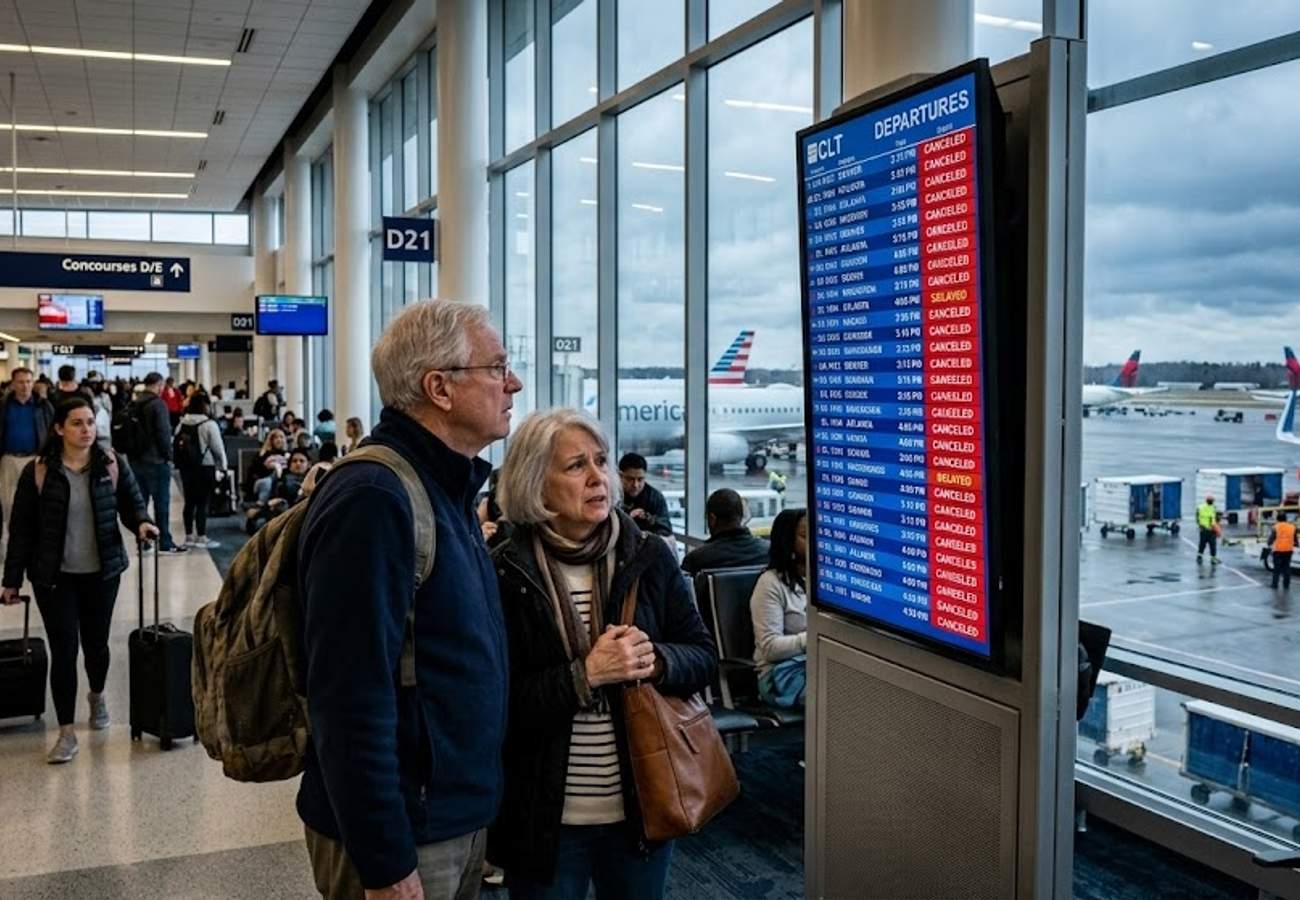
Image generated by AI
A wing-to-tail collision at Charlotte Douglas International Airport (CLT) has grounded two commercial aircraft and disrupted schedules for passengers traveling to New York and Houston.
The incident occurred on July 27, 2026, at approximately 7:00 p.m. local time. A Frontier Airlines aircraft, identified as flight 2395, made contact with a parked Delta Connection aircraft (flight DL5051) during a pushback maneuver.
Collision Dynamics and Aircraft Involved
The accident involved two vastly different aircraft types. The Frontier plane, an Airbus A320neo, is a narrow-body jet capable of carrying more than double the passenger capacity of the Delta aircraft. The Delta flight was operated by Endeavor Air using a Bombardier CRJ-900, a regional jet with a 76-passenger capacity.
According to Delta Air Lines, the wing of the Frontier aircraft struck the tail of the parked Endeavor Air plane. Because the collision happened during the pushback phase—where a specialized tug vehicle moves the plane away from the gate—neither aircraft had passengers or crew on board at the moment of impact.
Operational Impact and Passenger Recovery
Both flights were immediately canceled following the collision. The Delta Connection flight was bound for LaGuardia Airport (LGA) in New York, while the Frontier flight was scheduled for George Bush Intercontinental Airport (IAH) in Houston.
Frontier Airlines confirmed that affected passengers were provided with:
- Meal vouchers
- Hotel accommodations (upon request)
- Travel vouchers for future flights
- Rebooking on alternative flights
While the Delta aircraft was removed from service for a comprehensive maintenance review, Frontier managed to resume the Houston route using a replacement aircraft. FlightAware data indicates that Frontier flight 2395 eventually departed at 9:23 a.m. local time on July 28, resulting in a delay of over 15 hours.
The Risks of Ground Maneuvers
Pushback is a high-precision operation requiring seamless synchronization between flight crews, tug operators, ramp personnel, and air traffic control. Because most commercial aircraft cannot reverse under their own power, any failure in communication or a slight error in positioning can lead to ground collisions.
This event underscores a recurring safety challenge in high-traffic hubs. While the Charlotte incident resulted in no injuries, other ground collisions in the U.S. have had far more severe outcomes.
Comparative Analysis of Recent U.S. Ground Incidents
The industry has seen several significant ground-based accidents over the last 18 months, highlighting the volatility of airport ramp operations.
| Date | Location | Aircraft/Vehicles Involved | Outcome |
|---|---|---|---|
| Feb 2025 | Scottsdale Airport, AZ | Learjet 35A & Gulfstream 200 | 1 fatality, 1 serious injury |
| Dec 2025 | JFK Airport, NY | Japan Airlines & Arkia Airlines | No injuries; 270 passengers stranded |
| March 2026 | LaGuardia Airport, NY | Air Canada plane & Rescue vehicle | 2 pilots deceased; 41 hospitalized |
| July 27, 2026 | Charlotte Douglas (CLT) | Frontier A320neo & Delta CRJ-900 | No injuries; both flights canceled |
The March 2026 LaGuardia tragedy was particularly severe; a flight from Montréal-Pierre Elliott Trudeau International Airport (YUL) carrying 72 passengers and four crew members collided with a rescue vehicle. That incident resulted in the deaths of two Air Canada pilots and left nine passengers in serious condition.
Safety Oversight and Next Steps
Delta Air Lines has stated that Endeavor Air will cooperate fully with aviation authorities to conduct a formal review of the collision. The goal is to determine whether the error stemmed from mechanical failure of the tug, a communication breakdown, or a positioning mistake by the ground crew.
The aviation industry continues to grapple with the balance of increasing flight frequencies and the rigorous safety protocols required for ground handling.
Related Travel Guides
Disclaimer
This article is for informational and educational purposes only. It does not constitute legal, financial, or professional advice. While we strive to provide accurate and up-to-date information, travel policies, regulations, and conditions change rapidly. Always verify information with official sources before making travel decisions. Nomad Lawyer makes no representations about the accuracy, reliability, completeness, or suitability of the information provided. Readers should consult qualified professionals for advice specific to their circumstances. The views expressed in this article are those of the author and do not necessarily reflect the views of Nomad Lawyer.
Kunal K Choudhary
Co-Founder & Contributor
A passionate traveller and tech enthusiast. Kunal contributes to the vision and growth of Nomad Lawyer, bringing fresh perspectives and driving the community forward.
Learn more about our team →