
Cruce Andino: Argentina and Chile's 12-Hour Mountain Crossing Revolutionizes Patagonian Travel in 2026
The legendary Cruce Andino binational route connecting Argentina's Bariloche to Chile's Puerto Varas via three alpine lakes redefines eco-tourism, replacing air travel with immersive wilderness experiences across Patagonia.

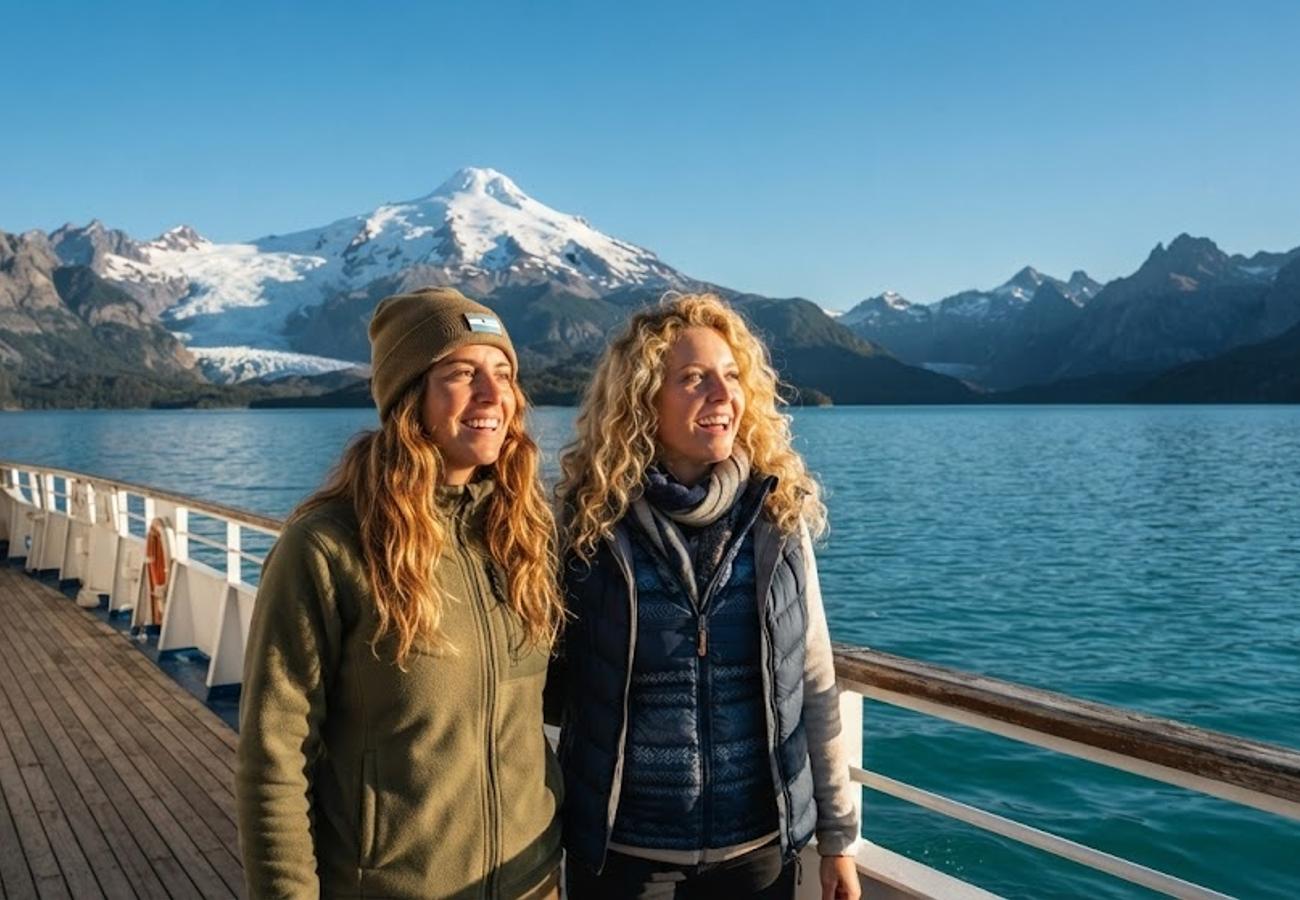
Image generated by AI
The Patagonian Crossing That's Rewriting Travel Rules
Argentina and Chile are quietly reshaping how international travelers experience South America's most dramatic wilderness. What was once a utilitarian mountain pass has transformed into a world-class experiential corridor that fundamentally challenges our assumptions about how travel should work.
The Cruce Andino network—spanning the Continental Divide at a remarkably accessible 1,000 meters—now stands as a beacon for sustainable binational tourism. Rather than surrendering another day to airport terminals and security queues, contemporary explorers are discovering something radically different: a 12-hour odyssey that transforms transit into the actual destination.
I'm witnessing a profound shift in how serious travelers construct their itineraries. The old model—fly, drive, repeat—is colliding with an emerging philosophy that values immersion over convenience.
The Route That Connects Two Nations Through Water
The journey itself reads like a masterclass in geographical poetry. Passengers board in San Carlos de Bariloche, Argentina's alpine jewel, and embark on a carefully choreographed sequence across three protected water bodies managed by both countries' tourism authorities.
The voyage unfolds in three distinct acts:
Lake Nahuel Huapi greets travelers with massive turquoise expanses, framed by the imposing silhouette of Mount Tronador volcano. The waters remain temperate year-round due to the region's unique microclimate. As catamaran engines hum, passengers absorb panoramic views that dwarf most Instagram feeds—and these aren't curated moments, they're unavoidable natural drama.
From there, the route transitions through Lake Frías, a stunning, lesser-known alpine body that feels genuinely untouched. Small bus transfers across pristine mountain passages connect passengers to the final aquatic leg.
The crossing culminates on Lake Todos los Santos in Chile, where the Osorno Volcano dominates the horizon—a perfect cone of dark volcanic rock that appears almost artificial in its symmetry. The route terminates in Puerto Varas, a charming Chilean lakeside city that feels worlds removed from Santiago's urban bustle.
Reddit: "Just did Cruce Andino last week. Everyone warned me it would be 'just transit.' Honestly changed my perspective on what a travel day could be." — r/travel
Why This Matters: The Eco-Tourism Revolution
Regional data tracked by Argentina's Ministry of Tourism and Sports and Chile's SERNATUR (National Tourism Service) reveal a decisive trend: travelers increasingly reject the false choice between speed and experience.
The binational framework deliberately distributes visitor traffic across remote communities that rarely benefit from mainstream tourism economics. Mountain villages like Peulla and Puerto Blest—tiny settlements perched on pristine shorelines—now generate sustainable revenue through ecological lodges and indigenous wilderness guides who previously operated entirely off conventional tourism grids.
Specialized operators including Turisur and Turistour have engineered synchronized departure schedules that maximize both environmental protection and traveler satisfaction. By spreading passenger loads across multiple daily rotations rather than concentrating arrivals, the region successfully prevents ecological degradation while maintaining economic viability.
This represents a genuine alternative to the cruise-ship, resort-chain model that has historically dominated South American tourism. According to recent hospitality analytics, this model of distributed, low-impact experiential travel correlates directly with higher traveler satisfaction and stronger community economic outcomes.
The Nitty-Gritty: What You Must Know Before Booking
This isn't airport travel—it's a binational customs crossing with real regulatory requirements. Preparation matters.
Border Documentation: All passengers require a valid passport with minimum six months residual validity. Necessary regional visas must be secured in advance. Unlike domestic flights, this crossing involves formal international frontier procedures requiring genuine attention to detail.
Biosecurity Rules: Chilean SAG (agricultural protection authority) maintains strict protocols. Unsealed fresh fruit, vegetables, and organic items cannot cross the border checkpoint. This isn't bureaucratic theater—it protects fragile Patagonian ecosystems from invasive species and agricultural contamination. Check your daypack carefully.
Baggage Coordination: The operational team manages automatic baggage transfers across catamaran and bus transitions. Your checked luggage follows a secure parallel route, allowing you to travel unencumbered and actually observe the landscape rather than managing gear.
Advance Bookings Essential: During peak season (November through April, when visibility of surrounding volcanoes remains optimal), securing preferred catamaran positions requires booking four to six weeks in advance. This isn't a walk-up operation—it's demand-constrained by environmental protection mandates.
Trail Compliance: When traversing designated shoreline pathways during scheduled bus transitions, remain strictly on marked trails. Patagonian rainforest soils represent irreplaceable ecosystems requiring active protection from foot traffic degradation.
Reddit: "The biosecurity stuff seemed annoying at first, but watching how seriously they take environmental protection actually made me respect the whole operation more." — r/southamerica
Single Day or Two Days: The Strategic Decision
The classic route executes as a complete 12-hour itinerary during peak season—technically doable as a single-day push for determined travelers. Honest assessment: it's exhausting but rewarding.
Most experienced travelers opt for the two-day variant, incorporating an overnight stay in Peulla. This allows genuine engagement with mountain ecosystems rather than treating the crossing as a box-check activity. The additional 24 hours grants access to optional early-morning treks through protected rainforest, interactions with local indigenous guides, and the psychological decompression that genuine wilderness travel requires.
The Bigger Picture: Why This Moment Matters
This crossing exists at the intersection of three powerful forces: environmental protection mandates, bold binational cooperation, and the unyielding human drive for authentic discovery. According to UNWTO's 2026 sustainable tourism report, this operational model represents one of the clearest examples of successful public-private collaboration in experiential tourism globally.
The Cruce Andino proves that comfort and authenticity aren't mutually exclusive. Modern infrastructure and genuine wilderness encounter can coexist. When travelers choose this route, they're not sacrificing amenities—they're opting for a fundamentally different engagement with landscape and community.
For millions of explorers watching this model unfold across South America, the message is clear: the future of travel rewards those willing to step outside conventional infrastructure and trust that the journey itself contains greater value than rapid destination arrival.
By choosing eco-responsible operators, supporting remote mountain communities, and honoring fragile Alpine ecosystems, contemporary travelers transform ordinary vacations into something genuinely transformative.
Step aboard these vessels—the Patagonian wilderness has been waiting.
Related Travel Guides
Disclaimer
This article is for informational and educational purposes only. It does not constitute legal, financial, or professional advice. While we strive to provide accurate and up-to-date information, travel policies, regulations, and conditions change rapidly. Always verify information with official sources before making travel decisions. Nomad Lawyer makes no representations about the accuracy, reliability, completeness, or suitability of the information provided. Readers should consult qualified professionals for advice specific to their circumstances. The views expressed in this article are those of the author and do not necessarily reflect the views of Nomad Lawyer.
Preeti Gunjan
Contributor & Community Manager
A passionate traveller and community builder. Preeti helps grow the Nomad Lawyer community, fostering engagement and bringing the reader experience to life.
Learn more about our team →