
Croatia’s 500-Year-Old Erdödy Castle Reopens After £11 Million Restoration Welcoming Travellers Again
Croatia’s 500-Year-Old Erdödy Castle Reopens After £11 Million Restoration Welcoming Travellers Again

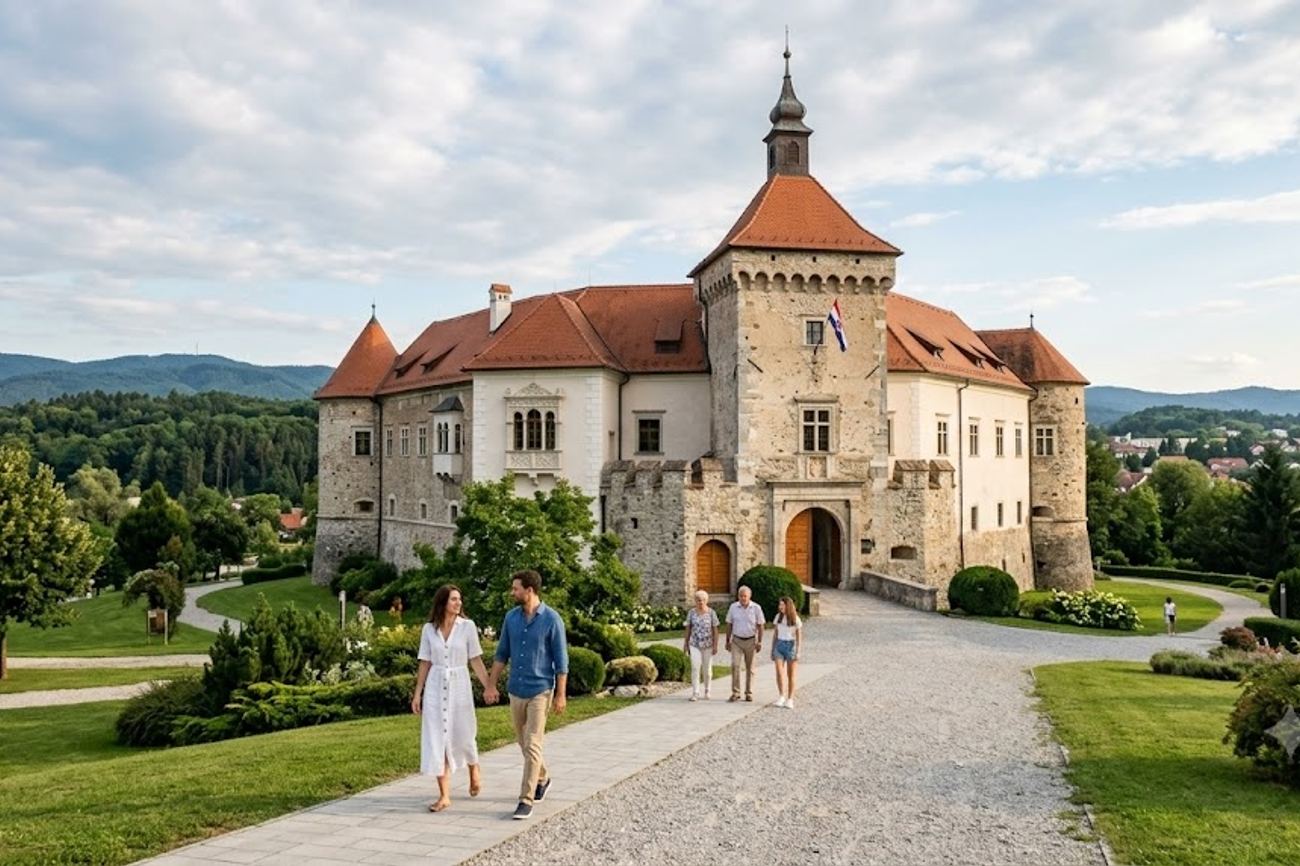
Image generated by AI
[Kerestinec, 2024] — Croatia has officially reopened the 500-year-old Erdödy Castle to the public following a comprehensive €13 million restoration project designed to convert the Renaissance-Baroque landmark into a premier cultural tourism hub.
The site, located in Kerestinec approximately 11 miles from Zagreb, returns to public access after years of intensive conservation work. The project was financed through a strategic combination of the European Union Solidarity Fund, the Croatian state budget, and the National Recovery and Resilience Plan. The reopening marks a shift in the site's utility, moving from a dormant historic monument to a multifunctional cultural center featuring educational facilities, exhibition spaces, and a music school.
The Catalyst for Restoration
The primary driver for the reconstruction was the necessity of heritage recovery following devastating seismic activity in the region. The Erdödy Castle project is a flagship component of a massive national effort to repair earthquake damage across Croatia.
The Croatian government has committed more than €5.12 billion toward post-earthquake reconstruction, with a specific focus on the areas impacted by the Zagreb and Petrinja earthquakes. Within Zagreb County alone, the Ministry of Culture and Media has overseen the restoration or ongoing renovation of over 80 buildings, representing a total investment exceeding €110 million.
Before physical construction began at Erdödy, specialists conducted rigorous archaeological research and architectural assessments. These studies uncovered hidden 19th-century scagliola decorations—a specialized technique using colored plaster to mimic marble—and historic wall paintings that had been obscured for decades. The preservation of these artistic features was prioritized to ensure the castle's interior remains an authentic representation of its multi-century evolution.
Scope of Impact and Site Features
The restoration transforms the castle from a static building into an active destination. The impact extends beyond simple tourism, integrating community services and educational infrastructure into the historic fabric of the site.
The following facilities are now operational at the castle:
- Cultural Institutions: A local heritage collection, dedicated library departments, and a fully equipped music school.
- Visitor Amenities: An interpretation center and versatile exhibition areas for rotating art and history displays.
- Exterior Infrastructure: A completely revitalized parkland featuring new lighting systems, pedestrian pathways, and outdoor furniture.
- Architectural Recovery: The full reconstruction of the historic entrance bridge located at the northern façade, restoring the original visual link between the castle and the landscape.
- Modern Upgrades: Implementation of new technical installations and energy-efficiency systems to meet current building standards without compromising the 16th-century aesthetic.
Practical Traveler Advisory and Strategic Insights
For tourists currently booking trips to the Croatian capital, the reopening of Erdödy Castle provides a high-value alternative to the crowded city center of Zagreb. Because the site is located just 11 miles from the capital, it is accessible via short taxi or shuttle trips, making it a viable half-day excursion.
Travelers should note that the site is no longer just a "museum" visit. The inclusion of a music school and performance spaces means the castle will host active concerts and cultural programs throughout the year. Visitors can expect a hybrid experience: the architectural grandeur of a Renaissance-Baroque manor combined with the amenities of a modern gallery.
From a logistical standpoint, the upgraded parkland and reconstructed bridge mean the site is now significantly more accessible for those with mobility concerns compared to its pre-restoration state. The integration of modern energy and technical systems also ensures that interior climate control is managed, protecting visitors from the extreme temperature swings common in old stone structures.
Evolution of a Landmark
The castle’s current state is the result of five centuries of continuous architectural layering. Originally developed as a manor in the early 16th century, it underwent a major expansion in 1576 under Count Petar II Erdödy. This expansion established the castle's defining silhouette: a two-story structure anchored by four cylindrical corner towers.
The meticulously restored Erdödy Castle serves as a premier cultural landmark, blending Renaissance architecture with modern visitor facilities. Travelers can coordinate their visit through the Official Croatia Tourism portal to discover integrated regional itineraries and local heritage guides.
The site's history is not solely one of nobility. The building's timeline includes darker chapters, having served as a prison camp during the Second World War and later functioning as a military facility. This transition from a private manor to a site of conflict, and finally to a public cultural asset, is a central theme of the new interpretation center.
The current reopening reflects a broader European trend in heritage management. Rather than maintaining "frozen" monuments with restricted access, Croatia is adapting its historical assets into "living" spaces that drive local economic growth through sustainable tourism and community engagement.
FAQ: Erdödy Castle Visit 2024
How far is Erdödy Castle from central Zagreb? The castle is located in Kerestinec, approximately 11 miles from the center of Croatia's capital, making it an easy excursion for those staying in the city.
What is scagliola, and can I see it at the castle? Yes. Scagliola is a 19th-century decorative technique using pigmented plaster to imitate marble. These rare features were uncovered and restored during the €13 million project.
Is the castle accessible for people with limited mobility? Yes. The restoration included significant infrastructure upgrades, including new pathways in the park and a reconstructed entrance bridge to improve visitor access.
What can I do at the castle besides view the architecture? Visitors can explore the local heritage collection, visit the interpretation center, and attend concerts or educational events hosted by the onsite music school and exhibition spaces.
A 500-year-old fortress reborn as a modern cultural engine.
#ErdödyCastle #ZagrebTourism2024 #CroatiaHeritageRecovery #Kerestinec #RenaissanceArchitecture #EUrecoveryfund
Related Travel Guides
- New York Outpaces Toronto, Mexico City and More American and Caribbean Shopping Travel Destinations for Shopaholics Turning Retail Into an Experience
- Iceland Resonates With Hawaii and Sicily in Attracting Adventure Seekers in Fiery Landscapes Booming Volcano Travel Across America
- Zimbabwe’s Masuwe Tourism City Could Transform Victoria Falls Travel With Longer Stays, MICE and New Experiences
Disclaimer
This article is for informational and educational purposes only. It does not constitute legal, financial, or professional advice. While we strive to provide accurate and up-to-date information, travel policies, regulations, and conditions change rapidly. Always verify information with official sources before making travel decisions. Nomad Lawyer makes no representations about the accuracy, reliability, completeness, or suitability of the information provided. Readers should consult qualified professionals for advice specific to their circumstances. The views expressed in this article are those of the author and do not necessarily reflect the views of Nomad Lawyer.
Kunal K Choudhary
Co-Founder & Contributor
A passionate traveller and tech enthusiast. Kunal contributes to the vision and growth of Nomad Lawyer, bringing fresh perspectives and driving the community forward.
Learn more about our team →