
India Expands Visa-on-Arrival Access to 180 Countries as Global Travellers Gain Easier Entry Opportunities
India Expands Visa-on-Arrival Access to 180 Countries as Global Travellers Gain Easier Entry Opportunities

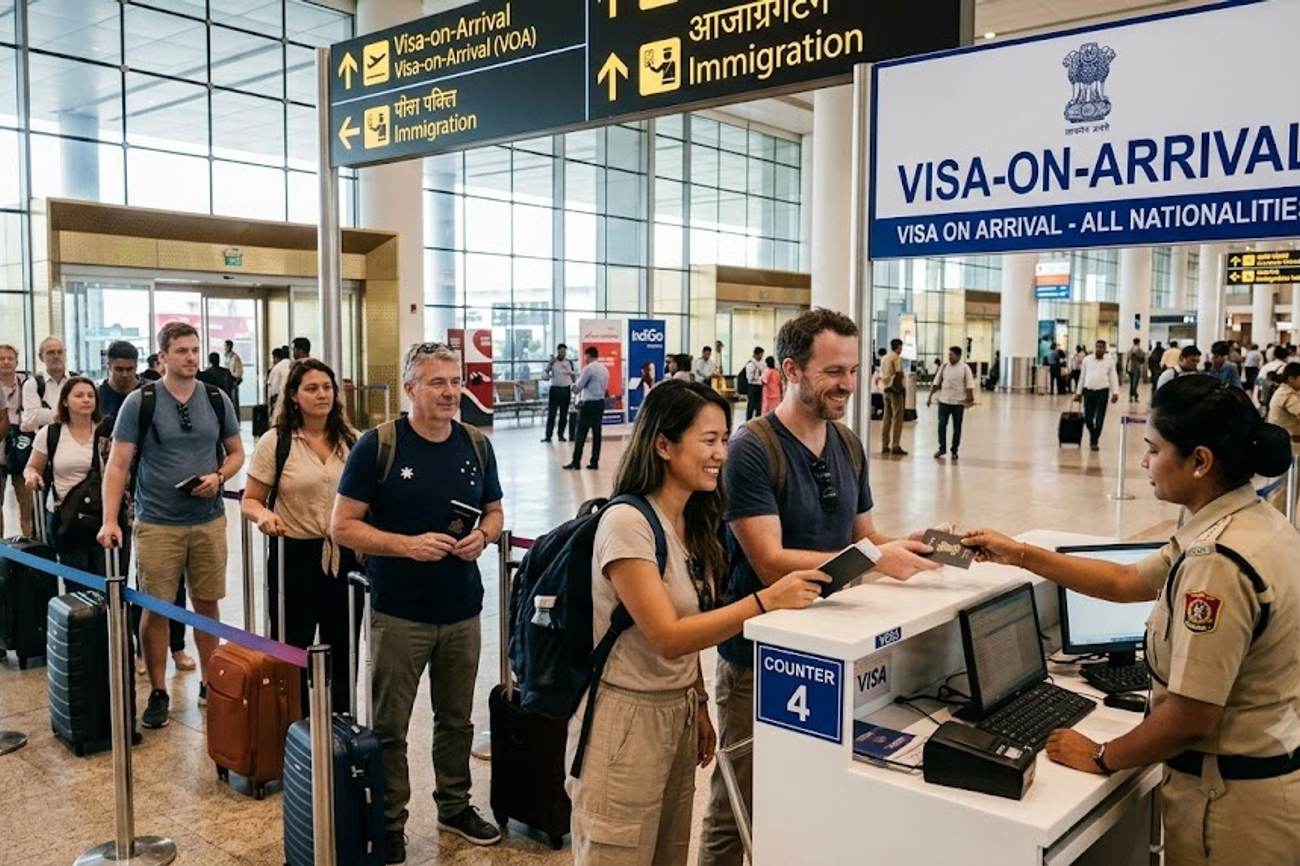
Image generated by AI
A business traveler from Germany or a leisure tourist from Canada planning a spontaneous trip to New Delhi may soon find their pre-departure checklist significantly shortened. Instead of navigating the bureaucratic hurdles of pre-arranged visas, these travelers will soon be able to secure entry permissions immediately upon landing on Indian soil.
India's Massive Visa-on-Arrival Expansion for 2024
The Indian government is preparing a systemic overhaul of its border entry protocols, transitioning from a restrictive visa regime to a highly accessible framework. Starting in October, India plans to extend its visa-on-arrival (VoA) facility to citizens of approximately 180 countries. This represents a staggering increase in accessibility, as the current system is limited to only 11 nations, including Japan, Singapore, and Finland.
This strategic pivot is designed to eliminate the administrative friction that often deters international visitors. By shifting the visa process from the consulate or online portal to the point of entry, India is positioning itself to compete with other global tourism hubs that utilize flexible entry systems to drive economic growth. The initiative is specifically targeted at boosting the tourism sector, enhancing business connectivity, and encouraging spontaneous travel—a segment of the market that is typically deterred by lengthy visa processing times.
The implementation phase will require significant coordination across immigration departments. Authorities must ensure that major international gateways are equipped with the staffing and technology necessary to handle a surge in on-arrival applications without creating bottlenecks at immigration queues.
Affected Nationalities and Entry Status
The scope of this expansion is nearly global, though it is not universal. The following breakdown details who is included and who remains excluded under the proposed October framework:
- Eligible Travelers: Citizens from approximately 180 countries (expanding from the current 11-country list).
- Excluded Nationalities: Citizens from 8 specific countries will remain ineligible for the visa-on-arrival facility. This list includes nationals from Pakistan and Afghanistan.
- Current VoA Beneficiaries: Travelers from Japan, Singapore, and Finland (who will see their existing privileges maintained within the larger framework).
- Implementation Date: The expanded system is slated for introduction in October.
Your Rights as a Passenger and Traveler
While visa policies are governed by sovereign state laws rather than passenger rights frameworks like EU261, the shift to a visa-on-arrival system changes your legal standing upon arrival. If you are traveling to India under this new scheme, you should be aware of the following logistical and legal considerations:
Entry Documentation and Legal Standing Under the proposed system, your legal right to enter the country is contingent upon the successful granting of the VoA at the airport. Unlike a pre-approved visa, which provides a guarantee of eligibility before boarding, a VoA means the final decision rests with the immigration officer at the port of entry. If a VoA is denied, the airline that transported you is generally responsible for your repatriation under international aviation norms, though this can lead to significant delays.
The Role of the Carrier Airlines are required to verify that passengers possess the necessary travel documents. With the expansion to 180 countries, airlines will update their IATA Timatic databases. If you are traveling in October, always verify your status via a flight tracking service or the airline's own status page to ensure the policy is active before you depart.
Administrative Recourse If you encounter issues with entry or believe you were wrongly denied a VoA despite being from one of the 180 eligible countries, your primary point of contact is the Foreigners Regional Registration Office (FRRO). For those traveling from the US or UK, consulting the US Department of Transportation or the UK CAA can provide guidance on carrier responsibilities regarding documentation errors.
Rebooking Strategy and Alternatives
For travelers who find themselves caught in the transition period between the old pre-visa system and the new October VoA rollout, a strategic approach to booking is necessary.
The "Wait-and-See" Refund Strategy If you are booking a trip for late September or early October, be cautious. If you have already paid for a traditional visa and the VoA system launches, you likely cannot get a refund for the visa fee. However, if you are booking flights and are unsure about your visa status, check if your fare allows for a flexible change. If the VoA system is delayed, having a refundable ticket allows you to push your trip back without financial loss.
Alternative Entry Routes If you are a national of one of the 8 excluded countries, the VoA is not an option. You must continue to use the traditional e-Visa or consular visa pathways. For those in the 180-country bracket, if you find the queues at major hubs like Indira Gandhi International (DEL) or Chhatrapati Shivaji Maharaj International (BOM) are too long due to the new system, consider entering via smaller international airports where immigration traffic may be lighter.
Competitor Comparison For business travelers, the ease of entry into India now rivals other emerging markets. If you are choosing between visiting India or another regional hub, the October change makes India a significantly more attractive option for short-notice professional exchanges and exhibitions.
FAQ: India Visa-on-Arrival Expansion 2024
Am I entitled to a visa-on-arrival in October? If you are a citizen of one of the approximately 180 eligible countries, yes. However, if you are from one of the 8 excluded nations, including Pakistan or Afghanistan, you must still apply for a visa in advance.
Can I get a refund for a visa I already purchased? Generally, no. Visa application fees are processed by government entities and are typically non-refundable, regardless of whether a more convenient entry method becomes available after your payment.
What happens if my VoA is denied at the airport? If the immigration officer denies your entry, you will be held in a transit area. The airline that flew you to India is typically responsible for arranging your return flight to your point of origin.
Which countries currently have VoA access? Currently, only 11 countries, including Japan, Singapore, and Finland, have access. This will expand to 180 countries starting in October.
Ensure your passport is valid for at least six months beyond your stay to avoid being turned away at the gate.
Tags: India-VoA-2024, DEL-Airport, BOM-Airport, India-Tourism-Policy, Immigration-Law-India, Visa-on-Arrival-Expansion
Related Travel Guides
- Philippines Domestic Travel Resilience Is Now Key to Better Protect Tourism as Air Disruption Grows
- Tanzania and UNESCO Unleash Powerful Heritage Transformation as Zanzibar Tourism Enters a New Sustainable Growth Era
- Ethiopia Expands Bale Conservation Tourism With Robe Access and Goba Park Links as Lodge Projects Advance
Disclaimer
This article is for informational and educational purposes only. It does not constitute legal, financial, or professional advice. While we strive to provide accurate and up-to-date information, travel policies, regulations, and conditions change rapidly. Always verify information with official sources before making travel decisions. Nomad Lawyer makes no representations about the accuracy, reliability, completeness, or suitability of the information provided. Readers should consult qualified professionals for advice specific to their circumstances. The views expressed in this article are those of the author and do not necessarily reflect the views of Nomad Lawyer.
Preeti Gunjan
Contributor & Community Manager
A passionate traveller and community builder. Preeti helps grow the Nomad Lawyer community, fostering engagement and bringing the reader experience to life.
Learn more about our team →