
Zimbabwe’s Masuwe Tourism City Could Transform Victoria Falls Travel With Longer Stays, MICE and New Experiences
Zimbabwe’s Masuwe Tourism City Could Transform Victoria Falls Travel With Longer Stays, MICE and New Experiences

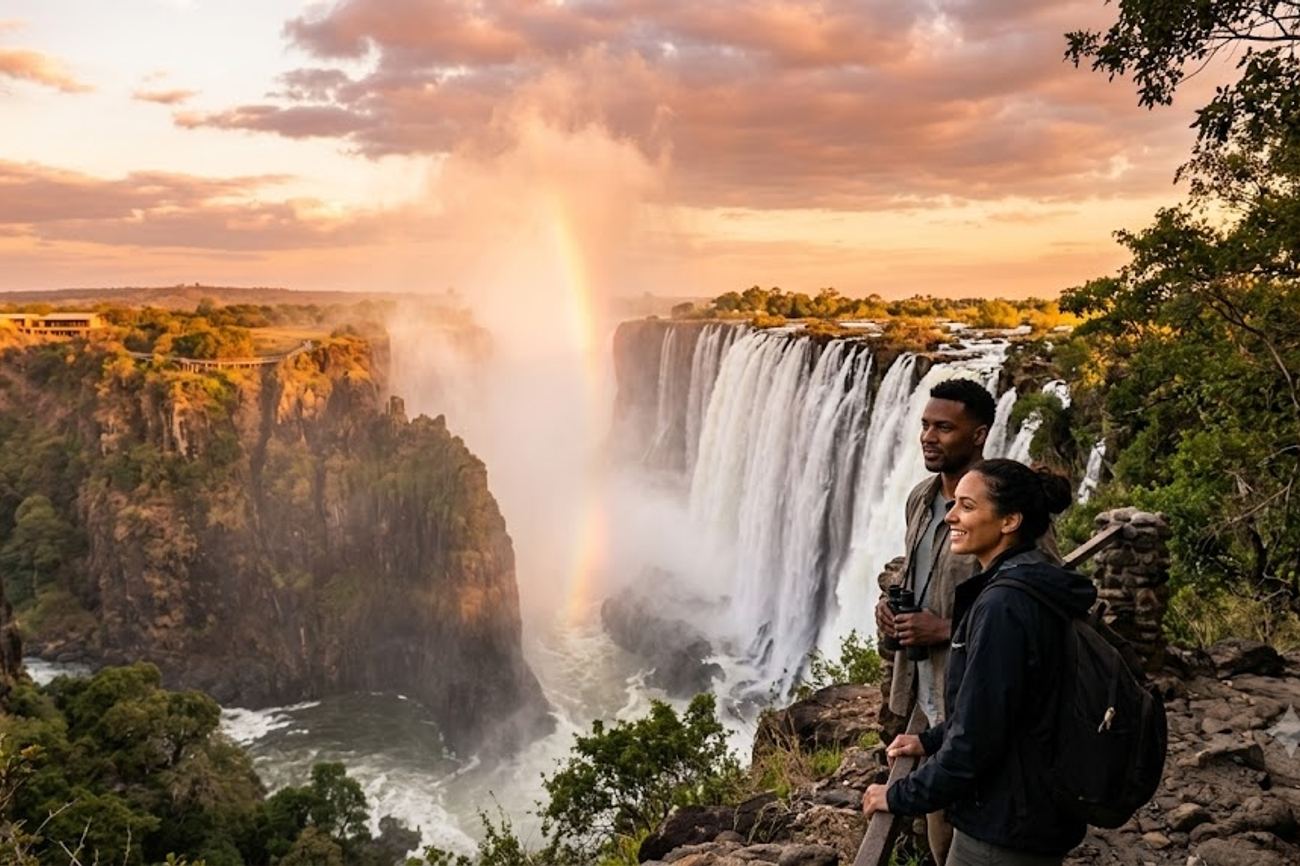
Image generated by AI
1,200 hectares of planned integrated development signal Zimbabwe's aggressive pivot from "bucket-list" sightseeing to a high-yield, long-stay tourism economy. By shifting the center of gravity away from the immediate perimeter of the waterfall, the Zimbabwean government is attempting to solve a systemic industry problem: the "short-stay" trap. For decades, Victoria Falls has functioned as a transit point—a place where travelers spend 48 to 72 hours before departing for other regional hubs. The Masuwe Tourism City project is a calculated effort to transform this transit point into a destination anchor.
The Masuwe Pivot: Beyond the Waterfall
The traditional tourism model in Victoria Falls has been dangerously monolithic, relying almost exclusively on the allure of the falls. The Masuwe development, situated approximately 10 km from the city center, represents a strategic diversification of the region's economic utility. This is not merely a hotel expansion project; it is the creation of a specialized tourism ecosystem designed to capture multiple traveler personas simultaneously.
The state-backed Mosi Oa Tunya Development Company is spearheading the effort, focusing specifically on Lot 1 of the Jafuta Estate, which comprises 271.5 hectares. The blueprint for this site is expansive, integrating high-end villas, holiday homes, and a golf estate with essential civic infrastructure, including a medical tourism center and a dedicated hotel school. By embedding a hotel school into the development, Zimbabwe is addressing the long-term labor shortage in luxury hospitality, ensuring that the human capital exists to support the physical infrastructure.
This shift is codified in the Zimbabwe Tourism and Hospitality Industry Policy 2025–2030. The policy emphasizes destination competitiveness and sustainable investment, moving away from volume-based tourism toward value-based tourism. The goal is to incentivize the "slow travel" movement, where visitors remain in the region for weeks rather than days, thereby increasing the average spend per visitor and distributing economic benefits more broadly across the regional service sector.
Infrastructure Milestones and Arrival Data
The transition from a conceptual "Tourism City" to a physical reality has followed a strict regulatory timeline. The project has moved through critical feasibility and legal phases to ensure that the massive scale of the 1,200-hectare wider area is manageable.
| Development Milestone | Official Status / Date |
|---|---|
| Bulk Infrastructure Feasibility Assessment | Completed June 2022 |
| Cabinet Endorsement | 21 March 2023 |
| Lot 1 Subdivision Permit & Layout | Approved June 2024 |
| Cadastral Survey (271.5 hectares) | Completed April 2025 |
| Initial Water Infrastructure | ZINWA reported on site |
The economic justification for this investment is supported by national arrival trends. According to the Zimbabwe National Statistics Agency (ZIMSTAT), the country saw a notable uptick in international interest leading into 2025. In the third quarter of 2025, Zimbabwe recorded 496,668 tourist arrivals, a 10.1% increase over the 450,922 arrivals recorded during the same period in 2024.
While these figures are national, they indicate a growing appetite for Zimbabwean destinations. However, the volatility of these numbers highlights the exact problem Masuwe aims to solve. National arrivals fluctuated from a high of 496,668 in Q3 2025 to a low of 347,555 in Q1 2025. This seasonality creates "ghost town" effects during the off-peak months, where hotels and restaurants operate at a fraction of their capacity.
Expert Analysis: The MICE Strategy and Aviation Synergy
For the seasoned traveler or corporate event planner, the most critical element of the Masuwe project is the focus on MICE (Meetings, Incentives, Conferences, and Exhibitions). In the aviation and tourism industry, MICE is the ultimate hedge against seasonality. While leisure travelers follow the weather and holiday calendars, corporate delegations travel based on fiscal years and industry cycles.
By building a convention center and high-capacity conference facilities, Zimbabwe is creating a "second anchor" for the region. The direct consequence for the traveler is a shift in pricing and availability. Traditionally, Victoria Falls experiences extreme price spikes during peak leisure seasons. A robust MICE sector introduces a different demand curve, potentially stabilizing hotel rates and ensuring that high-end services remain operational year-round.
The Masuwe Tourism City project aims to diversify the Victoria Falls region by integrating MICE facilities and extended-stay luxury accommodations to reduce tourist turnover. This strategic expansion aligns with the broader growth objectives outlined by the Zimbabwe Tourism Authority, focusing on sustainable infrastructure and high-value visitor experiences.
This strategy is only viable because of the existing aviation infrastructure. The Airports Company of Zimbabwe manages a facility with a 4,000-metre runway—a specification that allows for the landing of wide-body aircraft from long-haul markets in Europe, Asia, and North America. With a combined terminal capacity of 1.5 million passengers annually, the airport is currently underutilized.
The data proves this gap: Victoria Falls International Airport handled 139,652 passengers in Q4 2024, but that number dropped to 107,500 in Q1 2025. The Masuwe development is designed to fill those Q1 troughs. If a major international medical or sports conference is scheduled for the low season, it transforms the airport from a seasonal gateway into a consistent international hub.
Furthermore, the integration of medical tourism facilities suggests that Zimbabwe is eyeing the "wellness" market—a high-spending demographic that typically requires longer stays and specialized logistics. This moves Victoria Falls beyond the "sightseeing" category and into the "lifestyle and health" category, which is far more resilient to geopolitical or economic shocks.
Key Takeaways
- Strategic Diversification: Zimbabwe is expanding the Victoria Falls offering from a single-attraction destination to a multi-purpose hub featuring sports, medical, and business facilities.
- Combatting Seasonality: The focus on MICE tourism is a deliberate attempt to stabilize the passenger dip seen between Q4 and Q1, utilizing the 1.5 million passenger capacity of the international airport.
- Investment Scale: The project spans a wider area of 1,200 hectares, with a specific immediate focus on 271.5 hectares at Lot 1 of Jafuta Estate.
- Growth Trends: National tourism is on an upward trajectory, with a 10.1% year-on-year increase in arrivals reaching 496,668 in Q3 2025.
- Sustainability Constraints: Because the development sits within the Wildlife Dispersal Area of the Kavango Zambezi Transfrontier Conservation Area, growth must be balanced against wildlife migration and environmental preservation.
FAQ: Victoria Falls Masuwe Development 2025
Will the Masuwe development increase hotel prices in Victoria Falls? In the short term, increased luxury supply may stabilize rates. In the long term, the shift toward MICE and medical tourism may create new price tiers, though it generally increases overall competition, which can benefit the budget-conscious traveler.
How does Masuwe affect the environment around the falls? The project is located 10 km from the city and falls within a Wildlife Dispersal Area. Developers are required to balance urban growth with the ecological needs of the Kavango Zambezi Transfrontier Conservation Area to prevent habitat fragmentation.
Can business travelers use Victoria Falls as a hub for other destinations? Yes. The 4,000-metre runway supports wide-body aircraft, making it an ideal base for corporate groups to combine business meetings at Masuwe with leisure excursions to other Zimbabwean wildlife attractions.
When will the Masuwe facilities be open to the public? While specific opening dates for individual hotels are not listed, the project has cleared major hurdles, including the April 2025 cadastral survey and the June 2024 subdivision permit, signaling that construction is moving into active phases.
The gamble for Zimbabwe is clear: transform a natural wonder into a sustainable economic engine, or remain a beautiful, but brief, stopover.
Tags: Mosi Oa Tunya Development Company, Victoria Falls International Airport, Zimbabwe Tourism Policy 2025, Masuwe Tourism City, Kavango Zambezi Transfrontier Conservation Area
Related Travel Guides
- Finland Tightens Border Checks For Autumn Travel
- Florida and New York Eye Tourism Boost as US Sets Sights on 100 Million International Visitors by 2030
- Global Sustainable Tourism Council CEO Randy Durband Urges Industry Shift from Destination Promotion to Supply Chain Management and Corporate Certification
Disclaimer
This article is for informational and educational purposes only. It does not constitute legal, financial, or professional advice. While we strive to provide accurate and up-to-date information, travel policies, regulations, and conditions change rapidly. Always verify information with official sources before making travel decisions. Nomad Lawyer makes no representations about the accuracy, reliability, completeness, or suitability of the information provided. Readers should consult qualified professionals for advice specific to their circumstances. The views expressed in this article are those of the author and do not necessarily reflect the views of Nomad Lawyer.
Naina Thakur
Contributor & Travel Specialist
Travel enthusiast and legal writer covering visa regulations, responsible tourism, and cultural journeys across global destinations.
Learn more about our team →