
Cleveland Hopkins International Airport Resumes Flights After August 2026 Airfield Security Breach
Cleveland Hopkins International Airport restored airfield operations on August 28, 2026, following a one-hour security pause caused by an escort failure in a restricted zone.

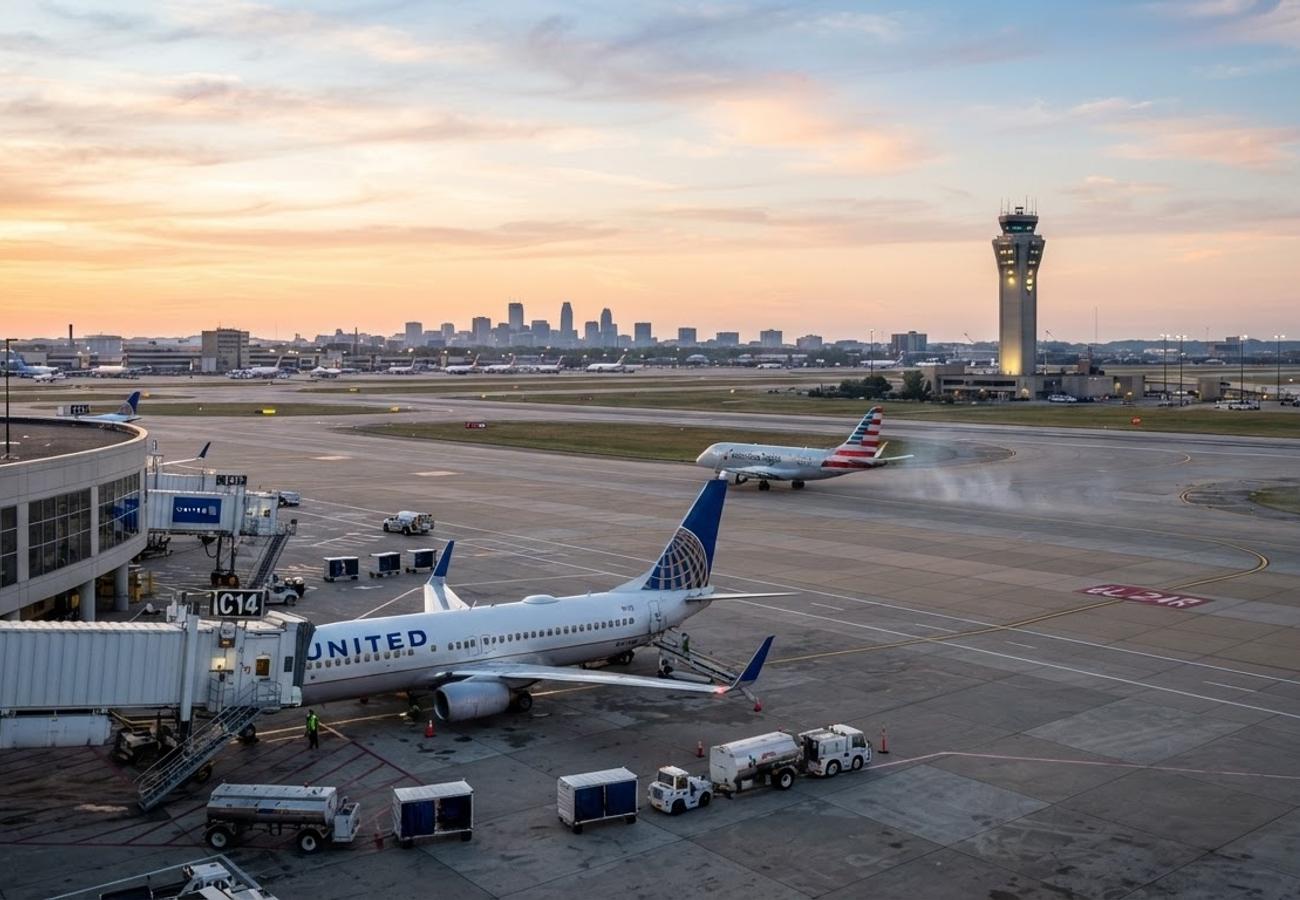
Image generated by AI
Cleveland Hopkins International Airport (CLE) has fully restored its airfield operations following a security incident on August 28, 2026, that triggered a one-hour total pause on aircraft movements. The disruption caused a wave of ripple delays for early-morning departures and arrivals during a peak travel window.
The incident, which occurred during the early hours of Friday, August 28, forced airport security and law enforcement to conduct an emergency sweep of restricted airfield zones. While the pause was relatively brief, it impacted a critical window for business travelers and connecting passengers, leading to temporary ground stops and aircraft holding patterns.
Security Breach Triggers Early Morning Ground Stop
Reports indicate that airfield activity at Cleveland Hopkins came to a complete halt on the morning of August 28, 2026. The decision to pause operations was a precautionary measure taken by airport authorities after a security matter was identified within the restricted airfield perimeter.
According to industry reports, the disruption was not the result of a prolonged emergency but rather a strict adherence to safety protocols. Law enforcement and security personnel were required to perform a comprehensive sweep of the airfield to ensure no unauthorized persons or objects remained in sensitive areas before flights could safely land or depart.
The pause lasted approximately 60 minutes. This timing was particularly disruptive as it coincided with the primary departure window for early-morning commercial flights. During this hour, aircraft that had already reached the taxiway remained stationary, while inbound flights were forced into holding patterns or, in some instances, diverted to alternative airports.
The catalyst for the shutdown was the loss of visual contact between an authorized escort and an individual provided by an airline contractor. The individual had been granted access to a non-public area of the airfield under strict supervision. Once the escort was interrupted and the person became separated, standard aviation security mandates required an immediate cessation of all airfield movements until the individual was located and the area verified as secure.
Restoration of Airfield Activity and Flight Recovery
Normal operations at Cleveland Hopkins officially resumed around 7 a.m. local time on August 28, once security teams confirmed that all restricted areas had been cleared.
Flight tracking data reveals that while aircraft began pushing back from gates and taxiing shortly after the lift of the ground stop, the schedule remained unstable for several hours. Airlines were forced to implement several recovery measures:
- Departure Adjustments: Most early flights departed significantly later than their scheduled times.
- Gate Reassignments: Ground crews shifted aircraft to different gates to optimize the flow of departing traffic.
- Passenger Rebooking: A minority of travelers missed critical connections due to the one-hour delay, necessitating immediate rebooking by carrier agents.
Passenger accounts from the scene described a period of uncertainty, with some travelers reporting they were asked to deplane or remain on the aircraft while waiting on taxiways. Once the duration of the pause was clarified as a short-term security sweep, boarding processes resumed.
By the late morning of August 28, the flight schedule had largely stabilized. Most remaining delays were measured in minutes rather than hours, as crew rotations and aircraft positioning were realigned to compensate for the early morning gap.
Analysis of Aviation Security Protocols
The events at Cleveland Hopkins mirror standard operating procedures used across the global aviation network. When a person without independent security clearance enters a restricted zone and is no longer under the direct supervision of an authorized escort, it is legally and operationally classified as a security breach.
Under these guidelines, a systematic sweep is mandatory. Industry observers note that airports typically prefer a total, short-term stoppage over partial restrictions. This approach allows security teams to clear the entire affected area more efficiently, providing a definitive "clear" signal that allows the airport to return to full capacity without lingering risks.
Following the incident, airport officials initiated a review of the event. This investigation focuses on the specific failure of the contractor's escort procedure and is evaluating whether enhanced training or more stringent access controls are required to prevent a recurrence.
Current Status and Guidance for Northeast Ohio Travelers
As of the end of August 2026, federal air traffic data confirms that Cleveland Hopkins International Airport is operating under normal conditions. There are currently no ground stops or security-related restrictions in place, and traffic patterns have returned to their routine seasonal volume.
Airport authorities continue to advise passengers to utilize airline-specific communication channels—such as mobile apps and SMS alerts—to monitor flight status. These tools provide the most accurate real-time data regarding gate changes and estimated departure times, which are more precise than general airport announcements during periods of disruption.
For those traveling through CLE in the coming months, the airport is continuing its broader modernization efforts. These capacity programs, which include upgraded security checkpoints and improved passenger flow systems, are designed to mitigate the impact of unexpected operational pauses and better manage high passenger volumes.
Why This Matters: The Impact on the Modern Traveler
From a logistical standpoint, this incident highlights the fragility of the "just-in-time" aviation model. A single human error—in this case, a contractor losing sight of an escort—can freeze an entire hub's operations. For the traveler, this means that even a "brief" 60-minute pause can result in a missed connection three states away, as the ripple effect of a ground stop extends far beyond the local airport.
Legally, these strict protocols exist to prevent catastrophic security failures. While frustrating for passengers, the immediate shutdown of an airfield is the only way to guarantee that a restricted zone has not been compromised. This event serves as a reminder that security "sweeps" are non-negotiable components of airfield management.
Operations have now fully stabilized at Northeast Ohio's primary gateway.
Related Travel Guides
Disclaimer
This article is for informational and educational purposes only. It does not constitute legal, financial, or professional advice. While we strive to provide accurate and up-to-date information, travel policies, regulations, and conditions change rapidly. Always verify information with official sources before making travel decisions. Nomad Lawyer makes no representations about the accuracy, reliability, completeness, or suitability of the information provided. Readers should consult qualified professionals for advice specific to their circumstances. The views expressed in this article are those of the author and do not necessarily reflect the views of Nomad Lawyer.
Kunal K Choudhary
Co-Founder & Contributor
A passionate traveller and tech enthusiast. Kunal contributes to the vision and growth of Nomad Lawyer, bringing fresh perspectives and driving the community forward.
Learn more about our team →