
Aviation Updates: Massive Delays at Charlotte/Douglas International Trigger Travel Chaos for American Airlines
As catastrophic logistical bottlenecks paralyze major transit grids, a brutal wave of 141 delays at Charlotte/Douglas International triggers widespread travel chaos for American Airlines passengers.

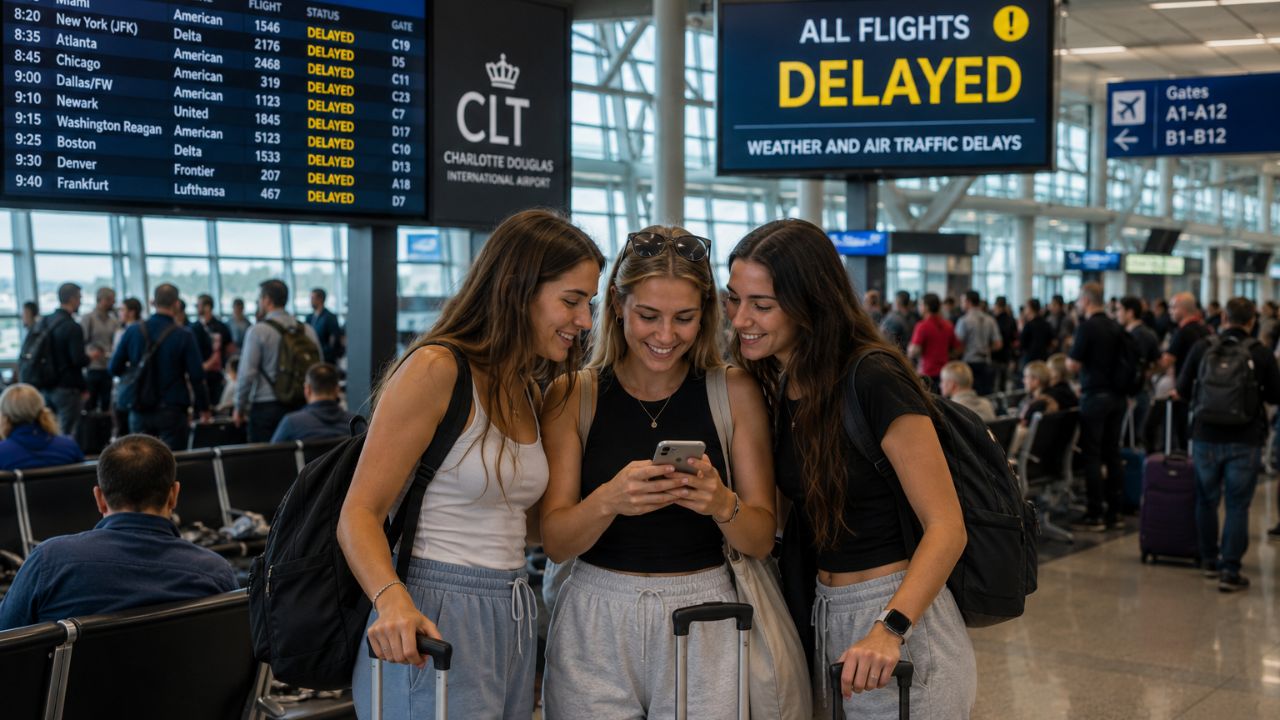
Image generated by AI
Aviation Updates: Massive Delays at Charlotte/Douglas International Trigger Travel Chaos for American Airlines
As extreme operational friction and suddenly compounding infrastructure bottlenecks continue to terrorize standard travel itineraries across North Carolina, a massive scheduling crisis at Charlotte/Douglas International Airport has violently triggered cascading schedule disruptions across major domestic routes to Miami, New York, and Atlanta.
Image generated by AI
As high-impact airline news platforms rapidly issue continuous, grim aviation updates regarding the intense fragility of massively congested primary transit grids, a severe logistical meltdown is actively rocking the American Southeast. Amidst widespread rolling travel chaos and severe airport disruptions, a massive wave of 141 scheduled flight delays violently slammed into Charlotte/Douglas International Airport (CLT) today. While legacy carriers aggressively executed tactical rolling delays to miraculously avoid outright flight cancellations, the sheer volume of scheduling friction completely paralyzed the massive high-volume transfer hub. As critical domestic and international corridors connecting to major centers like Miami, New York, and Atlanta began to massively back up, exhausted travelers were violently subjected to grueling terminal waits, entirely upending corporate timelines and premium leisure itineraries.
Expanded Overview: The Collapse of Frictionless Transit
To fully comprehend the sheer scale of this severe network degradation, commercial aviation analysts must closely examine how rapidly localized scheduling friction violently reshapes continental hub-and-spoke connectivity.
The massive disruption pattern actively terrorizing the Charlotte grid is primarily defined by high-volume scheduling friction affecting absolutely critical domestic transfer routes. Real-time, tracked commercial flight data, rigorously equaling the strict standards of the FAA, explicitly confirmed that while outright flight cancellations were successfully avoided, the immense strain of 141 cascading delays caused a massive domino effect. Because CLT functions primarily as a high-volume transfer hub, a delay on a single incoming leg frequently forces desperate travelers to miss tightly scheduled onward flights to secondary domestic destinations. Passenger advocacy standards aggressively outlined by the U.S. Department of Transportation (DOT) highlight that even when cancellations are totally avoided, prolonged ground delays violently strain airport infrastructure, directly resulting in massive, crowded boarding gates, severe baggage claim backlogs, and incredibly hostile demands for customer service interventions.
Section-Wise Breakdown: The American Airlines Bottleneck
Terminal operations are violently degrading across the entire Charlotte footprint, forcing major legacy operators to furiously deploy rolling delays to strictly ensure passengers are not totally stranded overnight.
The American Airlines Meltdown: A critical breakdown of individual airline performance explicitly indicates that American Airlines and its massive network of regional subsidiaries violently shouldered the most extensive logistical impact. As Charlotte/Douglas International serves as a vital, massive fortress hub for the carrier, mainline American Airlines aggressively recorded 83 severely delayed flights, completely accounting for roughly 11% of its total daily operation at the facility.
Regional Carrier Shockwave: Regional partners operating under the massive American Eagle banner faced incredibly similar, devastating operational challenges. PSA Airlines saw 30 flights aggressively delayed (12% of its scheduled fleet), heavily followed by Piedmont Airlines with 12 severe delays (4% of its fleet), and Envoy Air recording 1 flight delay (3% of its fleet). These regional disruptions completely sever the vital circulatory network linking smaller municipal airports directly to the Charlotte mega-hub.
Secondary Legacy Friction: Other massive domestic and international legacy carriers experienced minor to moderate friction. Delta Air Lines officially recorded 2 delays (7% of operations), while Frontier and Southwest each aggressively logged single flight delays. On the critical international front, Lufthansa and Etihad Airways each registered a single delayed flight, representing a massive 50% delay rate for their highly limited daily departures from the terminal. Regional contractors such as Mesa Airlines, heavily working under the United Airlines banner, and Canada’s Jazz Aviation also recorded 1 delay apiece.
Disruption Details: Verified Charlotte Delay Matrix
To ensure stranded passengers and commercial aviation analysts can accurately track the incredibly precise operational telemetry of this massive network slowdown, the verified structural data has been consolidated into the exact, mandatory matrix below.
| Airline / Operator | Verified Delays | Percentage of Daily Operations |
|---|---|---|
| American Airlines (Mainline) | 83 Delays | 11% |
| PSA Airlines (American Eagle) | 30 Delays | 12% |
| Piedmont Airlines | 12 Delays | 4% |
| Delta Air Lines | 2 Delays | 7% |
| Envoy Air (American Eagle) | 1 Delay | 3% |
| Lufthansa | 1 Delay | 50% |
| Etihad Airways | 1 Delay | 50% |
| Frontier / Southwest | 1 Delay Each | N/A |
| Mesa Airlines / Jazz Aviation | 1 Delay Each | N/A |
| Total Cancellations | 0 Cancellations | 0% |
(Source: FlightAware and CLT Airport Authority)
Industry Analysis: The Macroeconomic Impact of Terminal Gridlock
Air travel explicitly across the massive Southeastern transit corridor continues to massively struggle, driven violently by incredibly fragile air traffic flow constraints and severely outdated scheduling buffers.
The immediate economic impact of these massive aviation bottlenecks actively extends well beyond the perimeter of the airfield, directly influencing regional tourism and business infrastructure. Tourism frameworks aggressively monitored by state commerce divisions heavily indicate that severe flight delays often lead to immediate, massive financial loss for localized service industries. Delayed arrivals mean highly lucrative missed check-in windows at regional hotels, violently abbreviated rental car reservations, and completely cancelled bookings at local dining or entertainment venues. Furthermore, because Charlotte acts as a vital, high-yield gateway to broader Southeast tourism corridors, persistent delays severely threaten corporate transit confidence. Business travelers attending conventions or time-sensitive corporate events within Charlotte’s financial district face incredibly heavy lost productivity, while leisure travelers heading toward North Carolina’s coastal or mountainous vacation zones face brutally shortened itineraries.
Passenger Impact: Protecting the Vacation Baseline
For the everyday premium domestic traveler and budget-conscious vacationer, the immediate consequence of this massive structural slowdown directly translates to a monumental, highly verified spike in transit anxiety.
Travelers desperately attempting to navigate complex East Coast flight itineraries frequently encounter heavily delayed baggage, catastrophic missed connections, and the terrifying threat of sudden airspace gridlock. While airline executives successfully avoided total fleet groundings through the use of highly calculated tactical rolling delays, the reality on the ground was purely chaotic. Passengers were ultimately given the means of completing their travels, but arriving hours behind schedule completely destroyed prepaid reservations and seamless corporate transfers.
Conclusion: A Network Stretched to the Limit
Ultimately, the aggressive, massive deployment of rolling delays at Charlotte/Douglas International Airport actively marks a massively significant stress test of the American Airlines hub system. By violently pushing the absolute limits of terminal capacity to avoid total cancellations, carriers successfully managed the flow of passengers, but at a massive cost to consumer comfort.
While airlines fiercely attempt to restore basic operational balance during severe disruptions, passengers must absolutely remain highly vigilant. In order to get to their destinations safely, passengers are actively urged to frequently review real-time updates, heavily review airline rebooking restrictions, and furiously maintain total flexibility with travel plans as the immediate threat of sudden schedule modification heavily persists across the national grid.
Key Takeaways
- Massive Tactical Delays: Charlotte/Douglas International Airport recorded exactly 141 delayed flights as airlines utilized rolling schedule shifts to avoid total cancellations.
- American Airlines Impact: Mainline American Airlines shouldered the vast majority of the chaos, suffering 83 delays, representing 11% of its daily operations.
- American Eagle Gridlock: Regional subsidiaries PSA Airlines and Piedmont Airlines recorded 30 and 12 delays respectively, severely crippling feeder routes.
- International Friction: Lufthansa and Etihad Airways each recorded single delays, severely impacting 50% of their highly limited daily terminal operations.
- Economic Fallout: The compounding delays actively threatened local tourism economies, causing missed hotel check-ins and disrupted coastal and mountain itineraries.
FAQ: Charlotte/Douglas Airport Delays 2026
How many flights were cancelled at Charlotte Douglas Airport today? Despite the massive terminal gridlock, commercial flight data confirms there were absolutely 0 cancellations today. Airlines aggressively relied entirely on 141 rolling delays to manage traffic.
Which airline had the most delays at Charlotte Douglas today? American Airlines recorded the highest volume by far, suffering 83 massive delays (11% of its operations). Its regional subsidiary, PSA Airlines, followed closely with 30 severe delays.
How do flight delays at CLT affect local tourism? Because CLT is a massive transfer hub, extreme delays violently trigger missed hotel check-in windows, cancelled restaurant bookings, and completely abbreviated rental car reservations across North Carolina.
What should I do if my flight is delayed at Charlotte Airport? Passengers are actively urged to continuously monitor real-time updates via airline apps, heavily review their specific rebooking restrictions, and furiously maintain travel flexibility.
Related Travel Guides
New Plymouth Airport Survey Stable Capacity Travel Chaos 2026
Wales Bangor Carmarthen Express Coach Travel Chaos 2026
United States Regional Tourism and Transit Survival Guide 2026
Disclaimer: This article is strictly for informational and aviation tracking purposes. The specific flight telemetry (141 total delays, 83 American Airlines delays, 0 cancellations) is based on verified FlightAware data available at the time of publication. National airspace capacity, specific airline scheduling optimizations, localized weather systems, and FAA ground stops are highly dynamic and subject to immediate modification by the operating authorities. Passengers holding active tickets should explicitly verify exact itineraries via official airline platforms and secure comprehensive travel insurance prior to departure.
Disclaimer
This article is for informational and educational purposes only. It does not constitute legal, financial, or professional advice. While we strive to provide accurate and up-to-date information, travel policies, regulations, and conditions change rapidly. Always verify information with official sources before making travel decisions. Nomad Lawyer makes no representations about the accuracy, reliability, completeness, or suitability of the information provided. Readers should consult qualified professionals for advice specific to their circumstances. The views expressed in this article are those of the author and do not necessarily reflect the views of Nomad Lawyer.
Kunal K Choudhary
Co-Founder & Contributor
A passionate traveller and tech enthusiast. Kunal contributes to the vision and growth of Nomad Lawyer, bringing fresh perspectives and driving the community forward.
Learn more about our team →