
Charlotte Douglas International Airport Faces Systemic Congestion with 243 Flight Delays
A surge of 243 flight delays at Charlotte Douglas International Airport has highlighted the fragility of the US hub-and-

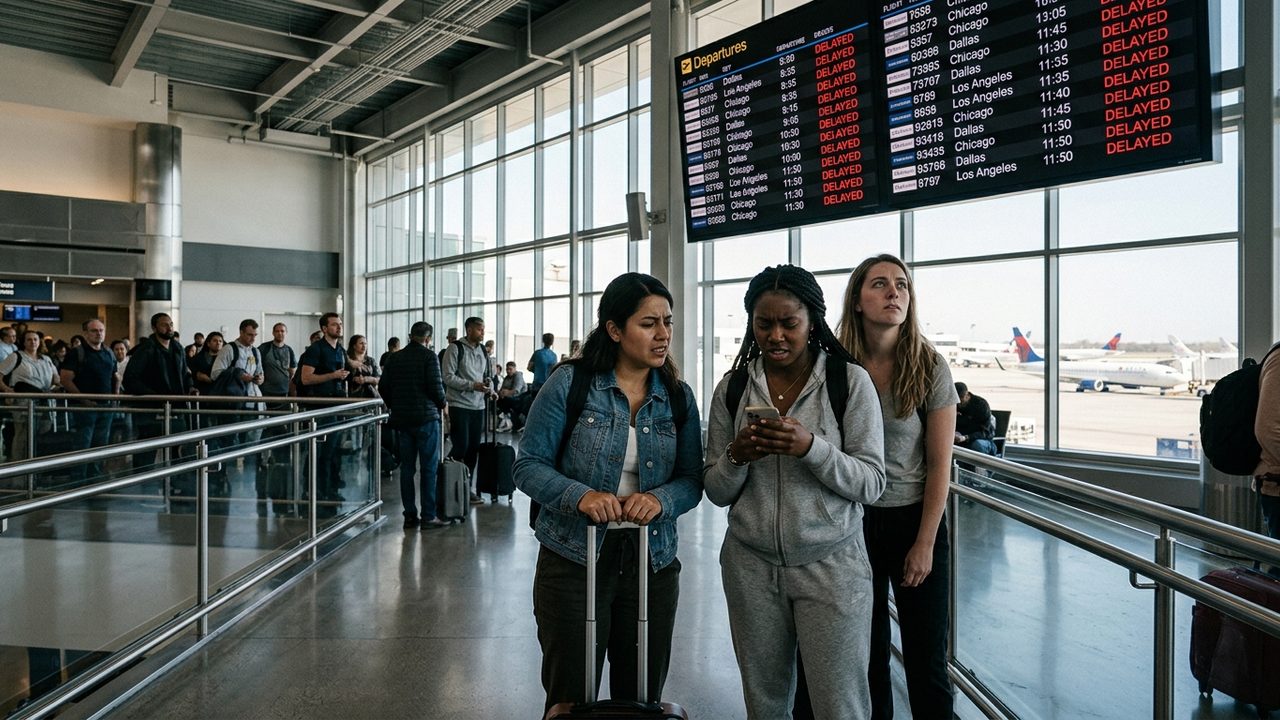
Image generated by AI
Systemic Congestion Strains Charlotte Hub
Charlotte Douglas International Airport (CLT) recently recorded 243 flight delays in a single day. While the airport managed to avoid total cancellations, the high volume of delays indicates significant systemic congestion.
The disruption underscores the inherent risks of the hub-and-spoke model. Because CLT serves as a primary connection point for the Continental United States, operational slowdowns here create a ripple effect across the national aviation network.
The decline in flight turnaround efficiency was observed through integrated airport operational reporting and air traffic control systems, signaling a bottleneck in movement despite the lack of grounded flights.
American Airlines and Regional Feeders Most Impacted
The delay distribution reveals a heavy concentration among carriers with a dominant presence at the airport. American Airlines was the most affected, accounting for 126 of the total delays.
The disruption extended deeply into the regional feeder network, which is vital for connecting smaller cities to major hubs:
- PSA Airlines (AAL affiliate): 64 delays
- Piedmont Airlines (AAL affiliate): 29 delays
This pattern demonstrates how delays at a primary hub cascade quickly to regional airports, disrupting travel for passengers on smaller routes who rely on Charlotte for onward connectivity.
Broad Network Reach and Passenger Impact
While American Airlines faced the heaviest burden, the congestion affected a wide array of carriers, including domestic giants and international operators.
| Airline | Number of Delays |
|---|---|
| American Airlines | 126 |
| PSA Airlines | 64 |
| Piedmont Airlines | 29 |
| Frontier Airlines | 6 |
| Contour Airlines | 4 |
| SkyWest Airlines | 3 |
| Mesa (United Express) | 3 |
| Republic Airways | 2 |
| Southwest Airlines | 2 |
| United Airlines | 1 |
| Delta Air Lines | 1 |
| Sun Country Airlines | 1 |
| Etihad Airways | 1 |
Industry averages suggest that delays at a major hub typically affect between 80 and 180 passengers per flight. With 243 delayed movements, tens of thousands of travelers likely faced missed connections, extended ground holds, and increased congestion at departure gates.
Implications for Business and Tourism
As a critical gateway for the Southeastern US, disruptions at CLT impact both corporate productivity and leisure travel.
Business travelers heading to financial and industrial centers—specifically New York, Dallas, and Chicago—faced significant schedule instability. For the tourism sector, these delays can lead to missed cruise connections and disrupted hotel check-ins across North Carolina, South Carolina, Florida, and Tennessee.
The scale of the event suggests that the issues were likely caused by systemic pressures rather than a single isolated incident. Potential contributors include:
- High aircraft movement density and sequencing congestion.
- Airspace flow restrictions.
- Mismatches in crew rotation timing.
- Constraints in gate availability.
Key Takeaways
- Zero Cancellations: Airlines prioritized maintaining flight schedules over punctuality, resulting in delays rather than cancellations.
- Hub Vulnerability: The heavy concentration of American Airlines flights at CLT made the carrier the primary victim of the congestion.
- Network Ripple Effect: Delays at a major hub like Charlotte propagate nationwide, affecting the schedule integrity of multiple airlines.
- Infrastructure Pressure: The event highlights a pressing need for improved gate and air traffic management to handle high-density operations.
FAQ
Q: Why were there so many delays but no cancellations? A: Airlines often choose to delay flights rather than cancel them to ensure passengers eventually reach their destinations and to avoid the complex logistics of full flight cancellations.
Q: Which airlines were most affected by the Charlotte airport disruption? A: American Airlines and its regional affiliates, PSA and Piedmont, experienced the vast majority of the delays.
Q: How does a delay in Charlotte affect other cities? A: Because Charlotte is a connecting hub, a plane arriving late from one city cannot depart on time for its next destination, creating a "domino effect" of delays across the US network.
Related Travel Guides
Disclaimer
This article is for informational and educational purposes only. It does not constitute legal, financial, or professional advice. While we strive to provide accurate and up-to-date information, travel policies, regulations, and conditions change rapidly. Always verify information with official sources before making travel decisions. Nomad Lawyer makes no representations about the accuracy, reliability, completeness, or suitability of the information provided. Readers should consult qualified professionals for advice specific to their circumstances. The views expressed in this article are those of the author and do not necessarily reflect the views of Nomad Lawyer.
Preeti Gunjan
Contributor & Community Manager
A passionate traveller and community builder. Preeti helps grow the Nomad Lawyer community, fostering engagement and bringing the reader experience to life.
Learn more about our team →