
Turkish Airlines Emergency Landing Sparks Wheel Fire at Kathmandu Airport: TK726 Passengers Evacuated as Runway Blaze Hits Nepal’s Tourism Grid; Safety Concerns Surge for Indian and UK Travelers in May 2026
A Turkish Airlines flight (TK726) triggered a major emergency response at Tribhuvan International Airport in Kathmandu after a landing gear fire broke out during touchdown. While all passengers were safely evacuated, the incident has sparked significant travel chaos and raised critical safety questions for Nepal's vital international tourism corridors.

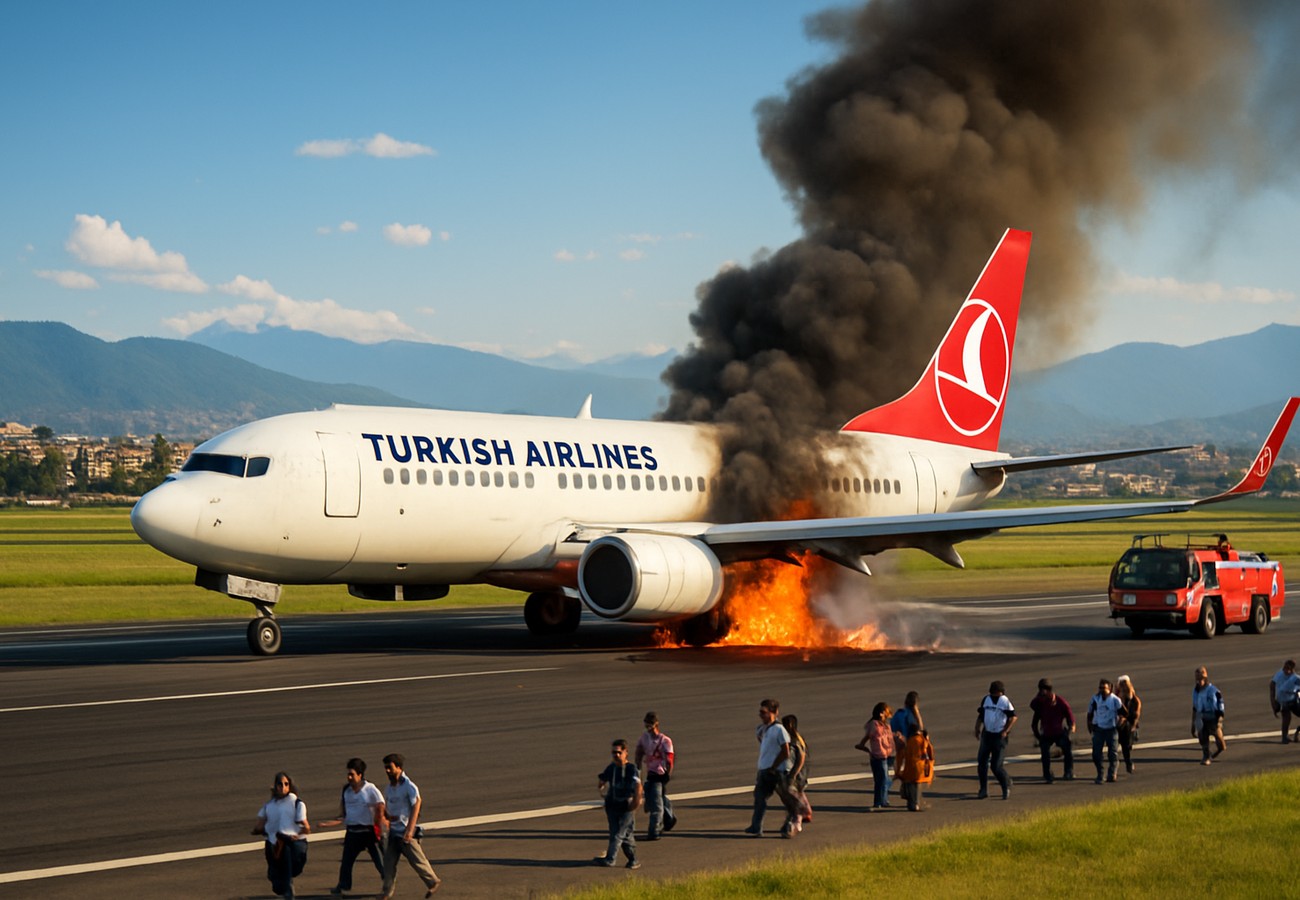
Miraculous Escape: Firefighters at Kathmandu Airport douse the flames on Turkish Airlines flight TK726.
Turkish Airlines TK726 Gripped by Runway Fire During Kathmandu Emergency Landing; Massive Evacuation Thwarts Disaster as Nepal’s Vital Indian and UK Tourist Links Face Safety Scrutiny
In a harrowing incident that has sent shockwaves through the Southeast Asian aviation community, Turkish Airlines flight TK726 was forced into an emergency landing at Tribhuvan International Airport (KTM) in Kathmandu on May 11, 2026. This airline news update confirms that as the aircraft touched down, a fire erupted in one of the landing gear wheels, engulfing the undercarriage in flames and triggering an immediate, high-stakes evacuation. While airport firefighters were able to extinguish the blaze within minutes and ensure the safety of all passengers, the travel chaos that followed has left the airport in a state of high alert. With no injuries reported, the miraculous escape has nonetheless cast a shadow over Nepal’s aviation safety record, potentially impacting the crucial tourism flows from India, the UK, China, and the United States.
The "Kathmandu Inferno" scenario was averted only through the split-second response of the Tribhuvan emergency teams. As the Civil Aviation Authority of Nepal (CAAN) launches a full-scale technical investigation into the landing gear failure, the broader impact on Nepal's tourism economy is already being weighed. For international travelers, particularly those on long-haul routes from Europe and North America, this incident serves as a stark reminder of the operational challenges inherent in high-altitude hubs. As authorities work to clear the runway, the global aviation grid is watching closely to see how this airport disruption will influence booking trends in the peak May season.
Expanded Overview: The TK726 Emergency and Regional Impact
The flight, arriving from Istanbul, was carrying a diverse mix of international tourists and business professionals when the technical malfunction occurred. Preliminary reports suggest that a failure in the braking system or landing gear hydraulics may have led to the friction-induced fire during the high-speed touchdown. This aviation update highlights that the incident is particularly sensitive for Nepal’s tourism industry, which has seen record growth in 2026. Turkish Airlines serves as a primary bridge for Western tourists—especially from the UK and US—making any safety lapse on this route a potential deterrent for high-yield travelers.
"This is a shocking incident for a gateway hub like Kathmandu," stated a senior aviation safety analyst. "The safe evacuation of every passenger on TK726 is a triumph for the airport's emergency protocols, but the visual of a burning Turkish Airlines jet on the tarmac will linger. We expect a temporary dip in confidence from the Indian and British markets as CAAN works to provide a definitive cause for this malfunction."
Section-Wise Breakdown: Response and Fallout
Tribhuvan International (KTM): The Emergency Response
The emergency response at Kathmandu was described by witnesses as "Disciplined and Rapid." Within seconds of the fire being reported by the flight crew, three fire tenders were on the scene, dousing the wheel well with chemical foam. The airport disruptions were significant, with the single runway at KTM being closed for several hours to allow for the safe evacuation of passengers and the removal of the disabled aircraft. While operations have since resumed, the backlog of flights has caused a ripple effect across regional networks.
Turkish Airlines: TK726 Operational Failure
Turkish Airlines, known for its extensive global reach and modern fleet, is now under pressure to explain the technical failure of TK726. The airline has confirmed that the aircraft involved is undergoing a thorough inspection by its technical teams and local authorities. While the airline has a strong safety record, this incident at a challenging airport like Kathmandu raises questions about maintenance cycles for aircraft operating in varied altitudes and environments.
Global Fallout: Concerns for Indian and UK Tourist Flows
Nepal’s tourism grid relies heavily on two primary markets: India and the United Kingdom. Indian travelers, who make up the largest percentage of annual arrivals, often exhibit resilience to such events, but the British and American markets are traditionally more sensitive to aviation safety incidents. If the investigation reveals a systemic maintenance issue, Nepal could see a significant slowdown in luxury and adventure tourism flows from the West as travelers look for "Safer" alternative destinations in the region.
Turkish Airlines TK726: Incident Profile May 11, 2026
The following table provides the critical data points regarding the emergency landing and subsequent fire at Kathmandu.
Incident Matrix: Turkish Airlines TK726 (KTM)
| Category | Details (May 11, 2026) | Status / Outcome |
|---|---|---|
| Flight Number | TK726 | Emergency Landing |
| Route | Istanbul (IST) → Kathmandu (KTM) | International Corridor |
| Incident Type | Landing Gear Wheel Fire | Extinguished on Runway |
| Casualties | Zero Injuries Reported | Successful Evacuation |
| Impacted Markets | India, UK, China, US | Monitoring Safety Updates |
| Authority | Civil Aviation Authority of Nepal | Full Technical Probe |
| Operations | Tribhuvan International (KTM) | Temporary Runway Closure |
Data sourced from CAAN and Turkish Airlines official statements.
Passenger Impact: Psychological Trauma and Connection Chaos
While physical injuries were avoided, the psychological impact on the passengers of TK726 cannot be understated. The sight of flames from the cabin windows during landing is a "Lasting Trauma" that can influence future travel choices. Beyond the immediate event, the travel chaos for those with onward connections to regional hubs in Nepal or back to Istanbul has been immense. Many have reported:
- Delayed Itineraries: With the runway closed for hours, those on connecting flights were left stranded in the KTM terminal.
- Lost Confidence: Some Western travelers have already expressed hesitation about their return flights, seeking alternative carriers with Middle Eastern connections.
- Cost of Disruption: Missed hotel bookings and tour departures in the Himalayas are adding a significant financial burden to the affected travelers.
Industry Analysis: The High-Altitude Safety Challenge
Aviation experts suggest that Kathmandu’s Tribhuvan Airport presents unique challenges due to its terrain and altitude. Any landing gear or braking malfunction at KTM is amplified by the limited runway space and the need for precision touchdown. The Civil Aviation Authority of Nepal (CAAN) is expected to review its safety guidelines for wide-body international arrivals in light of this incident. Furthermore, the reliance on Turkish Airlines as a primary long-haul carrier means that any prolonged investigation could affect the "Air Bridge" that supports Nepal's economic recovery.
"The industry needs to look at the 'Altitude Factor' in braking system failures," says one senior aviation journalist. "While this may be an isolated technical glitch, the stakes at KTM are always higher. This incident will likely lead to more rigorous pre-landing checks for all international flights entering the Kathmandu valley."
Conclusion: Recovery Outlook for Nepal’s Tourism
As the investigation into the TK726 wheel fire continues, the priority for Nepal’s aviation authorities is to "Reassure the World." While the incident was handled with efficiency, the path to restoring full passenger confidence—especially in the UK and Indian markets—will depend on the transparency of the final report. For now, Nepal remains a top-tier destination, but the "Kathmandu Fire" serves as a sobering reminder that in the world of global aviation, safety is a journey that never ends.
Key Takeaways
- Turkish Airlines TK726 made an emergency landing at Kathmandu (KTM) on May 11, 2026.
- A fire erupted in the landing gear wheel during touchdown, but was quickly extinguished.
- All passengers were safely evacuated with zero injuries reported.
- Tribhuvan International Airport faced temporary closure, causing significant travel chaos.
- Safety concerns have been raised for travelers from major markets like India and the UK.
- CAAN has launched a full technical investigation into the cause of the fire.
- Travelers are advised to check flight statuses and ensure they have comprehensive travel insurance.
/article-footer-standard
Related Travel Guides:
- Navigating Tribhuvan: A Traveler's Guide to Kathmandu's International Hub
- Aviation Safety 101: Understanding Emergency Landings and Passenger Rights
- Nepal Beyond the Clouds: Top Destinations for Indian and UK Travelers in 2026
Disclaimer
This article is for informational and educational purposes only. It does not constitute legal, financial, or professional advice. While we strive to provide accurate and up-to-date information, travel policies, regulations, and conditions change rapidly. Always verify information with official sources before making travel decisions. Nomad Lawyer makes no representations about the accuracy, reliability, completeness, or suitability of the information provided. Readers should consult qualified professionals for advice specific to their circumstances. The views expressed in this article are those of the author and do not necessarily reflect the views of Nomad Lawyer.
Kunal K Choudhary
Co-Founder & Contributor
A passionate traveller and tech enthusiast. Kunal contributes to the vision and growth of Nomad Lawyer, bringing fresh perspectives and driving the community forward.
Learn more about our team →