
Central Railway Upgrades Five Regional Trains to Regular Status
Central Railway permanently integrates five high-demand Solapur, Daund, Kalaburagi, and Badnera routes into its regular schedule starting August 15, 2026.

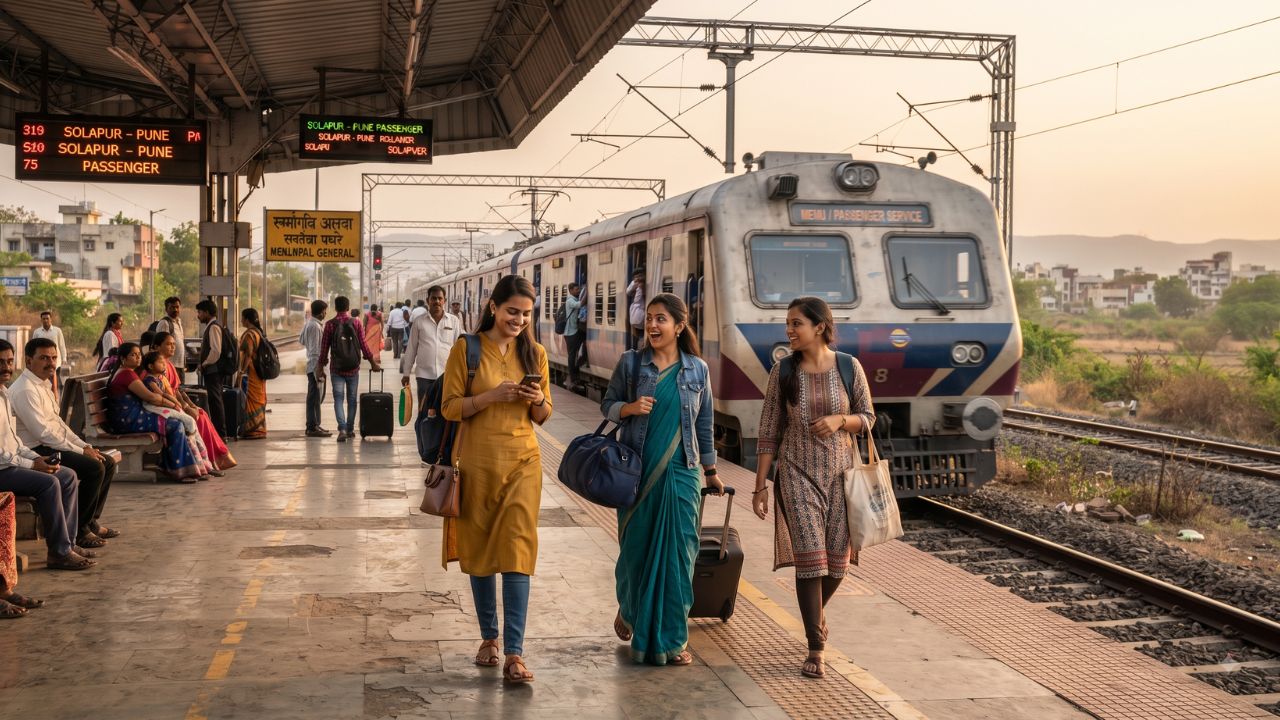
Image generated by AI
Daily commuters traveling across Maharashtra and Karnataka will benefit from enhanced stability, as Central Railway permanently upgrades five special train routes to regular passenger status starting August 15, 2026. This administrative transition replaces fluctuating schedules with fixed timetables and standardized DEMU and MEMU services.
Streamlining Regional Connectivity: The Transition to Permanent Rail Timetables
Commercial rail transit in India is moving toward structured reliability, and the latest policy update from Central Railway reflects this transition. Taking effect on August 15, 2026, this strategic decision upgrades five high-demand special trains to regular passenger status across the states of Maharashtra and Karnataka. According to Central Railway official Dr. Swapnil Nila, the transformation aims to provide daily commuters with a dependable transit experience. Historically, special trains were operated on a temporary basis to handle seasonal passenger surges. However, these temporary arrangements often suffered from scheduling fluctuations and booking uncertainties. By integrating these routes permanently into the official rail timetable, the administration provides passenger services that eliminate travel uncertainty for regional travelers.
The deployment of DEMU (Diesel Electric Multiple Unit) and MEMU (Mainline Electric Multiple Unit) trains is central to this upgrade. DEMU rakes feature self-propelled coaches powered by onboard diesel generators that drive electric traction motors. This design provides rapid acceleration and deceleration, which is ideal for regional routes with frequent stops. MEMU services, on the other hand, operate on overhead 25kV AC traction lines, providing higher carrying capacity and quieter operations. By deploying these standardized train types, Central Railway ensures consistent service speed and capacity across all upgraded corridors.
The upgraded routes span several key industrial, agricultural, and pilgrimage centers:
- Solapur-Daund Daily Passenger: Operating under train numbers 71434 and 71433, this service deploys a standardized fleet of 10 DEMU (Diesel Electric Multiple Unit) coaches. The train provides essential connections at intermediate towns, with scheduled halts at Mohol, Madha, Kurduwadi, Kem, Jeur, Kettur, and Bhigwan.
- Solapur-Kalaburagi Daily Passenger: Now designated as trains 71435 and 71436, this route is also configured with 10 DEMU coaches. The service bridges the border between Maharashtra and Karnataka, stopping at Hotgi, Akalkot Road, Dudhani, and Ganagapur Road.
- Daund-Kalaburagi Corridor: To manage passenger volume efficiently, this corridor is split into two distinct weekly schedules. Trains 51301 and 51302 run five days a week, excluding Sundays and Thursdays, featuring 10 General Second Class coaches and 2 Second Seating-cum-Guard’s Brake Vans. Trains 51303 and 51304 operate specifically on Sundays and Thursdays. Both services share halts, including Bhigwan, Kettur, Jeur, Kem, Kurduwadi, Madha, Mohol, Solapur, Tikekarwadi, Hotgi, Akalkot Road, Boroti, Dudhani, and Ganagapur Road.
- Badnera-Nashik Road Passenger: Renumbered to 61130 and 61129, this daily route uses a high-capacity 12-car MEMU (Mainline Electric Multiple Unit) rake. The service makes stops at Murtizapur, Borgaon, Akola, Shegaon, Nandura, Malkapur, Bodwad, Bhusaval, Jalgaon, Pachora, Kajgaon, Chalisgaon, Nandgaon, Manmad, Lasalgaon, and Niphad.
Sustainable Transit and Direct Support of Local Handloom and Culinary Economies
From an environmental perspective, upgrading seasonal services to regular train routes represents a significant step forward in promoting low-carbon mass transit. Rail travel remains the most fuel-efficient method for moving large numbers of passengers across regional corridors, with carbon emissions per passenger-mile that are substantially lower than road or air alternatives. The standardization of MEMU and DEMU trains supports this eco-conscious goal. MEMU trains, in particular, run on 25kV AC overhead electrical systems, which completely eliminates localized exhaust emissions along the route, improving air quality in rural areas. This shift aligns with Indian Railways' broader environmental mandate to achieve net-zero carbon emissions by 2030. Replacing private road travel with regional train services also reduces highway congestion and fuel consumption.
For the visitor, the real impact of this railway upgrade is the opportunity to directly support local communities and promote economic development in intermediate towns. The Maharashtra Tourism Development Corporation (MTDC) and the Karnataka State Tourism Development Corporation (KSTDC) encourage travelers to utilize regional passenger trains to explore under-the-radar cultural and historical sites. By establishing permanent, reliable halts at smaller stations, Central Railway ensures that local vendors, artisans, and family-owned businesses have steady access to passenger traffic. Travelers stopping at stations like Solapur can purchase traditional handloom blankets (Solapuri Chaddars) directly from local weavers, keeping tourism revenue within the host community. Similarly, small-scale dining stalls at stations like Akalkot Road or Ganagapur Road benefit from regular visitor traffic, helping to sustain regional livelihoods and preserve multi-generational trades.
Local Specialist Guide: Pilgrim Halts, Regional Specialties, and Transit Apps
To ensure a culturally rich and seamless journey through Maharashtra and Karnataka, local destination specialists offer several practical insider recommendations:
-
Regional Culinary Specialties:
- Solapur: Do not miss trying the famous Shenga Chutney, a spicy peanut chutney prepared with garlic and red chili, often served with flatbread.
- Kalaburagi: Sample the traditional Jolada Roti (flatbread made from sorghum flour) and the flavorful regional Tahari, a spiced meat and rice dish cooked with local herbs.
- Transit Dining at Daund: When transiting through Daund Junction, visit the platform stalls to try hot Vada Pav served with green chilies and a cup of cardamom-infused ginger chai, which is a classic Indian rail dining experience.
-
Navigating Key Pilgrim Stops:
- Akalkot Road: This is the primary rail access point for the Swami Samarth Maharaj Temple. It is customary to remove shoes before entering the temple complex, and visitors are expected to dress modestly in traditional attire.
- Ganagapur Road: The halt serves the historic Nirguna Paduka Temple of Dattatreya. Ensure you respect local pilgrim customs, and note that the temple area can be highly crowded during festival periods.
- Shegaon: Accessible via the Badnera-Nashik Road route, Shegaon is famous for the Anand Sagar spiritual garden and the Gajanan Maharaj Temple.
-
Essential Rail Booking Tips:
- The UTS Mobile Application: To avoid long ticket counter queues at busy stations like Nashik Road, Badnera, or Solapur, download the official unreserved ticketing app (UTS) from Indian Railways. This allows you to purchase paperless tickets on your mobile device within a five-kilometer radius of the station.
- Off-Peak Travel Window: Travel during the early winter months, from October to February, when temperatures are cooler and more comfortable for temple walks and heritage tours.
Proactive Network Expansion: The Long-Term Impact on Commuter Logistics
The regularization of these passenger routes shows a strategic shift in how Indian Railways manages its network capacity. In the past, the railway administration relied on reactive scheduling, deploying temporary special trains to handle holiday and festival rushes. While these temporary services addressed immediate passenger surges, they often led to booking bottlenecks and operational challenges. By integrating these routes permanently into the timetable, the administration can optimize rolling stock usage, streamline crew scheduling, and implement stricter safety protocols that are standard for regular trains.
Standardizing coach counts also improves maintenance logistics. Since the Solapur-Daund and Solapur-Kalaburagi routes use identical 10-coach DEMU configurations, Central Railway can share maintenance resources and spare parts across Solapur and Daund depots. Similarly, the 12-car MEMU operating on the Badnera-Nashik Road line allows maintenance teams in Nashik and Badnera to specialize in a single rake type, reducing maintenance downtime and improving train reliability.
This proactive network design directly aligns with other recent large-scale infrastructure upgrades across the Central Railway system, such as the deployment of 15-car rakes on suburban services near Mumbai. By standardizing capacity and establishing reliable schedules, the administration is building a resilient transit network that addresses the demands of a growing population. For regional commuter systems, these permanent upgrades bridge the transport gap between major commercial hubs and rural towns, ensuring that small communities remain connected to broader economic opportunities. As the rail network continues to modernize, this focus on long-term utility and data-driven scheduling will remain essential for supporting sustainable regional development and improving the daily travel experience for millions of passengers.
Related Travel Guides
Mumbai Suburban Rail Upgrade Speeds Up with 238 Vande Metro Trains
Indian Railways Expands Amrit Bharat Express Network With Seven New Routes
The 10 Best Places to Visit in Maharashtra, According to Reddit
Disclaimer
This article is for informational and educational purposes only. It does not constitute legal, financial, or professional advice. While we strive to provide accurate and up-to-date information, travel policies, regulations, and conditions change rapidly. Always verify information with official sources before making travel decisions. Nomad Lawyer makes no representations about the accuracy, reliability, completeness, or suitability of the information provided. Readers should consult qualified professionals for advice specific to their circumstances. The views expressed in this article are those of the author and do not necessarily reflect the views of Nomad Lawyer.
Kunal K Choudhary
Co-Founder & Contributor
A passionate traveller and tech enthusiast. Kunal contributes to the vision and growth of Nomad Lawyer, bringing fresh perspectives and driving the community forward.
Learn more about our team →