
Indian Railways Expands Amrit Bharat Express Network With Seven New Routes
Indian Railways expands the Amrit Bharat Express network, launching seven new routes to boost affordable, comfortable long-distance travel.

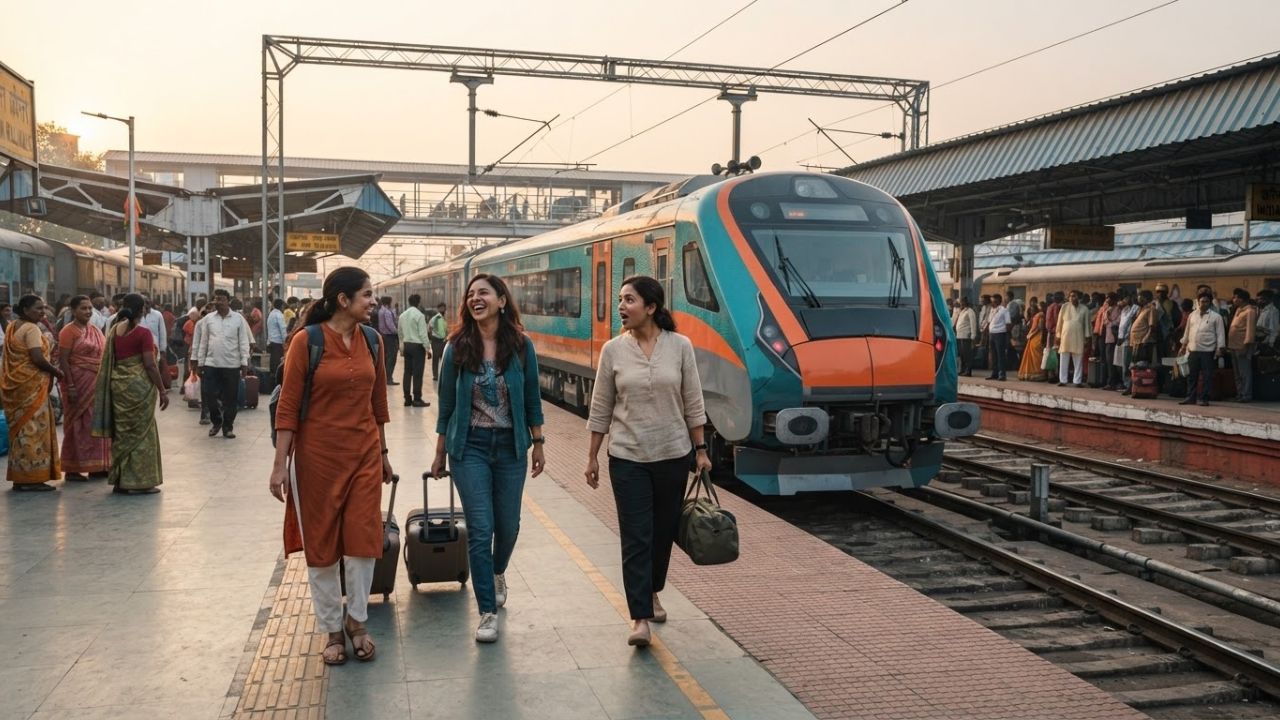
Image generated by AI
Indian Railways is launching seven new routes under the Amrit Bharat Express network to strengthen long-distance connectivity across states such as Uttar Pradesh, Maharashtra, Telangana, Tamil Nadu, Jharkhand, Madhya Pradesh, and Gujarat.
The national transport network in India undergoes constant development to meet the demands of a growing population. The proposed expansion of the Amrit Bharat Express network represents a targeted operational response to these transit needs. Unlike premium express services that target high-income business travelers, the Amrit Bharat Express focuses on providing reliable, comfortable, and safe services at affordable ticket pricing. These trains feature non-AC sleeper and general second-class coaches, equipped with improved cushion seats, mobile charging points near every berth, and passenger information systems.
For the visitor, the real impact is a transit system that makes regional travel accessible to daily commuters, migrant workers, students, and families traveling long distances. By bridging transit gaps between industrial centers and regional towns, these new trains support local economies, improve transit flexibility, and reduce reliance on private vehicles or crowded local buses. The addition of Linke Hofmann Busch (LHB) coaches also ensures higher safety standards and smoother rides during high-speed travel.
Comprehensive Routes: Connecting Eastern and Southern Corridors
The first of the seven newly approved routes is the Dhanbad-Coimbatore Amrit Bharat Express, linking the industrial zones of Jharkhand directly with the educational and commercial hubs of Tamil Nadu. This weekly service will depart from Dhanbad on Saturdays, with the return journey running on Tuesdays. The train will make scheduled stops at Gomoh, Parasnath, Koderma, Gaya, Prayagraj Chheoki, Jabalpur, Nagpur, Vijayawada, Salem, and Tiruppur.
Another significant corridor is the Charlapalli-Gorakhpur Amrit Bharat Express, which links Telangana with eastern Uttar Pradesh. Scheduled to operate on Fridays from Charlapalli and return on Sundays from Gorakhpur, the service will stop at Kazipet, Peddapalli, Nagpur, Bhopal, Jhansi, Kanpur, Lucknow, Barabanki, and Gonda. This service supports passenger movement across central and northern India, simplifying family homecoming trips during major festivals. The route will also improve access for students studying at universities in Hyderabad and Vijayawada, making it a vital link for the regional education sector.
Strengthening Northern and Western Industrial Connections
Indian Railways is also introducing services to link Uttar Pradesh with major financial and administrative hubs:
- Gorakhpur-Bandra Amrit Bharat Express: A weekly service departing Gorakhpur on Fridays and returning from Bandra on Saturdays. Stops include Basti, Gonda, Kanpur, Agra Fort, Kota, Ratlam, Vadodara, Surat, Valsad, Vapi, and Borivali, providing an affordable link to Mumbai. The train operates with 22 coaches, including 12 sleeper class coaches, 8 general second class coaches, and 2 guard vans.
- Gorakhpur-Delhi Amrit Bharat Express: Running weekly on Thursdays and Fridays, this train connects eastern Uttar Pradesh with the national capital region, stopping at Khalilabad, Basti, Gonda, Sitapur, Bareilly, Moradabad, and Ghaziabad.
- Subedarganj-Lokmanya Tilak Amrit Bharat Express: Linking Prayagraj's Subedarganj terminal with Mumbai, this weekly service will run via Fatehpur, Banda, Chitrakutdham Karwi, Satna, Katni, Jabalpur, Itarsi, Khandwa, Bhusaval, Nashik Road, Kalyan, and Thane.
Dual Connections for Prayagraj and Western India
The city of Prayagraj gains two additional Amrit Bharat Express connections, improving travel to Gujarat and Maharashtra. The Prayagraj-Udhna Amrit Bharat Express will run through Fatehpur, Govindpuri, Etawah, Agra, Kota, Ratlam, and Vadodara, providing direct access to Gujarat's industrial centers.
The second service, the Prayagraj-Lokmanya Tilak Amrit Bharat Express, will connect Prayagraj directly to Mumbai via Satna, Jabalpur, Itarsi, Bhusaval, and Kalyan. These two routes offer passengers in central Uttar Pradesh alternative travel options to western India, reducing passenger load on existing daily trains and making long-distance journeys more comfortable during peak seasons.
Integrating Green Technologies and Rail Decarbonisation
The expansion of the Amrit Bharat Express network is coupled with Indian Railways' commitment to sustainability and carbon-neutral operations. These trains are designed to run on electric locomotives in a push-pull configuration, with one engine at the front and one at the rear. This setup improves acceleration and deceleration, reducing travel times and saving energy compared to traditional single-engine configurations.
To protect the local environment, the trains are fitted with modern bio-toilets that prevent sewage discharge on the tracks. Indian Railways is also installing solar panel arrays on station roofs along these routes to generate clean energy for lighting and water systems. Passengers can support these eco-tourism efforts by avoiding single-use plastics, using designated trash bins at stations, and choosing train travel over fossil-fuel-powered road vehicles, contributing to the reduction of the tourism industry's carbon footprint.
Destination Expert Insider Tips for Prayagraj and Gorakhpur
To help travelers experience the cultural heritage, local sights, and culinary specialties of Prayagraj and Gorakhpur safely and responsibly, local destination specialists recommend the following insider tips:
- Book Your Triveni Sangam Boat Ride Early: When in Prayagraj, visit the Triveni Sangam (confluence of the Ganga, Yamuna, and mythical Saraswati rivers). Arrive at sunrise (6:00 am) for the calmest waters. Board from Saraswati Ghat or Kila Ghat. Negotiate boat prices in advance; shared boats cost ₹100–₹300 per person, while private rowboats cost ₹500–₹1,500. Always wear life jackets.
- Sample Allahabad Guavas and Litti Chokha: Try the local red-fleshed Allahabad guavas, available from street vendors during harvest months. For dining, try Litti Chokha—baked wheat balls stuffed with sattu, served with mashed vegetables. Top spots include local stalls near the Civil Lines area and the popular food joints along the AG Office Road. These regional snacks are perfect for passengers traveling on the train.
- Respect Etiquette at Gorakhnath Temple: When disembarking in Gorakhpur, visit the spiritual complex dedicated to Guru Gorakhnath. Dress modestly (shoulders and knees covered). Photography is restricted in the main temple area. Avoid visiting during the massive Makar Sankranti Mela in mid-January if you want to avoid millions of pilgrims.
- Try Authentic Gorakhpur Baati Chokha: Visit "Baati Chokha" near Taramandal or Golghar in Gorakhpur for an authentic, clean dining experience of traditional roasted baati served in clay plates. This rustic meal is prepared using pure ghee and organic sattu, reflecting the traditional culinary heritage of the region.
- Carry Offline Railway Apps: Ensure you have offline railway scheduling apps like NTES updated to track real-time platform changes and train delays on these new corridors.
Long-Term Outlook for Indian Railways Capacity Expansion
The long-term outlook for passenger rail travel in India is defined by modernization efforts, including route electrification, station redevelopments under the Amrit Bharat Station Scheme, and the introduction of high-capacity trains. Under the station scheme, over 1,300 railway stations are being modernized with improved waiting halls, free Wi-Fi, better passenger information systems, and pedestrian-friendly access plazas.
By building dedicated freight corridors and optimizing existing passenger lines, Indian Railways is working to increase average speeds and reduce delays. Temporary festival services and permanent Amrit Bharat Express runs remain a necessary bridge, helping manage holiday travel demand while the network expands its permanent capacity. This balanced approach supports regional economies, preserves regional cultural practices, and ensures that passenger travel remains safe, affordable, and accessible across the country, fostering a sustainable future for the national transport sector.
Related Travel Guides
Disclaimer
This article is for informational and educational purposes only. It does not constitute legal, financial, or professional advice. While we strive to provide accurate and up-to-date information, travel policies, regulations, and conditions change rapidly. Always verify information with official sources before making travel decisions. Nomad Lawyer makes no representations about the accuracy, reliability, completeness, or suitability of the information provided. Readers should consult qualified professionals for advice specific to their circumstances. The views expressed in this article are those of the author and do not necessarily reflect the views of Nomad Lawyer.
Kunal K Choudhary
Co-Founder & Contributor
A passionate traveller and tech enthusiast. Kunal contributes to the vision and growth of Nomad Lawyer, bringing fresh perspectives and driving the community forward.
Learn more about our team →