
Cebu Pacific Secures Jet Fuel Through June 2026 Amid Regional Turbulence
Cebu Pacific inks long-term jet fuel agreement through June 2026. The Philippine carrier's supply security stabilizes operations as Asia-Pacific aviation faces geopolitical headwinds and commodity volatility in 2026.

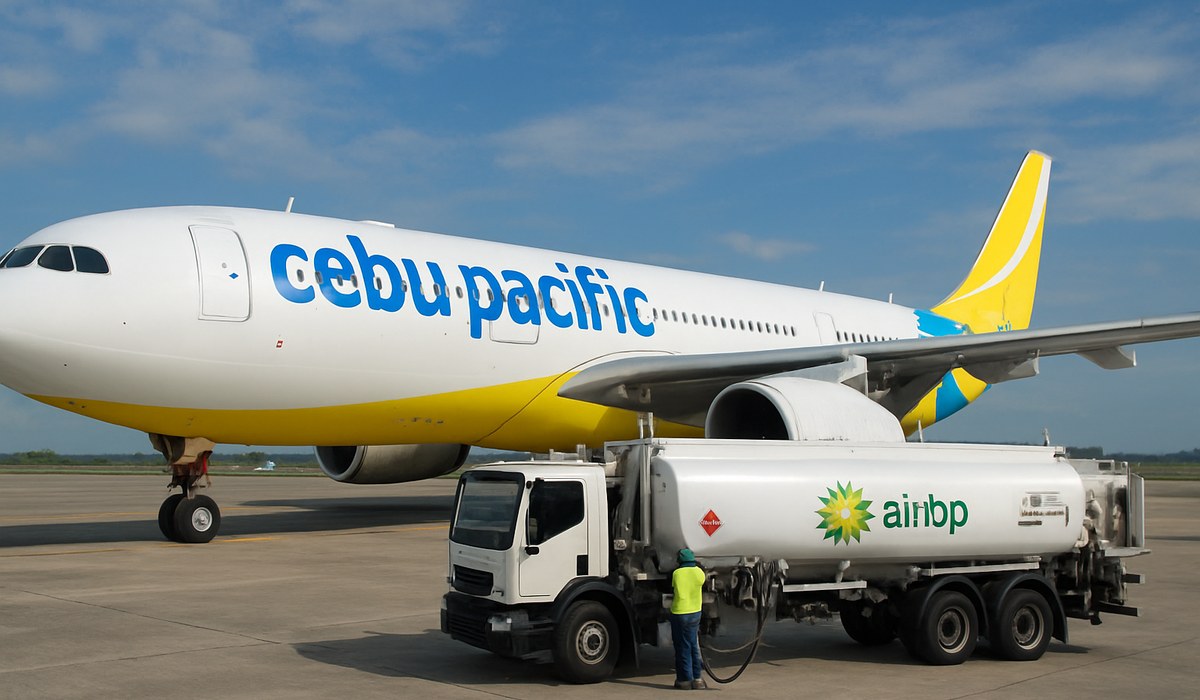
Image generated by AI
Quick Summary
- Cebu Pacific secures jet fuel supply through June 2026, anchoring operational continuity
- Long-term agreement shields Philippines' largest low-cost carrier from commodity price volatility
- Fuel security positions Cebu Pacific competitively against carriers facing supply chain disruptions elsewhere in Asia-Pacific
- Strategic move signals airline confidence in sustained regional travel demand through mid-2026
Cebu Pacific Secures Long-Term Fuel Stability Through Mid-2026
The Philippines' largest low-cost carrier has locked in its jet fuel supply pipeline extending through June 2026. Cebu Pacific announced the secured fuel agreement this week, removing a critical operational uncertainty as commodity markets gyrate and geopolitical tensions ripple through Asia-Pacific corridors.
The deal represents more than routine supply logistics. In an aviation environment where fuel costs typically consume 25–35% of an airline's operating budget, predictable sourcing becomes a competitive moat. Cebu Pacific secures its position across one of Southeast Asia's busiest travel markets by locking in availability when other regional players scramble to manage volatile jet kerosene prices.
This agreement arrives as international carriers recalibrate routes and capacity in response to airspace restrictions and macroeconomic headwinds. The carrier operates roughly 120 daily flights connecting Manila, Cebu, Davao, and secondary hubs to 27 domestic destinations and 25 international routes spanning Taiwan, South Korea, Thailand, and beyond. With fuel supply confirmed through the midyear window, Cebu Pacific avoids the operational paralysis that grounded carriers elsewhere during previous supply crunches.
Industry observers note the timing signals strategic planning discipline. While exact financial terms remain undisclosed, long-term fuel contracts typically lock in pricing bands that protect against sudden spikes—critical leverage when Brent crude and jet fuel futures remain unpredictable through 2026's first half.
Why Jet Fuel Supply Agreements Matter for Philippine Aviation
Jet fuel availability determines whether an airline can operate scheduled routes or scrambles to find alternative supplies at inflated spot prices. The relationship between fuel security and service reliability is direct: no fuel, no flights. No flights, no revenue.
The IATA standardizes fuel quality and supply protocols across member airlines globally. What Cebu Pacific's agreement accomplishes is alignment with those international standards while securing domestic and regional sourcing—a dual requirement for carriers serving Manila's Ninoy Aquino International Airport (MNL, ICAO: RPLL) and Mactan-Cebu International Airport (CEB, ICAO: RPMC), both capacity-constrained during peak seasons.
Philippines' aviation sector remains underdeveloped compared to Singapore, Bangkok, or Hong Kong—three hubs served by Cebu Pacific. The domestic carrier must manage narrower profit margins on regional routes where competition from flag carriers (Philippine Airlines) and budget rivals (AirAsia Philippines) creates pricing pressure. Locking in fuel supply removes one variable from an already complex operational equation.
When carriers lack fuel certainty, they reduce frequency, defer new routes, or raise fares to compensate for spot-market exposure. Cebu Pacific's secured supply through June 2026 enables schedule expansion during the crucial April–May summer season and maintains service during the typhoon-disrupted September–October corridor when routes concentrate on essential connectivity.
The agreement also signals investor confidence. Public shareholders at Cebu Pacific Aviation Inc. (traded on the PSE under ticker CEB) benefit from supply-chain visibility that reduces operational risk. Fuel hedging and long-term contracts are standard practice among major carriers, yet many regional airlines lack the balance-sheet strength to negotiate multi-month agreements.
Competitive Advantage in Asia-Pacific's Shifting Airline Landscape
While Cebu Pacific locks down fuel access, competing carriers across the region face different pressures. The FlightRadar24 tracking network shows Cebu Pacific maintains roughly 15% of the Philippines' commercial flight volume, a distant second to Philippine Airlines but dominant in the budget segment where fuel efficiency and operational predictability drive profitability.
The contrast sharpens when examining regional disruptions. Carriers operating through conflict-affected zones or supply-constrained markets face route diversions, increased landing fees, and fuel surcharges. When Middle East tensions restrict flight corridors (as detailed in the Middle East Airspace Crisis: South Africa's Travel Corridor Faces Major Disruption in 2026), Southeast Asian carriers benefit from geographic isolation—but only if they maintain operational agility. Fuel supply security enables that flexibility.
Similarly, alliance partners and codeshare networks depend on anchor carriers maintaining reliable service. Cebu Pacific's partnership framework with international carriers—comparable to how regional consolidation efforts like the Premia Expands Americas–Southeast Asia Connectivity with Thai Airways Alliance function—requires predictable capacity and frequency. Fuel supply agreements underpin those commitments.
The contrast also reveals how proactive supply planning separates winners from losers in 2026's volatile market. When carriers like Aurigny must trim capacity and suspend routes (as covered in Aurigny Trims Spring Flights: Iran Conflict Slashes Demand), fuel logistics often play a secondary role to demand destruction. Cebu Pacific's approach—securing supply in advance—positions the carrier to capitalize on demand when it emerges in underserved regional markets.
What This Means for Travelers and Regional Connectivity
Passenger-facing implications cascade from this commercial agreement.
Ticket availability depends on aircraft utilization. With fuel supply confirmed, Cebu Pacific can commit to published schedules without worrying about operational constraints. Travelers booking Manila-Cebu, Manila-Davao, or Cebu-Bangkok routes gain confidence that flights won't cancel due to fuel unavailability—a material consideration in markets where slot-hopping and last-minute rebooking create friction.
Pricing stability also benefits passengers. When airlines face fuel supply uncertainty, fares creep upward as carriers add surcharges to hedge spot-market exposure. Secured fuel agreements allow carriers to offer more transparent pricing, reducing the "fuel surcharge" volatility that complicates budget-conscious travelers' planning.
The agreement also affects route expansion potential. Cebu Pacific has indicated interest in expanding service to underserved international destinations—Vietnam, Malaysia, and emerging markets where Philippine diaspora and business travel create demand. Fuel supply confirmation removes a key barrier to launching new routes, expanding the competitive set of regional carriers accessible to passengers departing from Philippine gateways.
For business travelers and tourism operators, route reliability translates to operational confidence. Hotels, travel agencies, and corporate travel managers in the Philippines depend on predictable carrier capacity. A fuel supply agreement extending through June 2026 signals that Cebu Pacific won't suddenly curtail schedules, enabling downstream businesses to staff appropriately and market their services with confidence.
FAQ: Jet Fuel Supply and Airline Operations
Q: How does a long-term fuel supply agreement protect an airline financially?
A: Carriers lock in pricing bands or indexes that limit exposure to spot-market spikes.
Disclaimer
This article is for informational and educational purposes only. It does not constitute legal, financial, or professional advice. While we strive to provide accurate and up-to-date information, travel policies, regulations, and conditions change rapidly. Always verify information with official sources before making travel decisions. Nomad Lawyer makes no representations about the accuracy, reliability, completeness, or suitability of the information provided. Readers should consult qualified professionals for advice specific to their circumstances. The views expressed in this article are those of the author and do not necessarily reflect the views of Nomad Lawyer.
Preeti Gunjan
Contributor & Community Manager
A passionate traveller and community builder. Preeti helps grow the Nomad Lawyer community, fostering engagement and bringing the reader experience to life.
Learn more about our team →