
Middle East Airspace Crisis: South Africa's Travel Corridor Faces Major Disruption in 2026
Middle East airspace turmoil in March 2026 severely impacts South Africa's travel connectivity. Major Gulf carriers halt services, forcing passengers to endure longer routes and costly reroutes affecting tourism, business travel, and medical journeys across Africa and Asia.

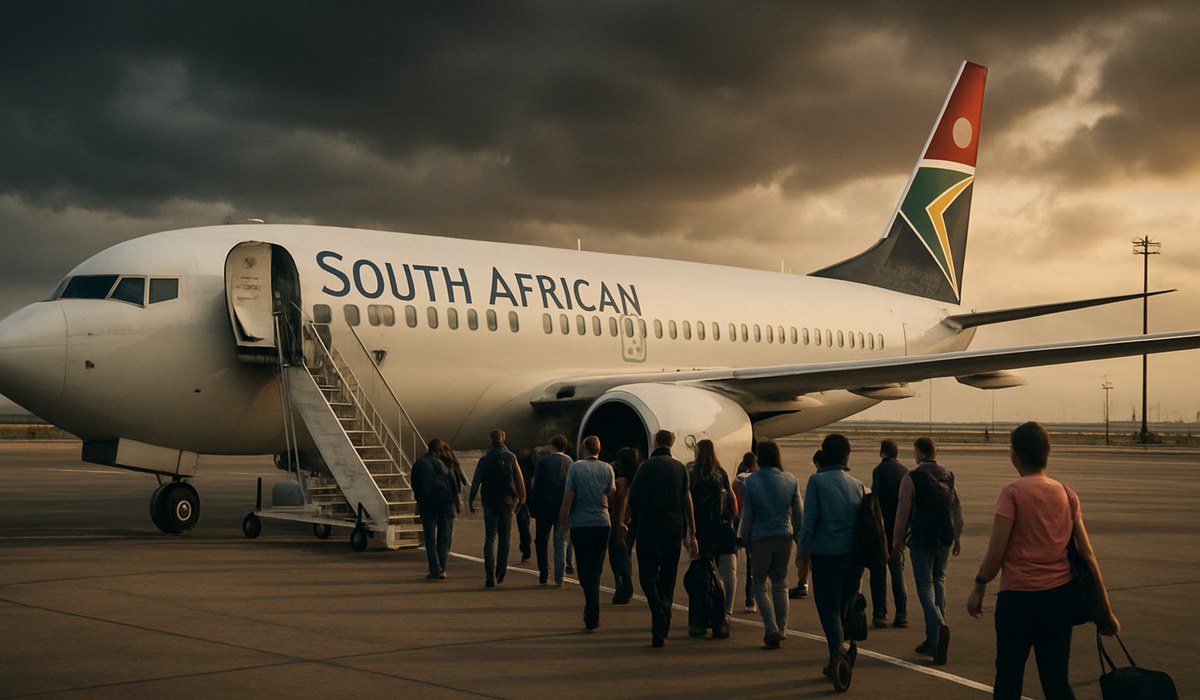
Image generated by AI
South Africa's aviation sector confronts unprecedented travel disruption as ongoing conflict triggers sweeping middle east airspace closures across Qatar, Saudi Arabia, the United Arab Emirates, and Iraq. Airlines operating from Johannesburg and Cape Town now face mass cancellations and forced diversions. The crisis directly impacts tourists, business travelers, and patients seeking medical care, extending journey times by up to five hours while stranding thousands at connection hubs.
Gulf Hub Collapse Forces South African Carriers Into Emergency Rerouting
Middle east airspace restrictions have crippled South Africa's primary gateways to Europe, North America, and Asia. Emirates and Qatar Airways, which historically carried the majority of South Africa's long-haul passengers, announced emergency schedule cuts effective late February 2026. Flights from O.R. Tambo International in Johannesburg and Cape Town International Airport now reroute via the Caucasus region, the Red Sea corridor, or East African hubs—adding significant delays and operational strain.
Flight-tracking data reveals that the traditional high-altitude corridor over Iraq, once described as aviation's "superhighway" between continents, operates at a fraction of normal capacity. South African carriers and their international partners must now navigate a patchwork of open airspace, burning additional fuel and reducing available seating on already congested routes. Tourism operators report that travelers booking flights to Europe or Asia now face four- to five-hour delays compared to pre-February schedules.
The closure directly affects South Africa's tourism sector, where international arrivals depend heavily on reliable Gulf connectivity. Industry bodies have issued formal travel alerts urging passengers to verify bookings and expect rolling schedule changes through at least mid-April 2026.
Middle East Airspace Turmoil Hits Cargo Networks Across Africa
Freight and logistics operations face equally severe constraints as passenger capacity shrinks across Gulf gateways. Etihad Cargo, Emirates SkyCargo, and Qatar Airways Cargo services between South Africa and Europe now encounter week-long transit delays. Shippers report that alternative routing via African hubs—Addis Ababa, Nairobi, and Cairo—increases per-kilogram costs by 15–25% while reducing available cargo capacity.
Supply-chain professionals operating out of Johannesburg's OR Tambo Cargo Terminal describe a cascading crisis. Fresh produce destined for European markets, automotive components for Asian assembly lines, and perishable medical supplies now face longer hold times. Many South African exporters have already absorbed premium pricing or shifted shipments to slower surface transport routes.
Regional logistics associations recommend that shippers contact their freight forwarding partners to identify alternative corridors and prepare for extended lead times. The turmoil underscores South Africa's dependence on middle east airspace for time-sensitive cargo, particularly in sectors like pharmaceuticals and high-value manufacturing.
Travel Sector Paralysis Extends Across Africa and Asia
South Africa stands alongside India, Nigeria, Thailand, and Singapore as nations experiencing severe travel connectivity losses due to middle east airspace closures. Indian national carriers have cancelled hundreds of flights, while Nigerian travelers endure reroutes via Mediterranean hubs. Southeast Asian markets face the inverse challenge: longer outbound journeys, yet newfound opportunities to position themselves as stable staging points for Europe–Asia itineraries.
Travelers from South Africa, India, and West Africa historically relied on Gulf carriers for frequency and competitive pricing. The sudden withdrawal of these options forces passengers into costlier, longer routing through secondary European airports. Airlines operating from Johannesburg have begun announcing partnerships with carriers in Istanbul, Frankfurt, and London to absorb diverted traffic, though seat availability remains tight.
The disruption creates a domino effect: tourist bookings to European destinations decline, business conferences scheduled for April and May face attendance uncertainty, and hospitality operators across the continent report cancellations. The International Air Transport Association estimates that rerouting alone adds $2,000–$4,000 per long-haul passenger ticket globally, with South Africa among the hardest-hit regions.
Medical Travel Networks Face Critical Patient Backlogs
Patients from Africa and South Asia traveling for specialist treatment now encounter flight cancellations that delay life-critical procedures and cancer therapies. Middle east airspace closures have fractured the medical-tourism pipeline: Indian hospitals report a 30–40% drop in international patient arrivals from South Africa. Facilitators and medical travel coordinators describe cases where patients waiting for cardiac surgery or oncology treatment have endured two- to three-week delays due to flight unavailability.
The turmoil hits South African private-hospital networks particularly hard. Many South African patients traveling to India for cost-effective orthopedic and cardiovascular procedures now confront double-digit flight delays. European medical centers treating South African patients for specialized conditions also report slower patient transfers, stretching bed availability and delaying elective procedures.
Industry insiders recommend that medical travelers contact their treatment providers immediately to reschedule procedures and confirm new flight arrangements with flexibility clauses. Travel insurance policies covering medical tourism often exclude conflict-zone disruptions, leaving patients financially vulnerable.
Operational and Cost Impacts for South African Hospitality Sectors
The middle east airspace crisis forces South African hotels, tour operators, and hospitality venues into damage-control mode. Leisure bookings for April and May have declined 15–20% as international travelers delay African vacations. Business-conference venues in Cape Town and Johannesburg report cancellations from international corporate delegations unable to secure timely flights.
Budget and mid-range accommodation providers dependent on flight-connected tourism face occupancy drops and revenue compression. Premium safari lodges, which rely on seamless long-haul connectivity, report wealthy international clients postponing luxury packages. Travel agencies across South Africa have activated rebooking protocols, but limited seat availability on alternative routes constrains their ability to recover lost bookings.
Hotel booking platforms show increased cancellation requests from travelers originally scheduled to arrive via Gulf hubs. Property owners now offer flexible cancellation and loyalty credits to retain future bookings amid ongoing uncertainty around middle east airspace reopening.
Key Impact Metrics and Timeline
| Impact Category | Affected Region | Typical Delay | Primary Carriers Impacted | Relief Timeline |
|---|---|---|---|---|
| Long-haul passenger routes | South Africa to Europe | 4–5 hours | Emirates, Qatar Airways, Etihad | TBD; dependent on airspace reopening |
| Cargo operations | Johannesburg to Frankfurt/Amsterdam | 7–10 days | Emirates SkyCargo, Qatar Airways Cargo | Mid-April 2026 estimated |
| Medical tourism patient arrivals | South Africa to India | 10–21 days | Multiple alliance carriers | Ongoing; case-by-case rescheduling |
| Tourism leisure bookings | Cape Town, Kruger National Park inbound | 15–20% decline | All international carriers | April–May 2026 recovery uncertain |
| Business-travel availability | South Africa outbound corporate | Limited seat inventory | Gulf carriers diverted to northern routes | Rolling adjustments through June 2026 |
| Medical evacuation flights | Sub-Saharan Africa to European centers | 48–72-hour delays | Specialized air-ambulance operators | Realtime assessment per case |
What This Means for South African Travelers Right Now
Travelers departing South Africa in April and May 2026 must adjust expectations and rebook proactively. Direct flights to Europe, North America, and Asia via traditional Gulf routes no longer exist; passengers now face mandatory reroutes through Istanbul, Frankfurt, London, or African hubs. Journey times have extended 4–5 hours minimum.
Action steps for South African passengers:
Disclaimer
This article is for informational and educational purposes only. It does not constitute legal, financial, or professional advice. While we strive to provide accurate and up-to-date information, travel policies, regulations, and conditions change rapidly. Always verify information with official sources before making travel decisions. Nomad Lawyer makes no representations about the accuracy, reliability, completeness, or suitability of the information provided. Readers should consult qualified professionals for advice specific to their circumstances. The views expressed in this article are those of the author and do not necessarily reflect the views of Nomad Lawyer.
Kunal K Choudhary
Co-Founder & Contributor
A passionate traveller and tech enthusiast. Kunal contributes to the vision and growth of Nomad Lawyer, bringing fresh perspectives and driving the community forward.
Learn more about our team →