
Aviation Updates: Cathay Pacific Apologizes as 72-Hour Interline Baggage Failure Triggers Massive Travel Chaos
A severe Melbourne departure delay forces a disastrous multi-hub reroute through Hong Kong and Manchester, exposing massive vulnerabilities in global baggage transfer systems.

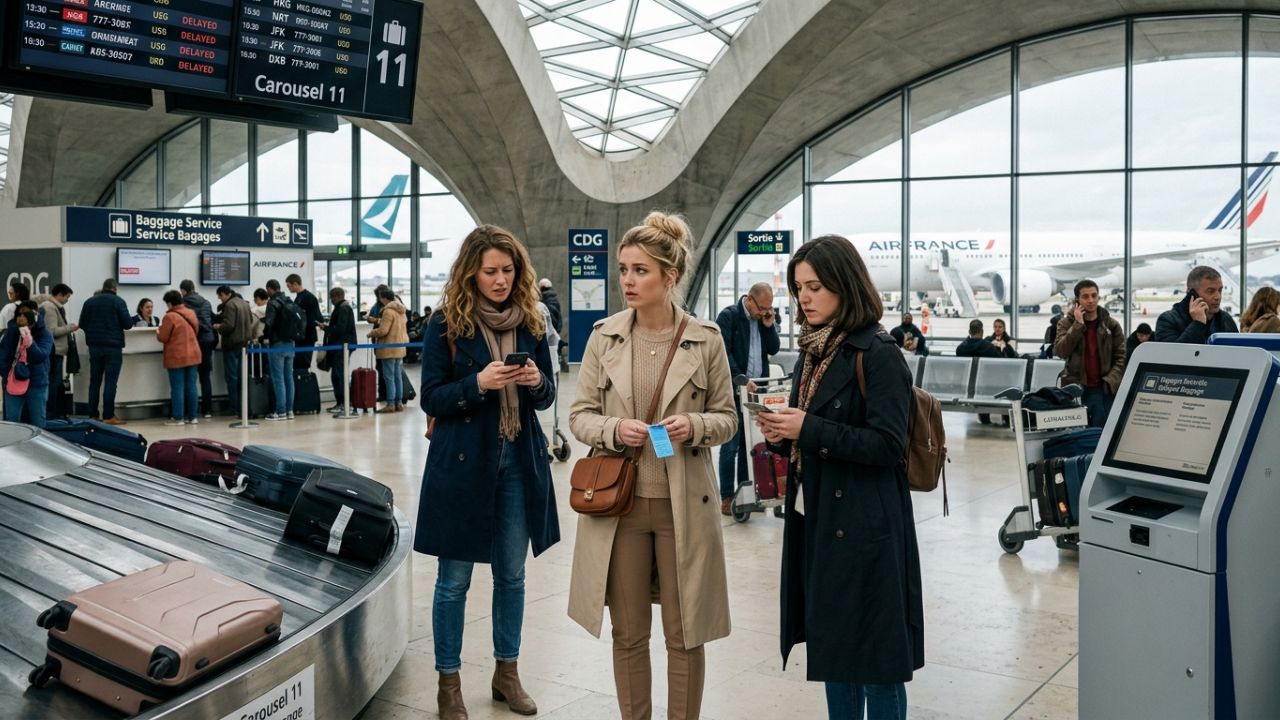
Image generated by AI
Aviation Updates: Cathay Pacific Apologizes as 72-Hour Interline Baggage Failure Triggers Massive Travel Chaos
Exposing the highly fragile nature of modern interline partnerships, a disastrous multi-hub rerouting operation by Cathay Pacific resulted in a massive 72-hour baggage delay in Paris, brutally highlighting how easily global baggage tracking systems completely collapse under operational pressure.
Image generated by AI
As urgent airline news platforms and critical aviation updates relentlessly document the agonizing vulnerability of long-haul passenger networks, a highly public baggage disaster has just triggered fierce scrutiny of global airline transfer systems. Following intense online backlash, Cathay Pacific has issued a formal public apology after a disastrously disrupted Melbourne-to-Paris journey resulted in a massive 72-hour baggage delay in France. The highly publicized incident occurred this week when prominent former Fahrenheit member Wu Chun experienced catastrophic luggage separation following a desperate emergency rerouting operation. Navigating through massive airport disruptions across Hong Kong International Airport and Manchester Airport before finally reaching Paris Charles de Gaulle, the failure perfectly exposes the deeply flawed reality of automatic baggage transfers. While airlines frequently deploy interline rerouting to save passengers from massive flight cancellations, this multi-airline transfer breakdown proves that frantic, last-minute schedule adjustments almost inevitably guarantee severe downstream travel chaos.
Expanded Overview: The Interline Tracking Collapse
When analyzing the massive logistical complexity of intercontinental aviation, this highly publicized case represents significantly more than a standard celebrity travel complaint.
It exposes a terrifying structural vulnerability within global interline agreements. Passengers inherently trust that once luggage is checked at the departure counter, it remains fully integrated into a globally synced tracking system. In reality, emergency rerouting completely shatters original baggage routing logic. When a passenger is violently forced off their original itinerary and pushed onto a partner carrier mid-journey, ground handling responsibility shifts drastically between entirely different corporate systems and third-party airport contractors. This massive communication disconnect means that while the passenger successfully boards the new flight, their luggage is frequently left abandoned in the chaotic underbelly of a foreign transfer hub, completely untracked and highly vulnerable to multi-day separation.
Section-Wise Breakdown: The Melbourne to Hong Kong Disruption
The entire catastrophic chain of events was violently triggered by a massive operational failure at the absolute beginning of the journey.
The original itinerary commenced with a scheduled Cathay Pacific long-haul flight departing Melbourne for Hong Kong. However, the aircraft suffered a brutal, nearly three-hour departure delay on the tarmac in Australia. This massive initial delay completely destroyed the passenger's highly precise connection schedule at Hong Kong International Airport. Missing a vital connecting window at a massive Asian mega-hub instantly throws a long-haul itinerary into absolute chaos. The airline's operations center was forced to execute a frantic, last-minute emergency rerouting protocol, desperately scrambling to find alternative pathways into Europe before crew duty limits expired.
Section-Wise Breakdown: The Manchester Transfer Bottleneck
To bypass the missed connection, Cathay Pacific successfully rerouted the passenger through Manchester Airport in the United Kingdom, where a heavily coordinated handover to an Air France flight bound for Paris was scheduled.
While Cathay Pacific explicitly confirmed to the passenger that standard interline procedures were enacted and the baggage would automatically follow the heavily revised routing, the entire system suffered a catastrophic failure at the absolute critical transfer point. Cathay Pacific later verified that the luggage physically reached Manchester Airport successfully. However, due to a massive ground handling disconnect and incredibly tight connection windows following the reroute, the baggage entirely failed to load onto the final Paris-bound Air France flight. This specific transfer point highlights the exact bottleneck: different airline systems simply fail to communicate effectively during frantic, real-time disruption scenarios.
Flight Details: Cathay Pacific Interline Rerouting Matrix
The exact operational telemetry outlining this massive multi-hub failure, detailing the specific rerouting paths and the absolute point of system breakdown, has been consolidated into the mandatory matrix below.
Cathay Pacific Interline Rerouting Matrix
| Incident Phase | Operational Reality |
|---|---|
| Origin Flight | Cathay Pacific (Melbourne to Hong Kong) |
| Initial Disruption | Nearly 3-hour departure delay from Melbourne |
| Connection Failure | Missed scheduled connection at Hong Kong International Airport |
| Emergency Rerouting | Redirected via Manchester Airport |
| Partner Airline Handover | Air France (Manchester to Paris Charles de Gaulle) |
| Interline Breakdown Point | Baggage failed to load at Manchester transfer |
| Total Baggage Delay | 72 hours (Paris delivery) |
Passenger Impact: 72 Hours of Frustration and Confusion
For the passenger, the massive system failure resulted in a deeply agonizing 72 hours trapped in a foreign country without essential belongings.
As the incident rapidly gained massive traction across Chinese-speaking travel communities, fierce online debate erupted regarding airline accountability and severe communication gaps. Passengers are frequently left completely blind during interline failures, lacking any real-time visibility into their luggage status while airlines frantically attempt to trace bags across rival carrier networks. While highly regulated aviation frameworks—such as the strict UK passenger rights rules (UK261) and robust EU compensation systems—legally guarantee baggage delay compensation, financial payouts do not mitigate the massive psychological stress of arriving at a final destination completely empty-handed. Following the intense public backlash, Cathay Pacific officially confirmed that extensive recovery operations successfully located the baggage, and complex arrangements were finalized for ultimate delivery directly into Paris.
Industry Analysis: The Hidden Risk of Rerouting
Aviation safety experts explicitly note that this case flawlessly highlights the absolute highest hidden risk in modern long-haul travel.
The biggest threat to passengers is absolutely not the initial flight delay itself, but the massive system fragmentation that occurs when multiple carriers attempt to execute a mid-journey handover. Rerouting instantly increases baggage risk because priority tagging is frequently lost or ignored during rapid transfer, and global tracking software simply does not sync perfectly between rival alliance systems. Ground handlers at pressure points like Manchester are entirely dependent on accurate digital handovers; if Cathay Pacific's system fails to immediately alert Air France's local ground team of the rerouted luggage, the bags are simply left sitting on the tarmac while the aircraft departs.
Conclusion: A Wake-Up Call for Global Connectivity
Ultimately, the disastrous 72-hour Cathay Pacific baggage delay involving Wu Chun serves as a massive, highly public wake-up call for global airline connectivity. While the airline has formally apologized and executed a successful recovery, the incident flawlessly exposes a terrifying structural reality: interline baggage systems remain highly vulnerable and frequently collapse entirely under the extreme pressure of multi-hub rerouting. For international travelers navigating highly complex transit itineraries, this massive failure proves that automatic baggage safety is no longer guaranteed by default. Passengers must actively demand real-time tracking transparency, retaining all claim references when forced onto partner airlines, or risk suffering severe travel trauma caused by invisible ground handling disconnects.
Key Takeaways
- Massive Baggage Delay: A severe Cathay Pacific routing failure resulted in a massive 72-hour baggage delay for passenger Wu Chun in Paris.
- Initial Breakdown: A nearly three-hour departure delay from Melbourne completely destroyed the scheduled connection at Hong Kong International Airport.
- Failed Interline Transfer: The passenger was frantically rerouted via Manchester Airport onto an Air France flight, but the baggage failed to make the critical handover.
- System Fragmentation: The incident highlights how priority tagging and tracking data frequently fail to sync between partner airlines during emergency rerouting.
- Airline Response: Following massive social media backlash, Cathay Pacific issued a formal apology, located the bags, and arranged delivery to Paris.
FAQ: Cathay Pacific Melbourne-Paris Baggage Delay
Why was the Cathay Pacific flight rerouted through Manchester? The passenger was forced into an emergency rerouting through Manchester Airport because a massive, nearly three-hour departure delay in Melbourne caused a missed connection at Hong Kong International Airport.
Where did the baggage tracking system fail? While the baggage successfully traveled from Hong Kong to Manchester, the interline ground handling system completely failed, and the luggage was not loaded onto the final Air France flight bound for Paris.
How long was the passenger's baggage delayed? Due to the massive multi-hub tracking failure, the passenger suffered a severe 72-hour baggage delay before the airline could successfully trace and arrange delivery to Paris.
Related Travel Guides
Vietnam Aviation Fleet Expansion Travel Chaos 2026
Smartwings Prague Winter Network Venice Bergen Travel Chaos 2026
European Passenger Rights Flight Delay Compensation Guide 2026
Disclaimer: This article is strictly for informational purposes. The aviation incident data, specific flight routing (Melbourne to Hong Kong to Manchester to Paris), operating carrier details (Cathay Pacific and Air France), and the exact duration of the baggage delay (72 hours) are based on public statements issued by the passenger and official apologies released by Cathay Pacific available at the time of publication. International baggage handling protocols, interline transfer liabilities, and specific compensation rights under UK261 and EU regulations are highly dynamic and subject to formal review by aviation authorities. Passengers actively experiencing baggage delays or forced rerouting must explicitly file formal reports at the arrival airport before leaving the terminal and verify compensation eligibility directly with the final operating carrier.
Disclaimer
This article is for informational and educational purposes only. It does not constitute legal, financial, or professional advice. While we strive to provide accurate and up-to-date information, travel policies, regulations, and conditions change rapidly. Always verify information with official sources before making travel decisions. Nomad Lawyer makes no representations about the accuracy, reliability, completeness, or suitability of the information provided. Readers should consult qualified professionals for advice specific to their circumstances. The views expressed in this article are those of the author and do not necessarily reflect the views of Nomad Lawyer.
Raushan Kumar
Founder & Lead Developer
Full-stack developer with 11+ years of experience and a passionate traveller. Raushan built Nomad Lawyer from the ground up with a vision to create the best travel and law experience on the web.
Learn more about our team →