
Caribbean Tourism Surge Drives Regional Economic Transformation
Tourism in the Dominican Republic, Bahamas, and Guyana is hitting record highs, driving GDP growth, infrastructure investment, and regional employment in 2026.
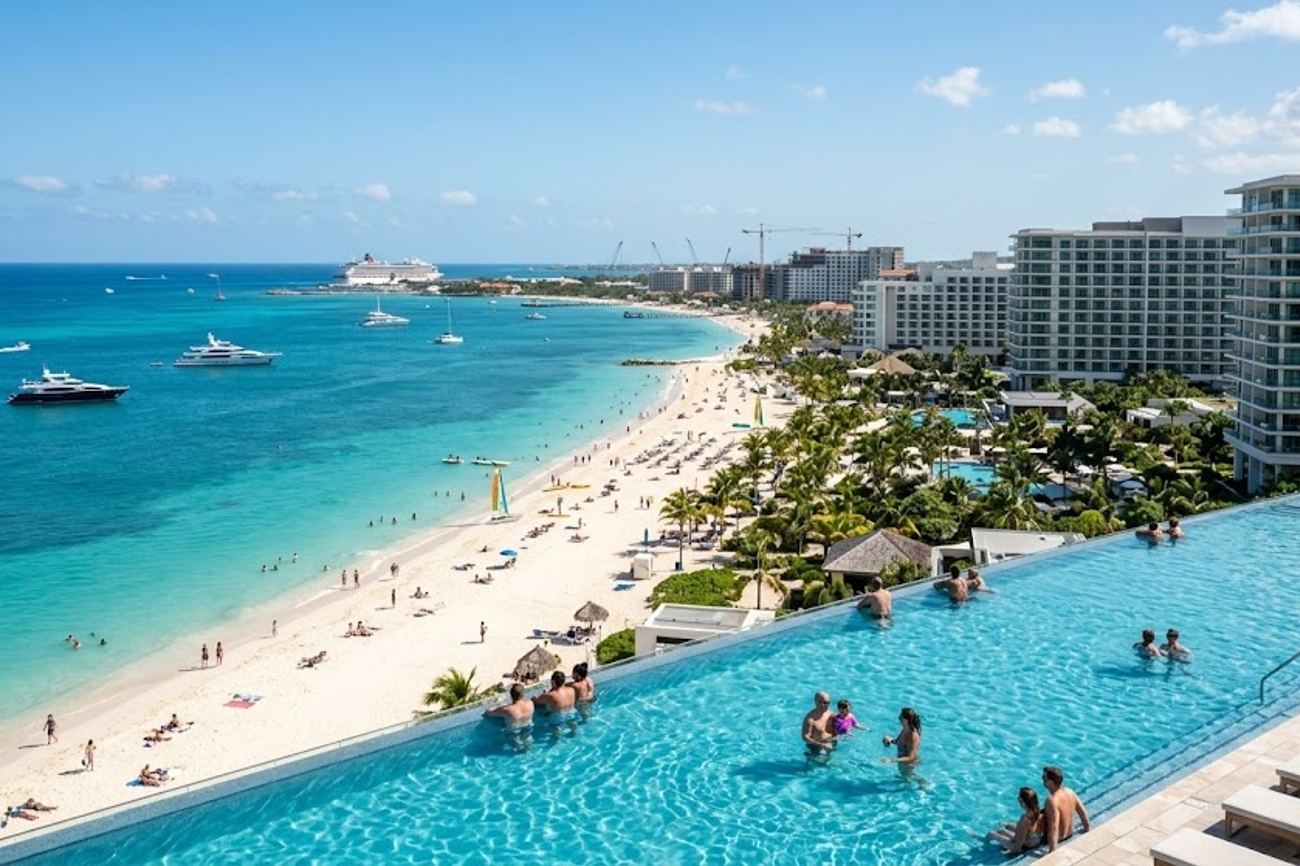
Image generated by AI
[Santo Domingo, September 5, 2026] — The Caribbean is witnessing a fundamental shift in its economic landscape as tourism evolves from a post-pandemic rebuilding phase into a high-velocity growth engine. Across the archipelago, a surge in visitor demand is triggering a wave of investment in aviation connectivity, hospitality infrastructure, and local supply chains, creating a multiplier effect that benefits sectors far beyond traditional hotels.
While the trajectory of growth varies by destination—with some nations battling hurricane recovery and others managing unprecedented demand—the overarching trend is a transition toward higher-value tourism. This shift is currently fueling foreign exchange reserves, stabilizing employment markets, and stimulating domestic retail and agricultural sectors.
Dominican Republic Hits Record-Breaking Arrival Milestones
The Dominican Republic has transitioned from recovery to a state of sustained expansion, establishing itself as a dominant force in the regional travel market. Government data confirms that in 2025, the nation welcomed 11,676,901 visitors, marking a 4.3% increase over 2024 figures.
The composition of these arrivals highlights a balanced growth strategy. Air travel remained the primary driver with approximately 8.86 million visitors, while the cruise sector contributed roughly 2.82 million arrivals. This momentum has accelerated into 2026; during the first seven months of the current year, the country hosted approximately 7.7 million visitors, representing a 7% increase compared to the same period in 2025.
Industry observers indicate that this growth is not merely a statistic but a catalyst for systemic development. The influx of travelers is driving aggressive investment in hotel capacity and destination infrastructure, ensuring that the Dominican Republic remains one of the largest tourism economies in the Western Hemisphere.
The Bahamas Leverages Tourism for Diversified Economic Gains
The Bahamas has recorded some of the most aggressive growth metrics in the Caribbean. In 2025, the government reported a total of 12.5 million visitors, an 11.4% climb from the previous year. The sea-based tourism sector saw a significant spike, with arrivals rising 13.8% to approximately 10.8 million, while air arrivals totaled about 1.7 million.
This trajectory has intensified in 2026, with first-quarter visitor numbers surging 17.5% over the previous year's comparable window. More importantly, the Bahamian government has documented a clear "multiplier effect" where tourism spending spills over into other industrial sectors.
Economic reports show that the construction sector grew by 9%, while accommodation and food services increased by 5.2%. This correlation suggests that the surge in visitor demand is directly funding domestic infrastructure and creating jobs in non-tourism related trades, such as utilities and retail.
Barbados Focuses on High-Value Tourism and GDP Stability
For Barbados, tourism is not just a sector but a cornerstone of national financial stability. Official 2025 statistics recorded 707,046 stay-over visitors. Further government reporting detailed approximately 727,310 long-stay visitors and 817,950 cruise arrivals.
The stakes are particularly high in Barbados, where tourism earnings account for approximately 45% of the nation's GDP. Because of this heavy reliance, the recovery of visitor-facing businesses—including transport services and boutique hospitality—is critical for the country's overall economic health.
Current strategies in Barbados have shifted away from simply increasing volume. Instead, officials are focusing on increasing the "per-visitor value," ensuring that the destination remains competitive by attracting higher-spending travelers and improving the quality of the visitor experience.
Guyana Emerges as a New Frontier for Regional Travel
Guyana is currently the Caribbean's most rapid growth story, diversifying the region's appeal beyond traditional "sun and sand" offerings. In 2025, the country achieved a historic milestone with 453,489 visitors, a 22% increase and the highest annual total in the nation's history.
The growth is being fueled by a combination of expanded air connectivity, increased diaspora travel, and a strategic focus on cultural attractions and sporting events. Government projections for 2026 are optimistic, with an expected arrival count of approximately 550,000 visitors.
By investing in tourism infrastructure and leveraging its unique cultural identity, Guyana is demonstrating how emerging markets can create new demand streams and shift the geographic center of gravity for Caribbean travel.
Dominica Surpasses Pre-Pandemic Baselines
Dominica has provided a clear blueprint for recovery, with 2025 data showing approximately 488,091 total passenger arrivals. This figure represents a 13% increase over 2024 and a massive 49% increase over 2019 levels. Stay-over arrivals, which include high-spending yacht visitors, reached about 112,195, an 18% annual rise.
The surge in arrivals is translating directly into wider economic activity, as visitor spending permeates local businesses and services, signaling that the island has decisively moved past the constraints of the pandemic era.
Regional Tourism Performance Summary
| Destination | 2025 Total Visitors | Growth Rate (YoY) | Key Driver |
|---|---|---|---|
| Dominican Republic | 11,676,901 | 4.3% | Balanced Air/Cruise Growth |
| The Bahamas | 12,500,000 | 11.4% | Sea Arrivals (10.8M) |
| Guyana | 453,489 | 22% | Cultural & Diaspora Travel |
| Dominica | 488,091 | 13% | Stay-over/Yacht Tourism |
| Barbados | 707,046 (Stay-over) | N/A | High GDP Contribution (45%) |
Why This Matters: The Shift to Economic Resilience
For the modern traveler, these statistics translate into a more diverse array of destinations and improved infrastructure. The shift from "recovery" to "expansion" means that airports are expanding, hotel quality is rising, and there are more authentic, non-traditional experiences available—particularly in emerging markets like Guyana.
From a logistical standpoint, the heavy investment in air connectivity across these nations reduces travel friction and opens up more direct routing options. For the regional economy, the "multiplier effect" seen in The Bahamas is the gold standard; when tourism drives a 9% increase in construction, it means the industry is building permanent wealth and infrastructure that remains long after the tourists depart. This creates a cycle of resilience, making these nations less vulnerable to the volatility of a single industry.
Related Travel Guides
Disclaimer
This article is for informational and educational purposes only. It does not constitute legal, financial, or professional advice. While we strive to provide accurate and up-to-date information, travel policies, regulations, and conditions change rapidly. Always verify information with official sources before making travel decisions. Nomad Lawyer makes no representations about the accuracy, reliability, completeness, or suitability of the information provided. Readers should consult qualified professionals for advice specific to their circumstances. The views expressed in this article are those of the author and do not necessarily reflect the views of Nomad Lawyer.