
Caribbean Nations Mandate Shift to Digital Arrival Cards
The Bahamas, Trinidad & Tobago, Dominica, and Barbados are replacing paper customs forms with mandatory digital arrival cards. Learn the new entry requirements.

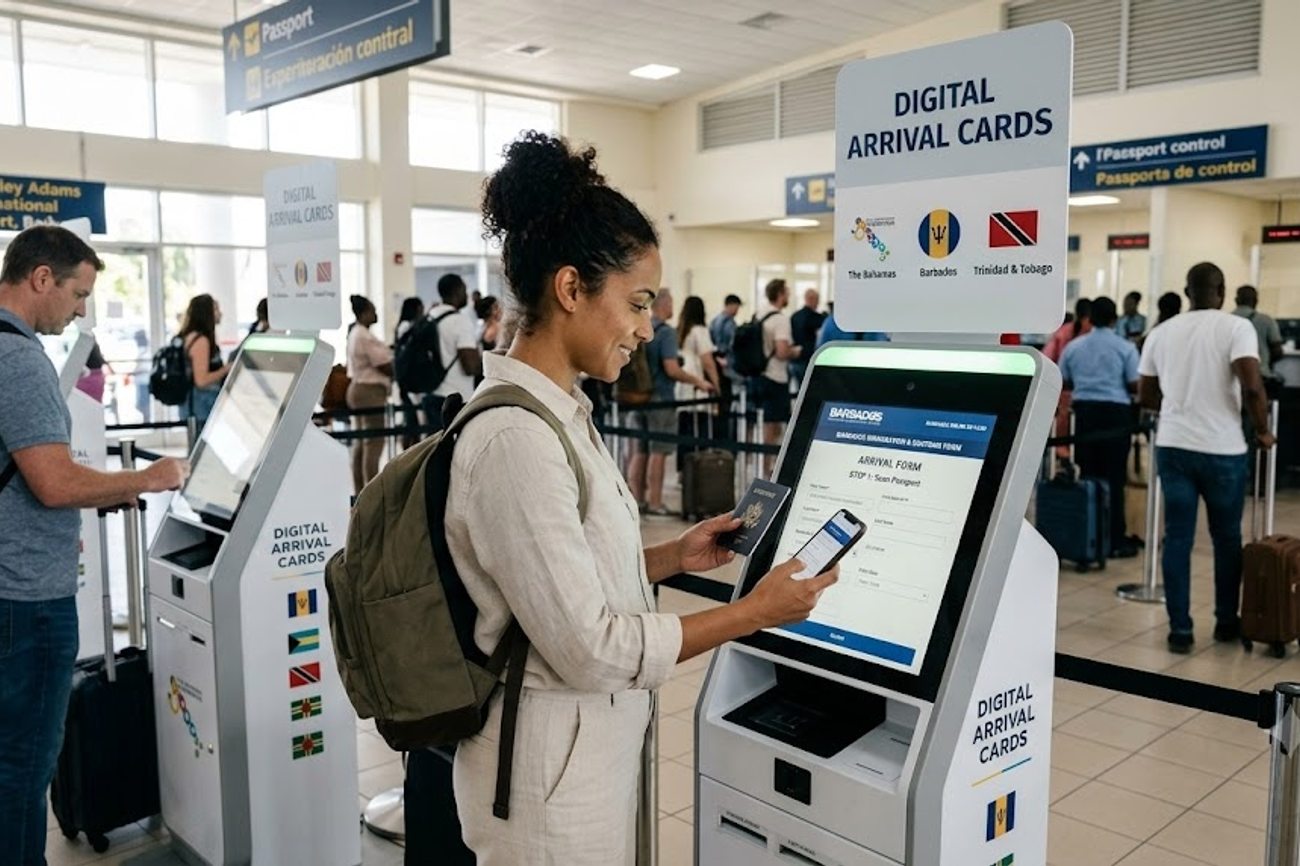
Image generated by AI
The Disruption Details
A systemic shift in border management is occurring across the Americas, as governments replace traditional paper arrival and customs forms with Digital Arrival Cards and electronic registration platforms. This transition moves the data collection process from the aircraft cabin and immigration hall to a pre-departure digital environment.
Travelers must now integrate electronic declarations into their travel itinerary, as passport validity alone is no longer sufficient for seamless entry.
Flight & Airport Impact Breakdown
The following nations have implemented specific digital mandates that affect all arriving international passengers:
- The Bahamas: Launched a pilot of the Bahamas Digital Arrival Card (BDAC) on May 5, 2026. The system integrates immigration and customs data. While paper forms are currently still accepted during the pilot phase, the government is transitioning toward a fully digital environment.
- Trinidad & Tobago: Implemented a mandatory Online Arrival/Departure Card Platform on March 17, 2026. Paper forms are no longer accepted. Forms must be submitted within 72 hours of travel to generate a required QR code for border processing.
- Dominica: Now utilizes an online Immigration and Customs Declaration Card. The government has issued specific warnings regarding third-party "service" websites that charge illegal fees for this free government service.
- Barbados: Operates an established digital immigration and customs declaration. The system opens for submission 72 hours prior to arrival.
Passenger Rights & Advisory
Our analysis of these new mandates indicates that the burden of compliance has shifted entirely to the passenger before they reach the airport. For the affected traveler, this means:
- Boarding Risks: Because some carriers verify entry requirements during check-in, failure to produce a QR code or electronic receipt (specifically for Trinidad & Tobago) may result in a denial of boarding.
- Financial Protection: In Dominica and other regions, passengers are being targeted by "spoof" websites. Our analysis suggests that official government declarations are free. Any site requesting payment for an arrival card is likely a fraudulent third-party entity.
- Timing Requirements: Passengers must synchronize their form submission with the specific windows provided (e.g., the 72-hour window for Barbados and Trinidad & Tobago). Submitting too early or failing to submit before takeoff can lead to processing delays at the border.
- Documentation Match: Ensure that the data entered into the digital portal exactly matches the machine-readable zone (MRZ) of your passport to avoid automated system flags.
Industry Analyst View
The move toward Digital Arrival Cards is a strategic effort to reduce "bottlenecking" at immigration hubs. By capturing customs and immigration data in advance, authorities can perform risk assessments before the aircraft lands. However, this creates a new point of failure for the traveler. We expect to see an increase in "technical denials" where passengers are delayed not by visa issues, but by failure to navigate the digital interface of the destination country.
Related Travel Guides
Disclaimer
This article is for informational and educational purposes only. It does not constitute legal, financial, or professional advice. While we strive to provide accurate and up-to-date information, travel policies, regulations, and conditions change rapidly. Always verify information with official sources before making travel decisions. Nomad Lawyer makes no representations about the accuracy, reliability, completeness, or suitability of the information provided. Readers should consult qualified professionals for advice specific to their circumstances. The views expressed in this article are those of the author and do not necessarily reflect the views of Nomad Lawyer.
Kunal K Choudhary
Co-Founder & Contributor
A passionate traveller and tech enthusiast. Kunal contributes to the vision and growth of Nomad Lawyer, bringing fresh perspectives and driving the community forward.
Learn more about our team →