
West Bengal to Move Power Grids Underground Across 16 Tourist Hubs
West Bengal is transitioning to underground power networks in 16 tourist towns to eliminate overhead cables, improve safety, and ensure power reliability.

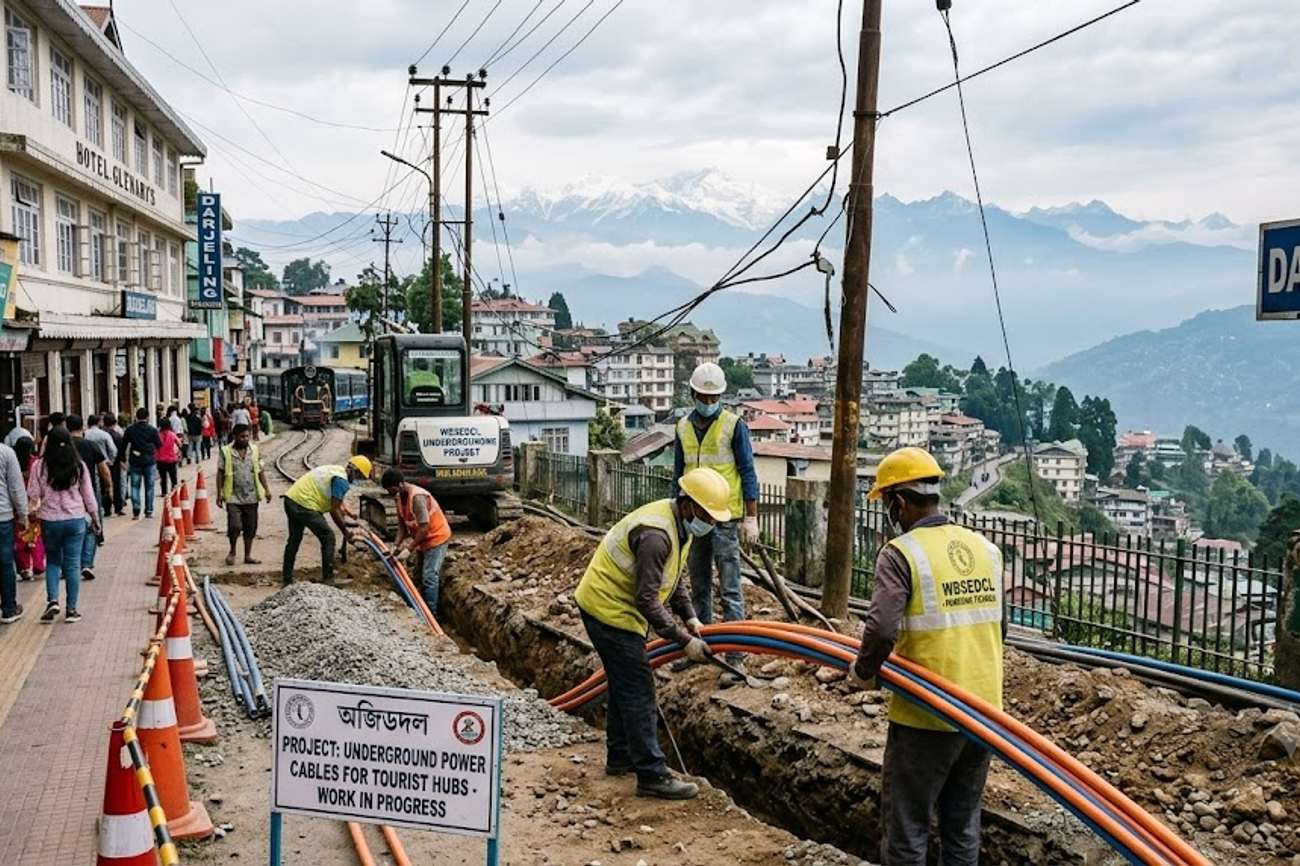
Image generated by AI
Modernizing Urban Utilities for Tourism and Safety
West Bengal is initiating a large-scale infrastructural shift by converting traditional overhead power distribution into advanced underground systems across 16 prominent towns. This project targets high-traffic tourist zones and densely populated urban centers to eliminate visual pollution and safeguard public spaces from environmental disruptions.
The transition aims to replace hazardous bare conductors with shielded subterranean networks. By removing the "web" of overhead wires, the state intends to enhance the aesthetic value of its heritage sites and natural landscapes, directly benefiting the regional tourism economy.
Funding Model and Engineering Strategy
Unlike previous utility upgrades, this initiative is supported by a 100% central government grant. This funding mechanism ensures that the modernization occurs without placing a financial burden on the state exchequer.
Due to the architectural complexities of historical towns—where narrow streets and existing subterranean water and drainage lines limit tunneling—engineers are employing a hybrid approach:
- Primary Infrastructure: Full underground cabling in viable zones.
- Secondary Infrastructure: Aerial bundled cables (ABC) in constrained alleyways.
- Goal: Total elimination of bare conductors to maximize safety and resilience.
Direct Benefits for Travelers and Hospitality
For the tourism sector, the removal of overhead cabling provides two primary advantages: visual clarity and physical safety. Visitors will experience unobstructed views of monuments and heritage streets, improving the quality of sightseeing and photography.
Safety is a critical driver for this project. During "Nor’westers" and seasonal storms, overhead live wires frequently snap, posing fatal risks to pedestrians and motorists. Undergrounding these lines removes this hazard entirely. Additionally, the increased reliability of the grid ensures that hotels and restaurants can maintain seamless operations without the frequent outages typical of overhead systems.
Evolution of Power Infrastructure in the Region
This project represents a scaling up of earlier, localized efforts. While the state previously implemented underground networks in specific areas, the new strategy is proactive and tourism-centric rather than reactive.
| Project Phase | Locations | Funding Source | Primary Objective |
|---|---|---|---|
| Earlier Initiatives | Digha, Krishnanagar, Chinsura, Bolpur, Nabadwip, Cooch Behar | State Funds / National Cyclone Risk Mitigation Project | Disaster recovery & localized upgrades |
| Current Initiative | 16 Selected Tourist Towns | 100% Central Government Grant | Tourism enhancement & systemic resilience |
Operational Impact and Industry Perspective
Energy experts note that shifting to shielded underground systems significantly reduces technical losses and prevents power theft. From a municipal standpoint, this transition lowers long-term emergency repair costs associated with extreme weather events.
To minimize disruption to local commerce and tourism, the deployment is being managed in phases. Local administrative bodies are coordinating trenching and cabling works to ensure that pedestrian movement and business operations remain functional during the construction period.
Key Takeaways
- Scope: 16 tourist-centric towns will receive underground power upgrades.
- Financials: The project is entirely funded by the Central Government via grants.
- Safety: Elimination of bare conductors prevents accidents during severe storms.
- Aesthetics: Removal of overhead wires improves the visual appeal of heritage and tourist sites.
- Engineering: A hybrid model using aerial bundled cables is used where tunneling is impossible.
FAQ
Why is West Bengal moving power lines underground? The move is designed to improve public safety during storms, remove visual clutter in tourist zones, and increase the reliability of electricity supply.
Will this project cost the state government? No, the current initiative for the 16 towns is funded 100% by the Central Government as a grant.
What happens in areas where underground cabling isn't possible? In narrow or historically dense areas, engineers use aerial bundled cables to ensure there are no bare conductors, maintaining safety while bypassing subterranean obstacles.
Related Travel Guides
Disclaimer
This article is for informational and educational purposes only. It does not constitute legal, financial, or professional advice. While we strive to provide accurate and up-to-date information, travel policies, regulations, and conditions change rapidly. Always verify information with official sources before making travel decisions. Nomad Lawyer makes no representations about the accuracy, reliability, completeness, or suitability of the information provided. Readers should consult qualified professionals for advice specific to their circumstances. The views expressed in this article are those of the author and do not necessarily reflect the views of Nomad Lawyer.
Raushan Kumar
Founder & Lead Developer
Full-stack developer with 11+ years of experience and a passionate traveller. Raushan built Nomad Lawyer from the ground up with a vision to create the best travel and law experience on the web.
Learn more about our team →