
Navi Mumbai International Airport to Launch Dedicated Freighter Hub for Major Airlines in 2026
Navi Mumbai International Airport is positioning itself as the primary cargo gateway for Western India, with major carriers preparing dedicated freighter operations to relieve congestion at Chhatrapati Shivaji Maharaj International Airport.

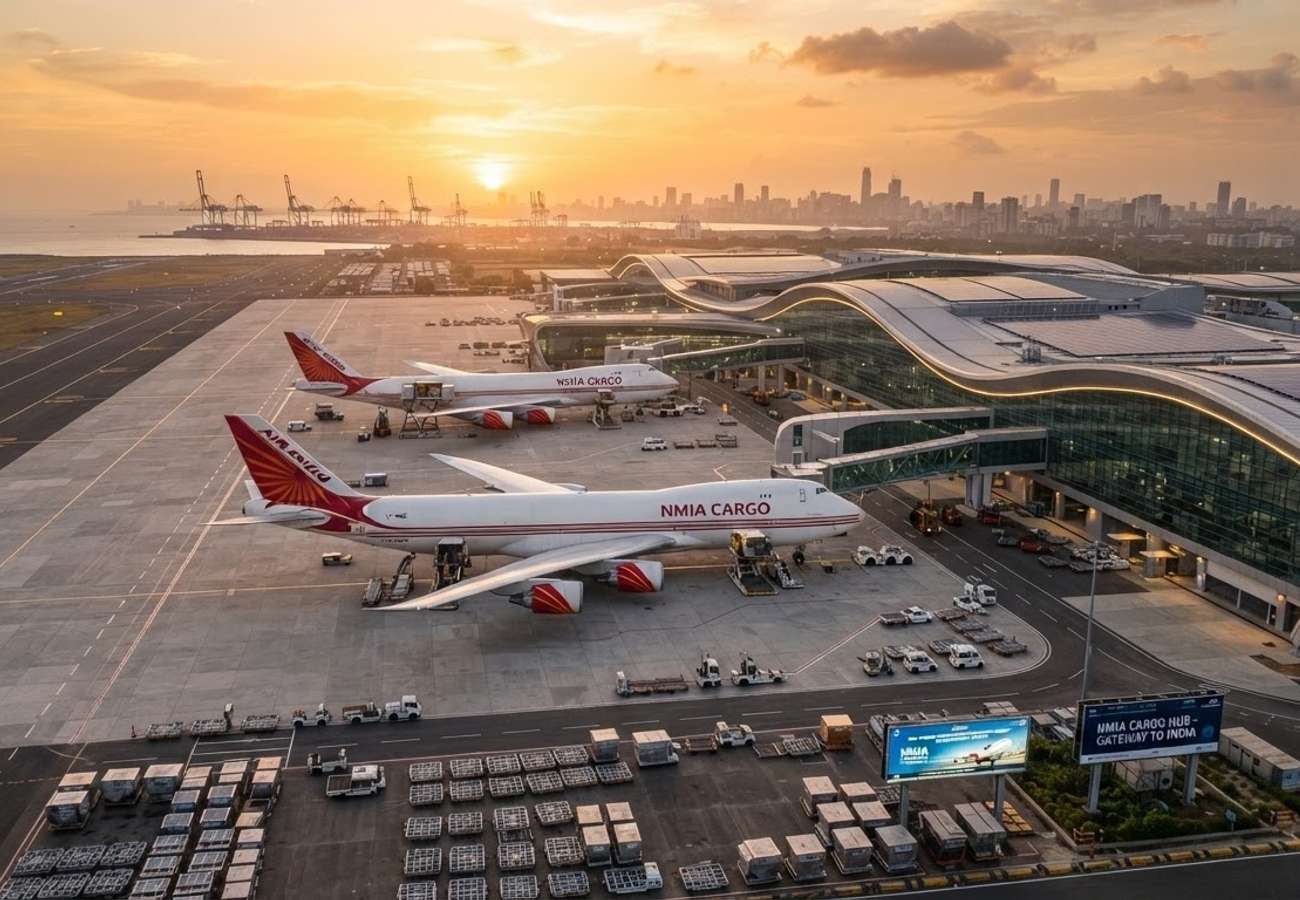
Image generated by AI
Major international and domestic carriers are mobilizing dedicated freighter fleets for launch at Navi Mumbai International Airport (NMIA). This strategic shift aims to establish the greenfield site as the primary cargo gateway for the Mumbai region, decoupling heavy freight from passenger traffic.
Strategic Migration of Cargo Operations
Navi Mumbai International Airport is preparing for a substantial increase in air freight activity. Our analysis of current operational plans indicates that international cargo specialists and Indian carriers are currently aligning their network schedules to coincide with the airport's early cargo phases.
The operational blueprint suggests a phased migration. Dedicated all-cargo freighter services are designated as a central pillar of the opening phase, launching alongside the initial wave of international passenger flights. However, belly cargo—freight carried in the holds of passenger aircraft—is expected to remain at Chhatrapati Shivaji Maharaj International Airport (CSMIA) for the immediate future.
This structural change is designed to alleviate the chronic bottlenecks at CSMIA, allowing the legacy hub to prioritize passenger experience while NMIA handles the bulk of the region's industrial logistics.
Infrastructure and Capacity Breakdown
Unlike existing urban airports that require retrofitting, NMIA was engineered with a "cargo-first" philosophy. The facility incorporates several high-efficiency features:
- Multi-Phase Cargo Village: A scalable layout designed to handle hundreds of thousands of tonnes annually in its first phase.
- Direct Industrial Access: On-airport warehousing with streamlined landside access to the industrial corridors of Maharashtra and Gujarat.
- Digital Cargo Community System: A next-generation platform integrating airlines, customs, freight forwarders, and ground handlers to reduce shipment dwell times through real-time visibility.
Airline Fleet and Network Strategy
Carrier strategies are evolving to leverage the two-airport system. Network planning data indicates a dual-track model:
- Dedicated Freighters: These will operate exclusively out of NMIA, utilizing overnight arrival windows to feed early-morning trucking departures into industrial belts.
- Widebody Passenger Jets: These will continue to utilize the primary city gateway, maintaining high-yield belly cargo connectivity to specific global destinations.
Logistics analysts suggest this separation may enable "triangular cargo services," linking Navi Mumbai with other regional hubs, which would attract international operators previously deterred by the saturated airspace and crowded terminals of central Mumbai.
Operational Risks and Regulatory Hurdles
Despite the infrastructure readiness, the full implementation of freighter operations faces specific sequencing challenges. Current reports indicate ongoing uncertainty regarding certain regulatory approvals.
Our analysis suggests that the pace of the ramp-up depends on the synchronization of three critical factors:
- Aviation Clearances: Final flight path and slot approvals for heavy freighters.
- Customs Integration: The full deployment of the digital community system with government customs interfaces.
- Security Protocols: Synchronization of security clearances between the two airport hubs.
Passenger and Shipper Advisory
For those navigating the shift in Mumbai's aviation landscape, the transition to a two-airport system introduces specific logistical considerations.
For the affected shipper or business traveler, this means:
- Split Logistics: You must verify whether your shipment is "belly cargo" (CSMIA) or "dedicated freighter" (NMIA), as they will be handled at different airports on opposite sides of the harbor.
- Transit Times: While NMIA promises lower dwell times due to digitalization, initial ground access and road connectivity may experience teething issues during the first wave of operations.
- Booking Verification: When booking high-value or time-critical freight, explicitly confirm the arrival airport to avoid costly cross-city transfers.
Industry Analyst View
The emergence of NMIA as a freighter base is a response to the rapid expansion of e-commerce and pharmaceutical exports in India. By separating heavy freight from passenger traffic, the region can scale its export competitiveness without compromising passenger throughput.
The long-term success of this model depends on the coordination between the two hubs. If managed correctly, CSMIA will evolve into a high-efficiency passenger terminal, while NMIA becomes a multimodal logistics powerhouse.
The transition to a dual-airport system marks a pivotal evolution in India's global supply chain integration.
Related Travel Guides
Disclaimer
This article is for informational and educational purposes only. It does not constitute legal, financial, or professional advice. While we strive to provide accurate and up-to-date information, travel policies, regulations, and conditions change rapidly. Always verify information with official sources before making travel decisions. Nomad Lawyer makes no representations about the accuracy, reliability, completeness, or suitability of the information provided. Readers should consult qualified professionals for advice specific to their circumstances. The views expressed in this article are those of the author and do not necessarily reflect the views of Nomad Lawyer.
Raushan Kumar
Founder & Lead Developer
Full-stack developer with 11+ years of experience and a passionate traveller. Raushan built Nomad Lawyer from the ground up with a vision to create the best travel and law experience on the web.
Learn more about our team →