
Cambodia Tourism Soars: AirAsia's Low-Cost Network Powers Regional Connectivity
Cambodia's tourism sector gains momentum as AirAsia Cambodia expands affordable regional connectivity and the Cambodia Tourism Board amplifies global destination marketing, positioning the Kingdom beyond Angkor.

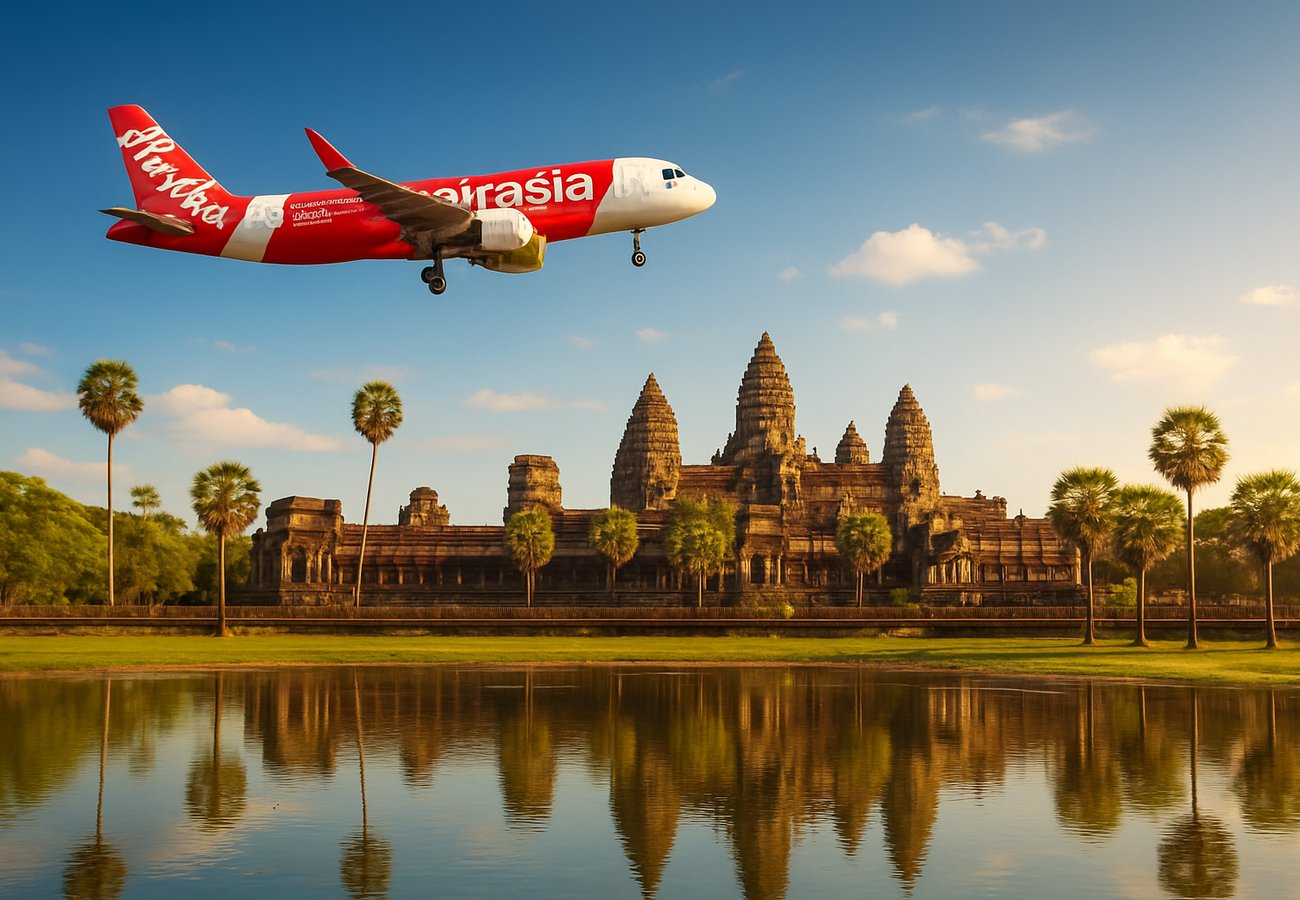
Image generated by AI
The Kingdom Enters a New Tourism Era
Cambodia is no longer asking travelers to choose between Angkor and everywhere else. The country is now actively reshaping itself as a multi-destination, affordable, and hyper-connected travel hub across Southeast Asia—and AirAsia Cambodia is the critical enabler making it happen.
I watched this transformation unfold over recent months. What was once a tourism story anchored almost entirely to the temples of Siem Reap has evolved into something far more ambitious: a regional travel network where domestic flights connect Phnom Penh, Siem Reap, and Sihanoukville, while the broader AirAsia Group routes connect the Kingdom to hubs in Kuala Lumpur and Bangkok. The message from the Cambodia Tourism Board is clear—the country is open for business, and it's ready to compete.
Reddit: "Cambodia just opened up flights to Sihanoukville? That changes everything for budget island trips." — r/travel
The numbers matter here. AirAsia Cambodia has already positioned itself as a core player in what the airline describes as one of Southeast Asia's most underserved markets. Underserved doesn't mean unpopular. It means potential.
Why This Moment Matters for Cambodia
Cambodia's tourism assets are substantial. The country sits at the intersection of three powerful travel drivers: ancient civilization, affordable travel, and regional accessibility. But assets alone don't move markets—distribution does.
When I examine the current landscape, three forces are converging:
AirAsia Cambodia's network removes the friction that kept budget-conscious travelers away. Low-cost routes between the Kingdom's three major cities enable weekend getaways, backpacker circuits, and multi-country ASEAN itineraries that weren't economically viable before. Family trips become affordable. Festival travel becomes accessible. The economics of Cambodian tourism just shifted.
The Cambodia Tourism Board's global promotion lifts Cambodia's profile beyond its single-site reputation. Tourism boards do heavy lifting that flights alone cannot accomplish—they shape narratives, build partnerships, conduct market research, and create the storytelling architecture that makes travelers want to visit. Cambodia is transitioning from "Angkor or bust" to "Cambodia as a complete Southeast Asian experience."
Cambodia's e-Arrival system digitizes the entry process. Travelers can submit arrival details online within seven days before arrival, free of charge through the General Department of Immigration. This removes bureaucratic friction. First-time visitors gain confidence. Tour operators encounter fewer logistical headaches. Simple? Yes. Powerful? Absolutely.
Three Cities. Three Travel Stories.
The domestic network strategy is deceptively sophisticated.
Phnom Penh functions as the cultural and business gateway. The capital commands riverfront experiences, museum tourism, food-driven travel, and urban exploration. It's where business travelers land. It's where city-break tourists want to spend three days.
Siem Reap remains Cambodia's tourism crown jewel. UNESCO World Heritage Angkor is one of Southeast Asia's most important archaeological sites—temples, reservoirs, canals, and historic routes spread across vast landscapes. But here's what matters now: travelers arriving via affordable AirAsia flights are more likely to extend their stay, move between cities, and explore beyond the temple circuit.
Sihanoukville transforms Cambodia's identity. This coastal gateway unlocks beach tourism, island escapes, and seasonal travel that Angkor alone could never capture. When travelers can affordably fly from Siem Reap to Sihanoukville in under two hours, the entire travel package changes.
Together, these three cities create what tourism operators call a "complete destination narrative." You're not visiting temples. You're experiencing Cambodia.
The UNESCO Advantage: Beyond Angkor
Here's what many Western travelers still don't know: Cambodia has four UNESCO World Heritage sites, not one.
Angkor dominates the conversation, deservedly so. But Preah Vihear, Sambor Prei Kuk, and Koh Ker represent an entirely different category of cultural tourism—archaeology that's less crowded, more intimate, and increasingly discoverable through tour operators who can now move visitors between sites via affordable domestic flights.
The inscription of Koh Ker as a World Heritage site was particularly significant for exactly this reason. It gives tour operators permission—and a marketing angle—to spread visitor interest beyond Siem Reap's temple-saturated core. Local communities in peripheral regions gain economic benefit. Small hospitality businesses outside the major tourist centers become viable.
According to UNESCO, these heritage sites create a deeper cultural route that appeals to travelers seeking history, archaeology, and less-crowded heritage experiences—travelers who increasingly make destination choices based on authenticity rather than brand recognition.
The Regional Connectivity Play
What makes this moment genuinely significant is how Cambodia plugs into the broader ASEAN travel ecosystem through AirAsia's wider platform.
The airline describes Cambodia as a core underserved market. That phrase carries weight. It means strong tourism potential paired with insufficient air infrastructure. AirAsia has a reputation for identifying exactly these markets and then flooding them with capacity once fares drop.
Through AirAsia's regional network, Cambodia becomes part of multi-country itineraries that include Malaysia, Thailand, Singapore, India, China, Japan, and Australia. A traveler flying from Melbourne to Bangkok can now easily add Cambodia. A visitor spending time in Kuala Lumpur can explore Siem Reap for three days before continuing to Vietnam. The regional connectivity doesn't just help Cambodia—it fundamentally reframes how independent travelers construct Asian itineraries.
For hospitality operators, this changes everything. It means more frequent, lower-cost visitor flows. It means longer average stays because multi-city travel naturally extends duration.
The Domino Effect: Economic Impact Beyond Airports
Tourism growth doesn't stop at baggage claim.
When more travelers arrive on AirAsia flights, demand rises across entire sectors. Hotels benefit from improved occupancy. Tour operators gain access to lower-cost traffic. Restaurants see stronger covers. Guides become fully booked. Transport operators gain predictable demand. Local craft sellers reach new customers. This is how tourism creates a ripple economy.
The biggest economic opportunity emerges from multi-city travel patterns. When visitors move seamlessly between Phnom Penh, Siem Reap, and Sihanoukville, average stay length increases measurably. Longer stays drive higher local spending. A three-city trip spanning ten days generates far more economic activity than a four-day single-city visit.
Small boutique hotels outside Siem Reap's core tourism area suddenly become accessible via short domestic flights. Family guesthouses in Kampot and Kep reach new market segments. Eco-tourism operators in Koh Kong gain viability. This is how regional connectivity creates distributed economic benefit rather than concentrated tourism pressure.
What This Means for Travelers Planning Cambodia
The practical implication for nomadic professionals and independent travelers is straightforward: Cambodia just became significantly more accessible, affordable, and navigable.
You can now plan multi-city itineraries with confidence, knowing that domestic flights operate on reliable schedules at low costs. The e-Arrival system means entry preparation takes minutes, not hours. The Cambodia Tourism Board's global push means more detailed destination information is reaching international platforms—better blog content, more refined travel guides, stronger media coverage.
For budget-conscious travelers, the affordability argument has just strengthened considerably. AirAsia's pricing model makes regional connectivity viable for backpackers, digital nomads, and mid-range travelers who previously had limited options for moving between Cambodian cities.
For business travelers, the connectivity story is equally compelling. Regular flights between the capital and regional centers make multi-site business travel feasible for companies operating across Cambodia.
The Competitive Landscape
Let's be direct about regional competition. Thailand, Vietnam, Malaysia, and Singapore all have stronger established tourism infrastructure and more extensive air networks. Cambodia's play isn't to outcompete these destinations—it's to position itself as an underexplored alternative within a multi-country ASEAN narrative.
The strategy works because travelers increasingly construct multi-week Asian itineraries rather than single-destination vacations. Cambodia's affordability, accessibility, and cultural depth give it distinct competitive advantage in this context.
The Cambodia Tourism Board's role becomes critical here. Its promotion efforts directly counter the narrative advantage that more-established destinations enjoy. By building global visibility around Cambodia's complete tourism offer—not just Angkor—the board is essentially creating a category shift. Cambodia stops being a "should we add it?" question and becomes a "how long can we stay?" question.
What Comes Next
The forces aligning around Cambodia represent a genuine inflection point. AirAsia's network expansion removes infrastructure constraints. The Cambodia Tourism Board's promotion removes visibility constraints. Digital entry systems remove bureaucratic constraints.
For travelers, this translates to better options, lower fares, and less planning friction. For local communities, it means economic opportunity distributed more widely than previous tourism models allowed.
What we're witnessing is a market correction—a destination with world-class cultural assets, geographical advantages, and regional connectivity finally gaining the distribution infrastructure that allows it to reach its full tourism potential.
The Kingdom isn't just opening flights. It's opening doors.
Cambodia's tourism moment has arrived, and AirAsia just handed it the keys to the region.
Related Travel Guides
Delta TechOps Expands Third-Party MRO Operations Through Strategic LATAM Airlines Brasil Partnership
AirAsia's Fleet Modernization Strategy: How Low-Cost Carriers Are Reshaping Southeast Asian Aviation
Disclaimer
This article is for informational and educational purposes only. It does not constitute legal, financial, or professional advice. While we strive to provide accurate and up-to-date information, travel policies, regulations, and conditions change rapidly. Always verify information with official sources before making travel decisions. Nomad Lawyer makes no representations about the accuracy, reliability, completeness, or suitability of the information provided. Readers should consult qualified professionals for advice specific to their circumstances. The views expressed in this article are those of the author and do not necessarily reflect the views of Nomad Lawyer.
Kunal K Choudhary
Co-Founder & Contributor
A passionate traveller and tech enthusiast. Kunal contributes to the vision and growth of Nomad Lawyer, bringing fresh perspectives and driving the community forward.
Learn more about our team →