
Air Canada Adds Backup Capacity and Flexible Rebooking as WestJet Flight Attendant Strike Threat Looms Over August Long Weekend 2026
Air Canada is positioning itself as a safety valve for travelers as WestJet flight attendants threaten strike action ahead of Canada's August long weekend peak travel period.

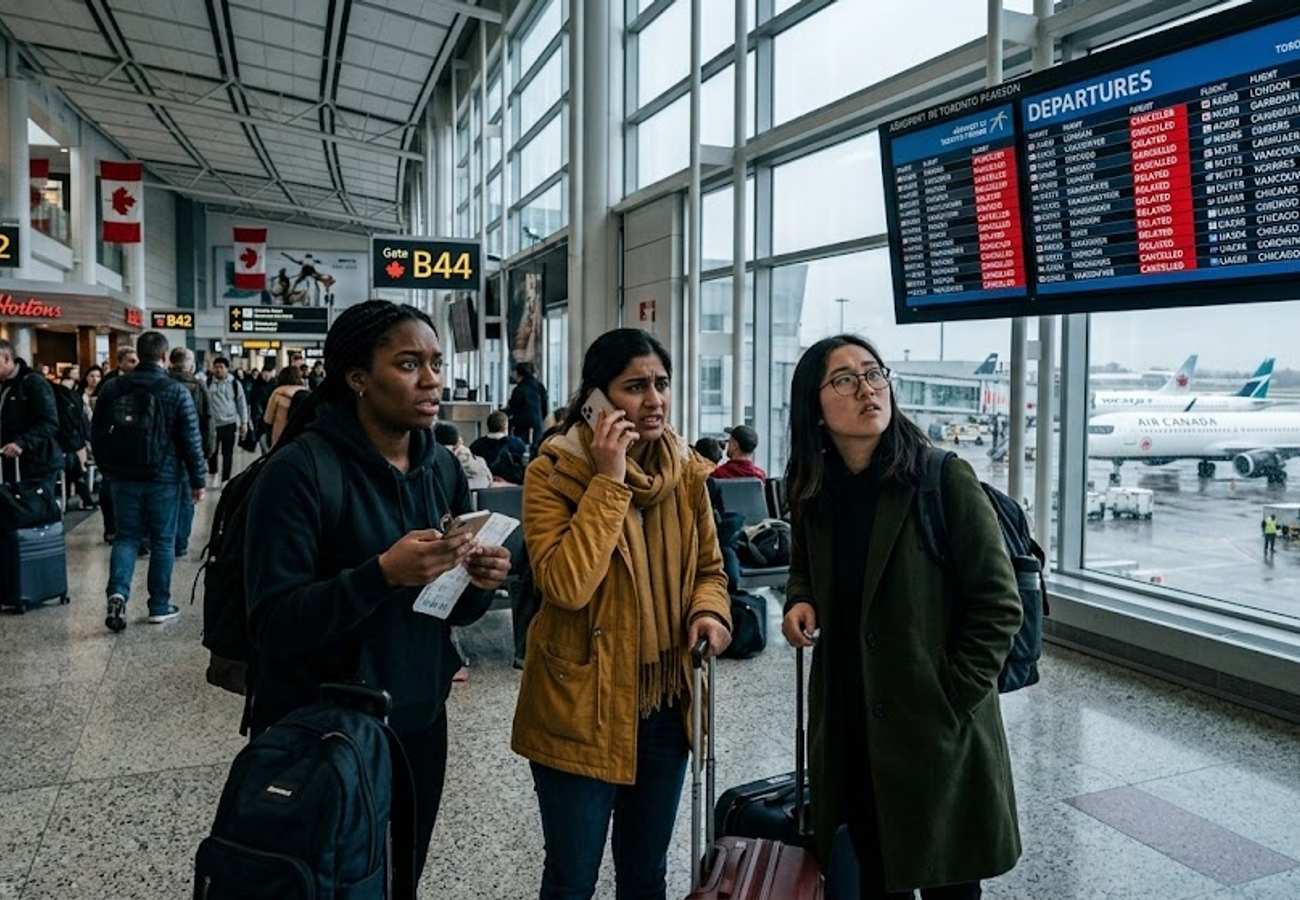
Image generated by AI
[Toronto, July 31, 2026] — Thousands of Canadian travelers face potential disruption as WestJet flight attendants issue a formal strike threat that could trigger job action as early as the August long weekend, and Air Canada is already moving to absorb displaced passengers with flexible rebooking policies and limited extra seat capacity on key domestic and transborder routes.
The labour standoff centers on unpaid work and scheduling disputes, with the union warning that negotiations have stalled. For passengers holding WestJet tickets in early August, the clock is ticking to secure backup plans before peak-season demand sells out alternative options.
WestJet Labour Dispute Threatens August Long Weekend Travel
WestJet flight attendants have formally notified the carrier of potential strike action, creating a narrow window of uncertainty ahead of one of Canada's busiest travel weekends. The August long weekend consistently ranks among the highest-demand periods in Canadian aviation, with aircraft operating near maximum capacity across domestic and transborder networks.
Reports indicate that the core grievances involve unpaid work hours and scheduling practices. The union representing flight attendants has cautioned that talks have reached an impasse, and that travelers should begin contingency planning rather than assume a resolution will arrive in time.
The pattern is familiar to seasoned observers of Canadian airline labour disputes. WestJet has historically begun winding down select operations before job action formally begins—parking aircraft and consolidating flights to protect what remains of its schedule. That approach, combined with the current strike notice, has triggered a surge of passengers booking backup tickets on competing carriers, including Air Canada, before high-demand routes reach capacity.
Canadian air passenger protection regulations classify cancellations caused directly by a strike as events outside an airline's control. This classification limits the cash compensation available to affected travelers, shifting passenger focus away from potential payouts and toward the practical challenge of reaching their destinations. For those with time-sensitive itineraries—cruise departures, guided tours, or family events—the stakes are particularly high.
Air Canada Positions as Alternative Carrier With Added Capacity
Air Canada has begun positioning itself as a pressure valve for travelers concerned about potential WestJet cancellations. According to advisories and publicly available information, an arrangement exists allowing some WestJet passengers disrupted by a strike to be rebooked onto available Air Canada services, subject to seat availability and fare conditions.
The carrier is no stranger to labour-related operational upheaval. Air Canada experienced its own flight attendant strike in 2025, when it preemptively reduced schedules and then required several days to rebuild full operations after a settlement was reached. Industry observers note that this history appears to be shaping the current response: the airline is selectively adding capacity on high-demand domestic and transborder routes while applying flexible fare rules for new bookings that passengers may use as insurance policies against WestJet disruption.
In practical terms, travelers are booking fully refundable or credit-eligible fares on Air Canada as a hedge. If WestJet's schedule holds, passengers cancel the Air Canada itinerary and retain a credit or refund per fare rules. If a strike materializes or WestJet cancels flights, they pivot to the Air Canada booking and avoid being stranded during peak season.
Analysts caution that Air Canada must manage this role carefully. The airline operates under its own capacity constraints, and large-scale rebooking of WestJet customers could fill flights quickly, reduce last-minute availability, and drive up fares on popular routes. Still, the willingness to assist reflects both a commercial opportunity and reputational pressure to demonstrate reliability during a period marked by repeated airline labour disputes across Canada.
Travelers Urged to Act Early and Understand Passenger Rights
Consumer advocates and travel experts are advising passengers with WestJet tickets for early August to review their options immediately rather than waiting for a last-minute decision from either side. In previous Canadian airline strikes, travelers who delayed action faced extended call-centre wait times and severely limited remaining seats on alternative carriers.
For passengers who can afford some flexibility, one strategy circulating in public travel discussions involves accepting free change or cancellation offers from WestJet where available, then rebooking on another airline—Air Canada, Porter, or foreign partners serving the same city pairs. This approach reduces the risk of being left without options if negotiations collapse close to departure.
Travelers choosing to maintain existing WestJet bookings are being encouraged to build additional buffer time into their itineraries, particularly when trips connect to cruises, tours, or onward international flights on separate tickets. Some passengers are shifting key events by a day or two, or flying earlier than originally planned, to create resilience against day-of-flight disruptions cascading through the network.
Passenger-rights groups emphasize that Canadian regulations require airlines to reroute travelers whose flights are cancelled or significantly delayed, even during a strike. The exact obligations depend on circumstances, but this can include rebooking on a competitor when no reasonable option exists on the original carrier. However, availability during peak periods is limited, and travelers may still face overnight stays or long connections.
Practical Steps for Booking Air Canada as a Backup
For travelers evaluating Air Canada as a backup or primary option, aviation and tourism experts point to several concrete actions:
First, study fare conditions carefully. Determine whether a ticket is refundable, changeable for a fee, or eligible for future travel credit. Many Air Canada economy fares can be converted to credit if plans change, while higher fare classes may offer full refunds.
Second, book nonstop flights where possible to minimize connection risk, particularly during a period when airports may see heavier-than-usual traffic from displaced WestJet passengers. When connections are unavoidable, longer layovers provide a cushion against minor delays that could otherwise cause missed onward legs.
Third, monitor both Air Canada's and WestJet's travel advisory pages continuously. Use mobile apps or online accounts to track schedule changes in real time. Past work stoppages show that airlines sometimes adjust timetables multiple times in the days leading up to a strike deadline, and seats that appear unavailable one day may reappear after a schedule reshuffle.
Finally, consider travel insurance with strike coverage as an additional layer of protection. Policies vary significantly, and travelers should read exclusions carefully, but many plans can cover nonrefundable expenses if a strike leads to cancellation, delay, or forced itinerary changes. Paired with flexible tickets on a carrier like Air Canada, insurance can substantially reduce the financial exposure of traveling during labour uncertainty.
Negotiations Outlook and Summer Travel Forecast
As of late July, negotiators for WestJet and its flight attendants remain under pressure to reach an agreement before the earliest possible strike date. Past Canadian airline labour disputes—including those involving both WestJet and Air Canada—have sometimes produced last-minute deals after strike notices were issued. These eleventh-hour resolutions have avoided prolonged work stoppages but left travelers anxious until the final hours.
Industry watchers note that airlines frequently reduce schedules in advance of a potential strike to prevent chaotic day-of cancellations. If WestJet follows that model, some passengers could see flights changed or consolidated even if talks ultimately succeed. In that environment, Air Canada's role as an alternative carrier is likely to remain central for travelers seeking added certainty through the remainder of the summer.
Why This Matters for Travelers
For anyone holding a WestJet reservation in early August, the practical risk is clear: a strike or preemptive schedule reduction could strand passengers during Canada's most compressed peak travel window. Canadian regulations limit cash compensation for strike-related cancellations, meaning the onus falls heavily on travelers to secure their own alternatives. From a logistical standpoint, this creates a narrow decision window—book backup capacity on Air Canada or other carriers now while seats remain, or gamble on a late-stage negotiation breakthrough. The travelers most vulnerable are those with nonrefundable cruise connections, tour departures, or separate-ticket international onward flights, where a single missed leg can cascade into thousands of dollars in losses. Air Canada's willingness to add capacity and apply flexible fare rules offers a lifeline, but that capacity is finite and will diminish rapidly as the strike deadline approaches.
The next ten days will determine whether Canadian travelers face a smooth August long weekend or a scramble for seats that sells out within hours.
Related Travel Guides
Disclaimer
This article is for informational and educational purposes only. It does not constitute legal, financial, or professional advice. While we strive to provide accurate and up-to-date information, travel policies, regulations, and conditions change rapidly. Always verify information with official sources before making travel decisions. Nomad Lawyer makes no representations about the accuracy, reliability, completeness, or suitability of the information provided. Readers should consult qualified professionals for advice specific to their circumstances. The views expressed in this article are those of the author and do not necessarily reflect the views of Nomad Lawyer.
Kunal K Choudhary
Co-Founder & Contributor
A passionate traveller and tech enthusiast. Kunal contributes to the vision and growth of Nomad Lawyer, bringing fresh perspectives and driving the community forward.
Learn more about our team →