
Sydney's Bankstown Rail Corridor to Launch as Australia's First Driverless Metro Line in 2026
Sydney's Bankstown rail corridor is set to reopen in 2026 as a fully driverless metro following the completion of intensive trial running and systems integration.
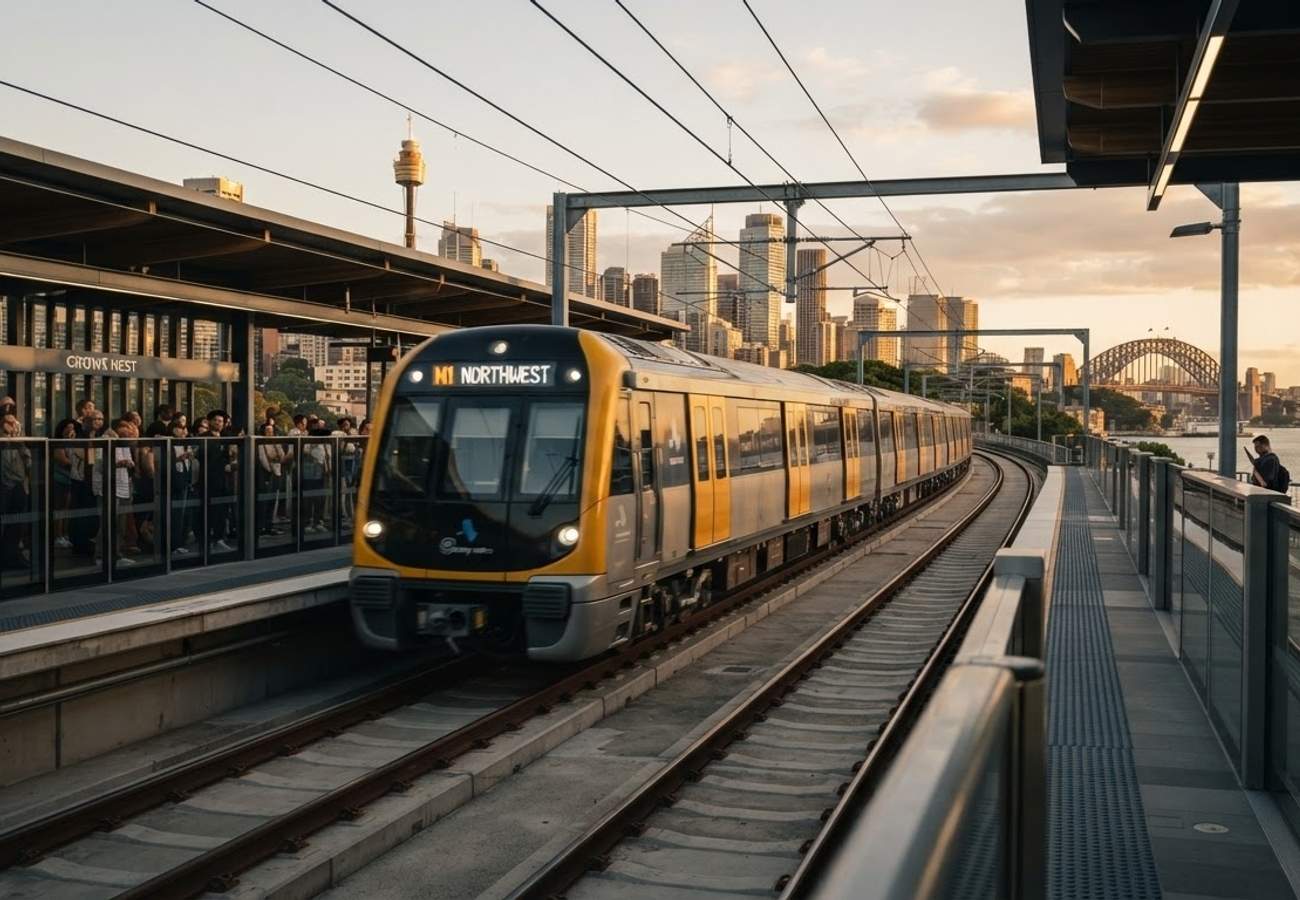
Image generated by AI
Sydney's historic Bankstown rail corridor will reopen in 2026 as a fully automated metro system. This transition marks the first time a heavily used legacy suburban railway in Australia has been converted to driverless operation.
The Southwest Metro project is transitioning the corridor between Sydenham and Bankstown from the traditional T3 Bankstown Line into the M1 Metro North West & Bankstown Line. This conversion involves replacing 130-year-old rail infrastructure with a fully segregated, high-capacity automated system.
Our analysis of project data confirms that a critical five-week trial running phase concluded in late August 2026. This phase utilized 130 simulated operational scenarios—including train faults, station crowding, and service recovery—to validate system robustness before the commencement of passenger services.
The project timeline has seen extensions due to the complexity of upgrading a live corridor and managing industrial action. However, end-to-end test runs from Tallawong to Bankstown are currently underway, indicating the final stages of integration.
While this is a rail project, the integration of the M1 Metro creates a new high-speed spine across metropolitan Sydney, impacting how travelers transit from the city center to suburban hubs.
- Route Scope: The extended M1 line will span approximately 66 kilometers, connecting Tallawong in the northwest to Bankstown in the southwest via the CBD.
- Service Frequency: Peak services are forecast to run every 4 minutes between Bankstown and the city center.
- Transit Efficiency: Journey times from Bankstown to the CBD are projected to drop to 30 minutes, a reduction of approximately 15 minutes compared to the previous suburban timetable.
- Infrastructure Upgrades: All 11 intermediate stations have received full accessibility upgrades, including the installation of platform screen doors and mechanical gap fillers for level boarding.
- Operational Speed: Testing has confirmed the system can sustain speeds of up to 100 kilometers per hour.
Passenger Rights & Advisory
For the affected passenger, the transition from a legacy rail line to an automated metro involves a fundamental change in service delivery and consumer rights.
Rebooking and Alternative Transit Until the official launch in the second half of 2026, the Sydenham to Bankstown section remains closed. Passengers must rely on substitute bus services and alternative suburban rail routes. Our analysis suggests passengers should allow an additional 20-30 minutes for travel during this interim period.
Accessibility and Boarding Rights The introduction of mechanical gap fillers and platform screen doors means that passengers with mobility impairments will have guaranteed level access. Under Australian accessibility standards, these upgrades are designed to eliminate the "gap" risk associated with older suburban platforms.
Service Reliability Expectations Because the M1 operates independently from the traditional double-deck suburban system, it is physically segregated from freight tracks. For the traveler, this means a significant reduction in "knock-on" delays caused by freight interference or failures on other suburban lines.
The conversion of the Bankstown corridor is a landmark for the global rail sector. By upgrading a century-old corridor rather than building an entirely new alignment, Sydney is demonstrating a scalable model for "brownfield" automation.
This move positions Sydney alongside global transit leaders such as Singapore, Vancouver, and Paris. The shift to a "turn up and go" model—characterized by high frequency and no fixed timetable—reduces the reliance on human operators and minimizes the impact of industrial action on the core transit spine.
The project effectively removes a major rail bottleneck where the legacy T3 line previously merged with multiple routes, which had historically made the broader Sydney network vulnerable to systemic delays.
The transition to a driverless spine signals a permanent shift in Australia's urban mobility strategy.
Related Travel Guides
Disclaimer
This article is for informational and educational purposes only. It does not constitute legal, financial, or professional advice. While we strive to provide accurate and up-to-date information, travel policies, regulations, and conditions change rapidly. Always verify information with official sources before making travel decisions. Nomad Lawyer makes no representations about the accuracy, reliability, completeness, or suitability of the information provided. Readers should consult qualified professionals for advice specific to their circumstances. The views expressed in this article are those of the author and do not necessarily reflect the views of Nomad Lawyer.