
Buffalo Niagara International Airport Fuel System Disruption Causes Flight Delays and Diversions in 2026
A critical fuel system failure at Buffalo Niagara International Airport triggered a NOTAM restriction, forcing JetBlue and other carriers to implement technical refueling stops and diversions.

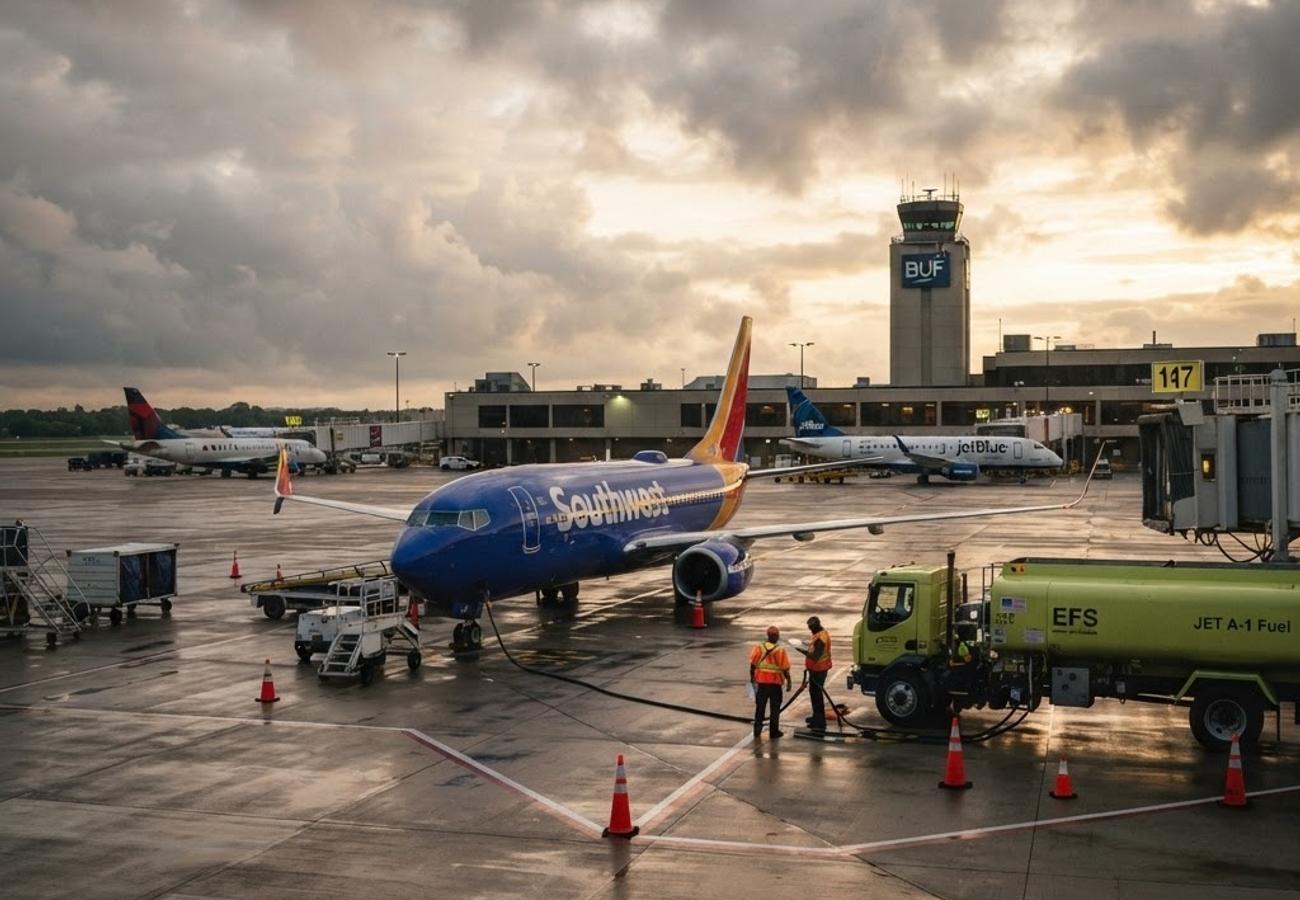
Image generated by AI
A temporary apron fuel outage at Buffalo Niagara International Airport on Monday, August 24, 2026, forced airlines to implement emergency operational changes, resulting in unplanned technical stops and significant passenger delays.
Technical Fuel System Failure and NOTAM BUF 08/188
Buffalo Niagara International Airport (BUF) in Cheektowaga, New York, experienced a localized disruption to its apron fueling capabilities on Monday. The outage was formalized via Notice to Air Missions (NOTAM) BUF 08/188, which explicitly stated that fuel was unavailable on the airport ramp for a specific window.
The restriction was active between 02:30 and 16:00 UTC. While the airport remained open for arrivals and departures, the inability to refuel aircraft on the apron created immediate operational constraints. Airlines were forced to either "tanker" additional fuel from their origin airports or schedule intermediate technical stops to ensure safe fuel reserves for their destinations.
The disruption appears to have been a mechanical or quality-control failure within the airport's fuel farm or hydrant distribution system rather than a regional fuel shortage. This localized technical failure necessitated emergency repairs and inspections to restore the distribution equipment to operational standards.
Operational Impact and Route Specifications
The fuel outage created a patchwork of delays across multiple carriers. While some flights departed on time due to sufficient pre-planned fuel loads, others suffered significant schedule shifts. Most notably, long-haul domestic services were the most heavily impacted.
| Parameter | Detail |
|---|---|
| NOTAM Reference | BUF 08/188 |
| Outage Window | 02:30 UTC to 16:00 UTC |
| Primary Cause | Apron fuel system/hydrant failure |
| Affected Carriers | Multiple (including JetBlue) |
| Notable Diversions | JetBlue southbound services to Florida diverted to Pittsburgh (PIT) |
| Operational Status | Airport remained open; fueling restricted |
JetBlue services operating southbound toward Florida were specifically reported to have diverted to Pittsburgh for refueling. This turned standard nonstop flights into multi-leg journeys, significantly increasing total travel time for passengers.
Traveler Logistics Guide: Navigating Infrastructure Disruptions
From a ground-level perspective, the best way to navigate an airport infrastructure failure—such as a fuel outage or power grid collapse—is to shift reliance from airport displays to direct carrier communication.
1. Monitoring Flight Status When a NOTAM is issued for ground services, "on-time" status on airport boards can be misleading. Airlines may hold aircraft at the gate while calculating if they have enough fuel to reach a diversion point. Use flight-tracking apps (like FlightAware or Flightradar24) to see if your incoming aircraft is carrying a heavier-than-usual fuel load or if it has a scheduled technical stop.
2. Managing Technical Stops If your flight is diverted for refueling (as seen with the Buffalo-to-Pittsburgh diversions), remain on the aircraft unless instructed otherwise. Technical stops for fuel are typically "sterile," meaning passengers do not deplane. Ensure you have sufficient water and power banks, as these stops can extend your journey by 90 to 180 minutes.
3. Digital Transit Policies For those connecting through BUF to international destinations, ensure your digital travel authorizations (such as ETIAS for Europe or ESTA for the US) are current. Infrastructure delays often lead to missed connections; having your documentation ready allows for faster re-booking and processing when you finally reach your hub.
Infrastructure Impact Assessment
This incident highlights a vulnerability in regional aviation hubs that rely on centralized fuel farms without sufficient redundant distribution points. While Buffalo Niagara International Airport's longer-term planning includes a conventional fuel farm and hydrant infrastructure, the total loss of apron availability for a 13.5-hour window demonstrates how a single point of failure can disrupt regional connectivity.
The event serves as a case study in "supply-chain resiliency." For the Northeastern airspace, the impact was contained, but for the individual passenger, the lack of redundancy in ground fueling systems resulted in significant itinerary instability. As North American airports face increased scrutiny over aging infrastructure, the Buffalo event underscores the need for more robust contingency planning regarding critical ground systems.
Operational stability returned to Buffalo Niagara International Airport as the NOTAM window closed and aircraft rotations normalized.
Related Travel Guides
Disclaimer
This article is for informational and educational purposes only. It does not constitute legal, financial, or professional advice. While we strive to provide accurate and up-to-date information, travel policies, regulations, and conditions change rapidly. Always verify information with official sources before making travel decisions. Nomad Lawyer makes no representations about the accuracy, reliability, completeness, or suitability of the information provided. Readers should consult qualified professionals for advice specific to their circumstances. The views expressed in this article are those of the author and do not necessarily reflect the views of Nomad Lawyer.
Preeti Gunjan
Contributor & Community Manager
A passionate traveller and community builder. Preeti helps grow the Nomad Lawyer community, fostering engagement and bringing the reader experience to life.
Learn more about our team →