
Buffalo Niagara International Airport Cites Circuit Fault for 2026 Flight Delays Amid Staffing Rumors
Buffalo Niagara International Airport has attributed three recent flight delays to a localized electrical circuit fault, dismissing social media speculation regarding fuel shortages or staffing crises.
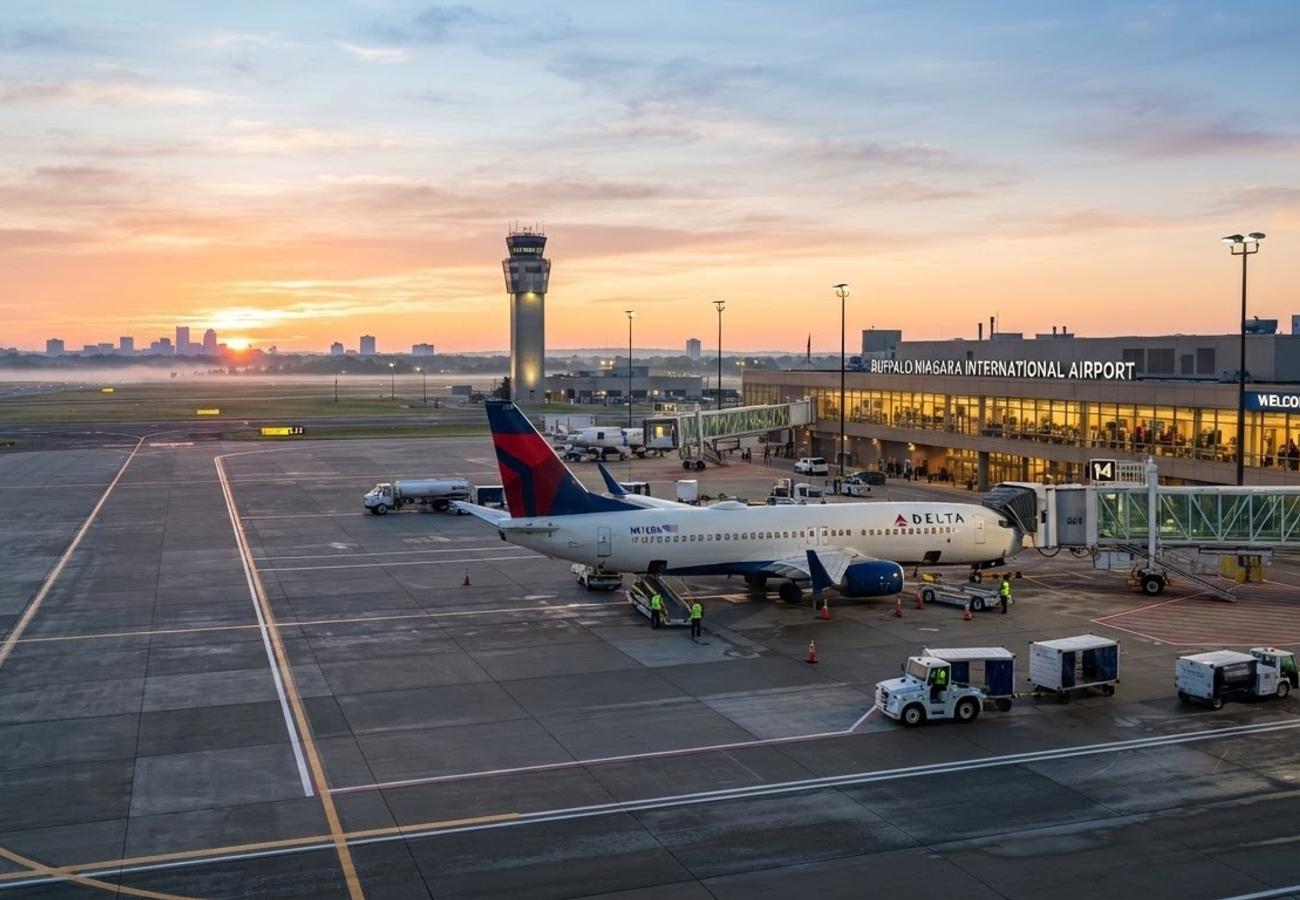
Image generated by AI
Buffalo Niagara International Airport has officially attributed three recent flight delays to a localized electrical circuit fault within terminal systems, explicitly countering public speculation regarding fuel shortages or staffing deficits.
The disruption was isolated to a short operational window, impacting a limited number of departures. While ground crews worked to bypass the affected area, arrival operations remained unaffected. Data indicates that the fault impacted equipment used during pre-departure processing, though it did not extend to safety-critical airfield infrastructure such as navigation aids or runway lighting.
Operational Breakdown of the Incident
Analysis of flight-tracking platforms and airport status reports confirms that the delays were contained. There were no federal safety statements issued, nor were any emergency procedures or flight diversions required.
The incident occurred during a period of scheduled infrastructure upgrades. Airport performance documentation for 2026 confirms ongoing electrical and lighting work across the airfield and terminal. Current Notices to Airmen (NOTAMs) for Buffalo list active work-in-progress advisories for taxiway centerline lighting, suggesting the circuit fault was a byproduct of incremental maintenance rather than a systemic collapse.
Key Technical Takeaways:
- Scope: Three specific departures delayed.
- Root Cause: Localized electrical circuit fault in the passenger terminal.
- Unaffected Systems: Runway lighting, navigation aids, and arrival operations.
- Context: Occurred during documented 2026 airfield lighting and electrical upgrades.
Addressing Staffing and Fuel Speculation
The delays triggered immediate social media speculation linking the disruptions to broader U.S. aviation trends, specifically air traffic control (ATC) staffing shortages and crew availability. This sensitivity is heightened by recent federal advisories regarding staffing-related delays at major New York hubs.
However, flight statistics and airport channel data do not support these theories. There is no corroborating evidence of refueling delays or personnel shortages specific to the Buffalo facility during this window. Aggregate statistics for the past month show that Buffalo's proportion of departures with delays exceeding 15 minutes remains consistent with national trends for midsize airports.
Infrastructure and Contingency Framework
The operational context is further clarified by federal notices detailing the summer maintenance schedule. These include:
- Temporary outages of specific navigation aids.
- Updates to taxiway lighting standards.
- Routine maintenance of precision approach indicators and instrument landing components.
According to the airport's tarmac delay contingency plan filed with federal regulators, the facility coordinates with airlines and ground handlers during unplanned events. Because airlines operate much of the boarding and deplaning equipment, the airport's role is primarily coordination and the provision of alternate terminal spaces.
Network Pressures and Passenger Perception
While the Buffalo circuit fault was a discrete event, it occurred during a summer of significant East Coast volatility. Regional data shows that weather systems and ground delay programs in the New York metropolitan area have caused rolling disruptions across the network.
Industry analysis suggests a common pattern where passengers attribute delays to their current location, regardless of whether the root cause is local or systemic. In this instance, the airport's move to identify a specific circuit fault serves to decouple Buffalo's local performance from the wider debate over regional ATC staffing.
Technical Resilience and Future Outlook
Buffalo Niagara International Airport's long-term planning focuses on terminal system investments and airfield lighting resilience. The recent cluster of delays highlights the necessity of:
- Redundant Circuitry: Minimizing the operational footprint of single-point failures.
- Rapid Diagnostics: Reducing the time between fault detection and resolution.
- Transparent Communication: Aligning airline and airport data to prevent misinformation.
As construction continues through 2026, further short-term adjustments to taxiways and approach procedures are expected. However, current performance metrics suggest the facility is operating within normal national parameters.
A localized technical glitch, not a systemic failure, defined this disruption.
Related Travel Guides
Disclaimer
This article is for informational and educational purposes only. It does not constitute legal, financial, or professional advice. While we strive to provide accurate and up-to-date information, travel policies, regulations, and conditions change rapidly. Always verify information with official sources before making travel decisions. Nomad Lawyer makes no representations about the accuracy, reliability, completeness, or suitability of the information provided. Readers should consult qualified professionals for advice specific to their circumstances. The views expressed in this article are those of the author and do not necessarily reflect the views of Nomad Lawyer.