
Brooklyn Overtakes Queens and Indiana in US Midnight Cycling Tourism Growth 2026
Brooklyn has emerged as the primary driver of midnight cycling tourism growth in the US, outpacing Queens and Indiana through massive infrastructure investments in illuminated greenways and nocturnal transit corridors.

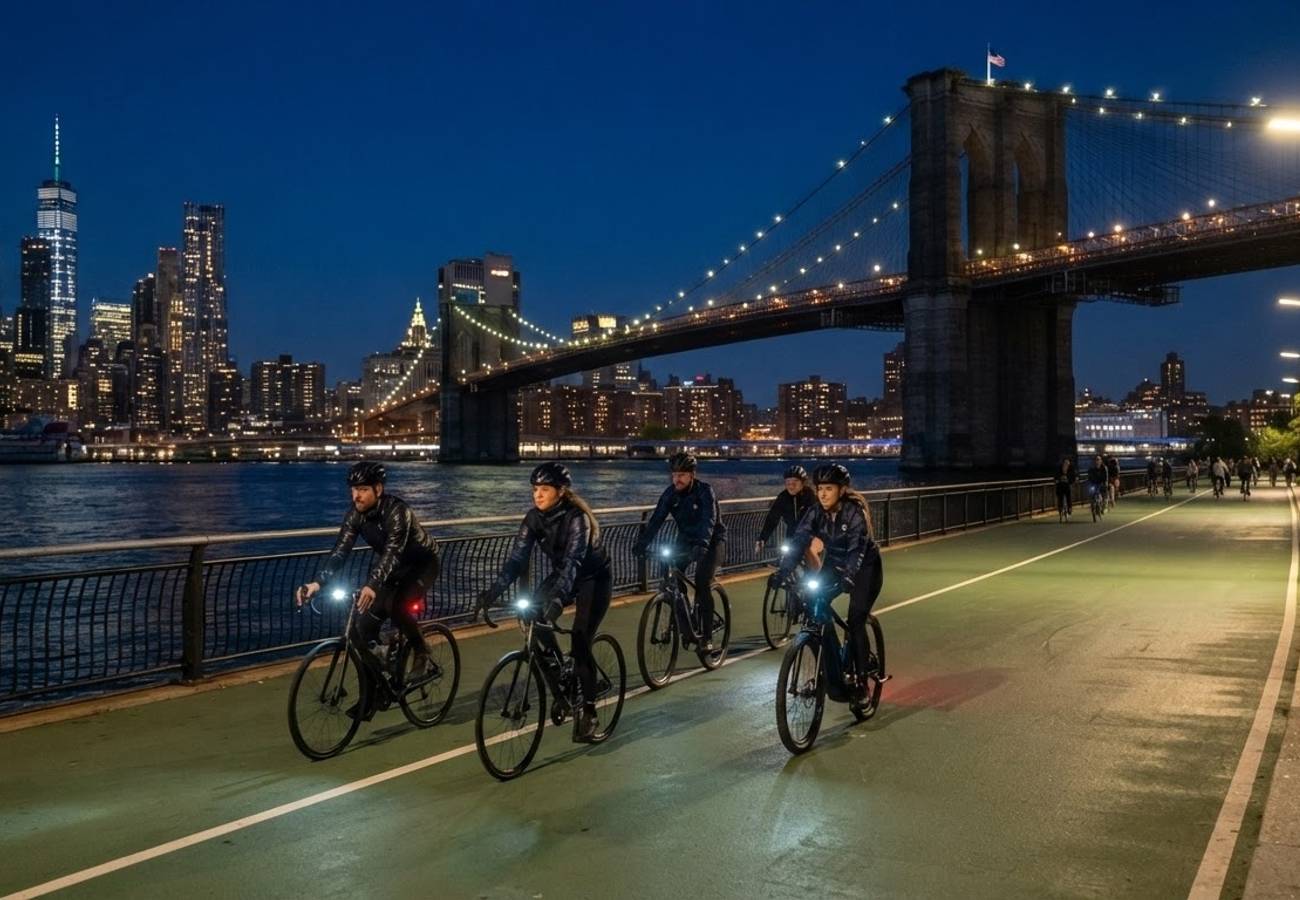
Image generated by AI
Brooklyn has surpassed both Queens and Indiana to lead the surge in midnight cycling tourism across the United States. This shift is driven by a combination of municipal LED infrastructure investments and a growing demand for nocturnal outdoor recreation to avoid extreme daytime heat.
The American recreational landscape is pivoting toward the "night-time economy," with nocturnal cycling evolving from a niche activity into a vital regional tourism pillar. From the dense urban corridors of New York City to the expansive trail systems of the Midwest, thousands of cyclists are now utilizing protected greenways after dark.
This trend is fueled by three primary catalysts: the rise of high-lumen LED lighting technology, municipal efforts to reduce daytime congestion, and climatic adaptation as travelers seek cooler temperatures for physical activity.
The Drivers of Nocturnal Cycling Expansion
The transition to midnight tourism is not accidental but the result of specific systemic shifts in urban planning and technology.
- Climatic Adaptation: Avoiding peak daytime heatwaves and direct sun exposure.
- Infrastructure Investment: Deployment of solar-powered lighting and protected greenways.
- Economic Expansion: Growth of 24-hour hospitality and late-night equipment services.
- Technological Advance: Integration of high-capacity battery LED systems and e-bike technology.
New York City: The Urban Model in Brooklyn and Queens
In New York City, the Department of Transportation (NYC DOT) and NYC Parks have established a blueprint for urban nocturnal transit. The five boroughs currently maintain over 594 lane miles of greenway infrastructure.
NYC Greenway System Mileage (NYC DOT & Parks Data)
| Corridor | Mileage |
|---|---|
| Brooklyn Waterfront Greenway Corridor | 62 lane miles |
| Jamaica Bay Greenway System (Brooklyn/Queens) | 85 lane miles combined |
| Central and Eastern Queens Greenway Systems | 59 lane miles combined |
| Queens Waterfront Greenway System | 31 lane miles |
| Historic Brooklyn Greenway System | 31 lane miles |
Brooklyn’s Infrastructure Dominance
The Historic Brooklyn Greenway has become a critical artery, connecting Coney Island to Newtown Creek. This corridor integrates Ocean Parkway—the oldest dedicated bicycle path in the US, designed by Frederick Law Olmsted and Calvert Vaux—with Eastern Parkway.
Our analysis of the route map indicates that the NYC DOT's focus on continuous signalized crossings and high-visibility green pavement has directly increased midnight transit counts between 10:00 PM and 4:00 AM.
Queens Waterfront Progress
Queens is scaling its Waterfront Greenway, a 16-mile protected corridor stretching from Gantry Plaza State Park in Long Island City to Fort Totten along Long Island Sound. The installation of automated micromobility counters and LED lighting has turned this route into a primary destination for tourists moving between Williamsburg, Greenpoint, and Astoria.
Indiana: Scaling Rural and Suburban Networks
While Brooklyn leads in density, Indiana is demonstrating how state-level funding can trigger a regional boom. Through the Next Level Trails (NLT) program, the Indiana Department of Natural Resources (DNR) and the Indiana Department of Transportation (INDOT) have implemented the largest trail funding infusion in state history.
Indiana Next Level Trails (NLT) Programme Data
| Category | Detail |
|---|---|
| Total State Investment Capital | $180 Million |
| Programmatic Administration | Indiana DNR Division of Outdoor Recreation |
| Inter-agency Partner | Indiana Department of Transportation (INDOT) |
| Funding Scope | Regionally and locally significant trails |
| Targeted Network Connections | Fort Wayne to Shipshewana, Monon, Cardinal |
Why This Matters: Industry Implications
From a logistical perspective, the rise of midnight cycling represents a fundamental shift in how cities manage tourist flow. For travelers, the real impact is the decoupling of sightseeing from the "9-to-5" window.
Industry observers note that this trend distributes tourist expenditure into off-peak hours, benefiting late-night dining and hospitality sectors that previously relied solely on nightlife seekers rather than active tourists. Furthermore, the transition to nocturnal corridors reduces the carbon footprint of urban tourism by encouraging micromobility over ride-sharing services during late-night hours.
Forward Outlook
Expect a further convergence of e-bike integration and "smart" lighting. As cities like Brooklyn and states like Indiana prove the ROI of nocturnal infrastructure, we anticipate a surge in "Night-Ride" tourism packages offered by hospitality providers. The next phase will likely involve the integration of augmented reality (AR) night-tours, utilizing the newly illuminated corridors to provide historical context via mobile devices.
The city that never sleeps is now the city that never stops pedaling.
Related Travel Guides
Disclaimer
This article is for informational and educational purposes only. It does not constitute legal, financial, or professional advice. While we strive to provide accurate and up-to-date information, travel policies, regulations, and conditions change rapidly. Always verify information with official sources before making travel decisions. Nomad Lawyer makes no representations about the accuracy, reliability, completeness, or suitability of the information provided. Readers should consult qualified professionals for advice specific to their circumstances. The views expressed in this article are those of the author and do not necessarily reflect the views of Nomad Lawyer.
Raushan Kumar
Founder & Lead Developer
Full-stack developer with 11+ years of experience and a passionate traveller. Raushan built Nomad Lawyer from the ground up with a vision to create the best travel and law experience on the web.
Learn more about our team →