
Brightline Rail Pedestrian Incident in Jupiter FL Sparks Safety Review for Palm Beach County Tourism 2026
A fatal Brightline train incident in Jupiter, Florida, on August 15, 2026, has highlighted critical gaps in visitor mobility and rail safety within Palm Beach County's luxury tourism corridor.

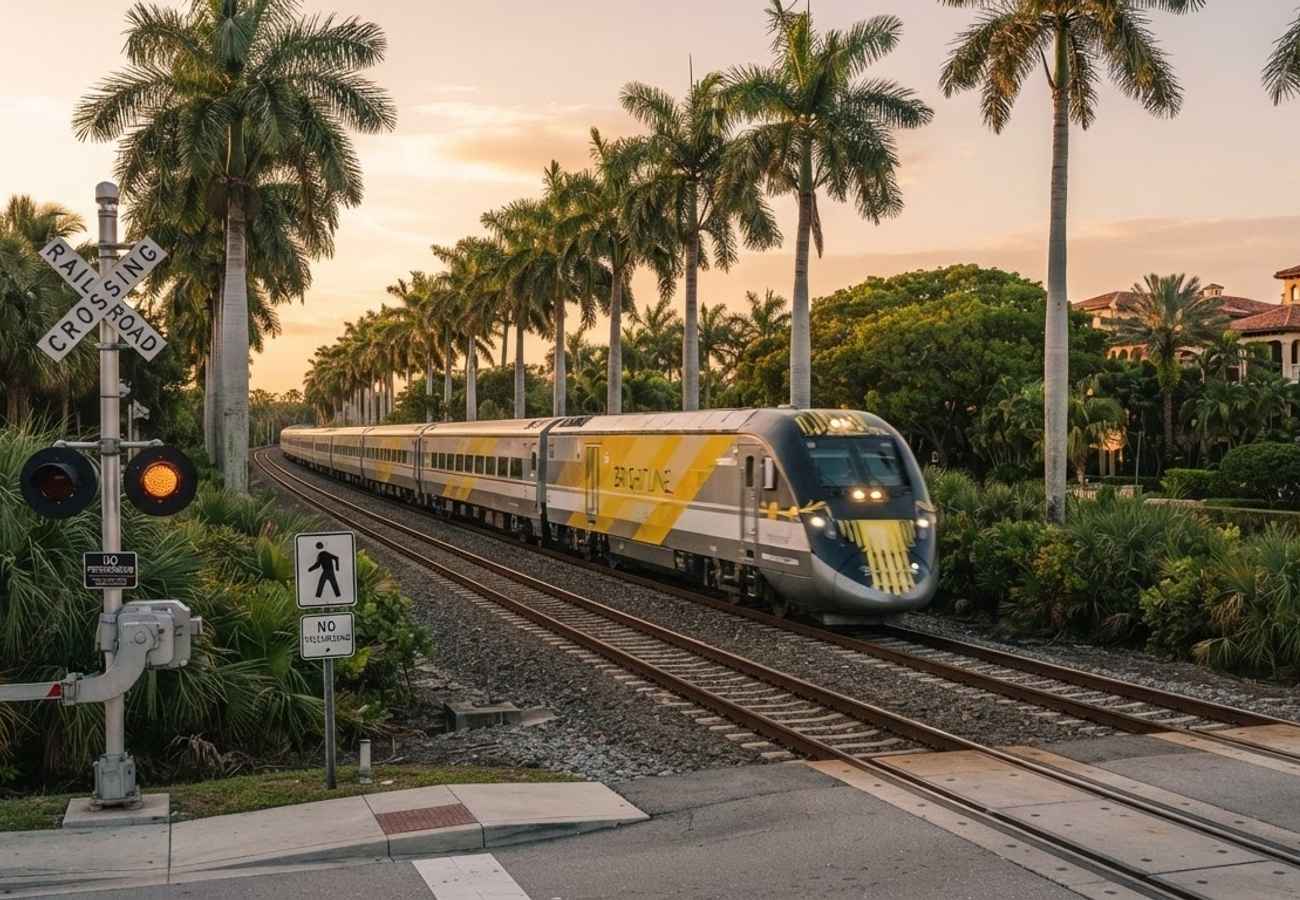
Image generated by AI
A pedestrian was struck by a Brightline passenger train in Jupiter, Florida, on August 15, 2026, triggering an immediate investigation into rail corridor safety. The incident underscores a growing tension between the rapid expansion of high-speed visitor mobility and pedestrian safety in luxury tourism hubs.
The collision occurred on the Florida East Coast Railway tracks near Toney Penna Drive. Local authorities launched an investigation immediately following the event. While the identity and medical condition of the pedestrian were not released immediately, the event has shifted the conversation toward how Palm Beach County manages the intersection of high-speed rail and tourist movement.
Palm Beach County has successfully positioned itself as a premier global destination, drawing high-net-worth visitors to its resorts, beaches, and cultural landmarks. However, as the region pivots toward integrated rail travel to reduce reliance on rental cars, the physical safety of the transit corridors has become a primary concern for destination management.
Critical Incident Breakdown
- Date of Incident: August 15, 2026
- Location: Florida East Coast Railway tracks, near Toney Penna Drive, Jupiter, FL
- Entity Involved: Brightline passenger rail
- Core Issue: Pedestrian strike resulting in an active police investigation
- Regional Impact: Increased scrutiny of rail-pedestrian interfaces in high-tourism zones
The Role of Rail in South Florida Visitor Logistics
Brightline has fundamentally altered the logistics of Florida travel by connecting the state's primary tourism markets. This infrastructure allows international and domestic travelers to bypass the congestion of South Florida's highway systems.
The current network integrates the following key hubs:
| Destination | Tourism Strategic Importance |
|---|---|
| Miami | International arrivals, cruise ports, and business hubs |
| Fort Lauderdale | Primary cruise tourism and coastal holidays |
| West Palm Beach | Luxury tourism and high-end cultural attractions |
| Boca Raton | Resort-based leisure and corporate travel |
| Orlando | Theme parks and family-centric tourism |
For visitors in Palm Beach County, the West Palm Beach station serves as the primary gateway to the region's luxury markets. Jupiter, where the incident occurred, offers a slower-paced environment focused on nature and waterfront activities, making the presence of high-speed rail corridors a unique safety challenge for visitors unfamiliar with the area.
Why This Matters: Industry Analysis
From a logistical perspective, this incident reveals a critical "infrastructure lag." When a destination scales its tourism capacity—adding luxury resorts and high-speed rail—the "last mile" of safety (pedestrian crossings, signage, and barriers) often fails to keep pace.
For travelers on this route, the real impact is a heightened risk profile when navigating between luxury hubs and natural attractions. Our analysis of the route map suggests that the Florida East Coast Railway corridor cuts through a volatile mix of residential neighborhoods, commercial zones, and tourist hotspots.
When high-speed passenger rail shares space with pedestrian-heavy tourism zones, "visitor confidence" becomes a fragile asset. International travelers, who may be unfamiliar with U.S. rail crossing protocols, are particularly vulnerable. If the perception of safety declines, it directly impacts:
- Destination Reputation: Safety incidents can overshadow the luxury appeal of the region.
- Travel Planning: A shift back toward rental cars, increasing road congestion.
- Economic Confidence: Potential hesitation from corporate event planners regarding visitor transit.
Forward Outlook
The Jupiter incident will likely accelerate a push for enhanced safety technology and infrastructure upgrades along the Florida East Coast Railway corridor. We expect to see a shift toward:
- Advanced Pedestrian Protection: Installation of more robust physical barriers and automated crossing gates.
- Targeted Safety Messaging: Integration of rail safety warnings into tourist welcome kits and digital travel apps.
- Operational Review: Increased coordination between the Federal Railroad Administration and local Palm Beach County tourism boards to synchronize infrastructure growth with safety standards.
The balance between high-speed connectivity and pedestrian safety will define the next phase of Florida's luxury tourism evolution.
Related Travel Guides
Disclaimer
This article is for informational and educational purposes only. It does not constitute legal, financial, or professional advice. While we strive to provide accurate and up-to-date information, travel policies, regulations, and conditions change rapidly. Always verify information with official sources before making travel decisions. Nomad Lawyer makes no representations about the accuracy, reliability, completeness, or suitability of the information provided. Readers should consult qualified professionals for advice specific to their circumstances. The views expressed in this article are those of the author and do not necessarily reflect the views of Nomad Lawyer.
Raushan Kumar
Founder & Lead Developer
Full-stack developer with 11+ years of experience and a passionate traveller. Raushan built Nomad Lawyer from the ground up with a vision to create the best travel and law experience on the web.
Learn more about our team →