
Brazil Tourism Breaks Records in 2026 with 5.2 Million International Arrivals and Expanded Flight Connectivity
Brazil surpasses 5.2 million international arrivals in H1 2026, driven by a 35% expansion in flight capacity and a surge in experiential travel across Rio de Janeiro and São Paulo.

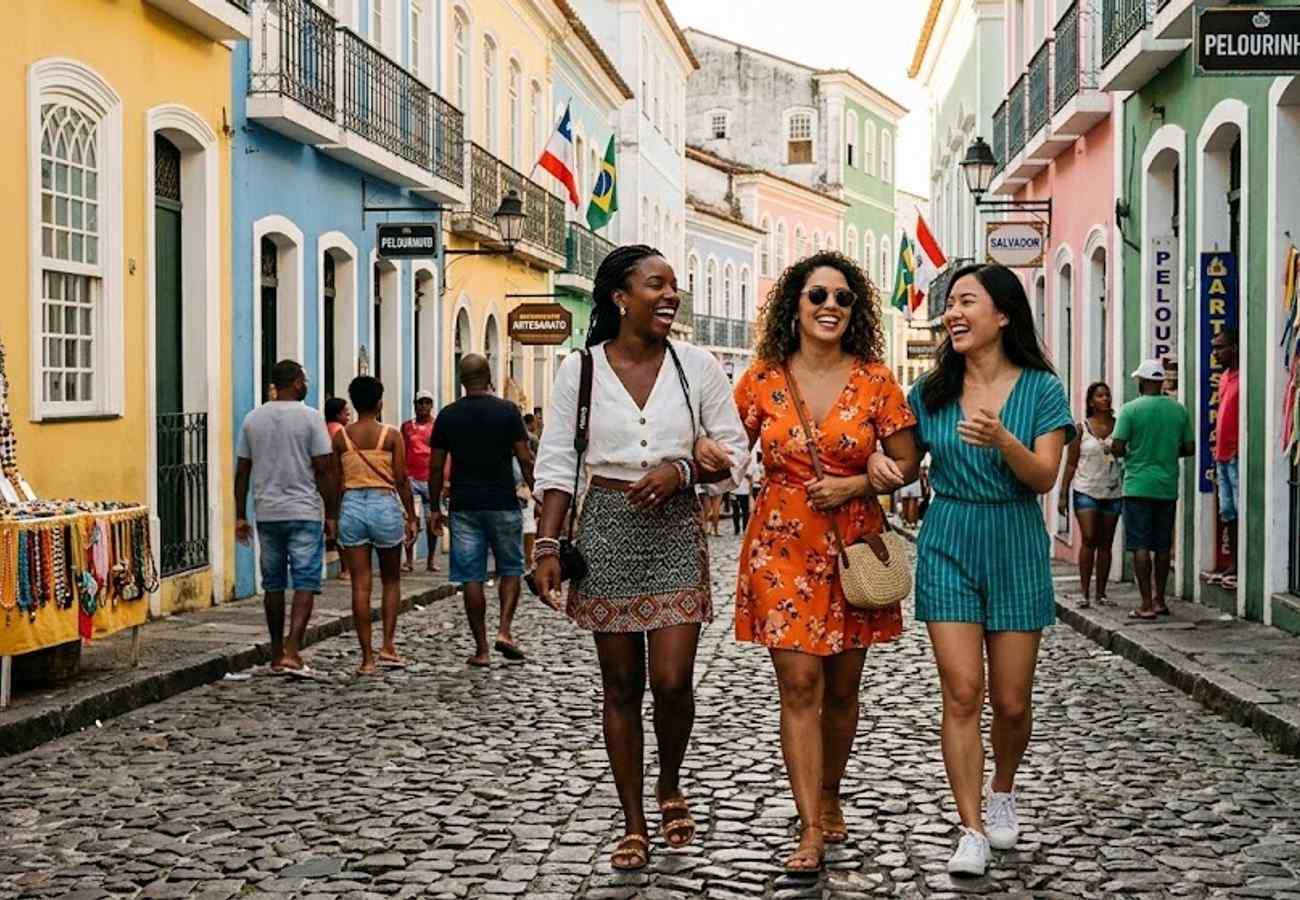
Image generated by AI
International arrivals to Brazil have surged beyond 5 million in the first half of 2026, generating over US$ 4.8 billion in foreign expenditure through May alone. This record-breaking growth is fueled by a massive 35% expansion in international flight capacity and a global shift toward high-impact experiential travel.
The Local Trend Revealed: Beyond Sun and Sand
Brazil is witnessing a fundamental shift in how global travelers consume the destination. While the classic allure of Copacabana remains, there is a decisive move toward "deep-dive" tourism. The data reveals a pivot toward immersive ecotourism in the Amazon and Pantanal, and a growing appetite for Afro-Brazilian cultural itineraries in Bahia.
This evolution is supported by strategic aviation upgrades. The National Civil Aviation Agency (ANAC) and the Ministry of Ports and Airports have facilitated a surge in direct frequencies. Notably, GOL has deployed modern Airbus A330-900 aircraft to link Rio de Janeiro directly with New York, Orlando, Lisbon, and Paris, while TAP Air Portugal and LATAM have strengthened ties between European/North American hubs and regional capitals.
The "Event Effect" has also become a primary driver. Massive music spectacles act as instant catalysts; for instance, Shakira’s free concert on Copacabana Beach in May triggered an 80.75% spike in international flight bookings for that week compared to 2024 levels.
H1 2026 Tourism Performance Data
The following figures, verified by Embratur, the Ministry of Tourism, and the Federal Police (Polícia Federal), highlight the scale of this growth:
| Tourism Performance Metric | Verified Government Data (H1 2026) | Strategic Driver |
|---|---|---|
| Total Foreign Visitor Volume | 5,261,733 international tourists | Plano Brasis campaign & simplified entry |
| Air Travel Throughput | 3,531,233 arrivals (+13.3% YoY) | 67% of all international entries |
| Top Urban Gateway Hub | São Paulo (2,753,869 arrivals) | MICE events & global gastronomy |
| Top Coastal Leisure Hub | Rio de Janeiro (1,337,950 arrivals) | 18,300+ scheduled international flights |
| Top Ecotourism Hotspot | Foz do Iguaçu (+37% room demand) | UNESCO eco-expeditions |
| Foreign Currency Injection | US$ 4.8+ billion (through May 2026) | Longer average stays & high-yield spend |
Cultural & Environmental Value: The Experience Shift
For the visitor, the real impact is the accessibility of Brazil's interior. The surge in Foz do Iguaçu—which saw a 37% increase in hotel room demand—reflects a growing preference for sustainable, nature-based travel. By diversifying arrivals away from just the Rio-São Paulo axis, Brazil is distributing economic benefits to regional communities and promoting the conservation of UNESCO-listed sites.
In Salvador, the focus has shifted toward the UNESCO-listed Pelourinho district. European travelers, particularly from France, Germany, and Portugal, are increasingly seeking authentic heritage experiences, with direct flights to Salvador operating at an 88% passenger load factor.
Destination Breakdown: The Top 5 Hubs
Rio de Janeiro The coastal capital welcomed 1,337,950 international tourists (+15.6% YoY). Galeão (GIG) and Santos Dumont (SDU) airports processed over 18,300 scheduled international flights, a massive 84.1% jump in long-haul seat capacity since 2023.
São Paulo As the primary aviation hub, São Paulo absorbed 2,753,869 foreign arrivals. It remains the highest-yield destination, with visitors spending an average of US$ 142 per day, driven by over 1,200 international MICE events.
Foz do Iguaçu Now the fastest-growing secondary destination, it captured over 1.03 million international entries. It is currently the #1 nature destination for travelers from Germany, France, and Spain.
Florianópolis The island capital saw over 420,000 international arrivals, with 81% originating from Argentina, Chile, and Uruguay. Hercílio Luz International Airport expanded direct international routes by 42%.
Salvador Drawing over 120,000 direct international air and cruise arrivals, Salvador has become a critical anchor for the Northeast, capturing 20% of all French, German, and Portuguese tourists visiting the country.
Source Market Analysis
The volume is anchored by South American neighbors, but long-haul growth is accelerating:
- Argentina: Largest source market with 1,008,022 air visitors (+15.9% YoY) and 1.97 million total arrivals.
- Chile: 471,590 arrivals (+6.46% YoY).
- Colombia: Fastest South American growth at +33.45% YoY (112,140 arrivals).
- United States: Top non-South American market with 395,929 travelers in H1.
- Portugal: Significant European growth with a surge between 26.53% and 29.7%.
Visitor Insider Tips
- Off-Peak Windows: To avoid the 88% hotel occupancy peaks in Copacabana and Ipanema, visit during the "shoulder" months of October or November, just before the summer rush.
- Cultural Etiquette: When visiting the Pelourinho in Salvador, engage with local guides certified by cultural heritage associations to ensure your visit supports the local community directly.
- Eco-Travel Rule: For the Amazon or Pantanal, prioritize "low-impact" lodges that are certified by regional conservation bodies to minimize your environmental footprint.
- Transit Tip: If connecting through São Paulo (GRU), allow extra time for customs, as it handles over 60% of all intercontinental flights to South America.
Tourism Outlook
The long-term trajectory for Brazil is one of diversification. By leveraging "mega-events" to attract initial interest and high-quality ecotourism to ensure repeat visits, Brazil is moving away from seasonal dependency. The integration of modernized infrastructure at the Tancredo Neves Bridge (processing 450,000 cross-border entries) suggests a future where regional land-based tourism complements the aviation boom.
Brazil is no longer just a destination for Carnival; it has become a global laboratory for experiential and sustainable travel.
Related Travel Guides
Disclaimer
This article is for informational and educational purposes only. It does not constitute legal, financial, or professional advice. While we strive to provide accurate and up-to-date information, travel policies, regulations, and conditions change rapidly. Always verify information with official sources before making travel decisions. Nomad Lawyer makes no representations about the accuracy, reliability, completeness, or suitability of the information provided. Readers should consult qualified professionals for advice specific to their circumstances. The views expressed in this article are those of the author and do not necessarily reflect the views of Nomad Lawyer.
Preeti Gunjan
Contributor & Community Manager
A passionate traveller and community builder. Preeti helps grow the Nomad Lawyer community, fostering engagement and bringing the reader experience to life.
Learn more about our team →