
Brazil's Atol das Rocas Remains Closed to Tourists Despite 2026 Vessel Procurement Update
Brazil's ICMBio has issued a new vessel tender for Atol das Rocas, but the UNESCO site remains strictly closed to public tourism, unlike the accessible Fernando de Noronha.

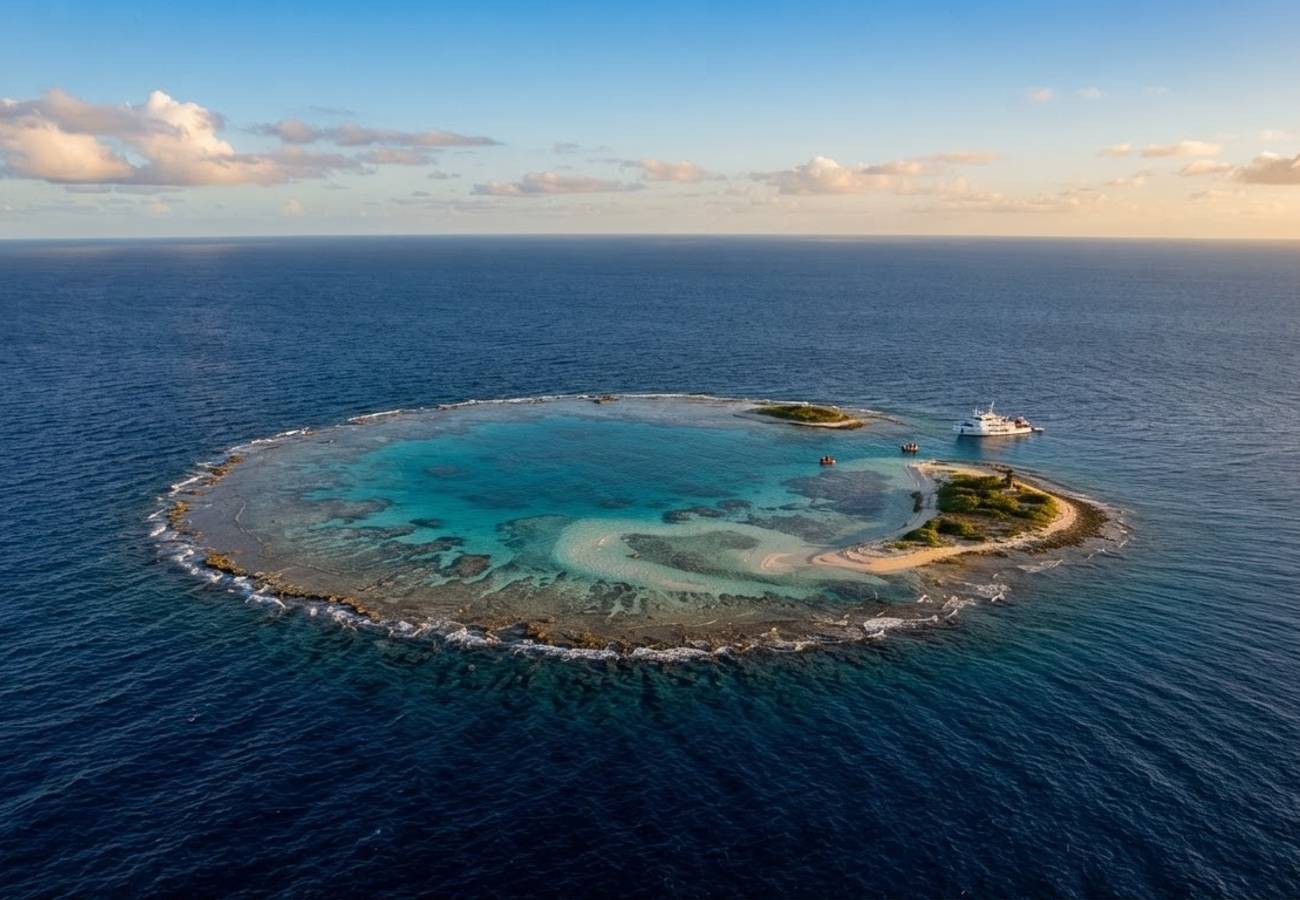
Image generated by AI
Brazil’s Instituto Chico Mendes de Conservação da Biodiversidade (ICMBio) has republished its ocean-vessel procurement for the Atol das Rocas Biological Reserve. While this administrative move ensures the continuation of scientific and enforcement missions, it does not signal an opening of the site to the public.
Ordinary tourists cannot visit Atol das Rocas. Despite its UNESCO status, the reserve remains a restricted zone where access is granted exclusively to authorized research and environmental teams.
The 2026 Procurement Process
On 31 July 2026, ICMBio launched Electronic Tender 03/2026 following the failure of the previous Electronic Tender 90002/2026. This is a continuous charter for an ocean-going vessel, not a purchase or a tourism concession.
The vessel's primary functions are restricted to:
- Scientific research and environmental monitoring.
- Biodiversity protection and law enforcement.
- Logistics and emergency response.
As of 6 September, the official GR-2 procurement index confirms the July republication is a reissue to maintain critical operations.
Logistics of a Restricted Zone
The technical specifications of the 2026 tender highlight the extreme isolation of Atol das Rocas. The reserve is located approximately 144 nautical miles (roughly 267 kilometres) from Natal, Rio Grande do Norte.
Because there is no air-transfer model or permanent crew on the atoll, all access is maritime. A typical expedition cycle lasts four days return, with team rotations occurring every 20 to 25 days.
Vessel and Operational Requirements
The tender mandates high-spec equipment to handle the offshore environment:
- Vessel Size: Minimum 11 metres (approx. 42 feet).
- Power: Minimum 100 HP engine.
- Range: Minimum 300 nautical miles.
- Payload: Minimum 1,500 kg for water, supplies, and gear.
- Personnel: Capacity for at least six researchers plus crew.
- Landing Gear: Inflatable boat with a 15–25 HP motor for final transfers.
- Communications: Mandatory GPS, VHF, HF-SSB, EPIRB, satellite phone, and tracking.
Due to the absence of immediate medical assistance at the reserve, the contract strictly requires comprehensive first-aid equipment and rapid emergency mobilisation capabilities.
Legal Barriers to Tourism
The prohibition of tourism is not a matter of current policy but of federal law. Under Article 10 of Law 9,985 (18 July 2000), a Biological Reserve is categorized as "Integral Protection." Public visitation is prohibited, with the only exceptions being educational access under strict rules or authorized scientific research.
UNESCO reinforces this restriction. While Atol das Rocas and Fernando de Noronha are both part of the "Brazilian Atlantic Islands" World Heritage property, they operate under different mandates. UNESCO identifies the presence of illegal tourist boats as a direct threat to the integrity of Atol das Rocas.
Contrasting the Atlantic Gateways: Natal vs. Recife
For travel planners and operators, it is vital to distinguish between the two components of this World Heritage site. They represent two entirely different products.
Comparison of Visitor Models
| Travel Factor | Atol das Rocas | Fernando de Noronha |
|---|---|---|
| Visitor Model | Public visitation prohibited | Controlled tourism permitted |
| Mainland Gateway | Natal | Recife |
| Transport Mode | Authorized maritime expeditions | Regular passenger flights |
| Primary Role | Research & Enforcement | Conservation & Regulated Tourism |
| Accommodation | None (Non-visitor destination) | Official lodging and tourism services |
| Marketability | Cannot be sold as leisure product | Distributed via conventional channels |
Natal serves as the administrative hub for Atol das Rocas, with all authorized missions departing from the Port of Natal. Conversely, Recife is the primary transit point for travellers flying approximately one hour to the archipelago of Fernando de Noronha.
Operational Costs of Conservation
The 2026 procurement provides a transparent look at the cost of maintaining a "closed" destination. The estimated annual value of the charter is R$1,057,983.84.
Estimated Annual Charter Costs
| Service Category | Annual Charter Days | Estimated Missions | Unit Daily Value | Estimated Annual Value |
|---|---|---|---|---|
| Routine Expeditions | 72 | 18 | R$10,834.22 | R$780,063.84 |
| Emergency Operations | 24 | 6 | R$11,580.00 | R$277,920.00 |
| Total Combined | 96 | 24 | — | R$1,057,983.84 |
Why This Matters
From a logistical and legal perspective, this update serves as a warning to the travel industry. There is a growing trend of "UNESCO-washing," where travel agencies market restricted sites simply because they hold World Heritage status.
Our analysis indicates that Atol das Rocas is an operational outpost, not a destination. Any itinerary offering "tours" to the atoll is likely operating illegally and risking significant federal penalties under Brazilian law. For the high-end expedition market, the real value lies in Fernando de Noronha, while Atol das Rocas remains a sanctuary for biodiversity, devoid of commercial infrastructure.
Industry Outlook
Expect continued strict enforcement of the "Integral Protection" status. As ICMBio secures its 2026 vessel contracts, monitoring of the 144-nautical-mile corridor from Natal will likely increase to deter illegal tourism. Travel sellers should ensure their documentation clearly separates the accessible Noronha archipelago from the restricted Atol das Rocas to avoid legal liability and consumer misinformation.
Strict conservation laws ensure that some of the world's most beautiful places remain unseen by the public.
Related Travel Guides
Disclaimer
This article is for informational and educational purposes only. It does not constitute legal, financial, or professional advice. While we strive to provide accurate and up-to-date information, travel policies, regulations, and conditions change rapidly. Always verify information with official sources before making travel decisions. Nomad Lawyer makes no representations about the accuracy, reliability, completeness, or suitability of the information provided. Readers should consult qualified professionals for advice specific to their circumstances. The views expressed in this article are those of the author and do not necessarily reflect the views of Nomad Lawyer.
Raushan Kumar
Founder & Lead Developer
Full-stack developer with 11+ years of experience and a passionate traveller. Raushan built Nomad Lawyer from the ground up with a vision to create the best travel and law experience on the web.
Learn more about our team →