
Aviation Updates: Travel Chaos Engulfs Brazil as 148 Delays and 37 Cancellations Paralyze LATAM, GOL, and Azul
As catastrophic logistical bottlenecks severely paralyze the Brazilian transit grid, thousands of passengers are trapped in intense travel chaos following 148 massive delays and 37 sudden flight cancellations.

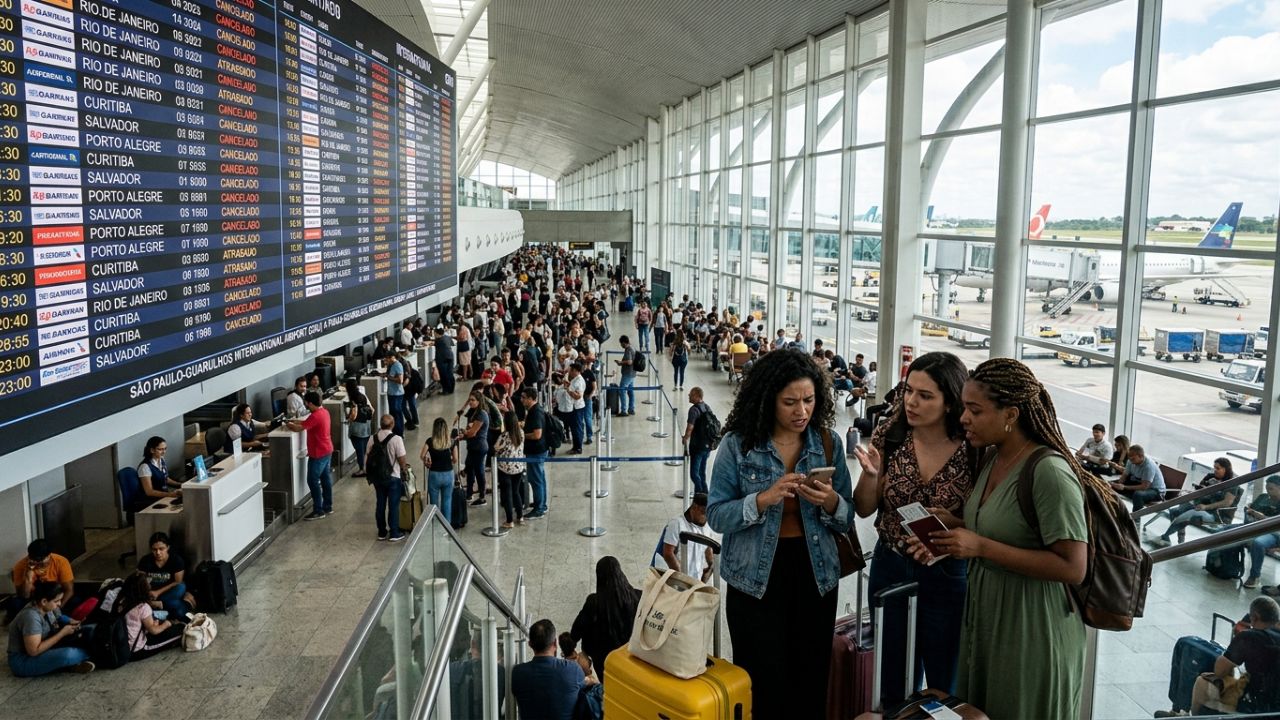
Image generated by AI
Aviation Updates: Travel Chaos Engulfs Brazil as 148 Delays and 37 Cancellations Paralyze LATAM, GOL, and Azul
As extreme operational friction and suddenly compounding infrastructure bottlenecks continue to terrorize the South American transit network, a severe wave of massive logistical failures has officially struck Brazil’s busiest aviation hubs.
Image generated by AI
As high-impact airline news platforms rapidly issue continuous aviation updates regarding the intense fragility of the global transit grid, Brazil has suffered a devastating operational meltdown. On June 30, flight operations across the massive South American nation completely deteriorated as airports collectively recorded a staggering 148 delayed flights and 37 outright flight cancellations. This sudden, massive wave of severe airport disruptions instantly abandoned hundreds of passengers and created terrifying ripple effects across domestic and international schedules. The intense travel chaos completely paralyzed the country’s massive legacy carriers, hitting LATAM Brasil, GOL Linhas Aéreas Inteligentes, and Azul Brazilian Airlines incredibly hard. Simultaneously, international operators including Air Canada, Iberia, and Boliviana de Aviación experienced highly disruptive delays on select services. Consequently, high-frequency routes running through key economic centers including São Paulo, Rio de Janeiro, Porto Alegre, Campinas, and Salvador were thrown into absolute operational disarray.
Expanded Overview: The Collapse of the Brazilian Network
To fully comprehend the sheer scale of this localized disaster, aviation analysts must closely examine the massive strategic importance of Brazil's interconnected domestic grid.
As South America's largest economy, Brazil relies entirely on its aviation network to transport millions of corporate executives and tourists across its massive landmass. However, the latest wave of flight disruptions definitively proves how quickly this system collapses under pressure. Airlines are currently battling a toxic mix of intense operational friction, refining schedules following regional network changes connected to recent airspace and airport restrictions. Furthermore, extremely strong domestic travel demand is placing brutal, unsustainable strain on airport capacity. When combined with seasonal weather conditions that heavily reduce the pace of aircraft movements, these delays rapidly spiral out of control, inevitably leading to massive cancellations across tightly scheduled hubs.
Section-Wise Breakdown: São Paulo Bears the Heaviest Impact
As the absolute epicenter of the crisis, the massive aviation hubs serving the metropolis of São Paulo remained the most heavily affected infrastructure in the country.
São Paulo-Guarulhos International Airport: Brazil’s busiest and most critical international gateway experienced the absolute highest level of disruption, recording a devastating 67 delays and eight cancellations. LATAM Brasil suffered incredibly at this specific hub, accounting for the largest number of disruptions with 38 delays and all eight cancellations at Guarulhos. Meanwhile, GOL, Air Canada (three delays), Iberia (two delays), and Boliviana de Aviación all reported highly delayed international flights.
São Paulo-Congonhas Airport: Functioning as the vital downtown corporate shuttle hub, Congonhas completely collapsed under the weight of 31 delays and 11 cancellations. GOL and LATAM Brasil were the most disrupted carriers on the tarmac, while Azul also experienced violently delayed operations, severely stranding high-paying business travelers.
Section-Wise Breakdown: Regional Hubs Paralyzed
The devastating travel chaos aggressively spilled beyond São Paulo, massively crippling critical regional gateways from the deep south to the northeast.
Viracopos International Airport (Campinas): This highly vital logistics and passenger hub registered 23 delays and seven cancellations. The terminal gridlock almost exclusively involved Azul Brazilian Airlines, which reported a staggering 22 delays and all seven cancellations at this specific airport.
Salgado Filho International Airport (Porto Alegre): In the south, Porto Alegre reported 12 delays and three cancellations. LATAM Brasil recorded the highest number of delays here, while GOL and Azul suffered intense operational disruptions.
Deputado Luís Eduardo Magalhães International Airport (Salvador): The critical northeastern tourism gateway recorded 10 delays and two cancellations. GOL accounted for the majority of delayed flights, while Azul reported both cancellations.
Santos Dumont Airport (Rio de Janeiro): Rio's iconic downtown airport experienced five delays and six cancellations. GOL recorded the absolute highest number of cancellations here, while Azul and LATAM Brasil also reported violently disrupted shuttle services.
Flight Details: Brazil Aviation Network Disruption Summary
To ensure international travelers and aviation analysts can accurately track the sheer scale of this massive national transit failure, the verified disruption telemetry (sourced via FlightAware) has been consolidated into the mandatory matrix below.
| Airport | Delays | Cancellations |
|---|---|---|
| São Paulo-Guarulhos | 67 delays | 8 cancellations |
| São Paulo-Congonhas | 31 delays | 11 cancellations |
| Viracopos (Campinas) | 23 delays | 7 cancellations |
| Salgado Filho (Porto Alegre) | 12 delays | 3 cancellations |
| Deputado Luís Eduardo Magalhães (Salvador) | 10 delays | 2 cancellations |
| Santos Dumont (Rio de Janeiro) | 5 delays | 6 cancellations |
| National Total | 148 delayed flights | 37 cancelled flights |
Airline Impact Analysis: The Big Three Suffer
The operational data confirms that Brazil’s "Big Three" carriers bore the absolute brunt of the massive systemic collapse.
- LATAM Brasil: Recorded the absolute highest number of delays across all affected airports, totaling 61 delayed flights. The airline was heavily paralyzed at Guarulhos and Congonhas.
- GOL Linhas Aéreas Inteligentes: Recorded 37 delays and suffered the highest overall number of cancellations across the country, violently slashing 14 scheduled flights.
- Azul Brazilian Airlines: Experienced 33 delays and 10 cancellations nationwide, with the absolute largest concentration of brutal disruptions occurring at Viracopos.
Conclusion: A Highly Fragile Infrastructure
Ultimately, the staggering 148 flight delays and 37 cancellations across Brazil represent a brutal day for South American transit. For passengers, travel is vastly more than simply reaching a destination; it represents crucial business opportunities and highly anticipated holidays. As sudden airspace bottlenecks, bad weather, and severe operational breakdowns continue to trigger massive airport disruptions, the Brazilian aviation network has proven highly vulnerable to cascading failures. While airline teams at São Paulo, Rio, Campinas, Salvador, and Porto Alegre tirelessly work to restore their fractured schedules, passengers must remain hyper-vigilant. Travelers are fiercely encouraged to rigorously monitor airline notifications, heavily utilize official airport announcements before departure, and secure robust travel insurance to survive the grueling realities of modern Brazilian air travel.
Key Takeaways
- Massive National Gridlock: Brazilian airports suffered a devastating 148 flight delays and 37 cancellations, triggering widespread travel chaos.
- São Paulo Epicenter: Guarulhos (67 delays, 8 cancellations) and Congonhas (31 delays, 11 cancellations) experienced the highest concentration of severe operational disruptions.
- Major Carriers Crippled: LATAM Brasil suffered 61 total delays, GOL suffered a massive 14 cancellations, and Azul recorded 33 delays and 10 cancellations overall.
- Global Routes Severed: International operators including Air Canada, Iberia, and Boliviana de Aviación suffered cascading delays at Guarulhos.
- Cascading Triggers: The intense disruptions were brutally fueled by strong domestic demand, seasonal weather restrictions, and complicated regional airspace network changes.
FAQ: Brazil Airports Mass Flight Disruptions
How many total flights were delayed or canceled across Brazil on June 30? According to verified FlightAware data, Brazil's major airports collectively recorded an incredibly disruptive 148 flight delays and 37 outright cancellations.
Which Brazilian airport experienced the absolute worst flight disruptions? São Paulo-Guarulhos International Airport was the most severely affected, suffering a devastating 67 delayed flights and eight cancellations, heavily crippling LATAM Brasil's international operations.
Which airlines were most impacted by the travel chaos in Brazil? The massive gridlock heavily disrupted operations for Brazil's "Big Three"—LATAM Brasil, GOL, and Azul. International carriers Air Canada, Iberia, and Boliviana de Aviación also suffered severe delays.
What caused the massive wave of flight cancellations in Brazil? The massive operational failure was aggressively fueled by intense domestic travel demand pushing airport capacity to its limits, seasonal weather delays, and highly complicated regional airspace restrictions.
Related Travel Guides
Italy Airports 879 Delays ITA Airways Ryanair Travel Chaos 2026
South America Regional Tourism and Transit Survival Guide 2026
France Airports 1075 Delays Air France easyJet Travel Chaos 2026
Disclaimer: This article is strictly for informational and aviation planning purposes. The specific flight disruption telemetry (148 delays, 37 cancellations), affected airports (Guarulhos, Congonhas, Viracopos, etc.), and impacted airlines (LATAM, GOL, Azul) are based on verified, manually obtained FlightAware data available at the time of publication. Brazilian airspace conditions, specific airline recovery schedules, and localized weather restrictions are highly dynamic and subject to immediate modification by the operating carriers and regulatory authorities. Passengers planning domestic or international travel through Brazil should explicitly verify their exact flight itineraries, strictly monitor their airlines for sudden flight cancellations, and secure comprehensive travel insurance prior to departure.
Disclaimer
This article is for informational and educational purposes only. It does not constitute legal, financial, or professional advice. While we strive to provide accurate and up-to-date information, travel policies, regulations, and conditions change rapidly. Always verify information with official sources before making travel decisions. Nomad Lawyer makes no representations about the accuracy, reliability, completeness, or suitability of the information provided. Readers should consult qualified professionals for advice specific to their circumstances. The views expressed in this article are those of the author and do not necessarily reflect the views of Nomad Lawyer.
Raushan Kumar
Founder & Lead Developer
Full-stack developer with 11+ years of experience and a passionate traveller. Raushan built Nomad Lawyer from the ground up with a vision to create the best travel and law experience on the web.
Learn more about our team →