
Boeing F-15EX Eagle II vs Eurofighter Typhoon: 2026 Combat Aircraft Showdown
The Boeing F-15EX Eagle II and Eurofighter Typhoon dominate Western air forces in 2026. This comparative analysis reveals how geopolitical tensions fuel decades-long investments in advanced fighter jet technology.

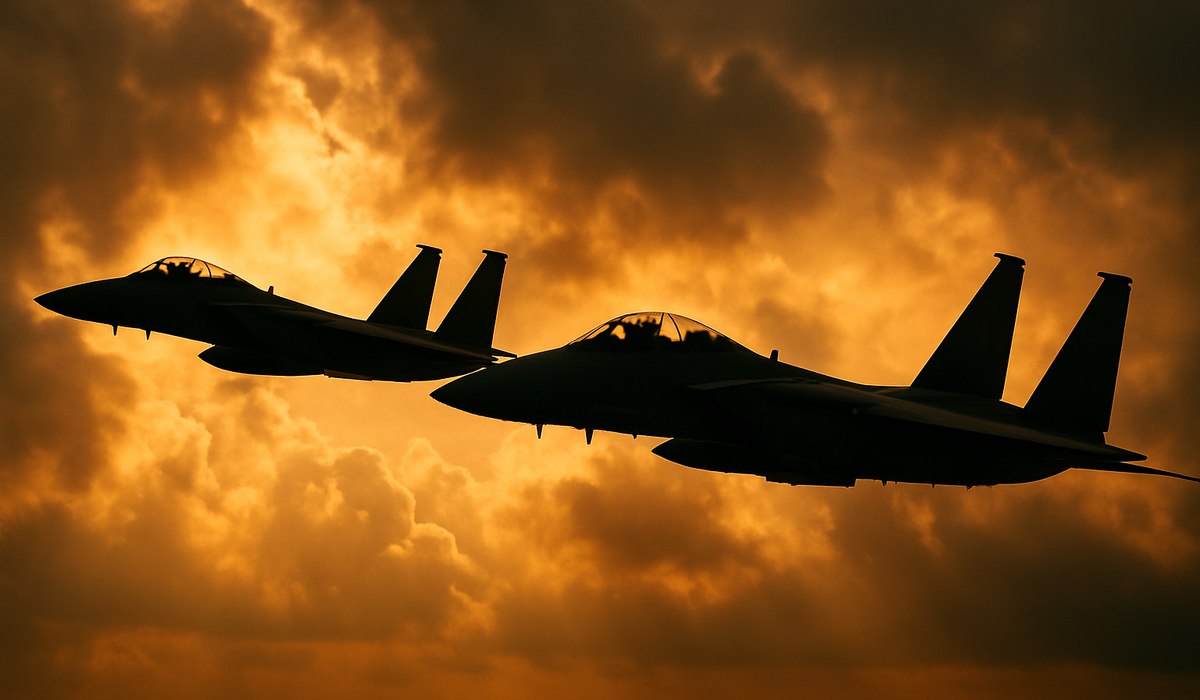
Image generated by AI
The Western Air Superiority Rivalry: F-15EX Eagle II Meets Eurofighter Typhoon
The Boeing F-15EX Eagle II and Eurofighter Typhoon stand as the cornerstone platforms of modern Western air defense strategies in 2026. Both aircraft command respect across NATO and allied nations, representing generational leaps in combat aviation capability. The F-15EX Eagle II serves primary operators including the United States Air Force and allied partners, while the Eurofighter Typhoon remains the operational backbone of air forces across Europe, the United Kingdom, Saudi Arabia, and Austria. Rising geopolitical tensions—from contested airspace over the South China Sea to renewed strategic competition in Eastern Europe—have accelerated modernization cycles for both platforms. Military planners expect both aircraft to remain frontline assets through the 2050s, making them cornerstones of aerial defense strategy across the Atlantic and beyond.
Payload Capacity and Armament Comparison
The Boeing F-15EX Eagle II delivers exceptional load-carrying capacity that exceeds most contemporary fighters. This platform can accommodate up to 13,628 kilograms of ordnance distributed across multiple hardpoints, enabling mixed air-to-air and air-to-ground mission profiles. The F-15EX configuration supports AIM-120 Advanced Medium-Range Air-to-Air Missiles, AIM-9X Sidewinders, and emerging hypersonic weapons systems. Conversely, the Eurofighter Typhoon operates with a maximum payload of approximately 7,500 kilograms, though its weapons suite emphasizes European-developed systems like the MBDA Meteor beyond-visual-range missile. The Meteor platform delivers extended engagement ranges—up to 150 kilometers—providing tactical advantages in certain scenarios. Both fighters accommodate conformal fuel tanks, extending range without sacrificing payload capacity. The F-15EX Eagle II's superior lifting capacity makes it particularly valuable for long-range interdiction missions, while the Typhoon's integrated European weapons ecosystem appeals to coalition operations and regional security frameworks. Each platform optimizes for different operational doctrines shaped by their respective air forces' strategic priorities and threat assessments.
Radar Systems and Avionics Technology
Modern combat effectiveness hinges on sensor integration and data fusion capabilities. The F-15EX Eagle II integrates the AN/APG-82(V)1 Active Electronically Scanned Array (AESA) radar, developed by Raytheon Technologies. This system provides 360-degree coverage, simultaneous multi-target tracking, and synthetic aperture mapping modes essential for ground-attack missions. The radar's design emphasizes long-range detection—exceeding 240 kilometers under optimal conditions—and resilience against electronic warfare threats. The Eurofighter Typhoon employs the Captor-E AESA radar, jointly developed by European defense consortiums. Captor-E delivers comparable range performance and adds advanced modes for littoral warfare and naval targeting. Integration of data-link systems proves crucial for both platforms. The F-15EX Eagle II connects seamlessly with NATO Link-16 standards and emerging Multi-Function Advanced Data Link (MADL) systems, enabling real-time threat sharing across mixed force structures. The Eurofighter Typhoon participates in European-specific data networks supplemented by NATO interoperability protocols. Avionics complexity in modern fighters extends beyond radar into electronic warfare management, terrain-following navigation, and autonomous mission planning. Both aircraft represent the cutting edge of cockpit integration, though the F-15EX Eagle II benefits from newer design cycles incorporating cloud-based mission planning. These technological investments reflect how intensifying strategic competition drives continuous capability evolution across Western air forces.
Combat History and Operational Track Record
The F-15 Eagle lineage boasts an unparalleled air-to-air combat record, with American variants achieving over 104 confirmed aerial victories across multiple conflicts while maintaining a reported kill ratio exceeding 30:1 against hostile aircraft. The F-15EX Eagle II represents the latest evolution, incorporating lessons from two decades of sustained operations in the Middle East and beyond. This platform first deployed operationally in 2023, with the United States Air Force planning to field over 144 examples by 2030. The Eurofighter Typhoon entered service in 2003 and has accumulated operational experience across NATO air policing missions, coalition operations in Iraq and Syria, and sustained presence over contested European airspace. The Typhoon completed over 32,000 operational flight hours by 2025, with multiple documented intercepts of Russian military aircraft over international airspace. German, Italian, Spanish, and United Kingdom air forces report extremely high pilot satisfaction with the platform's handling characteristics and sensor performance. Combat deployment frequency has accelerated recently, with Typhoon squadrons rotating through Black Sea patrols and Baltic air defense operations. Both platforms command respect from adversary nations, with Russian and Chinese military publications acknowledging the F-15EX Eagle II and Eurofighter Typhoon as peer-competitive threats requiring dedicated countermeasure development. This operational pedigree ensures continuing confidence from allied air forces considering modernization investments during this decade.
Strategic Utility and Future Deployment Scenarios
Geopolitical competition shapes force structure decisions at the highest levels of Western defense strategy. The Boeing F-15EX Eagle II supports American air power projection across Pacific and Atlantic theaters, with export variants under consideration for South Korea, Poland, and NATO eastern flank partners. The platform's payload capacity and range make it particularly valuable for counter-access/area-denial scenarios where sustained loiter time and deep strike capability determine mission success. American planners envision mixed formations of F-15EX Eagles and fifth-generation F-35 Lightning II aircraft, with legacy fighters providing sensor coverage and payload delivery while fifth-generation platforms lead deep penetration missions. The Eurofighter Typhoon fulfills complementary roles within the European security framework, optimized for air superiority and quick-reaction alert responsibilities. Recent NATO expansion has concentrated Typhoon squadrons along the eastern frontier, with rotating deployments to Poland, Romania, and the Baltic states. European defense ministries announced plans to operate Typhoons through 2070, necessitating continuous upgrade cycles and sustainment investments. Joint fighter procurement discussions between European nations and potential future export markets underscore confidence in the platform's relevance during an era of strategic competition. Both aircraft represent sustained commitments exceeding $100 billion cumulatively across all operators, reflecting deep institutional conviction that modern air power remains strategically indispensable. As global tensions persist, these two platforms will anchor Western air defense strategies through the coming decades.
Comparative Performance Data Table
| Performance Metric | Boeing F-15EX Eagle II | Eurofighter Typhoon |
|---|---|---|
| Maximum Speed | Mach 2.5+ | Mach 2.0+ |
| Combat Radius | 1,061 km | 860 km |
| Maximum Payload | 13,628 kg | 7,500 kg |
| Service Ceiling | 15,240 m | 20,000 m |
| Radar Range | 240+ km | 200+ km |
| Operational Since | 2023 | 2003 |
| Primary Operators | USA, Japan, Qatar | 7 nations (Europe, Saudi Arabia) |
| Projected Service Life | Through 2050s | Through 2070 |
| Development Cost (USD) | $19.2+ billion | €38+ billion |
| Air-to-Air Missiles | AIM-120, AIM-9X | MBDA Meteor, IRIS-T |
What This Means for Travelers
Understanding modern combat aircraft technology provides context for international
Disclaimer
This article is for informational and educational purposes only. It does not constitute legal, financial, or professional advice. While we strive to provide accurate and up-to-date information, travel policies, regulations, and conditions change rapidly. Always verify information with official sources before making travel decisions. Nomad Lawyer makes no representations about the accuracy, reliability, completeness, or suitability of the information provided. Readers should consult qualified professionals for advice specific to their circumstances. The views expressed in this article are those of the author and do not necessarily reflect the views of Nomad Lawyer.
Kunal K Choudhary
Co-Founder & Contributor
A passionate traveller and tech enthusiast. Kunal contributes to the vision and growth of Nomad Lawyer, bringing fresh perspectives and driving the community forward.
Learn more about our team →