
Main Reason Expensive: F-35 Aircraft Hidden Costs Explained
The F-35 Lightning II's true cost extends beyond flyaway prices in 2026. Maintenance, support systems, and advanced avionics drive total ownership expenses for military aviation programs.

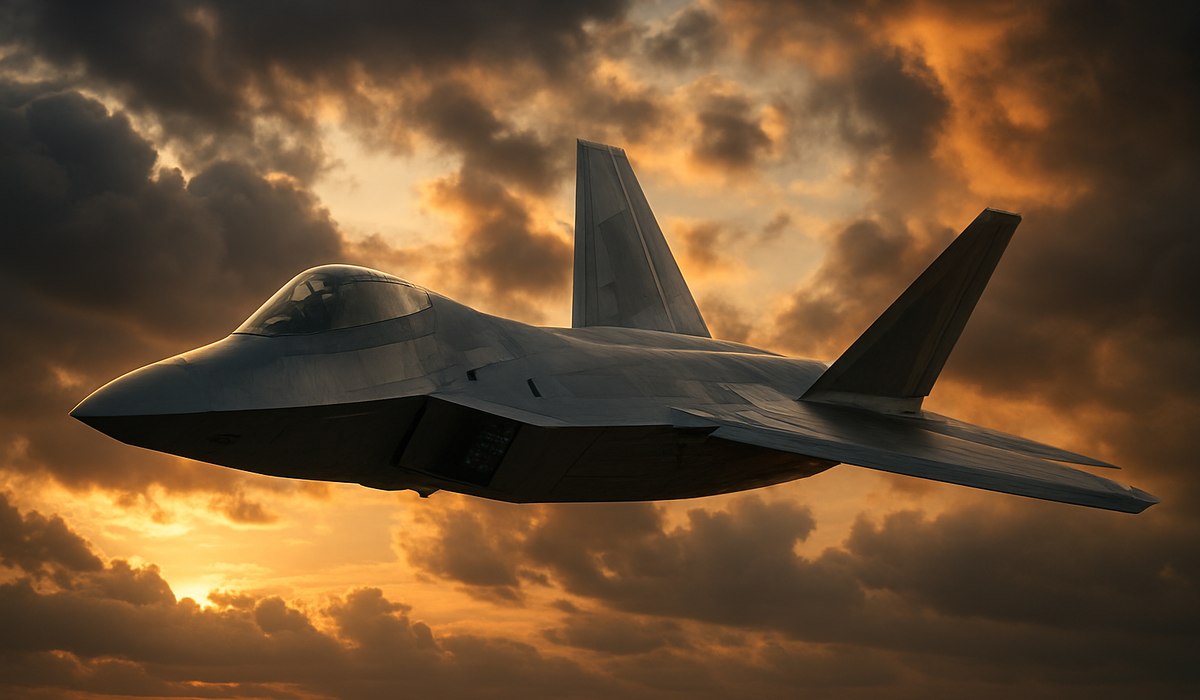
Image generated by AI
Understanding the True Cost of Advanced Military Aircraft
The Lockheed Martin F-35 Lightning II remains the world's most capable fighter aircraft, yet its extraordinary price tag stems far beyond initial purchase expenses. The main reason expensive discussions around this jet reveal a complex financial picture. While manufacturers have successfully reduced direct flyaway costs to competitive levels, the cumulative expenses of maintenance, advanced systems integration, and lifecycle support create the actual financial burden. Understanding these hidden costs provides insight into modern aerospace procurement challenges and how military aviation budgets truly work in 2026.
The F-35 as a Supercomputer, Not Just a Fighter
The F-35 fundamentally differs from traditional fighter jets in its operational architecture. Rather than viewing this aircraft as purely a combat platform, military strategists recognize it as an advanced sensor fusion system with integrated avionics networks. The main reason expensive calculations must account for this supercomputer-like complexity.
The jet contains over 8 million lines of software code, requiring continuous updates and cybersecurity monitoring. Its sensor suite integrates radar, infrared, and electro-optical systems that transmit real-time data across entire battle networks. Lockheed Martin engineers designed the aircraft with artificial intelligence-driven targeting systems that exceed previous generation fighter capabilities. This technological sophistication demands specialized maintenance protocols, software licensing fees, and trained personnel. The airframe itself represents only a fraction of total ownership costs. Infrastructure investments, pilot training programs, simulation systems, and ground support equipment multiply expenses significantly. Each F-35 operates within an interconnected ecosystem requiring sustained investment in related military infrastructure.
Breaking Down Flyaway Costs vs. Total Ownership
Flyaway costs represent the direct manufacturing and assembly expenses to produce a single aircraft. Lockheed Martin has successfully negotiated flyaway costs down to approximately $82-90 million per unit through economies of scale and international partnerships. This represents a genuine achievement in defense procurement.
However, total ownership costs tell a different story. Military analysts estimate lifetime costs per F-35 at $1.7 trillion across all variants and international orders. The main reason expensive becomes apparent when examining the 50-year lifecycle of the aircraft. Maintenance costs alone exceed $1 million annually per jet. Spare parts inventories, depot-level repairs, and structural overhauls consume substantial budgets throughout the platform's service life. Engine maintenance requires specialized facilities and manufacturer expertise. Software updates demand coordination between Lockheed Martin and defense department cybersecurity teams. International partners including Canada, Australia, and NATO allies contribute to shared sustainment expenses, yet individual countries absorb significant support costs.
Visit FAA aircraft regulations for baseline aerospace standards information.
Maintenance and Support: Where Real Expenses Accumulate
The main reason expensive ultimately traces to ongoing maintenance and support requirements. F-35 operators report actual hourly operating costs ranging from $30,000 to $35,000 per flight hour when all expenses are included. This surpasses legacy fighter aircraft like F-16s, which average $20,000-25,000 per flight hour.
Predictive maintenance systems demand sophisticated data analytics infrastructure. Each flight generates terabytes of sensor and performance data requiring analysis by specialized technicians. Pilot training for F-35 operations involves longer curricula than traditional fighter jets due to system complexity. Depot-level maintenance requires technicians certified in both airframe repair and advanced avionics systems. Structural inspections reveal unique wear patterns in the stealth coatings that require specialized repair techniques. Spare parts availability remains critical; the F-35 uses components sourced from hundreds of suppliers across multiple countries. Supply chain disruptions significantly impact squadron readiness. Engine replacement costs approximately $20-30 million per unit, with intervals shorter than many anticipated. Software licensing agreements with Lockheed Martin continue indefinitely, generating recurring revenue streams beyond hardware sales.
What Makes the F-35 the World's Most Capable Aircraft
Capability justifications underpin the main reason expensive conversations within defense circles. The F-35 achieves supersonic speeds exceeding Mach 1.6 while maintaining vertical takeoff capability in certain variants. Its integrated sensor fusion capabilities exceed any previous fighter platform, allowing pilot awareness across 360 degrees and multiple electromagnetic spectrums simultaneously.
Stealth design principles reduce radar cross-section to the equivalent of a golf ball. This provides survivability advantages in contested airspace against advanced air defense systems. The aircraft carries internal weapon bays maintaining stealth configuration, unlike external weapon stations on earlier fighters. Air-to-ground, air-to-air, and electronic warfare capabilities integrate within a single platform, reducing force structure complexity. Network-centric warfare integration allows F-35 pilots to serve as mobile sensor nodes, relaying targeting information to other aircraft and ground units. This network value multiplier justifies some of the program's cost in modern military doctrine. International interoperability through common software standards strengthens NATO coalition operations. The aircraft continues receiving capability upgrades through software modifications rather than requiring new platforms.
For detailed airline operations and aircraft regulations, consult US DOT consumer information.
Key Data Points: F-35 Program Financial Overview
| Cost Category | Amount | Notes |
|---|---|---|
| Flyaway Cost per Unit | $82-90 million | Direct manufacturing only |
| Estimated Lifetime Cost | $1.7 trillion | All variants, all operators, 50-year lifecycle |
| Annual Maintenance per Aircraft | $1-1.5 million | Recurring annual expense |
| Hourly Operating Cost | $30,000-35,000 | Inclusive of all support expenses |
| Total Program Cost | $1.727 trillion | Historical and projected through 2070 |
| Engine Replacement Cost | $20-30 million | Approximately every 3,000 flight hours |
| Annual Software Support | $2-5 million | Per aircraft cybersecurity and updates |
What This Means for Defense Budgets and Procurement Strategy
The main reason expensive extends beyond a single aircraft to systemic considerations in military procurement. Defense departments worldwide must balance capability requirements against fiscal constraints. The F-35 investment represents approximately 30% of many air force modernization budgets, creating opportunity costs in other platforms and technologies.
Strategic airlift capability, helicopter modernization, and unmanned systems compete for limited budgets. Countries must assess whether the F-35's integrated capabilities justify the sustained financial commitment. Some nations have questioned total program participation, exploring alternative platforms like the Gripen or Rafale fighters with lower lifecycle costs. Yet the network-centric warfare integration and long-term software roadmap provide compelling advantages for allied interoperability. Defense planners increasingly recognize that main reason expensive discussions require nuanced analysis beyond headline acquisition prices. Sustainment cost transparency helps justify program continuation and budget requests. International partnerships distribute costs across multiple nations, improving individual affordability while maintaining technological standards.
Traveler Action Checklist
While fighter aircraft programs don't directly impact civilian travelers, understanding advanced aerospace procurement informs broader aviation technology adoption:
- Research your airline's fleet age – Newer aircraft incorporate efficiency improvements reducing operational costs and ticket prices
- Monitor aerospace technology investments – Commercial aviation benefits from military technology spinoffs in avionics and materials
- Understand maintenance requirements – Know that airline fares reflect actual aircraft operating costs including labor and parts
- Track international aviation agreements – Procurement standards affect aircraft availability and pricing across airlines
- Review aircraft specifications – Fuel efficiency, range, and passenger capacity directly influence ticket affordability
- Consider airline partnerships – Carriers with modern fleet investments offer better service reliability and pricing transparency
Frequently Asked Questions
What is the main reason expensive for the F-35 aircraft? The main reason expensive stems from total ownership costs rather than flyaway prices. While initial manufacturing costs represent approximately $82-90 million per unit, lifetime expenses including 50 years of maintenance, software updates, spare parts, and support infrastructure total $1.7 trillion across all variants. Maintenance costs
Disclaimer
This article is for informational and educational purposes only. It does not constitute legal, financial, or professional advice. While we strive to provide accurate and up-to-date information, travel policies, regulations, and conditions change rapidly. Always verify information with official sources before making travel decisions. Nomad Lawyer makes no representations about the accuracy, reliability, completeness, or suitability of the information provided. Readers should consult qualified professionals for advice specific to their circumstances. The views expressed in this article are those of the author and do not necessarily reflect the views of Nomad Lawyer.
Preeti Gunjan
Contributor & Community Manager
A passionate traveller and community builder. Preeti helps grow the Nomad Lawyer community, fostering engagement and bringing the reader experience to life.
Learn more about our team →