
Bhutan Transmutes Modern Travel Through Gross National Happiness Policies To Offer Visitors Profound Cultural Reflections
Bhutan Transmutes Modern Travel Through Gross National Happiness Policies To Offer Visitors Profound Cultural Reflections

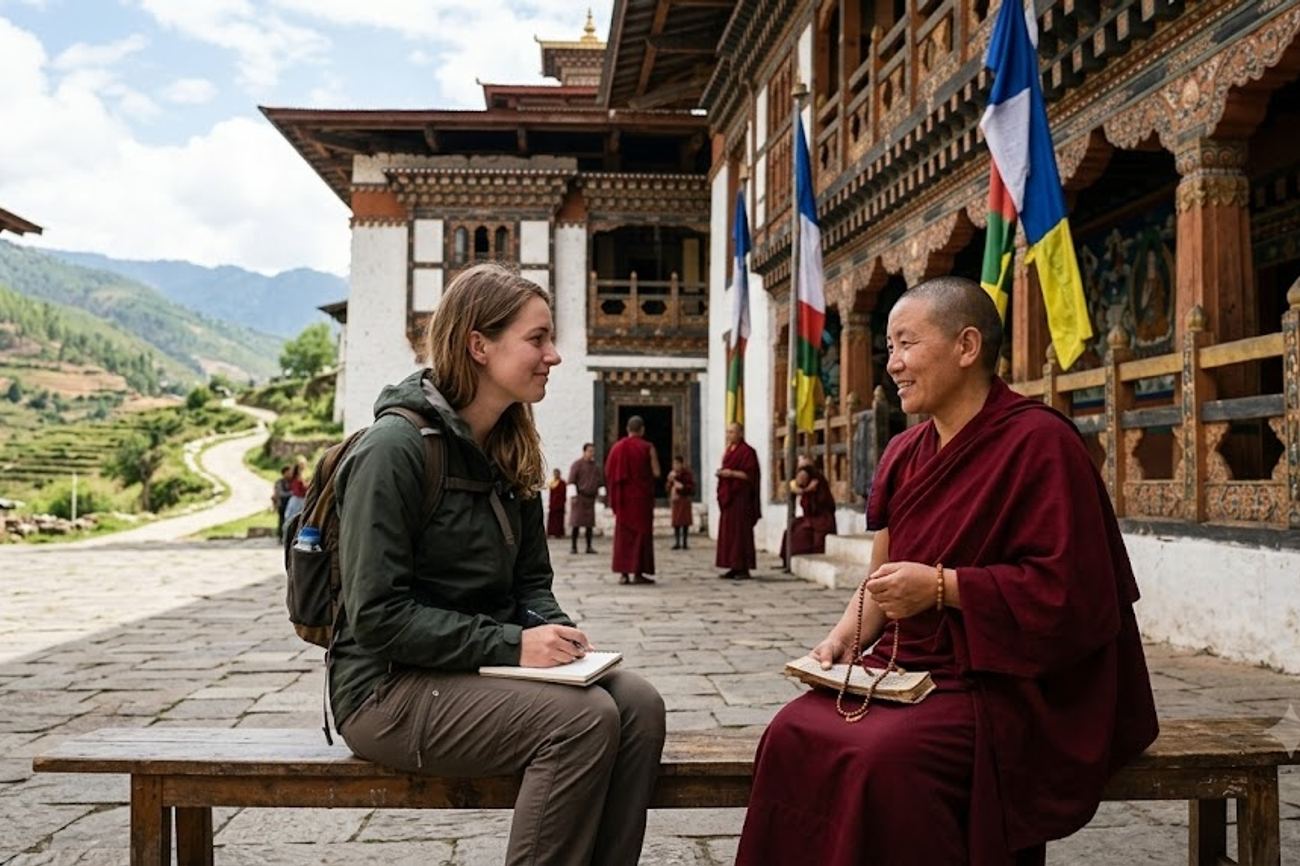
Image generated by AI
[Thimphu, May 2026] — The Kingdom of Bhutan is aggressively scaling its "high-value, low-volume" tourism model to combat global over-tourism, leveraging a mandatory Sustainable Development Fee (SDF) to fund universal healthcare and education.
The Himalayan nation is positioning itself as the global blueprint for ethical travel by prioritizing Gross National Happiness (GNH) over traditional GDP metrics. By strictly regulating visitor numbers and enforcing rigid architectural and environmental codes, Bhutan is attempting to decouple economic growth from environmental degradation, offering a restorative alternative to the urban exhaustion prevalent in modern global hubs.
The Mechanics of Controlled Access
The Bhutanese government utilizes a decisive policy framework to prevent the systemic collapse of its alpine ecosystems and ancestral customs. Central to this strategy is the Sustainable Development Fee, a daily levy required of all foreign nationals. This financial mechanism serves two primary functions: it acts as a barrier to entry for mass-market tourism that typically leads to overcrowding, and it creates a direct pipeline of funding for the state's social infrastructure.
Unlike typical tourism models where revenue is captured by international hotel chains or foreign tour operators, Bhutan’s system ensures that the economic benefits of travel are redistributed into public services. This ensures that the presence of international explorers strengthens internal social stability rather than straining fragile public resources.
Impacted Travel Sectors and Destinations
The implementation of these strict conservation and hospitality mandates affects several key areas of the travel experience:
- High-Altitude Trekking: The route to the Paro Taktsang (Tiger’s Nest Monastery) remains a primary draw, though it is managed as a physical and spiritual pilgrimage rather than a standard sightseeing stop.
- Hospitality Infrastructure: All resorts and hotels must adhere to strict traditional architectural guidelines. This prevents the "homogenization" of the landscape seen in other tourist hubs, ensuring that modern construction blends seamlessly into the Himalayan environment.
- Environmental Zones: Pristine forested valleys and cliffside sanctuaries are under rigorous protection, with visitor flow managed to prevent soil erosion and wildlife disruption.
- Global Policy Influence: Urban planning boards and resort operators worldwide are currently analyzing the Bhutanese model to implement similar entrance frameworks in other ecologically delicate regions.
Practical Traveler Advisory and Strategic Insights
For the modern traveler, a trip to Bhutan is no longer a budget-friendly excursion but a high-investment "restorative" experience. Passengers should expect the following practical impacts:
Financial Requirements: Travelers must budget for the mandatory daily sustainable development fees in addition to standard lodging and transport costs. This effectively eliminates the "backpacking" or low-cost travel segment from the market.
Psychological Shift: The travel experience is designed to be a catalyst for personal growth. Visitors are encouraged to move away from "superficial leisure" and instead engage in mindful exploration. The environment is curated to help those with urbanized values relearn concepts of conscience and peace.
Logistical Constraints: Due to the low-volume policy, availability for peak seasons is strictly limited. Travelers cannot simply "show up"; they must operate within a regulated framework that prioritizes the carrying capacity of the land over market demand.
The GNH Framework and Future Global Tourism
Bhutan’s reliance on Gross National Happiness (GNH) represents a fundamental shift in how a destination manages its "product." By evaluating success through spiritual identity, public well-being, and environmental safety, the nation has created a resilient economy that is less susceptible to the volatility of global market trends.
Visitors to the Kingdom must adhere to the "High Value, Low Volume" tourism policy, which includes a mandatory Sustainable Development Fee (SDF) to fund national conservation and infrastructure. Detailed requirements for visas and the current daily tariff structures are managed by the Department of Tourism.
This model is now influencing the broader World Tourism Organization (UNWTO) discourse on sustainable destination management. As global explorers increasingly seek "responsible exploration," Bhutan is proving that environmental protection and cultural pride can coexist with the demands of 2026 travel.
The shift toward restorative and wellness-focused experiences is forcing global hospitality operators to redesign their packages. The "Bhutan Effect" is pushing the industry away from volume-based profit models toward value-based, conscientious travel that honors the host community as much as the guest.
FAQ: Bhutan Sustainable Travel 2026
What is the Sustainable Development Fee (SDF)? The SDF is a mandatory daily payment required from all foreign tourists. It is used by the Bhutanese government to fund free healthcare, education, and the preservation of the country's carbon-neutral environment.
How does Bhutan prevent over-tourism? The state employs a "high-value, low-volume" strategy. By maintaining high entry costs and regulating the number of visitors, they ensure that landmarks like the Tiger's Nest Monastery do not suffer from overcrowding or ecological decay.
Is Bhutan a budget-friendly destination? No. Due to the mandatory fees and the government's commitment to high-end, sustainable tourism, Bhutan is positioned as a premium destination. It is designed for travelers seeking transformative, mindful experiences rather than low-cost vacations.
What is Gross National Happiness (GNH) in a travel context? GNH means the country prioritizes the well-being of its citizens and the health of its environment over raw economic growth. For travelers, this results in a more authentic, less commercialized experience.
A blueprint for a future where the traveler serves the destination, not the other way around.
Related Travel Guides
- Yellowstone Summer Tourism Moderates in 2026 as West Entrance Absorbs 43% of Park Traffic: Insider Survival Guide
- Uzbekistan Airways and flydubai Forge Landmark Interline Pact: Opening the Ancient Silk Road to Global Travelers in 2026
- Ten Crowd-Free Lake Tahoe Alternatives Across the United States: 2026 Mountain Water Escapes
Disclaimer
This article is for informational and educational purposes only. It does not constitute legal, financial, or professional advice. While we strive to provide accurate and up-to-date information, travel policies, regulations, and conditions change rapidly. Always verify information with official sources before making travel decisions. Nomad Lawyer makes no representations about the accuracy, reliability, completeness, or suitability of the information provided. Readers should consult qualified professionals for advice specific to their circumstances. The views expressed in this article are those of the author and do not necessarily reflect the views of Nomad Lawyer.
Preeti Gunjan
Contributor & Community Manager
A passionate traveller and community builder. Preeti helps grow the Nomad Lawyer community, fostering engagement and bringing the reader experience to life.
Learn more about our team →